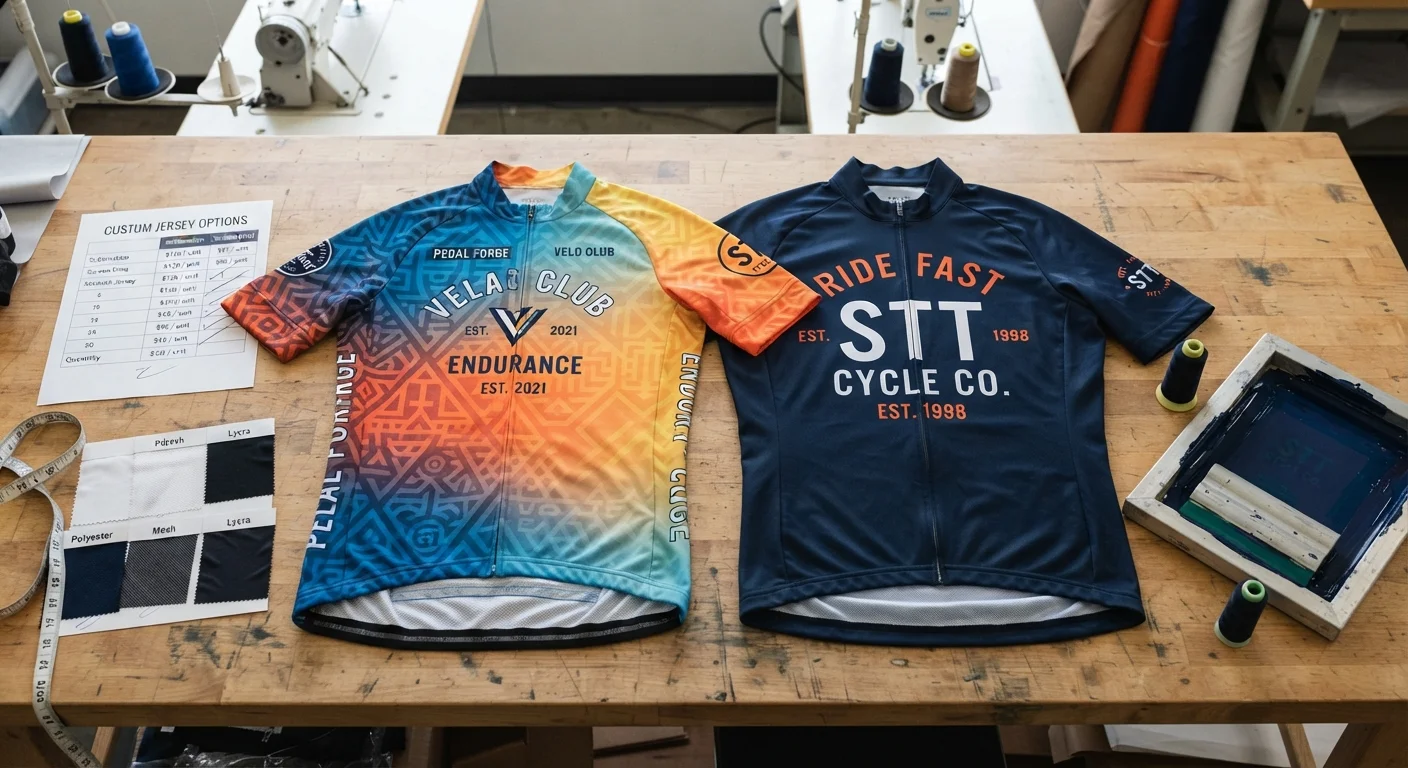
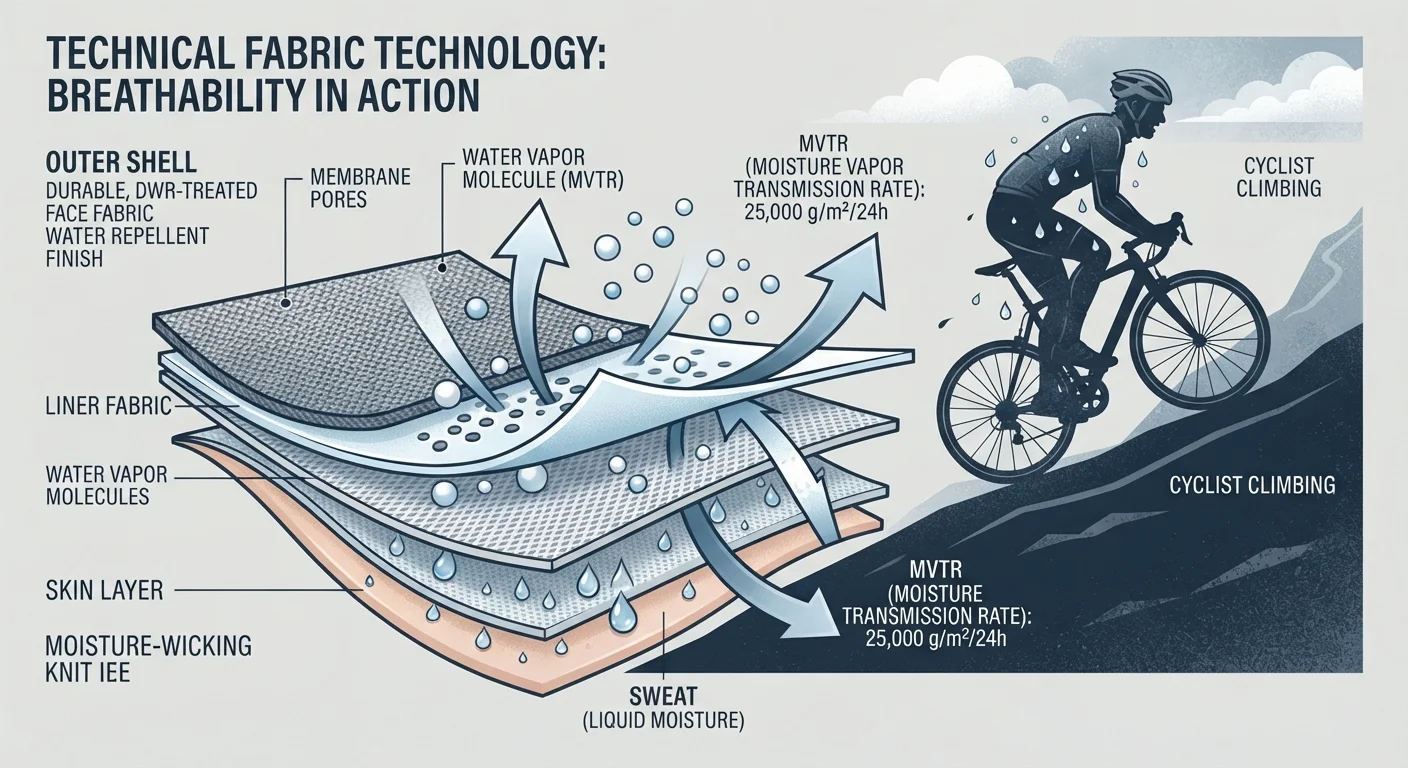
"We only need 30 jerseys, but every factory keeps saying MOQ 50. If you're a small cycling team captain, a startup apparel founder, or an e-commerce seller with a logo file sitting in your inbox and nowhere to send it, you already know what happens next. Big manufacturers ghost you, small ones quote wildly inconsistent prices, and nobody tells you what a real low minimum order quantity apparel manufacturer actually looks like. Forget the 3,000-word history of cycling fabric. The practical playbook gives you the exact MOQ thresholds, a copy-paste vetting script, hidden cost breakdowns, and the red flags that separate genuine custom cycling jersey manufacturers for small orders from the ones who'll waste your budget and your season. Grab your design file. Let's find you a supplier worth emailing today.
Map Your Order Size to the Real MOQ Floor (10, 30, or 50 pcs)
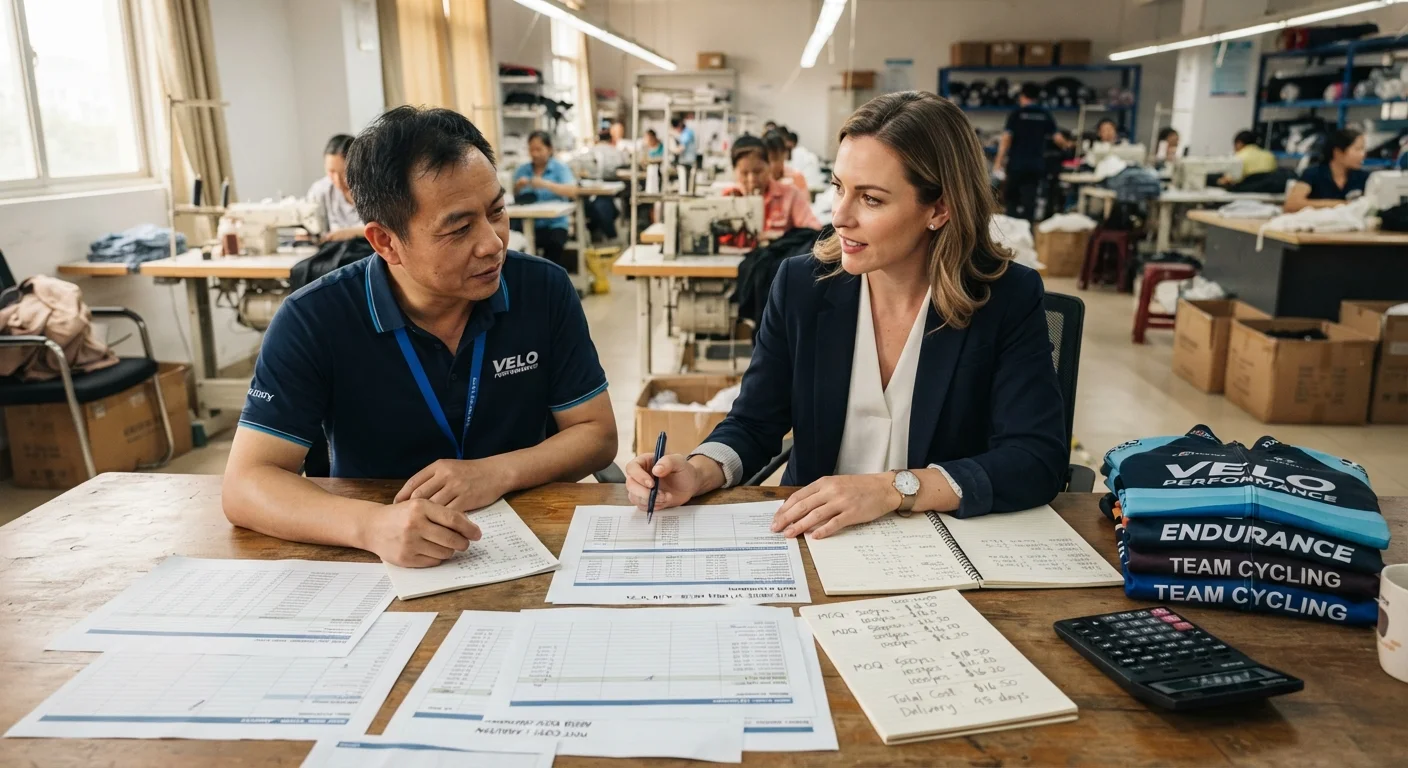
MOQ is break-even math. A supplier sets their minimum based on setup costs, dye lots, and machine time, not some universal rulebook. So when three factories quote three different numbers for the same jersey, they're running different math.
Where cycling jerseys land
Activewear sets — jerseys, bibs, kits — sit in the 50–200 pcs range industry-wide. Hoodies run 30–80 pcs, T-shirts and dresses 50–100 pcs, and accessories like bags and jewelry go as low as 10–50 pcs . Custom sublimation, which most jerseys require, pushes floors higher than basic cut-and-sew because of the dye-sub print setup.
What each floor means for your order
10 pcs — sample-buy territory. This is negotiated test-run pricing, not real production. Expect 1–10 pcs cycling jerseys sample MOQs at best, mostly for simple SKUs.
30 pcs — a realistic, negotiable floor for low-complexity garments. It's on the table if your design skips complex panels or multiple fabric weights.
50 pcs — the most common true low MOQ for custom-made cycling apparel. This is your safest entry point.
Below 50 pcs you get higher per-unit cost , tighter customization limits, and pricing that looks more like private-label than full custom. Budget $500–2,000 for most startup-sized first runs at this tier.
The Negotiation Move That Saves You Money
Don't ask "what's your MOQ?" Ask suppliers to break out sample MOQ, trial MOQ, and production MOQ separately, then compare per-unit pricing at 10, 30, and 50 pieces instead of the headline number. Treat 50 pcs as your floor, 30 pcs as negotiable, and 10 pcs as sample-level only. That question filters out vague quotes fast.
Filter Suppliers with a 5-Question, 3-Round Vetting Script
Most people vet suppliers backward. They ask about price first, then discover three emails later that they've been chatting with a trading company, not an actual custom cycling clothing OEM factory. Fix that order. Here's the script broken into three rounds, so you disqualify the wrong fits fast and spend your time only on suppliers worth a deposit.
Round 1: The Fast Disqualifier (Email or DM)
Send these five questions before you send a single design file:
Are you the manufacturer, a distributor, or a trading company? Ask for the business license and factory name. A cycling jersey printing factory should answer this without hesitation.
What's your MOQ, lead time, and price break by configuration? Get numbers for your exact spec, not a generic range.
What certifications are active, and what's their expiry? Request test reports and CoCs, not just a logo on the website.
What's your monthly production capacity, and how do you handle overflow during peak season?
Can you send two references and a recent sample inspection report?
No answer on question one, or a vague dodge on certifications, means move on.
Round 2: The Live Qualification Call
This is where you find out if there's a real cycling team kit supplier behind the email signature. Ask who owns the process — sales, engineering, QC — and get one named point of contact. Request a virtual factory walkthrough showing actual line equipment. Walk through their QC workflow: incoming inspection, in-process checks, final inspection, defect thresholds. Ask about years in business and whether one customer accounts for most of their revenue — that's a stability flag most buyers skip.
Round 3: Shortlist Verification
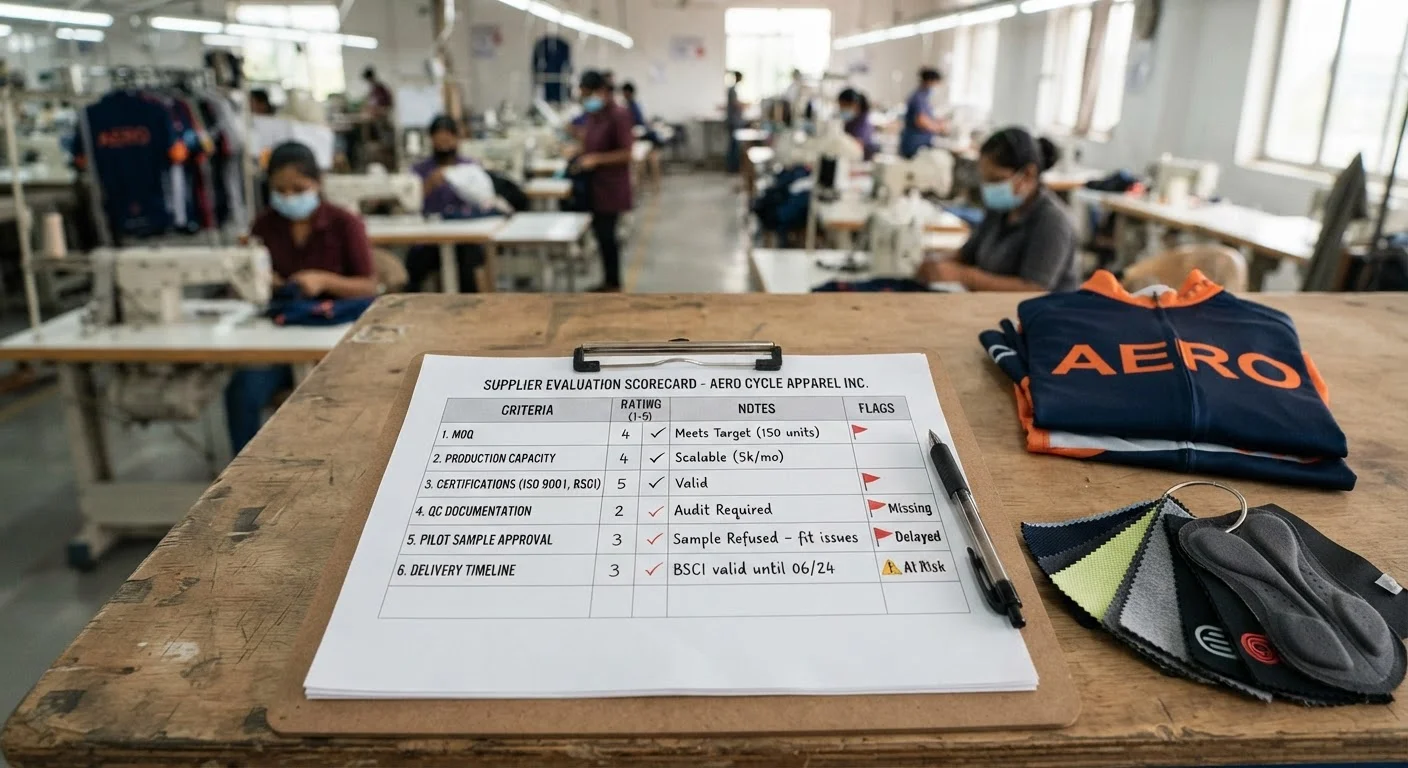
Before any PO, require a pilot sample run with agreed specs and defect limits. Get a written quote itemizing tooling, setup, freight, duties, and payment terms — separately, line by line. Ask for the full quality pack: license, certs, audit report, references.
Score each supplier on a simple sheet: supplier type, MOQ by SKU, capacity, active certs, documented QC (yes/no), references (yes/no), pilot sample passed (yes/no). Anything missing factory status or current certs gets dropped, no exceptions, no matter how good the price looks.
Decode the True Small-Batch Cost Structure (Unit Price, Sampling, & Hidden Fees)
Small runs of 50–100 pieces routinely carry a 15–30% per-unit premium over 500+ unit orders, and for complex custom designs that premium can climb to 1.5–2x standard production cost. Setup time, dye lots, and machine changeovers don't shrink because your order does.
Where the money goes
A single prototype or sample piece often costs 2–3x the bulk unit price. For example, a sample piece runs $30–80 versus $10–15 at bulk volume. That gap is your first clue about whether a factory is quoting honestly or padding numbers.
Sample fees run $100–$300 for custom items, sometimes $200–$500 per round for more technical development work, and most buyers go through 2–3 rounds before locking a final design. “Free samples” rarely are. Watch for $25–$60 shipping and $30–$80 rush production tacked onto that “free” offer. Budget $100–$150 per sample as your realistic floor with any custom cycling clothing OEM factory.
Tooling and setup fees vary by complexity, anywhere from $150 for simple plate work up to $2,000+ for more involved molds or NRE charges. Ask upfront which bucket your jersey design falls into.
The Line-Item Checklist to Request Before You Commit
Don’t accept a single bundled number. Ask any sportswear manufacturer sample order quote to itemize:
Material surcharge
Tooling or mold fee
Sample/prototype rounds
Rush fee
Shipping, freight, and duty
QC/inspection fee : often $0.50–$1.00 per piece at low MOQ, versus $0.20–$0.50 at scale
Packaging, artwork, or plate fee
MOQ penalty or “low-quantity order” surcharge
Ask this exact question: “Can you send a full TCO quote broken out by material, tooling, testing, shipping, and any low-quantity penalty?” That single request separates a transparent low minimum order quantity apparel manufacturer from one hiding margin in vague line items.
Many suppliers will credit your sample fee against the final production order once you hit MOQ. It’s not universal, but it’s common enough that you should always ask before you pay.
Spot the "We Accept Small Orders, But..." Factory (Pitfall Warning Checklist)
A factory says yes to your small batch, then buries the "but" in fine print. That "but" costs you money, months, or both. Run every custom team jersey supplier through this checklist before you wire a deposit.
Red flags that mean walk away:
MOQ changes depending on who answers your email, or they dodge "what's your minimum per style, per color, per size?"
No sample stage offered, or they push straight to bulk commitment
Quotes missing fabric, trim, labor, packaging, freight, or inspection fees
Slow replies and zero technical questions about your fabric, GSM, sizing, or packaging. A real cycling jersey printing factory always asks.
No verifiable address, no live video tour, or a business license name that doesn't match the factory name on the invoice
No QC documentation and no explanation of how your approved sample becomes the bulk standard
Demands for 100% upfront payment (standard small-batch terms run closer to 30/70)
Pricing roughly 40% below every competitor with no explanation
"Free molds" or "100-unit MOQ" pitches hiding $5,000+ mold fees behind the headline number
"No MOQ" claims paired with limited fabric options and inconsistent past output
Reasonable sample fees run $50–$150. Anything past $200 needs justification. Many startup cycling brand manufacturer partners quote a flexible 150–300 pcs range, while some rigid factories still push 500+ units, too high for a first order.
Before you pay anything , get in writing: unit price by size/color, sample fee, lead time, Incoterm, production photos or live video, a past QC report, and staged payment terms. If they can't produce it, that's your answer.
Verify Sample Quality Before Ordering Production (The Physical Proof)
A photo of a sample proves nothing. Fabric behaves differently under warehouse lighting than in your phone camera. Colors shift. Stitching hides problems until you touch it. The pre-production sample—sometimes called the golden sample—must be physical and made from your actual bulk fabric, trims, and tooling.
What "production line version" means
A real approval sample confirms the factory can reproduce your spec using the same materials and machines they'll use for your 50-piece order. Lock these details in writing before you approve it: exact materials, trims, colors, measurements, tolerances, construction methods, artwork placement, and final quality level. That sample becomes your binding benchmark. Keep it sealed. You'll reference it during every bulk inspection.
Your physical checklist
Measure every critical dimension with calipers, and record the numbers against your spec sheet.
Confirm the fabric is the real production substrate—check hand feel, GSM weight, finish, and color.
Inspect stitching, seam construction, and label placement against your tech pack.
Pack the sample in the actual shipping carton to check clearance. A 300mm item needs roughly 320mm of inner carton width once foam and insertion room are factored in.
Request a reference photo set so every production unit gets checked against the same visual standard.
Decision time
Compare the physical sample against your tech pack, BOM, and graded spec, then pick one: approve for bulk, approve with corrections, or reject and resample. No middle ground.
Before you commit, request the full sample packet: dated tech pack, BOM with color codes, graded spec with tolerances, a signed approval tag, and a QC photo set tied to the golden sample. If a supplier can't produce that packet, they're not ready for your PO.
Three Legitimate Strategies to Negotiate MOQ Down for Small Teams
A factory's MOQ is a negotiating position. Most cycling team kit supplier quotes have room to move if you push the right lever.
1. Trade a trial order for a written follow-on. Ask for a small first run, then commit in writing to a larger reorder later. A common structure locks 500 units now, 1,000 in 60 days, and 3,000 in 120 days into one document. Trial orders typically land at 20%–50% of the factory's standard MOQ, but only if you can show a real launch date or sales channel, not just enthusiasm.
2. Trade price or payment terms for volume. Offer a slightly higher per-unit price to unlock a lower MOQ. Or speed up cash flow with a higher deposit, sometimes 50%–100% upfront. This works when the supplier's real constraint is working capital or machine-slot risk; raw material shortage is a different issue.
3. Change the shape of your order. Pool 3–5 SKUs or variants together so the total still hits the factory's minimum. Stick to standard fabrics and in-stock components instead of custom dye lots. Ask directly whether the on-demand cycling apparel production line has existing molds or shared slots you can piggyback on.
Ask What Drives the MOQ
Ask what's driving the MOQ — tooling, dye minimums, machine time. Then negotiate against that specific constraint. Quote at least 3 suppliers, ideally 10+, for leverage. Keep your first ask modest, around 30%–50% off the headline number, not a fantasy figure. Trading companies often flex faster than direct factories here.
Conclusion
30 pieces feels small to you. To the right factory, it's just Tuesday.
You now know what separates "no MOQ" marketing copy from a real production partner: actual MOQ floors, a five-question vetting script, honest cost breakdowns, and a sample in your hands before you spend a dollar.
That script is the filter. It finds factories that want your small batch and weeds out the ones that will burn three weeks of your timeline.
Pull your design file this week. Run it through the 3-round script. Request samples from two different low-MOQ cycling jersey apparel manufacturers. Compare the stitching, not just the quote. Your jersey and your brand's first impression deserve that extra hour.