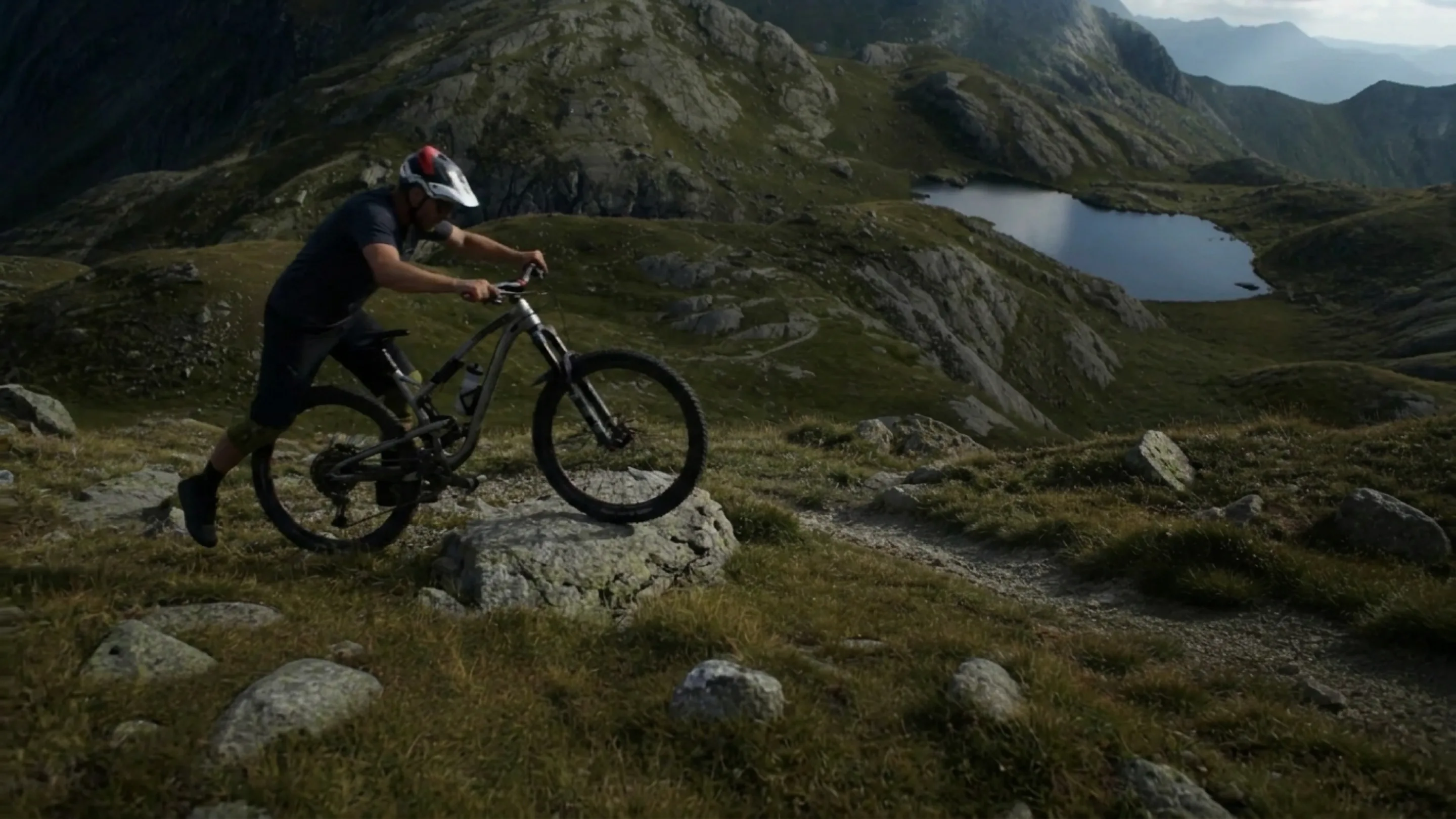
Custom MTB Jerseys Built for Where Technical Terrain Wears a Kit Out
Branch contact, dust, and frequent dismounts wear a kit at the same points, ride after ride — see where, and how the fabric tier and cut answer for it.
Where MTB Sits: Durability Over Endurance
The one axis that separates mtb from every other riding style on this site.
Riding Posture: The Widest Swing of Any Discipline
Mountain biking's posture shifts more than any other riding style we build for — leaning forward to climb, shifting back and standing to descend, sometimes both within the same minute on technical terrain. A kit cut for a posture that holds steady, like road's, restricts exactly the movement mtb riding depends on.
Road Surface Severity: The Highest in Our Range
Technical off-road terrain produces the highest abrasion load of any discipline here — not just repeated flex like gravel, but real surface contact: brush, rock dust, and grit. Where that contact concentrates on a garment is a fabric and cut question, not a guess — section 5 covers where, sections 3 and 6 cover how the fit and fabric tier respond.
Session Duration: Burst-and-Recover, Not Steady
MTB sessions run at intermittent high intensity — a hard technical descent, then a slower climbing recovery, repeating through the ride. That's a different load pattern than road's steady output or bikepacking's multi-day accumulation, and it changes what the fabric needs to do between bursts.
Environment: Terrain Contact, Not Weather
Dust, mud, and branch contact are the primary environmental variables on a mountain-bike ride — weather is a secondary concern compared to what the terrain itself does to a garment.
Is this your page?
If your riding is technical off-road terrain with real abrasion and contact exposure, this page is built around that. If your riding stays on mixed but non-technical surfaces, gravel is likely the closer match — full gravel-specific reasoning lives on our Gravel Cycling page once that page is live.
Fit for a Position That Keeps Changing
Why a kit cut for one posture fails the moment mountain biking demands another.
Standing to Descend Needs Room Sitting to Climb Doesn't
A climbing posture stays close to a road-like forward lean, but standing to descend shifts weight back and opens the hip and knee angle dramatically. A fit fully optimized for the climbing posture restricts exactly the range a descent demands — and a fit that's loose enough for a descent flaps and catches during a seated climb.
The Answer Isn't "Loose," It's Targeted Range
The pattern adds range at the hip, knee, and shoulder — the joints that do the most work switching between climbing and descending posture — while keeping the torso close enough to the body that it doesn't catch on brush or a pack strap on technical terrain.
Why This Rules Out a "Just Size Up" Fix
Sizing up to get more room adds bulk everywhere, including places that don't need it, and that extra fabric becomes its own catch-and-snag risk on technical terrain. The range has to be built into the pattern at the joints that need it, not added generically across the whole garment.
Start Your MTB Kit
Start Your MTB KitWhere Wear Concentrates on Technical Terrain
The specific points repeated contact and abrasion hit hardest, and why.
The Knee and Lower Leg
Technical terrain means dismounting to walk a bike through an obstacle far more often than road or gravel riding does, and every dismount and remount puts the knee and lower leg through ground-level brush, mud, and pedal contact. It's a repeat-exposure point on nearly every ride, not an occasional one.
The Hip and Outer Thigh
Frequent remounting also means repeated saddle contact at the hip and outer thigh, and a pack strap crossing the same area on longer technical rides adds its own friction on top of that. Two different wear mechanisms landing in roughly the same zone.
Why Fabric Tier and Cut Are the Answer, Not an Add-On
Section 6 covers which of the factory's fabric tiers holds up best to this kind of repeat contact, and section 3 covers why the cut needs extra range at exactly these joints. Neither is a bolt-on fix — they're the same fit and fabric decisions every mtb kit needs, made with these wear points in mind from the start.

Seam construction at the knee and lower-leg zone, built to hold up to repeat brush and ground contact.

Fabric weave at the hip and outer-thigh zone, chosen for repeat saddle and pack-strap friction.
Fabric Built to Dump Heat Between Bursts
Why burst-and-recover intensity needs a different fabric answer than steady effort does.
A hard technical descent generates heat fast, and the recovery window on the following climb is when that heat actually needs to leave the body — not during the burst itself, when effort is already maxed out. Fabric chosen for mtb prioritizes rapid heat and moisture release during the lower-intensity recovery phase over the sustained, even breathability a steady road session calls for.
Within the factory's nylon/spandex blend options (88/12, 90/10, 91/9), the mtb pick is made for that recovery-phase performance specifically, not for constant airflow through the whole ride.

What MTB Kits Don't Need
MTB's posture never holds steady the way road's or gravel's does — it swings too widely, too often, for a pattern built around one fixed lean to work.
What We Build for MTB Programs
The garments an mtb kit typically includes, built to the fit and fabric choices above.
MTB programs typically include short- and long-sleeve jerseys built to the wide-range-of-motion fit above, plus vests and windproof outerwear for exposed trail sections. Sublimation, heat transfer, and computerized embroidery are the standard options, kept clear of the pattern's flex zones so decoration doesn't add stiffness exactly where the garment needs to move.


MTB Apparel Questions
What buyers ask before placing a first mtb kit order.
Start Your MTB Kit
Tell us your terrain and riding style — we'll match the fit and fabric tier to it.