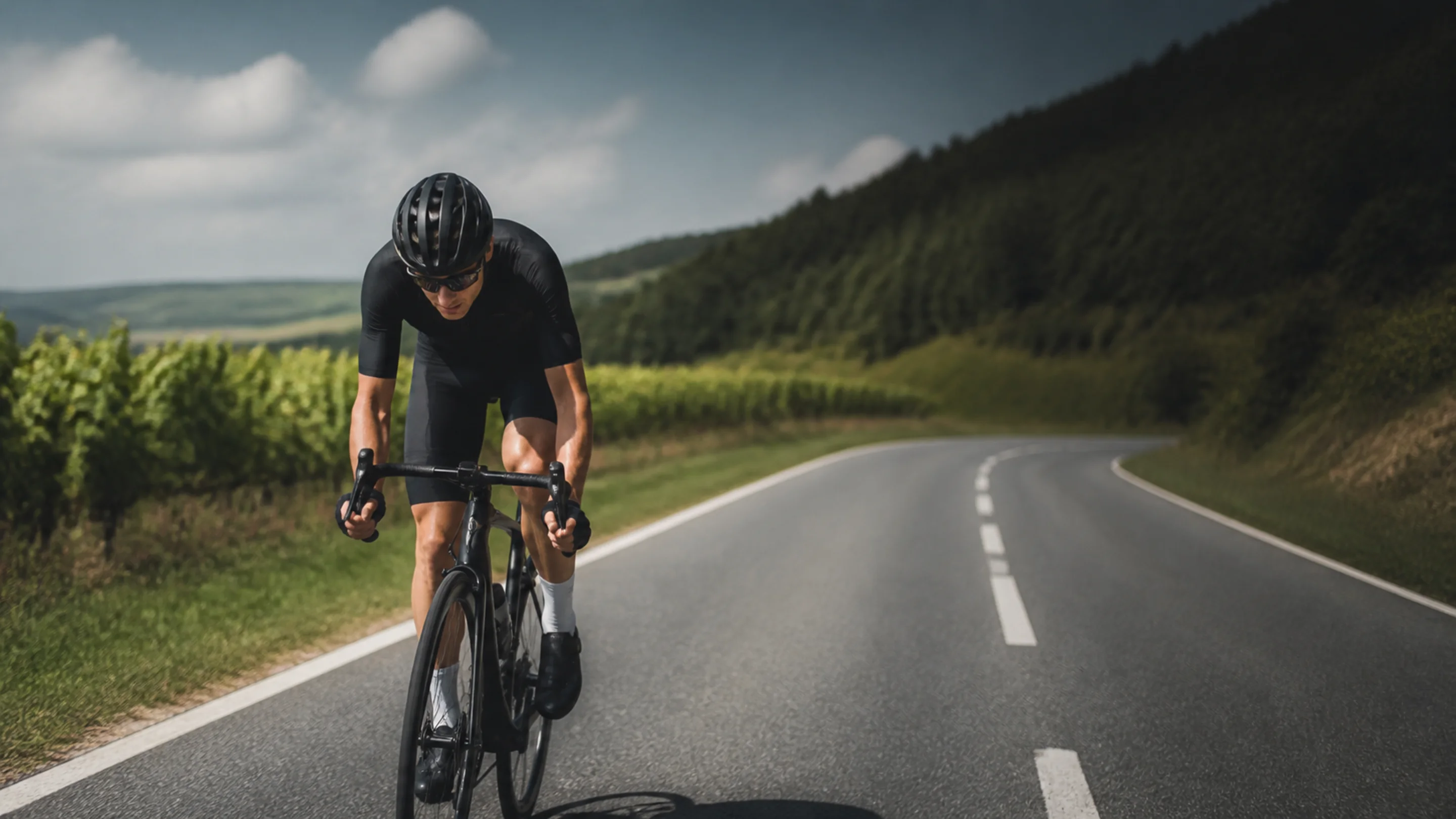
Road Cycling Kits Built for a Forward-Lean Held for Hours
One roster or one rider, built around the forward-lean posture road racing actually holds for hours — see what that does to fit and fabric before anything else.
Where Road Riding Sits on the Four Axes
Four judgment axes decide what a kit needs to do. Here's where road lands on each one, before any garment name enters the conversation.
Riding Posture: Steady, Not Switching
Road holds a forward-lean racing posture for the length of the ride — climbs and sprints shift effort, not the angle of the torso. That steadiness is the single fact this page is built around: a kit cut for a posture that holds still is a different problem than a kit cut for a posture that keeps changing.
Road Surface Severity: The Lowest in Our Range
Paved surfaces produce the lowest abrasion and flex load of any discipline we build for. Road's fabric and cut are chosen for that load specifically — what higher-load terrain needs is a different page's spec, not a missing feature here.
Session Duration: Long and Even
Road sessions run long at a relatively even intensity — steady-state effort held over hours, not the climb-flat-descent intensity swings that mixed-terrain riding produces. That evenness is what the fabric section below is actually built around.
Environment: Wind, Not Weather
The primary environmental load on a road kit is aerodynamic drag at speed, not rain or temperature swing. Most road sessions run in fair-weather windows; the fit answers to wind resistance first.
Is this your page?
If your riding holds a steady forward-lean for the length of the session on paved roads, this page is built around that. If your route mixes surfaces, or your riding position shifts with the terrain, gravel or mountain bike apparel is likely the closer match — both linked from here, not repeated.
Fit Built for a Forward-Lean Held for Hours
What a steady racing posture actually costs the pattern, and where we spend it.
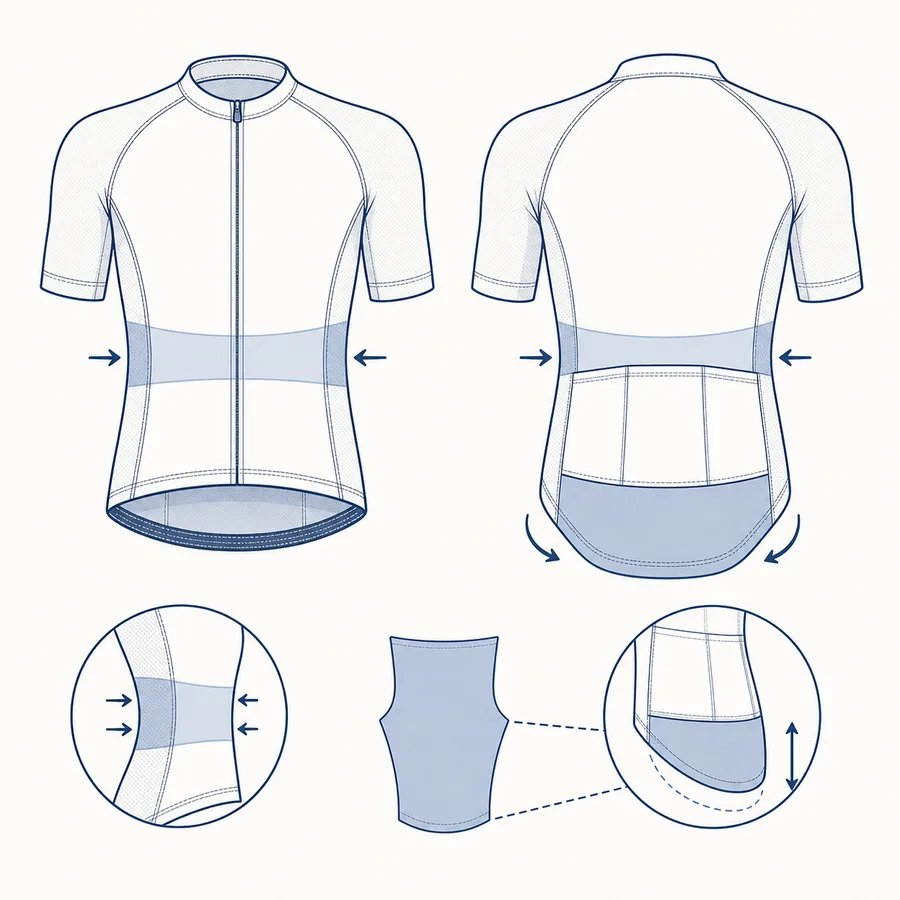
The Back Panel Has to Do More Work
A forward-lean posture stretches the back of the jersey further than an upright cut does — the rear panel has to be cut longer than a standard athletic template, or the jersey rides up under the crouch within the first few miles and stays there for the rest of the session. This isn't a style choice; it's a direct consequence of the angle the torso holds.
The Compression Layer Has a Ceiling on Thickness
A tight torso wrap helps hold aerodynamic shape, but a compression layer that's too thick restricts the chest at the exact angle a forward lean already narrows. The panel has to compress without closing down the breathing room a rider needs to sustain the posture for hours, not minutes — that ceiling is a fitting decision made before fabric weight is chosen, not after.
What Actually Restarts a Pattern Fitting
Three things move a road fit out of standard-template territory:
- A genuinely aggressive time-trial-level lean (steeper than typical road racing posture)
- A rider outside standard size-curve proportions
- A request to add a garment the base pattern wasn't built around, like integrated outerwear
A colorway or sponsor-logo change never does — that's a decoration decision, not a pattern one.
Fabric for Steady-State Distance
Why a road build and a mixed-intensity build don't use the same fabric logic, even at the same weight.
Two-Component Fabric, Chosen for a Steady Load
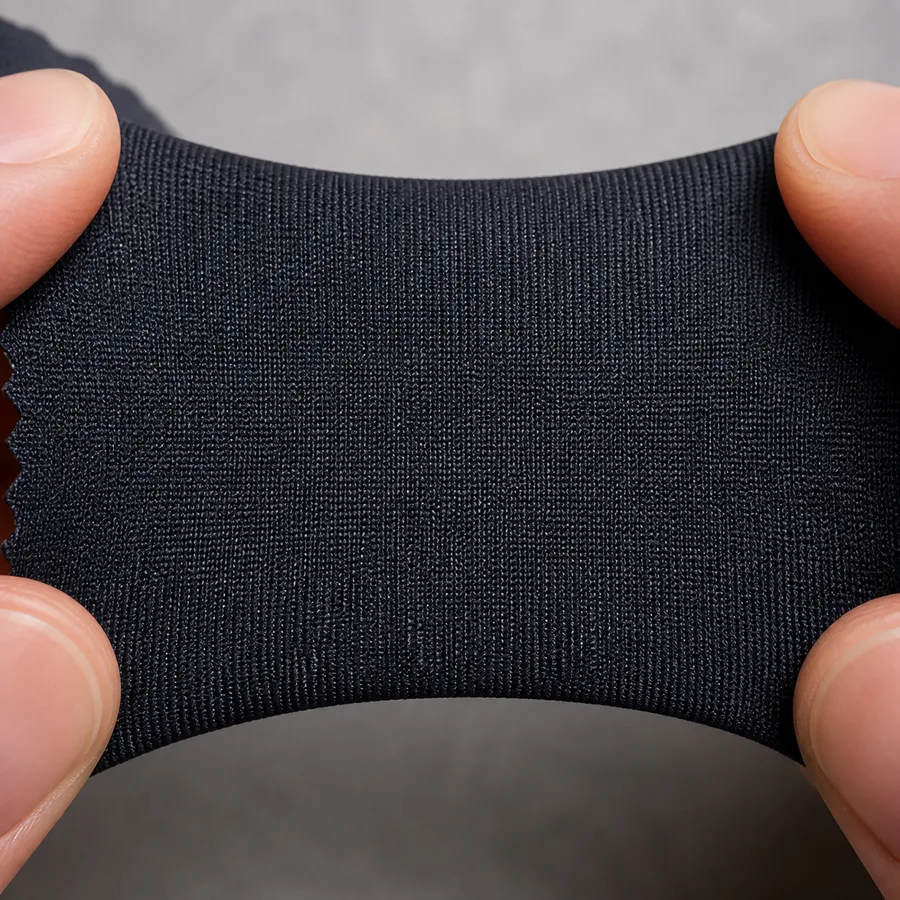
The fabric choice comes from the factory's standard nylon/spandex blends — 88/12, 90/10, or 91/9 — but road narrows that choice a specific way: a steady-state session doesn't need the fabric to handle sudden intensity swings, so the pick weighs breathability and compression consistency over the burst-recovery structure a stop-start ride would call for.
Why "Steady" and "Variable" Aren't the Same Spec
A road session holds close to one output level for its duration; a mixed-terrain session swings between a hard climb and a fast, low-effort descent within the same ride. Fabric tuned for the second case trades some steady-state breathability for recovery speed between bursts — the right trade for that riding style, the wrong one for road, where the load never really lets up long enough to need it.
Road — Steady-State Load
Mixed-Terrain — Burst-Recovery Load
Mixed-terrain here means gravel or mountain biking, not a road build — shown for contrast only.
What This Means for Chamois, If It's Part of Your Kit
If chamois is part of your road kit, it's specified and developed against whatever reference you bring us, not pulled off an existing product line — the point that matters here is narrower than the full development process, which lives on Cycling Chamois Development: a steady-state session and a stop-start one call for different density judgments, and that judgment gets made while the sample is being built, not assumed from a generic default.
Ready to Spec Your Road Kit?
Start Your Road KitWhat We Build for Road Programs
The garments a road kit typically includes, and how they're decorated.
Road programs are typically built from short- and long-sleeve jerseys, vests, and windproof or waterproof outerwear layers, specified against the forward-lean fit described above so a jersey and a vest from the same order actually match in cut, not just in color. Sublimation, heat transfer, and computerized embroidery are all available, applied at the placements a road cut allows without disrupting the aerodynamic surface: chest, sleeve, and a narrow back band rather than a full-panel wrap that would add drag.
Team or club programs ordering road kits together follow the same garment logic per rider, with sizing handled at the order level rather than one-off; if that's your situation specifically — same roster, ordering again next season — Cycling Clubs & Teams covers how that process runs, separate from what's covered here.
What a Road Kit Doesn't Need
A road kit doesn't carry extra structural weight for flex and abrasion loads paved riding doesn't produce — that weight only costs a road rider drag they never asked for.
Road Cycling Kit Questions
What buyers ask before placing a first road kit order.
Start Your Road Kit
Tell us your riding posture, roster size, and timeline — we'll take it from there.