Thirty kilometers into a Saturday climb, my cotton t-shirt was soaked through, clinging to my back like a wet towel, and every pedal stroke felt heavier than it should. Sound familiar? If you're staring at your closet wondering whether that old race tee will cut it for your next ride, you're not alone, and you're asking the right question.
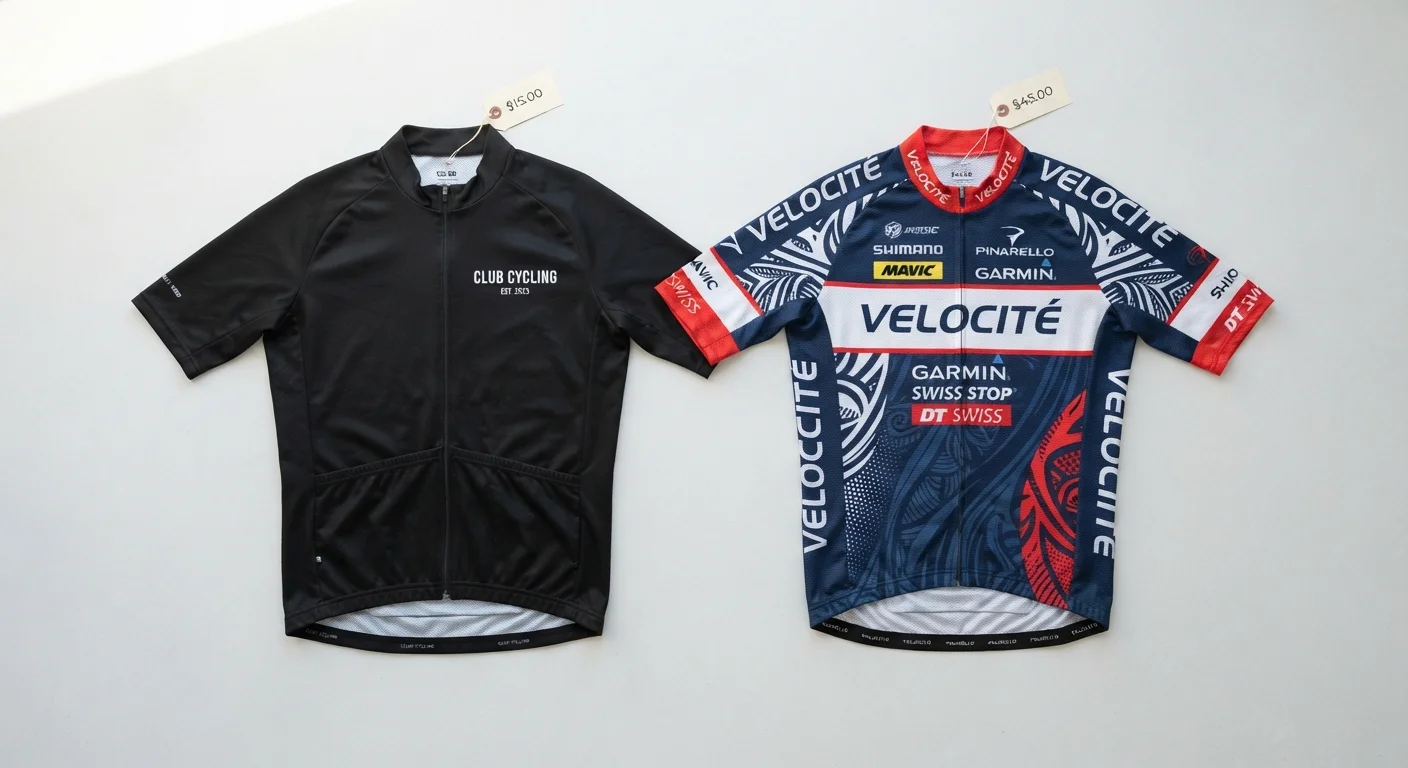
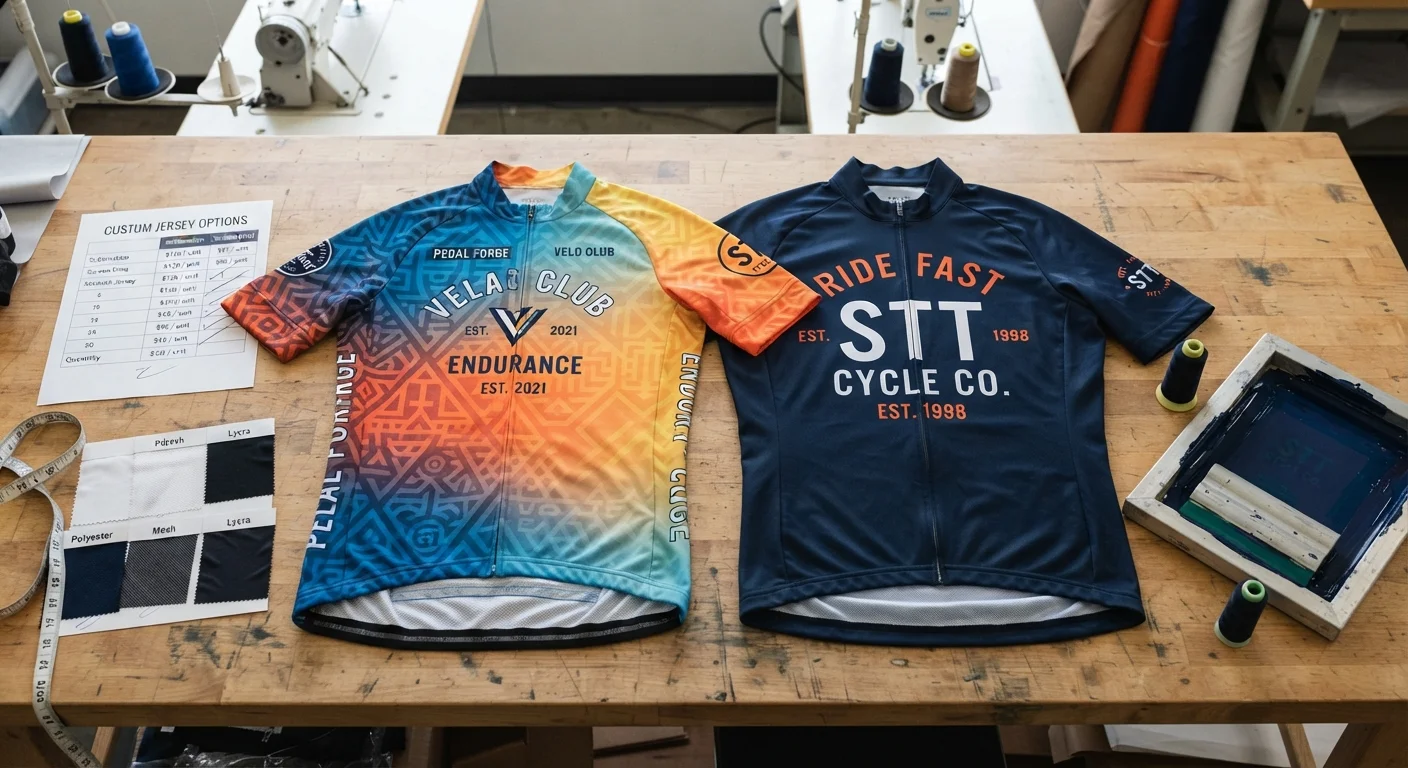
The difference between a cycling jersey and a regular t-shirt comes down to moisture-wicking fabric that dries while you ride, an aerodynamic fit cycling jerseys are built for, and functional details a plain tee can't offer.Brands can source custom Cycling Jerseys for private-label collections.
I put both to the test across real rides—commutes, climbs, and summer slogs—so you don't have to guess. Let's break down exactly where the differences matter, and where they don't.
The Sweat Test: How Fabric Choice Affects Your Ride Comfort
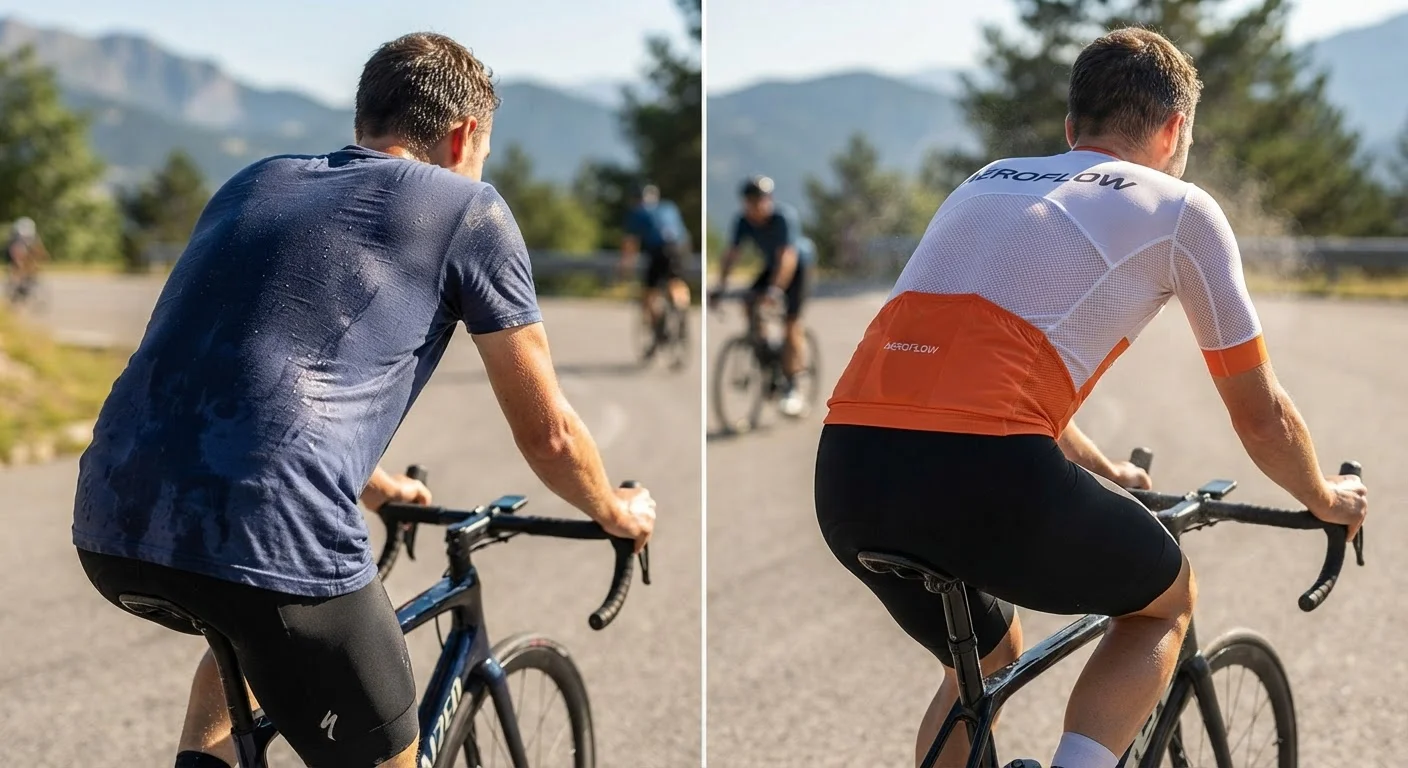
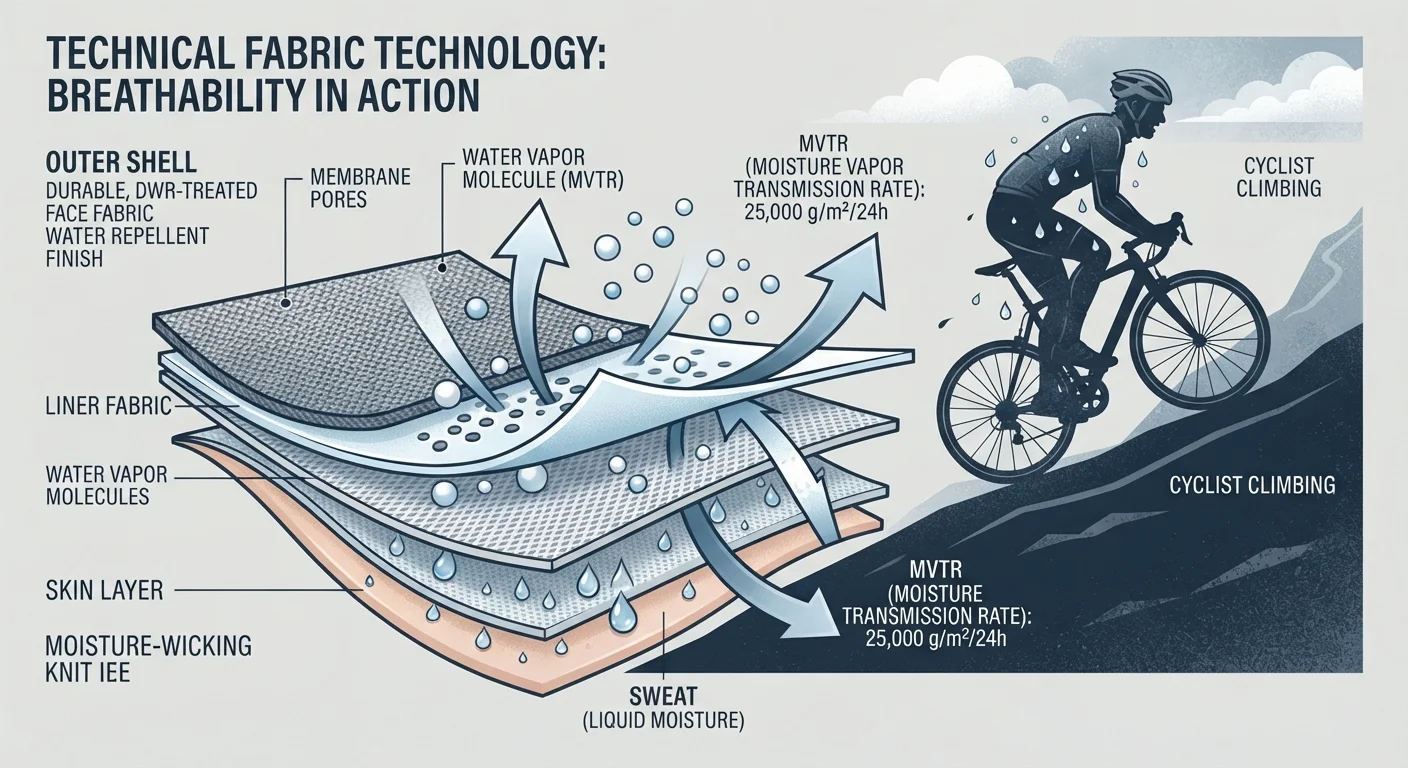
Fabric performance under sweat is measurable. Three numbers tell you how comfortable you'll feel on a ride: air permeability (how fast air moves through the fabric), moisture vapor transmission rate (MVTR) (how quickly sweat vapor escapes), and moisture buffering (how much dampness the fabric can hold before you feel wet). These three numbers explain almost everything about why one shirt leaves you soaked and another keeps you dry.
Why Cotton Falls Behind
Cotton absorbs sweat well, but that's the problem. It holds onto moisture instead of releasing it. Once it's wet, it stays wet—clinging, heavy, and cold once you stop pedaling. Technical fabrics engineered for cycling apparel prioritize release over absorption. A Cycling Jersey manufacturer can develop moisture-wicking fabric blends.
A cotton t-shirt might feel fine for the first five kilometers, but by kilometer twenty, that trapped moisture starts working against you.
Nylon doesn't solve this either. In woven-fabric testing, standard nylon shows lower water-vapor transmission than cotton. Unless it's engineered with wicking yarns or special finishes, plain nylon traps moisture just as badly.
The Merino Wool Surprise
A four-year study cited by Mons Royale found merino wool outperforms polyester by 96% in moisture buffering. Merino can absorb up to one-third of its own weight in moisture before it starts to feel damp against your skin. That's a massive comfort buffer compared to synthetics that saturate faster and start clinging sooner.
What the Numbers Say About Breathable Cycling Clothing
Textile testing gives us hard benchmarks:
Knitted sports fabrics typically test at 500–800 mm/s air permeability
Professional athletic t-shirts need at least 400 mm/s to perform adequately
Anything below 200 mm/s is a functional failure for sweaty activity
Cycling-specific fabric tests published in Frontiers measured weight, thickness, thermal resistance, vapor resistance, and air permeability during actual 20 km ride simulations. These numbers separate a jersey that breathes from one that suffocates your skin.
How Performance Cycling Apparel Is Engineered
The best moisture-wicking fabric layers two functions. On the skin side, hydrophobic or engineered wicking yarns pull sweat away from your body immediately. On the outer side, a more open weave or high-MVTR layer lets that moisture evaporate into the air. This combination—wick, spread, evaporate—is why technical cycling fabric dries faster than cotton ever will, even after heavy sweating on a summer climb.
Lab Standards Worth Knowing
If you're comparing fabric specs before buying, look for products tested under these standards:
ASTM D737 — air permeability at 100 Pa pressure
ASTM E96, Procedure B — water-vapor transmission over 24 hours
ISO 9237 — air permeability testing for sportswear
For hot, sweaty rides, prioritize fabrics with air permeability of 400 mm/s or higher and strong vapor transmission.Request a custom wholesale price for Cycling Jerseys by order volume.
Heavy cotton and tightly woven synthetics without wicking treatments are the ones to avoid when the mercury climbs.
The Fit Factor: Why a Riding Posture Demands a Different Cut
Bend forward at the hips until your torso is nearly parallel to the ground. Extend your arms like you're gripping handlebars. Now hold that position for two hours straight. Regular t-shirts were not built for this posture.
A standard t-shirt is patterned for an upright body. A cycling jersey is patterned for a body leaning forward. That difference determines how the garment behaves in the saddle.
What Riding-Cut Construction Changes
Jerseys built for aerodynamic fit cycling use three pattern adjustments that t-shirts skip:
Forard-angled sleeves. The shoulder seam angles forward to match your extended arms in the riding position.
Extended rear hem. The back panel is longer so it stays tucked below your waistband when you lean forward.
Closeable collar. A zipper or snug neckline stays shut during movement so the front doesn't gap the way a loose crew-neck does on a bent torso.
The same design logic shows up in equestrian apparel. Riders need an ear-shoulder-hip-ankle alignment with an open hip angle and soft elbow bend. Riding tops in that world use close-fitting cuts and compression panels, sometimes Italian 3D knit with a wide compression band across the lower back, so the fabric moves with the body.
Some jerseys are marketed around a 'racing pattern' for correct riding posture.A dependable Cycling Jersey supplier can offer multiple fit options.
This is a construction difference you can test yourself.
The Forward-lean Test You Can Do Right Now
Before buying, try this check:
Put the garment on.
Bend at the hips until your torso is roughly parallel to the floor.
Extend your arms forward as if holding handlebars.
A jersey cut for riding will:
Keep the back hem below your waistband
Show no shoulder pull or fabric bunching across the upper back
Keep the collar or zipper closed without gapping
If your t-shirt fails any of these, it's a fashion cut. A jersey passes these checks because it's built for 90-degree hip flexion, mile after mile.
Storage & Ventilation: What Rear Pockets and a Full Zip Do
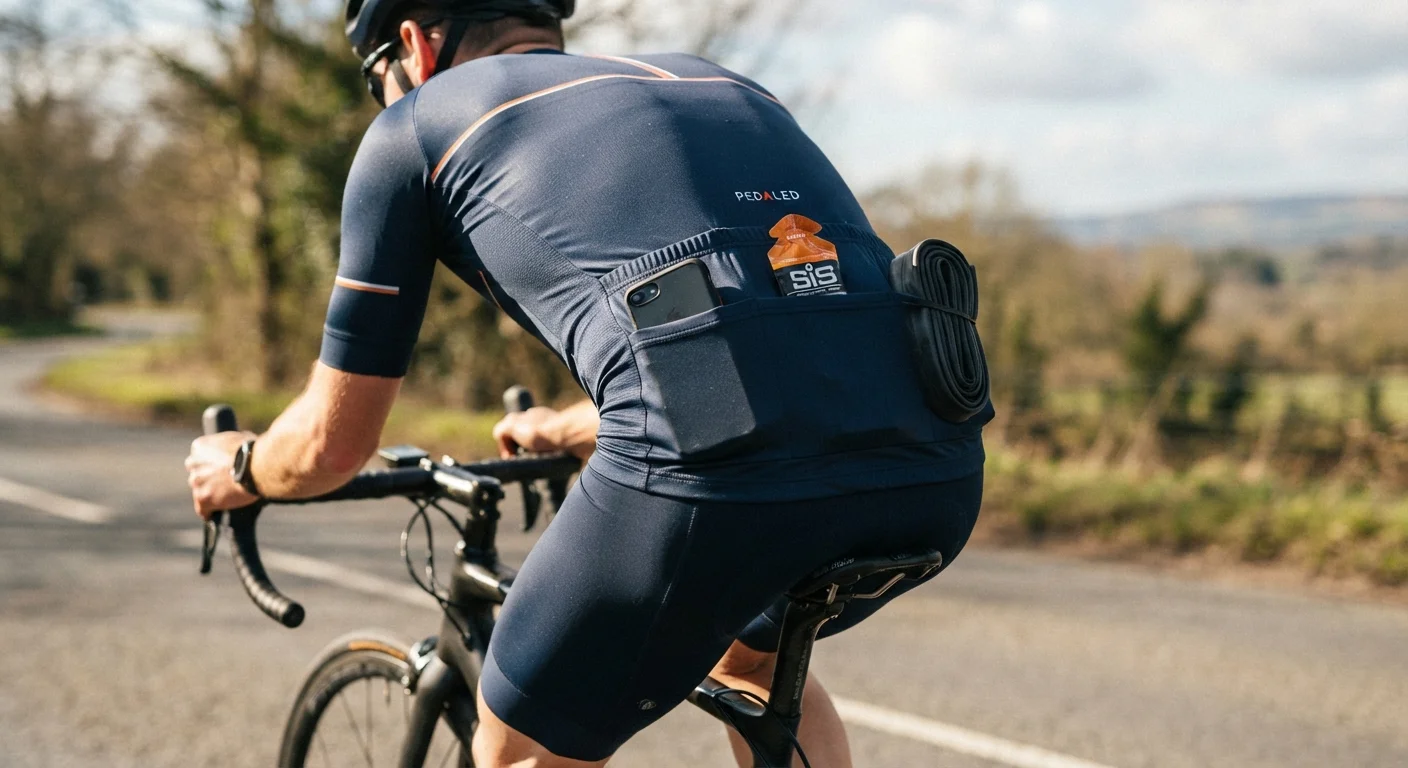
A regular t-shirt can't carry a phone, energy gel, and spare tube. That's the practical gap most riders never think about until they're 20 kilometers from home with nowhere to carry a flat tire kit.
Rear Pockets: The Standard
Most cycling jerseys ship with 3 rear pockets as the baseline. It's become the industry standard for a reason. These pockets sit low on your back, positioned so gravity keeps contents in place while you're bent forward in riding posture. Compare that to a t-shirt's front pocket (if it even has one), which dumps everything onto the ground the moment you lean over handlebars.
Real jerseys on the market confirm this pattern:
PEARL iZUMi Attack Cycling Jersey : 3 rear bellowed pockets
Ibex Spoke Full-Zip Long-Sleeve Jersey : 3 ergonomic rear elastic storage pockets
POC Pristine Print / Essential Road : 3 rear stash pockets + 1 rear vertical zip pocket
Endura Loop Zipped Cycling Jersey : 4 pockets total, including a triple rear pocket layout plus a zippered security pocket
That 4th pocket matters more than it sounds. It's zippered specifically for valuables: your key, card, or cash, items you don't want bouncing out on a rough descent. The Endura Loop pairs this storage setup with 88% polyester / 12% lyocell moisture-wicking fabric, so the same jersey handling your gear is also managing sweat.Bulk Cycling Jerseys simplify team and club apparel purchasing.
Full Zip: Ventilation You Control Mid-Ride
A full-length zipper isn't cosmetic. Brands market it as instant ventilation control:
-Adidas calls it "easy temperature regulation"
-Castelli calls it "quick airflow adjustment"
-Ibex pairs it with a locking zipper pull for stability during descents
Unzip halfway on a climb, zip up on a fast descent. A t-shirt gives you one setting: on. A jersey gives you a dial.
When You Can Actually Wear a Cotton T‑Shirt Cycling
Sometimes a cotton t-shirt works fine. Not "fine if you suffer through it" fine. Actually fine.
Cotton is hydrophilic. It soaks up sweat like a sponge. Under standard conditions, cotton holds about 8.5% moisture by weight. That number isn't huge until you sweat enough to push past it. Then the fabric starts clinging, airflow drops, and heat traps against your skin. That's exactly what gives you that soaked-shirt feeling on longer rides.
But that mechanism only kicks in past a certain sweat threshold. Below it, cotton is fine.
The Honest "Cotton Works Fine" Checklist
A cotton t-shirt works when your ride looks like this:
Distance under 10-15 km — short enough that sweat stays low
Leisurely pace — a cruise to the coffee shop, not intervals
Mild temperatures — cool or overcast days where you're not sweating hard
Flat terrain — no sustained climbing that spikes your heart rate
A 15-minute pedal to the store — doesn't need performance gear
If your ride checks those boxes, don't spend on a jersey. A well-fitted cotton tee, nothing oversized or stretched out, will get you there and back.
Where Cotton Falls Apart
Once any of these show up, cotton works against you:
-Rides past 20 kilometers
-Sustained climbs or high-intensity intervals
-Summer heat where sweat comes fast
-Multi-hour rides where a wet shirt chills you
For those, moisture-wicking blends outperform cotton. They release sweat instead of holding it. A cotton-blend top around 4.75 oz with wicking treatment is a reasonable middle ground if you're not ready for a full jersey.Retailers can add wholesale Regular and cycling T-Shirts to entry-level cycling collections.
Conclusion
Your sweat-soaked cotton tee already told you that fabric and fit determine whether you finish your ride energized or peel a damp shirt off your back. The data doesn't lie. Moisture-wicking fabric dries in a fraction of the time cotton needs, aerodynamic cuts eliminate flapping drag that's slowing you down, and rear pockets solve a real storage problem you didn't know you had.
But you don't need to overspend on gear for a lazy 5K coffee ride. Save the cotton tee for that. The moment you're logging 20+ kilometers, climbing hills, or feeling that post-ride chafe, it's time to invest.
Grab a proper cycling jersey sizing guide, try one on, and feel the difference for yourself.A custom Regular T-Shirt manufacturer can support branded casual cycling wear.