Fifty riders, one order form, and two quotes sitting side by side — one nearly triple the other. Club managers either overspend on marketing hype or underdeliver on a kit their team will wear for the next three seasons. The gap between a pro cycling kit and a club cycling kit is measurable in GSM fabric weight, compression stretch ratios, chamois density, and stitching technique, all of which affect comfort on a 4-hour Sunday ride versus a 20-minute Tuesday spin class.
This isn't a fluff piece on fabric buzzwords. You get real numbers — aero fit cycling jersey compression percentages, moisture-wicking fabric breathability tests, and a straightforward budget-usage matrix that tells you, in under five minutes, whether your roster needs race-fit performance or club-grade reliability. No guesswork, no overspending. You get a purchasing decision you can stand behind.Teams looking for higher-performance options can explore a custom pro cycling kit solution tailored to race-level requirements.
Price Breakdown: Pro vs Club Kit (Custom Order, 50-Piece Minimum)
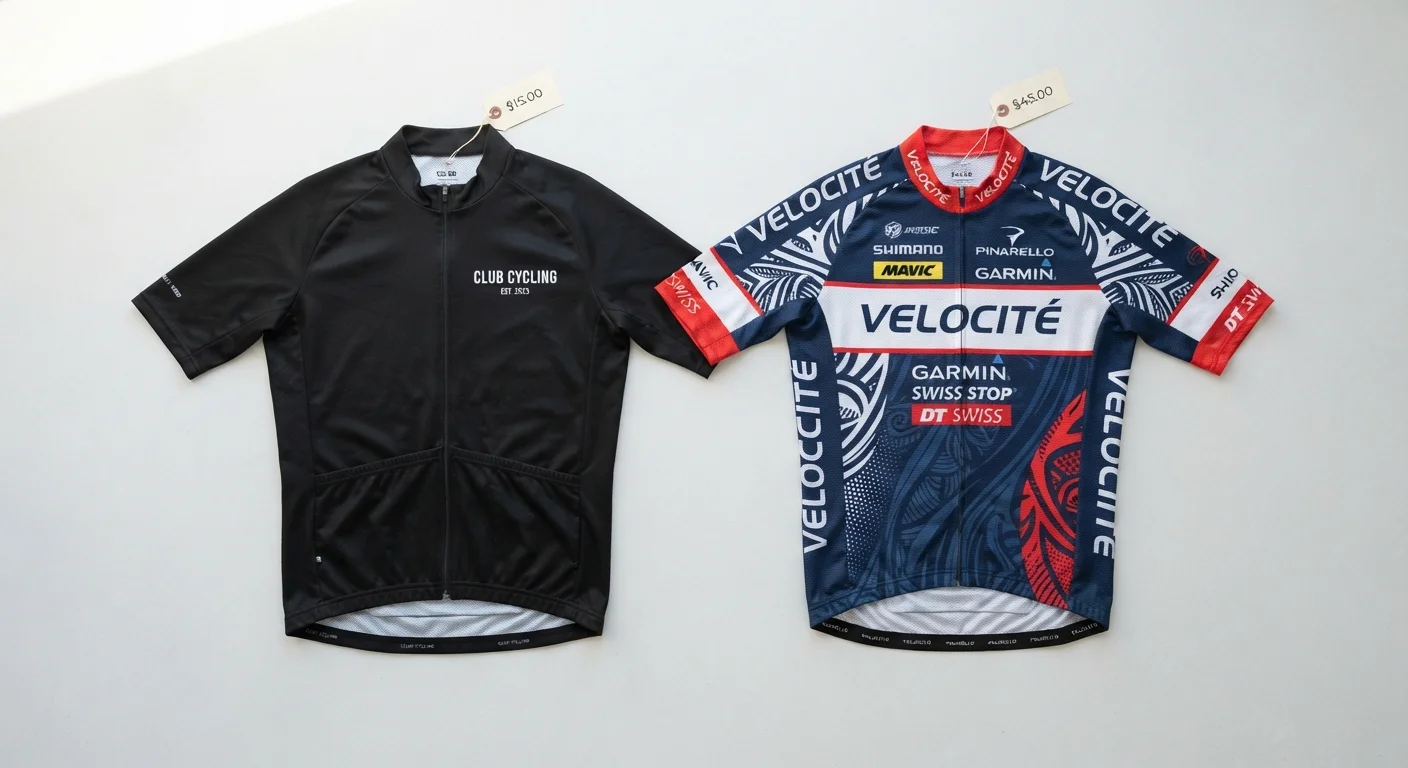
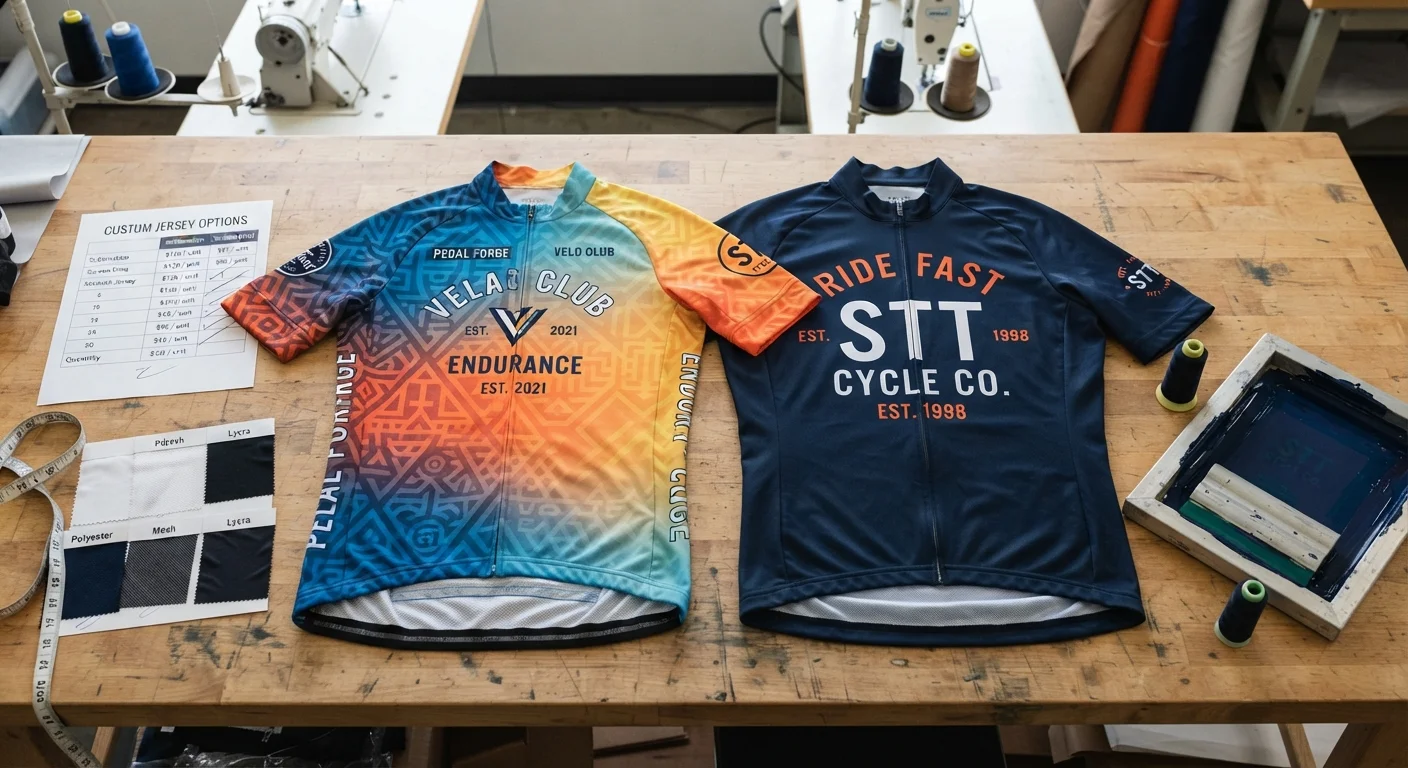
Here's the number that matters: at a 50-piece minimum order, club-grade custom team kits run $12–$18 per unit. Pro-style match kits built to UCI cycling apparel specs hit $40–$48+ per piece. That's what upgraded fabric, sublimation printing, and sponsor-ready logo placement actually cost.
The tiers at 50-99 pieces break down like this:
Basic club kits : $12–$18/unit. Standard polyester, screen-printed logos, single-layer construction.
Mid-tier club packages : $20–$40/unit. Better breathability, multi-panel cuts, some sublimation.
Pro-style match kits : $40–$48+/unit. Peloton-grade fabric, full sublimation, upgraded chamois, premium socks.
One club cycling kit supplier shows this ladder clearly: Gold at $30/kit, Premium at $40/kit, Pro Match Kit at $48/set. The jump from Gold to Pro is fabric weight, stitch count, and sponsor-panel real estate.
Cycling-specific gear costs more than generic team apparel. At 31–50 pieces, technical kits run $40–$90 per item depending on garment type. Bib shorts with race-grade chamois cost more to produce than a basic jersey.
Budget $15/piece for training kits. Go $35–$45/piece if your roster races and needs aero-fit performance. Don't split the difference between those tiers — you'll waste money either way.
Fit Architecture: Aero Compression vs Relaxed Comfort
Two jerseys. Same fabric family. Completely different feel on the bike.
The difference between race fit and club fit comes down to one number: compression level. A true aero fit cycling jersey built to performance specs runs 20–23 mmHg of moderate compression — that's the 2XU Aero standard. The fabric breakdown matters here: 72% nylon / 28% Lycra up front, 65% nylon / 35% Lycra across the back panels. That blend keeps muscles locked down, kills fabric flutter at speed, and holds its shape through a four-hour effort.
Club kits skip that engineering. They land on the relaxed end of the standard fit ladder — Compression → Fitted → Semi-Fitted → Relaxed — with a looser, draped cut. Think Ministry of Supply's AeroZero approach: "easier fit," longer body length, room to move when the ride turns social instead of competitive.
What this means for your order sheet:
Compression fabric builds fit riders who need locked-in support and minimal bounce — training blocks, road races, time trials.
Relaxed comfort builds work for casual rosters, commuter mixes, or riders who want airflow over hold.
Sizing backs this up. Fitted aero jerseys map chest, waist, hip, arm length, and inseam from XXS to 3XL — precision cuts, not guesswork. Relaxed-fit kits skip that granularity. One size range covers more bodies, giving up contour for comfort.
Match the fit to how your roster actually rides, not how the marketing copy reads.
Fabric Specifications: GSM, Stretch, and Breathability Compared
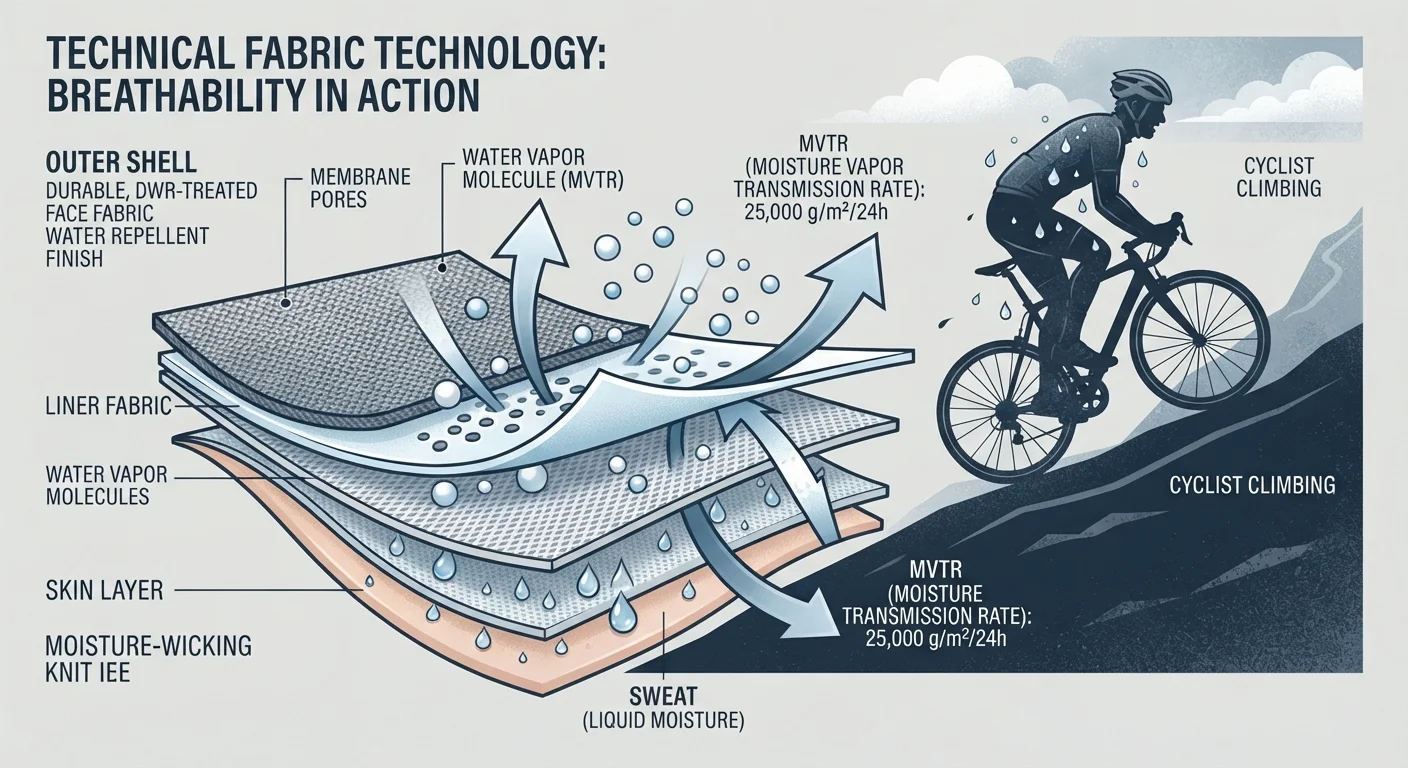
Grams per square meter tells you more about a cycling kit than any marketing sheet. GSM is the number that separates a jersey that feels like tissue paper from one that holds structure at 40 km/h. Lower GSM means lighter, airier fabric. Higher GSM means denser, heavier material with more compression and less airflow. That trade-off drives every peloton-grade fabric decision your custom cycling kit supplier makes.
The GSM ladder for cycling apparel
100–160 GSM : Ultra-light, high airflow, minimal structure. Rarely used beyond base layers.
160–190 GSM : General casual-wear range. Too soft for race-day compression.
180–250 GSM : Activewear zone, where most club kits land. Enough stretch and moisture-wicking for training rides.
200–300 GSM : Fitted-garment territory. Better elasticity retention for bib shorts and compression sleeves.
240 GSM+ : Abrasion resistance and warmth over cooling, so think cold-weather kits.
A 250 GSM compression fabric delivers noticeably less breathability than a 170 GSM running fabric. That 80-gram gap is the difference between a jersey that traps heat on a July century ride and one that lets it escape.
But GSM alone doesn't determine stretch. Elastane percentage and knit construction do that job. A polyester-spandex blend at 160–260 GSM offers 4-way stretch and solid moisture-wicking, the sweet spot for training tees and club shorts. Nylon-spandex jumps to 180–280 GSM for higher recovery, the standard in leggings and race-fit bib shorts.
Buyer rule of thumb : screen fabric weight first with GSM, then confirm elastane content and mesh-panel placement before signing off on 50 units.
Construction & Stitching: Flatlock vs Overlock, Panel Count
Seams don't show up in a product photo, but they show up on skin after mile 60. Cheap kits fail riders here; pro-grade kits earn their price tag.
Flatlock joins panels edge-to-edge for a low-profile seam. Sourcing specs call it ISO 4915 stitch type 607, built on a 4-needle, 6-thread machine that spreads stress across a wider seam bed. Stitch density runs 9–11 SPI. It's slower to produce and needs specialized equipment — that drives the cost up.
Overlock wraps raw edges together, leaving a small ridge. It's specified as ISO 4915 stitch type 514, using 2- to 5-thread safety-stitch configurations at 10–12 stitches per 2.5 cm. It's the fastest, cheapest option in the factory.
Where each seam type goes:
Flatlock : crotch gussets, inner thigh, underarm, side-body, shoulder straps — anywhere skin rubs fabric for hours.
Overlock : linings, internal seams, budget club lines where cost matters more than chafe prevention.
More panels mean more seams. Pro kits keep flatlock in contact zones only, controlling labor cost while protecting comfort where it counts.
Bib Shorts: Compression, Chamois Grade, and Ride Duration
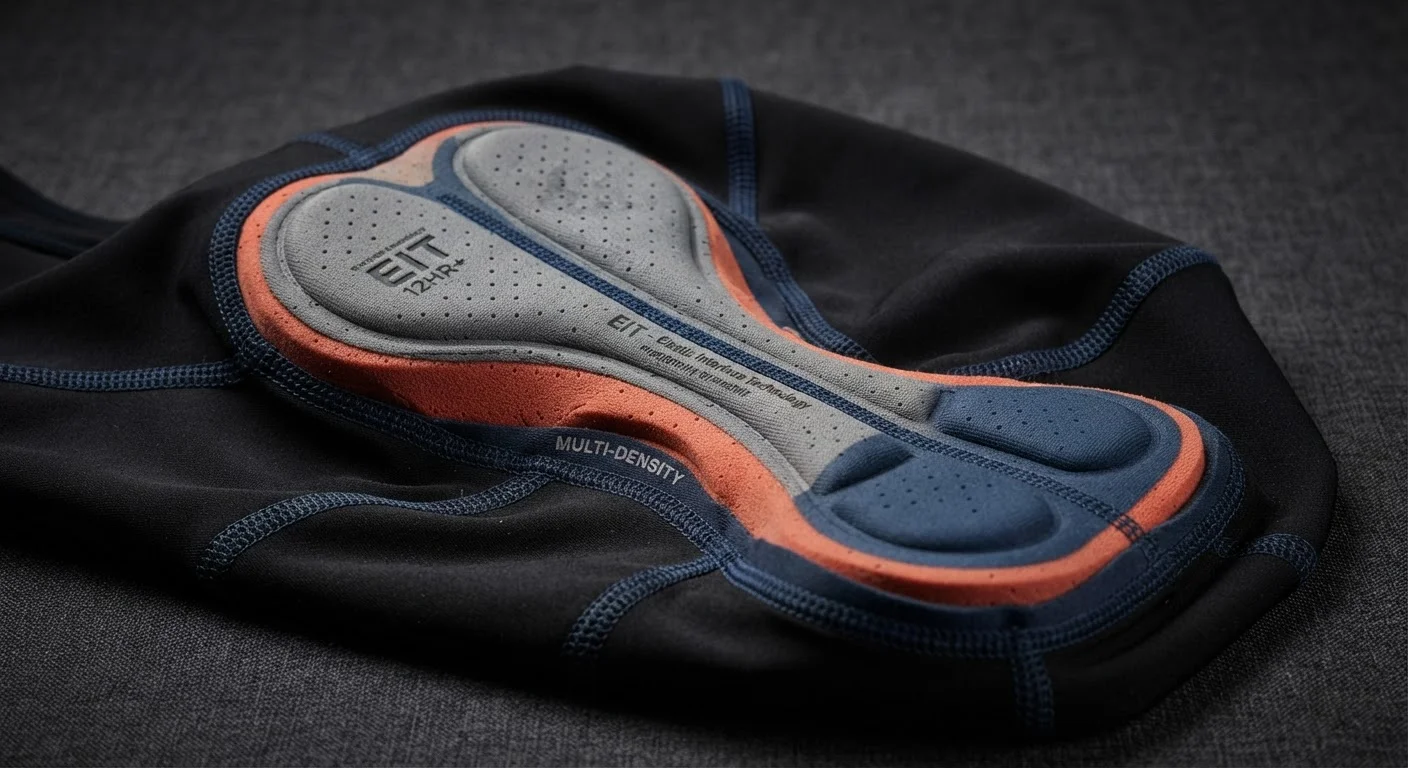
Chamois density is a math problem. Match the pad to ride duration and you solve the comfort equation before your riders ever clip in.
The benchmark breakdown:
Under 60 minutes : Thin, single-density foam. Commuters and short spin sessions don't need bulk.
60–90 minutes : The industry's go-to fit-test window. If a bib feels good here, the density is right for that rider.
1–3 hours : Multi-density chamois wins. This is the "balanced comfort" zone most club training rides fall into.
2–5 hours : High-density pads take over. 120 kg/m³+ is the cited threshold for long-distance stability.
4–6 hours : Endurance bibs need more density than race bibs. The goal shifts from minimal weight to fatigue management.
Thickness scales with duration too. Short-ride pads run 3–5mm. Endurance and touring builds jump to 10–15mm multi-layer construction, built to resist bottoming out after hour three.
Why density beats gel past the 3-hour mark
Multi-density foam beats gel on longer rides. It holds shape better, breathes better, and spreads pressure across a wider contact zone. Gel compresses flat. Multi-density foam doesn't. That's the whole argument for upgrading bib shorts chamois quality on any kit built for centuries or sportives.
Order-sheet logic:
Commuter/short training rosters : low-density, thin pad, breathability first.
Club training mix (1–5 hours) : medium-density chamois. The default for most club-grade kits.
Race/endurance rosters : high-density, multi-layer pads matched to pro-grade compression fabric cycling builds.
If discomfort shows up after 2–3 hours during testing, step up a density tier before the full order ships.
Aerodynamic Performance: Measurable Watt Savings on the Road
Wind tunnel data from other high-speed industries backs up what cycling brands claim: small drag reductions compound into real savings. Heavy-duty trucking studies found that aero add-ons like side skirts, roof fairings, and gap reducers cut fuel use anywhere from 1% to more than 10%, depending on which components stack together. Combine multiple drag-reducing features, and total savings can exceed 12%. An aero fit cycling jersey works the same way. Smoothing out every seam, panel, and gap reduces resistance, and those reductions add up over distance.
In cycling terms, a single feature rarely wins the race alone. Cab roof fairings alone save 6–8% in trucking tests; adjustable deflectors save 2–4%. In a jersey, that’s the difference between a smooth shoulder seam and a raised collar catching wind at 40 km/h. Trailer side skirts deliver 4–7% savings by controlling airflow along the body. The cycling equivalent is a fitted torso panel that eliminates flapping fabric at speed.
What this means for kit selection:
Gap reduction matters. Closing airflow gaps — collar-to-neck, sleeve-to-arm — mirrors the 2% fuel savings trucking fleets get from shrinking tractor-trailer gaps.
Stacked features compound. No single panel wins the aero fit cycling jersey argument. It’s compression fabric plus flatlock seams plus tailored cut, together.
Weight penalty stays low. Added aero structure barely affects performance, similar to how aero devices add minimal drag despite extra material.
The Budget-Usage Matrix: Fast Decision Guide for Club Managers
Every kit order comes down to four questions: budget, ride frequency, race calendar, and member impact. Score each against those inputs, and you'll see which tier fits.
Run your roster through this matrix:
Roster Profile | Weekly Volume | Race Calendar | Recommended Tier | Per-Unit Budget |
|---|---|---|---|---|
Commuter/social club | Under 3 hrs/week | None | Basic club kit | $12–$18 |
Training-focused club | 3–8 hrs/week | Occasional sportive | Mid-tier club kit | $20–$40 |
Competitive racing team | 8+ hrs/week | Road races, TTs | Pro-style match kit | $40–$48+ |
Approval logic to avoid budget waste:
Approve now : chamois quality upgrades if riders log 3+ hour rides weekly. Comfort failures hurt retention.
Review first : aero fit cycling jersey upgrades for a mixed roster. Confirm at least 60% of riders race before paying UCI-spec pricing.
Defer : sublimation printing upgrades if screen-printed logos still meet sponsor requirements this season.
Build in a 5–10% contingency above your quoted per-unit price. Fabric surcharges and rush production fees hit custom cycling team kit pricing more often than cycling kit wholesalers admit upfront.
cyclingapparelfactory.com
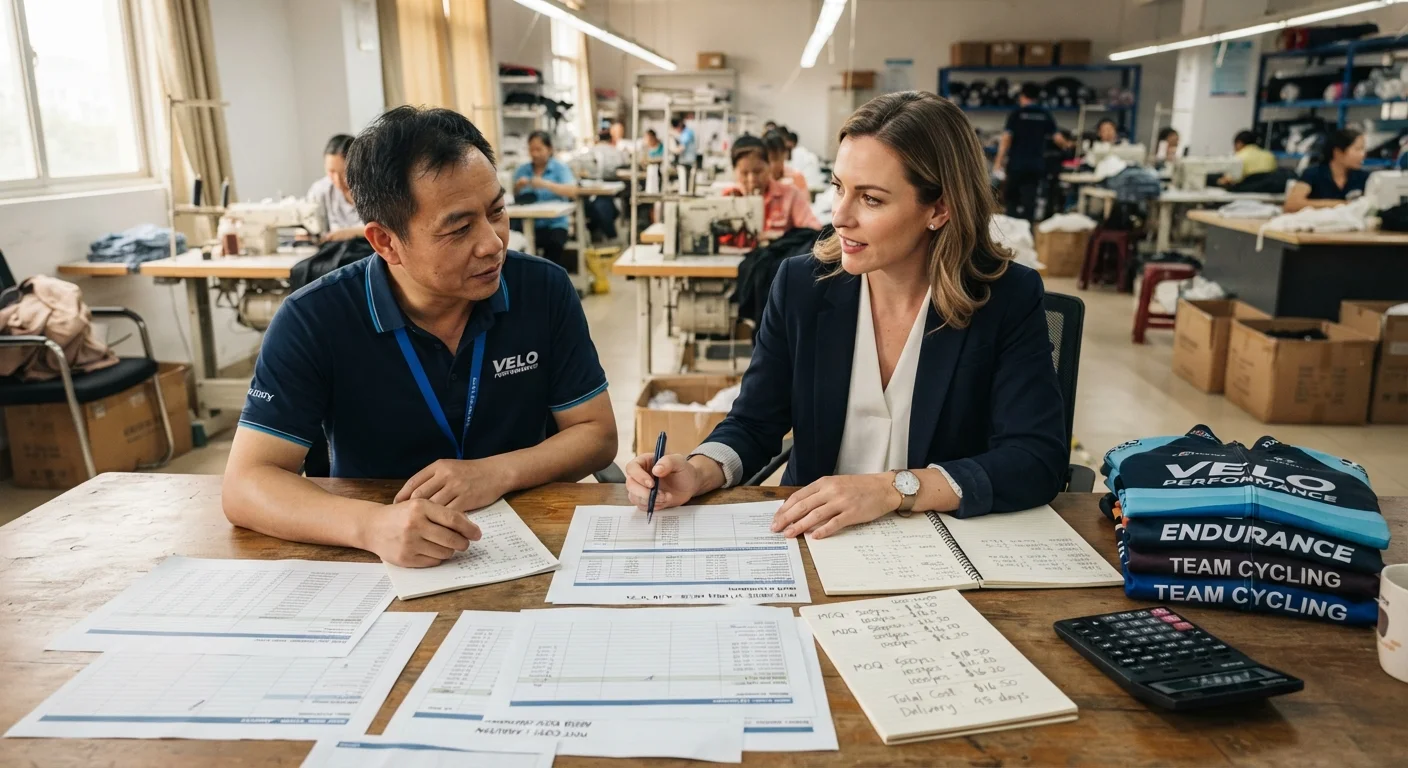
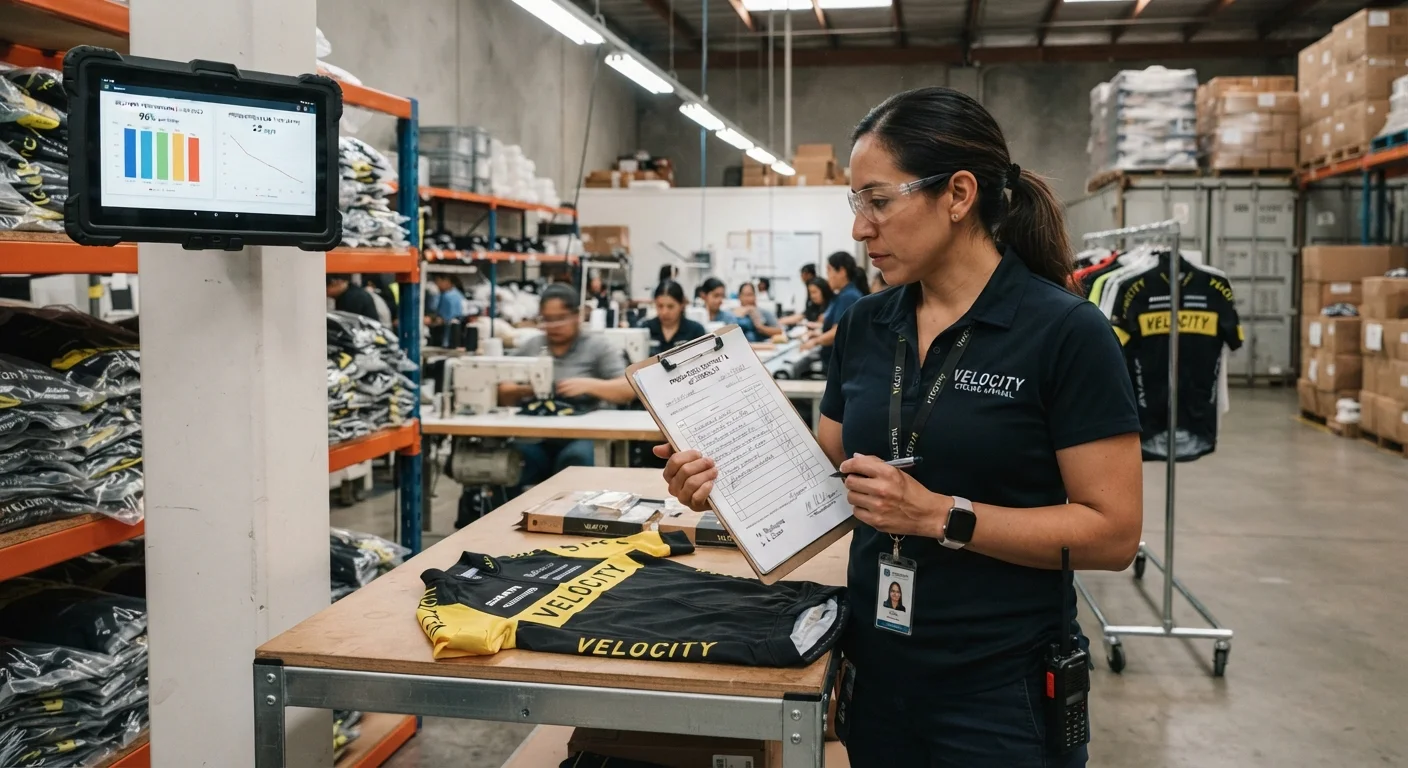
Factory choice decides whether your custom team kit pricing holds up over three seasons. Run Cycling Apparel claims 30+ years of OEM/ODM experience of cycling apparel, a 50,000 sqm plant, and 24-hour response times — full in-house production, zero subcontracting. MONTON Sports runs a comparable Guangzhou facility. Both fit club-grade sublimation printing cycling kit orders at scale.
For UCI regulation cycling apparel and peloton grade fabric, Shin Textile Solutions offers GORE-TEX and WRAP certification from its Vietnam factory. CUORE of Switzerland operates across six countries with 30+ years in premium builds. For budget-conscious buyers, NeoPro Cycling sources from the same factories as major brands at roughly one-third the price. Aero Tech Designs and Voler cover USA-made alternatives for buyers who prioritize domestic sourcing over unit cost.
Conclusion
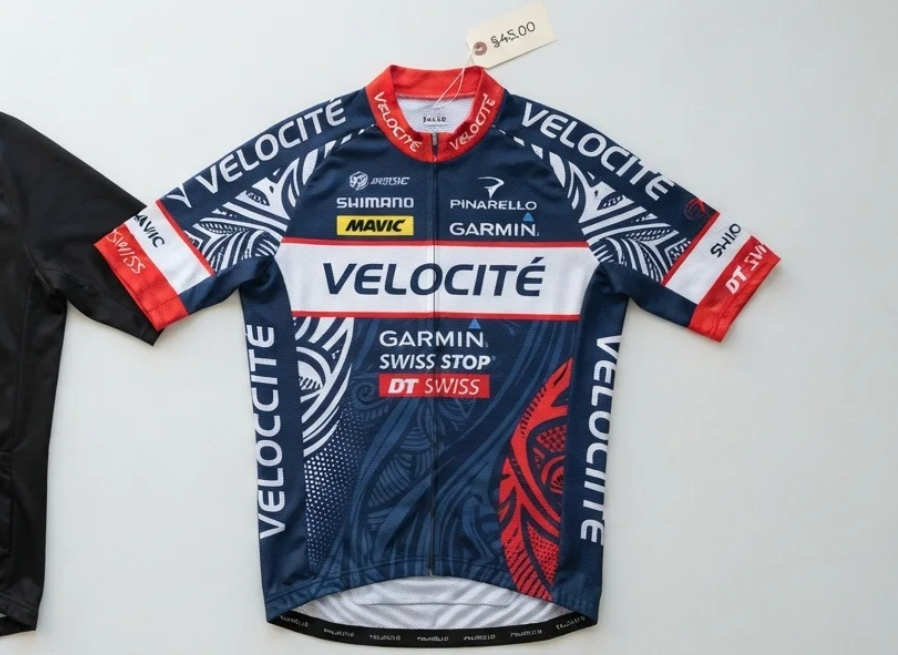
The price gap between pro cycling kit and club cycling kit is measurable in GSM, watts, and stitch counts. If your team races crits or does 60+ mile Saturday rides, the aero fit cycling jersey and compression bib chamois deliver real performance that justifies the premium. But if 70% of your riders are weekend commuters, spending the same budget on 50 club-grade kits will build more team morale than 30 pro-grade ones.
Run your roster through the budget-usage matrix before you request quotes. That five-minute step can prevent a five-figure mistake. Then bring your numbers to a Cycling Kit manufacturer who will walk through the tradeoffs with you, not just push the top tier.
When you're ready to spec your order, contact cyclingapparelfactory.com for a fabric-and-fit consultation that accounts for your club's actual mileage and budget.