Complete Cycling Kit Development: One Programme, and Every Piece Has to Meet the Next One
A kit is rarely spoiled by one bad garment. It comes apart where two pieces meet — the warmer that will not sit under the cuff, the vest a shade off the jersey, the sixth piece that queues behind the other five.
A Kit Rarely Fails at a Garment. It Fails Between Two of Them.
Four ways a kit programme comes apart. Not one of them is a badly made piece, and each one is a handover — so each gets the step we take to close it, not a sentence saying we care.
Between pieces
Inside a piece
Sizing that stops at the garment edge.One size table is applied across every piece in the programme, and the two pieces that touch are fitted as a pair on the same sample body — not signed off separately and compared afterwards.
Colour that drifts between fabrics.One colour reference file is issued before bulk dyeing and goes to every fabric in the programme at once, so the mesh and the shell are matched to the same source rather than to each other.
Six pieces, six queues.One development window covers the whole kit. The piece that signs off last sets the date, which is why we tell you early which one that is likely to be.
Four people to ask.One person carries the programme from brief to carton, and answers for the joins as well as for the pieces.
The One That Costs the Most to Fix Late
Sizing. A colour question is answered on a swatch; a join is answered on a body, and the body is only available at sampling. That is why the pairs are fitted together rather than separately.
The piece list
Six Kinds of Piece, and the Three Things Every One of Them Inherits
The component list is short on purpose. What matters is not how many pieces you can add — it is that every piece added inherits the same three documents, and is counted on its own.
Each card turns over to the three documents that piece inherits.
Core
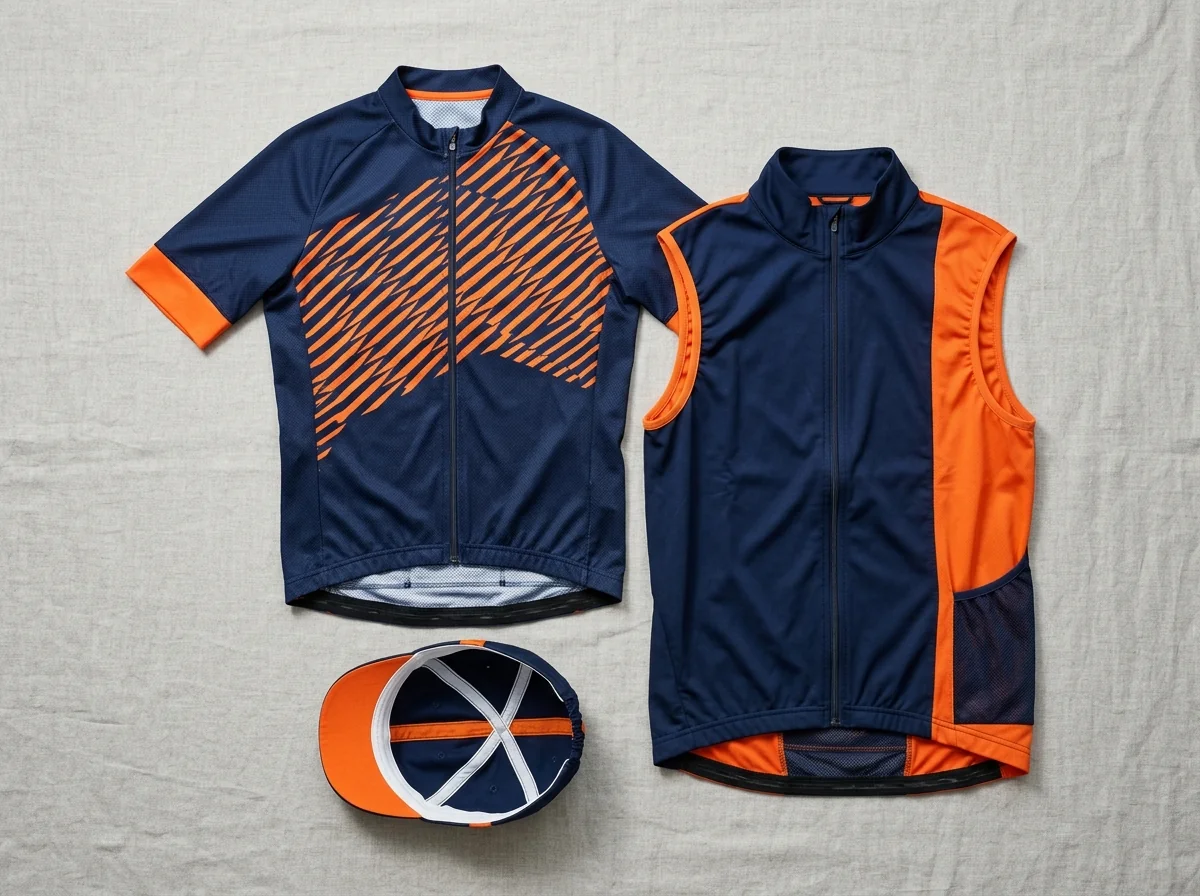
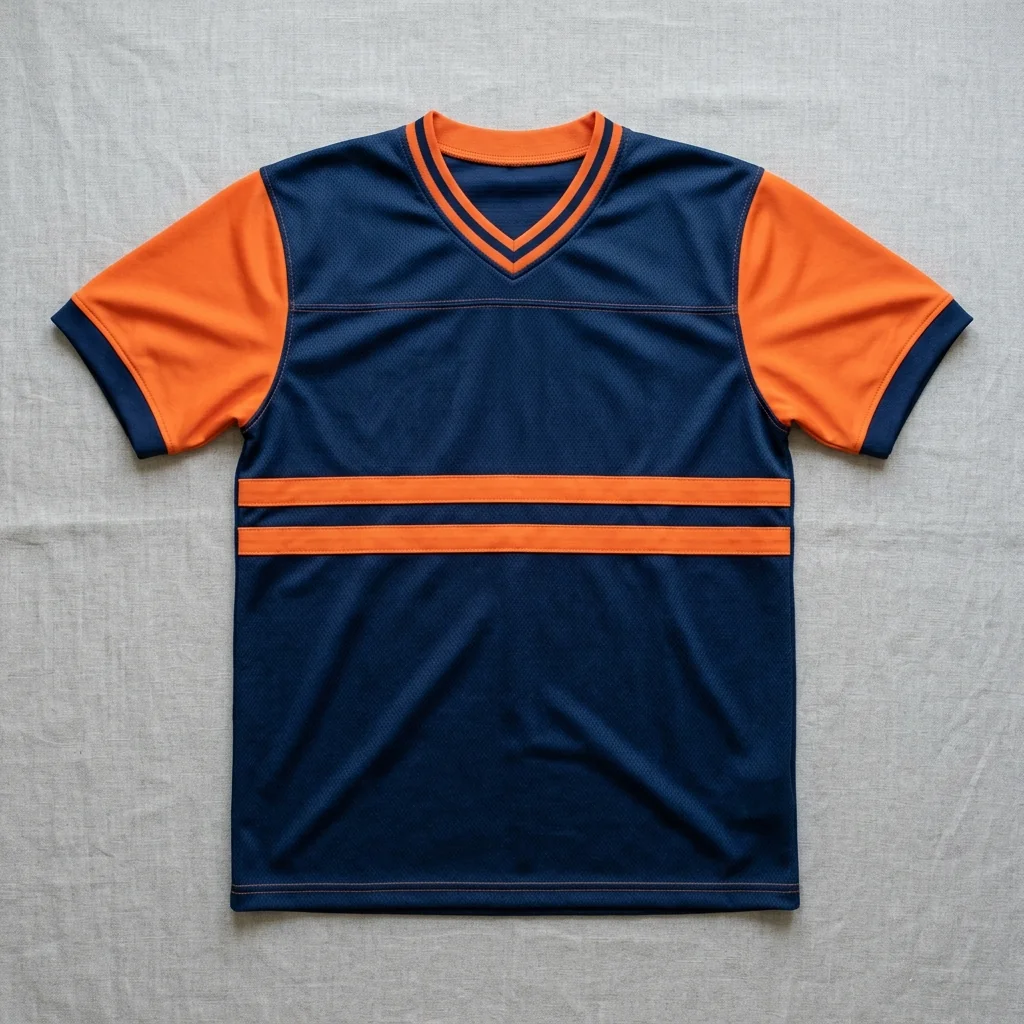
JerseyShort sleeve is where most programmes start; the long-sleeve version is a separate count, not a variant of the same one.
InheritsThe reference surface
The colour reference file — and the jersey's body fabric is the surface the other pieces get read against.
The size table — its cuff is what decides where an arm warmer lands.
The decoration file — it usually carries the most artwork, so it usually sets the date.
Core
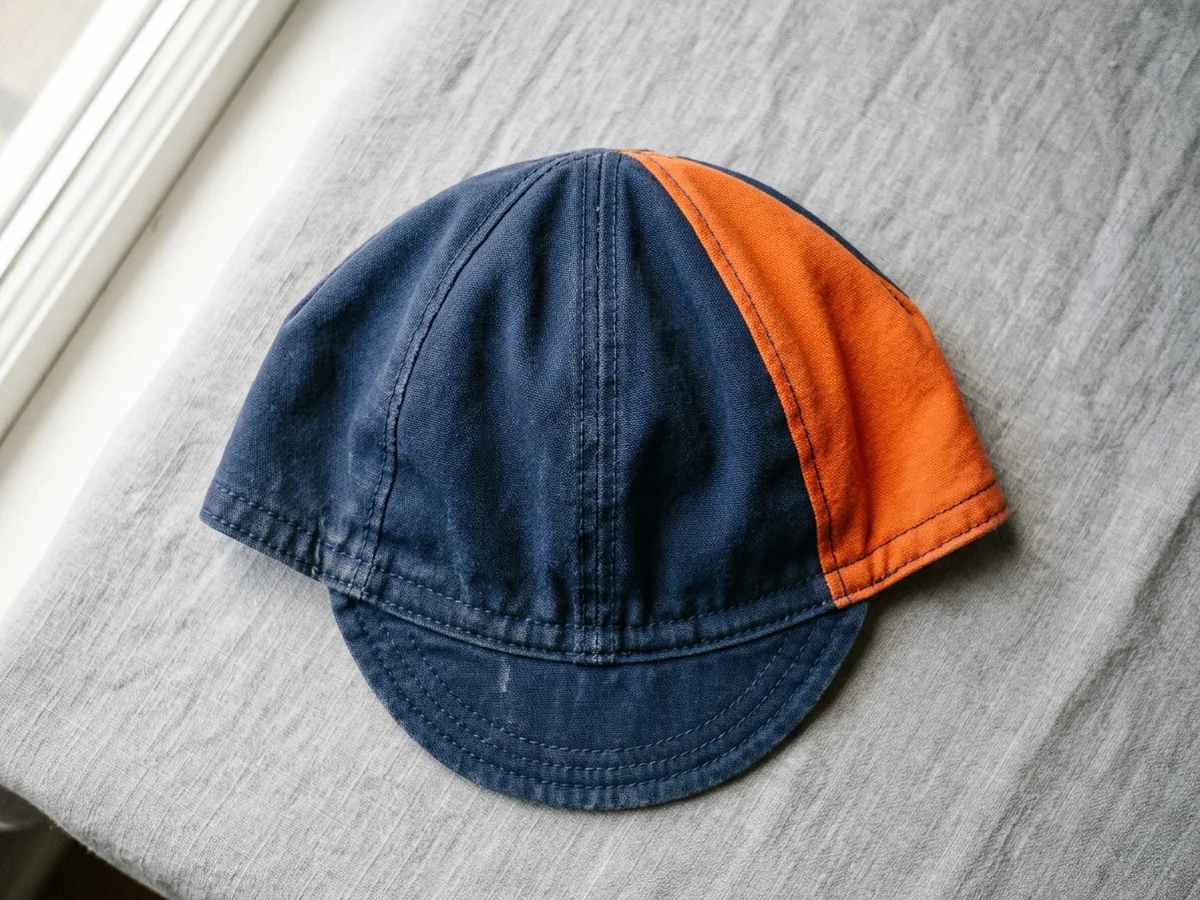
CapThe smallest piece in the programme and the one most often added last, which is exactly why it is counted from the start.
InheritsThe fastest tell
The colour reference file — a small panel shows a mismatch sooner than a large one does.
The size table — head sizes step on their own scale but are held in the same table.
The decoration file — one mark, placed once, with nowhere to hide a placement error.
Core
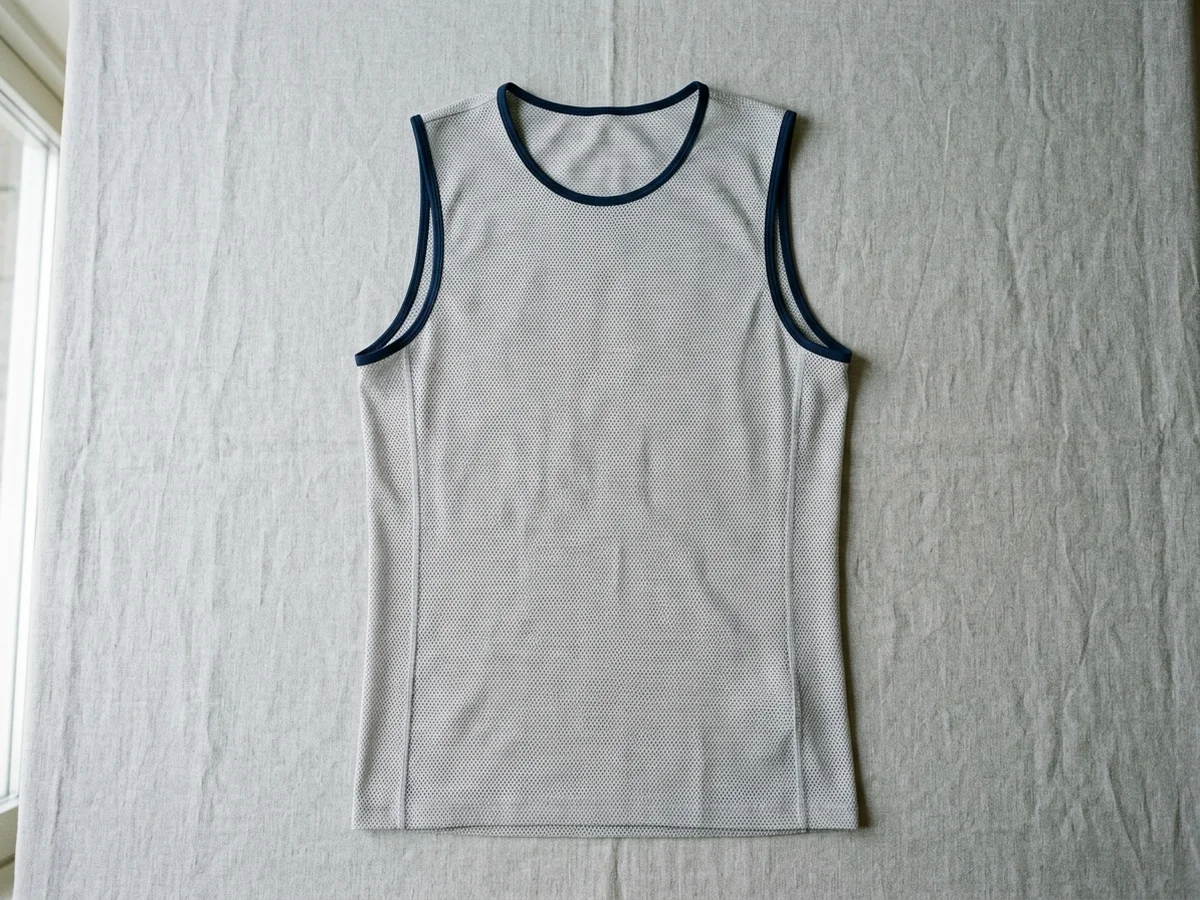
Base layerCut closest to the body, so it is the piece a size chart gets tested on before the rest of the kit is committed.
InheritsThe first test
The colour reference file — judged on its open mesh reading, not on the body fabric's.
The size table — the closest fit in the kit, so it is where your chart gets proved first.
The decoration file — usually no outward mark at all, which is still a decision recorded in it.
Extended
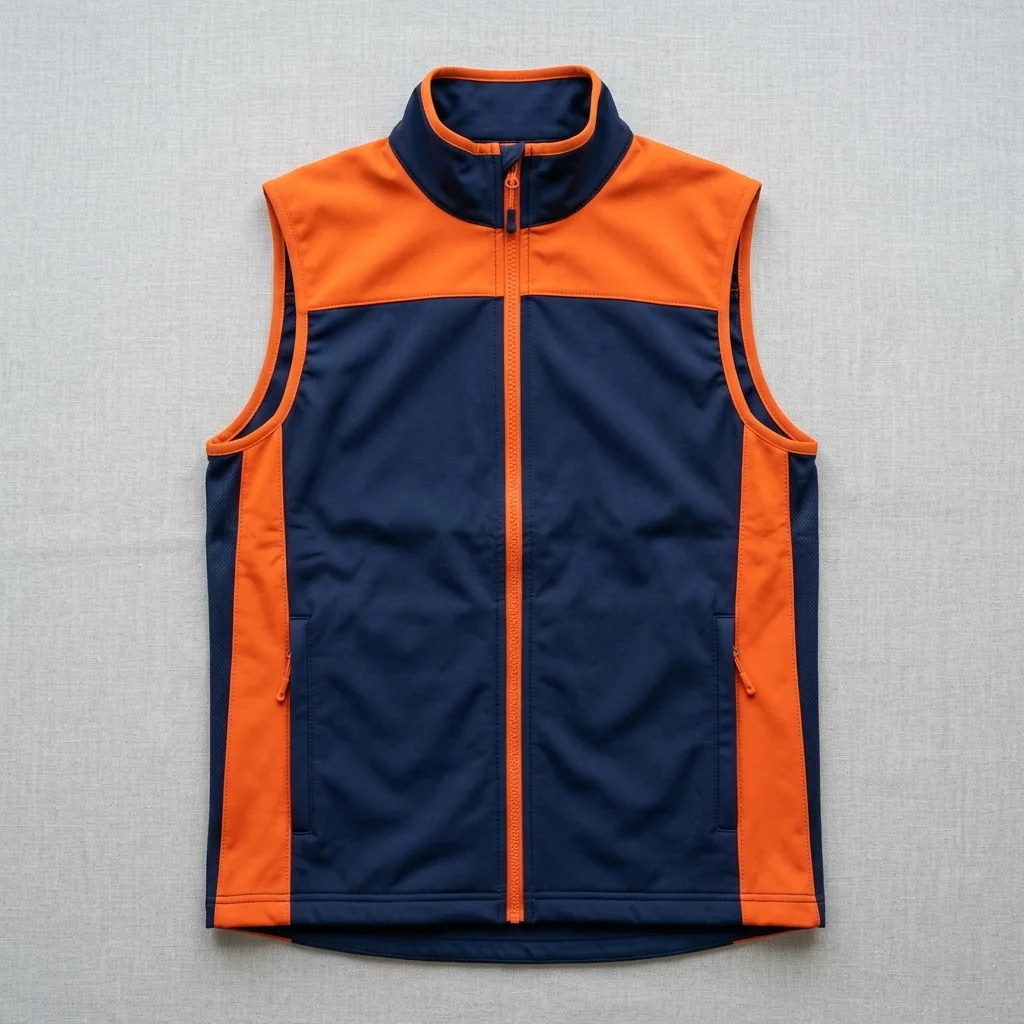
Vest (gilet)The piece most often bought a season after the jersey, and the one whose colour gets compared to it most closely.
InheritsThe closest comparison
The colour reference file — matched to the card, never to the jersey sitting next to it.
The size table — drafted to go over the jersey, from the same table the jersey came from.
The decoration file — the same marks as the jersey, with fewer panels to place them on.
Extended
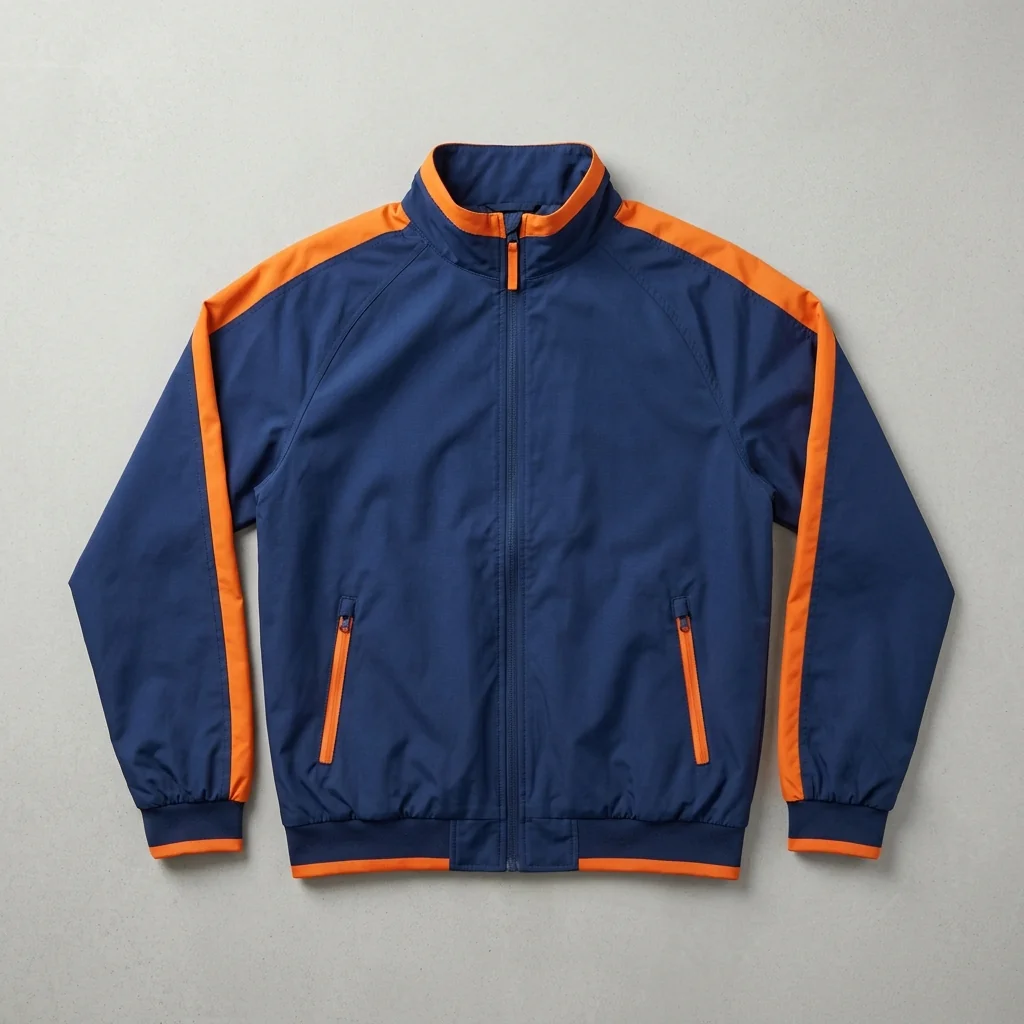
JacketThe heaviest surface in the kit, and the one a fine artwork detail is most likely to be lost on.
InheritsThe deepest surface
The colour reference file — a laminated shell sits deepest against the card, and reads coolest.
The size table — drafted to go over the vest as well as the jersey, from that one table.
The decoration file — the surface that decides whether a hairline detail survives at all.
Extended
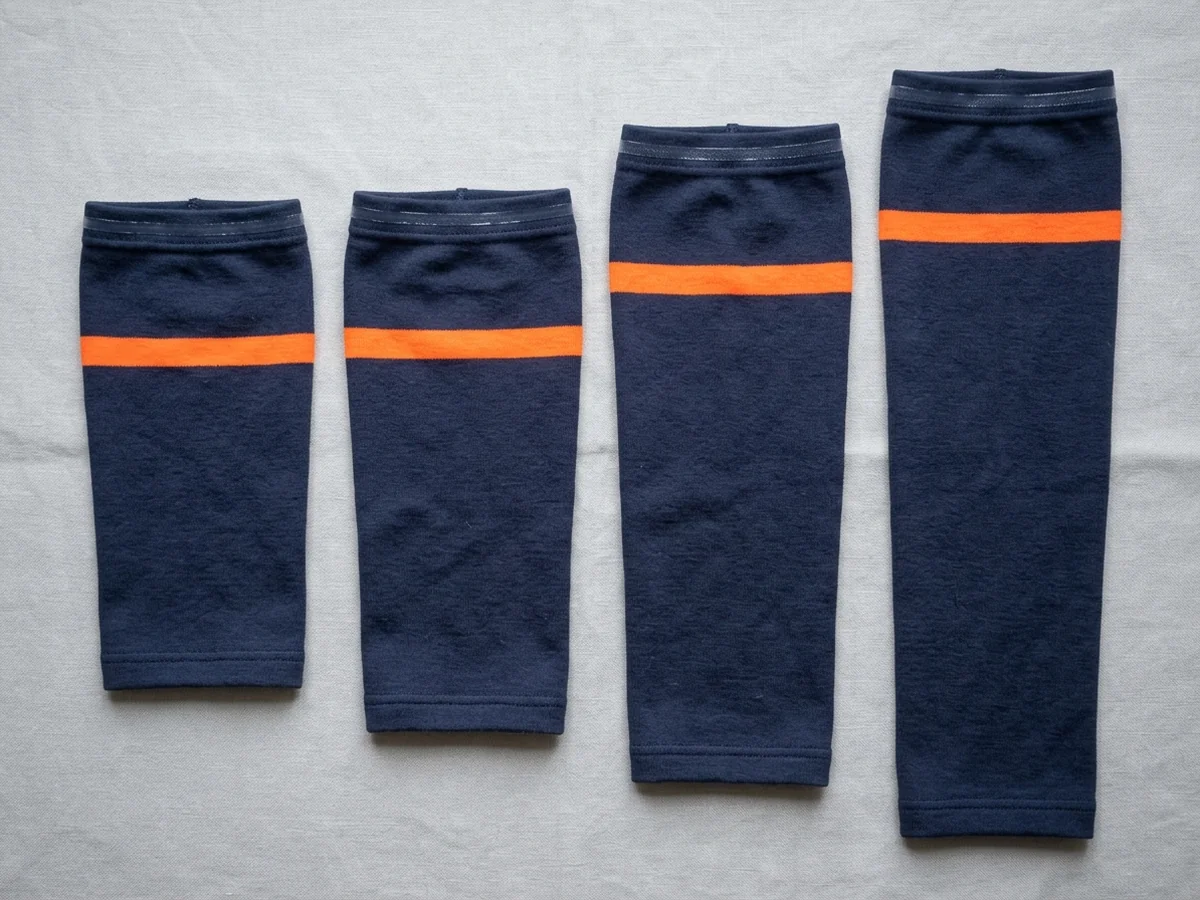
Arm & leg warmersCounted in pairs and rarely at the same number as the jersey — twenty pairs against sixty jerseys is an ordinary shape here.
InheritsThe piece that has to meet another
The colour reference file — matched to the jersey's reference, not to the jersey itself.
The size table — where the overlap with a cuff and a hem is actually decided.
The decoration file — often blank, and a blank entry still has to be signed.
Each Piece Is Counted on Its Own
Sixty jerseys and twenty pairs of warmers is a normal shape here. The counts are per piece, not per rider, so a kit is not forced into one number for everything in it. The ordering logic sits on MOQ & Wholesale Pricing.
Where the Pattern Work Itself Lives
This list is the pieces and what they inherit. How a pattern is actually developed is a subject of its own, and it is set out on Riding Fit & Pattern Development rather than summarised here.
What Is Not a Piece on This List
Gloves, footwear of any kind including overshoes, helmets, and hardware. None of those are garments and none are made here.
Bib-type finished goods are not a product line either — bib and pad work is development and sampling against a pad specification you supply, and the detail sits on Cycling Chamois Development.
One reference, three surfaces
One Colour Reference File, Read on Three Different Fabric Surfaces
This is the part of a kit programme that most often disappoints, and the part where an honest answer is more useful than a confident one. Here is what the file does, and where it stops.
What is issued
When
What it governs
One colour reference file
Before bulk dyeing, once for the whole programme
Every fabric in the kit at the same time — not fabric by fabric as each one comes up
A physical reference card
With the first sample set
What the eye judges against, because a screen is not a colour reference
A signed reference sample
At sample confirmation
What the mid-run check compares to, and the thing that ships back to you
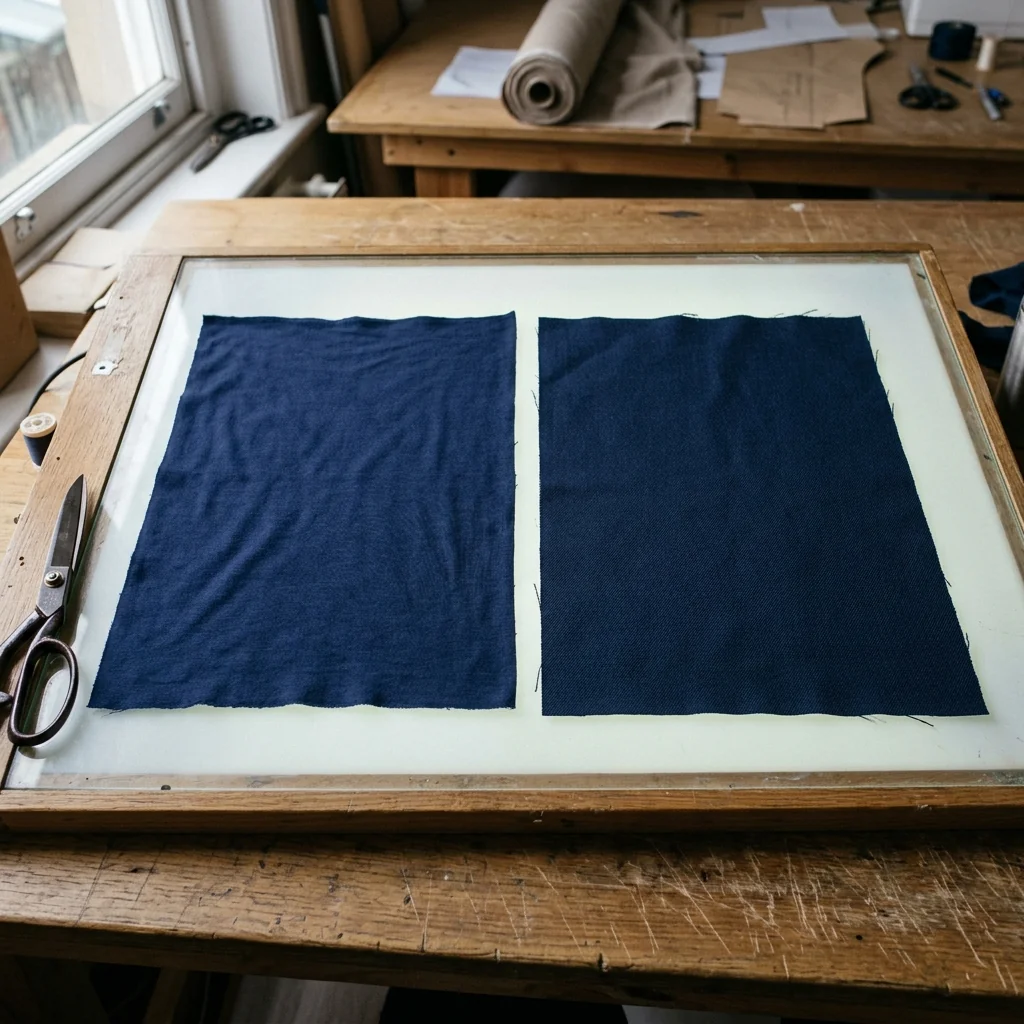
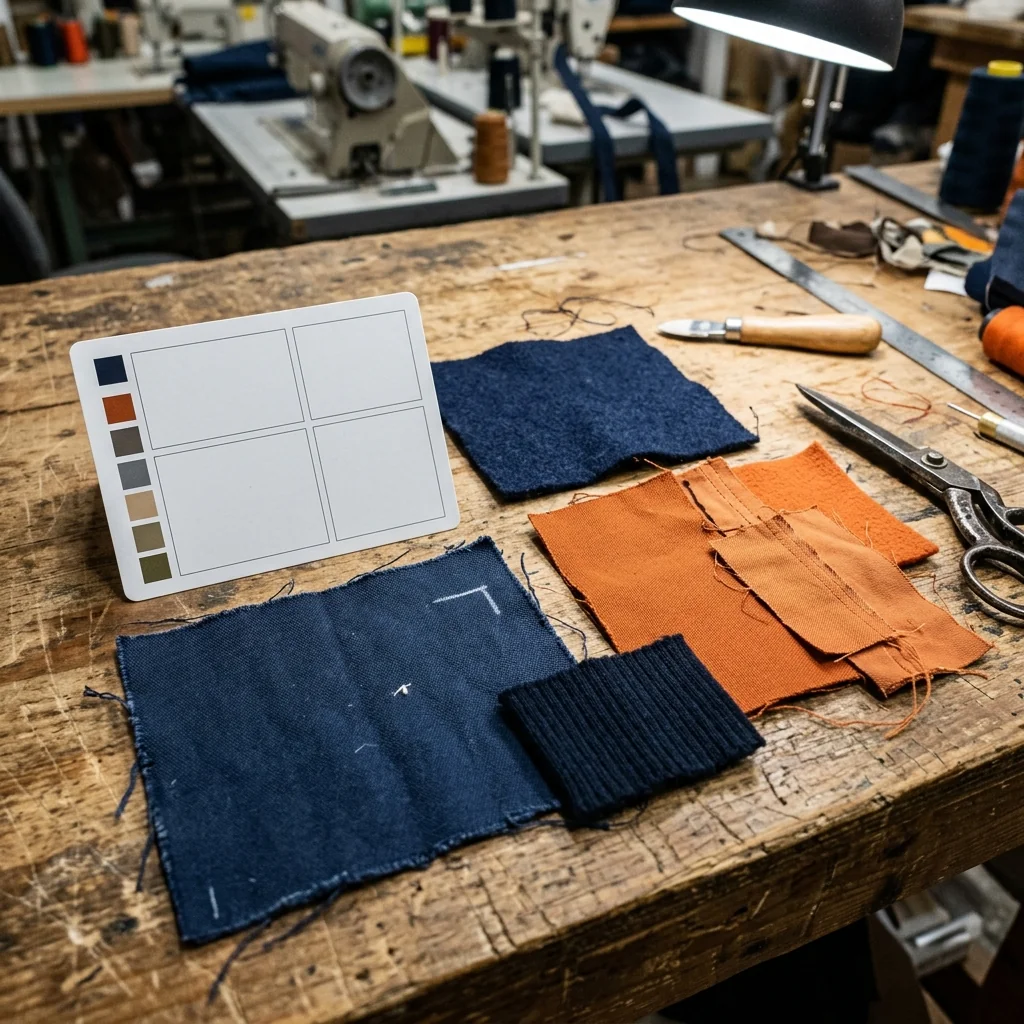
Two fabrics from one programme, side by side under one light — the only way the difference can be judged rather than argued about.
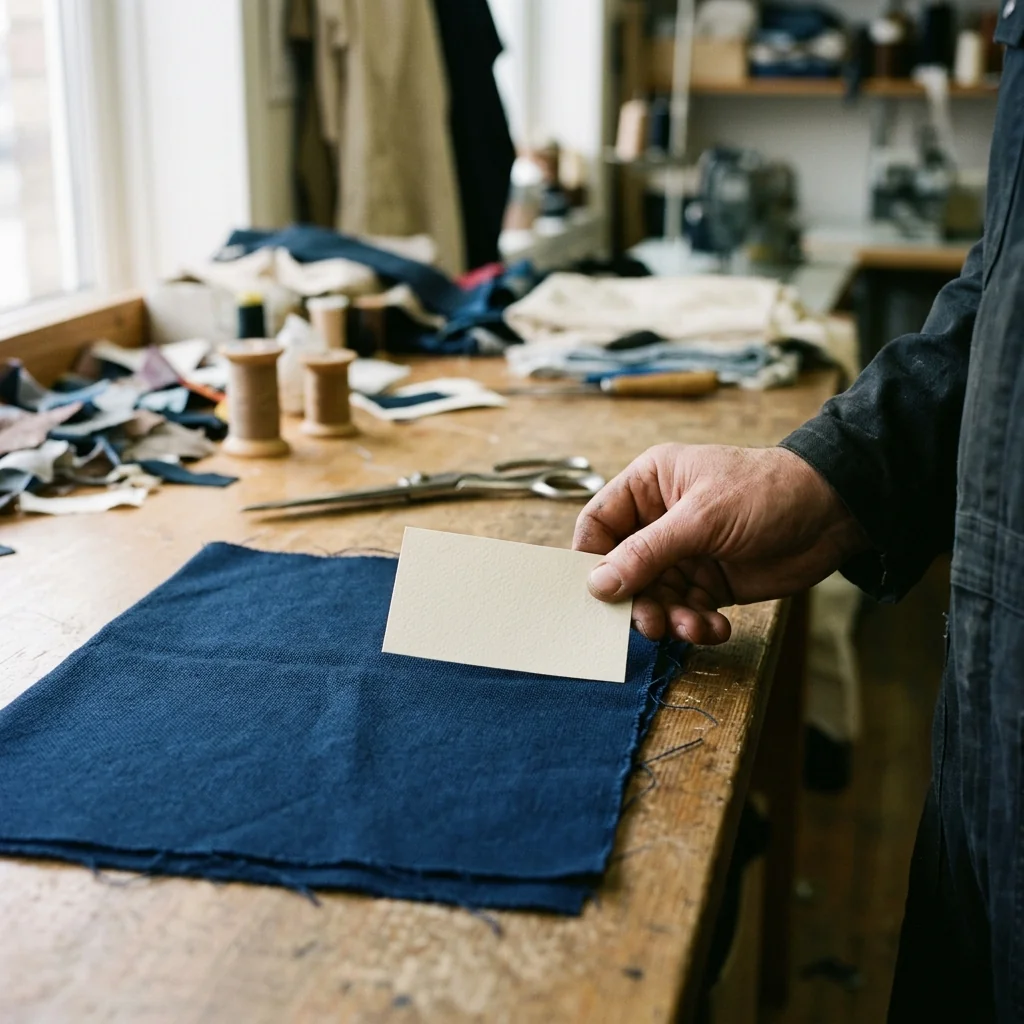
The card is the thing being matched to. It is held against the cloth in daylight, not compared on a screen.
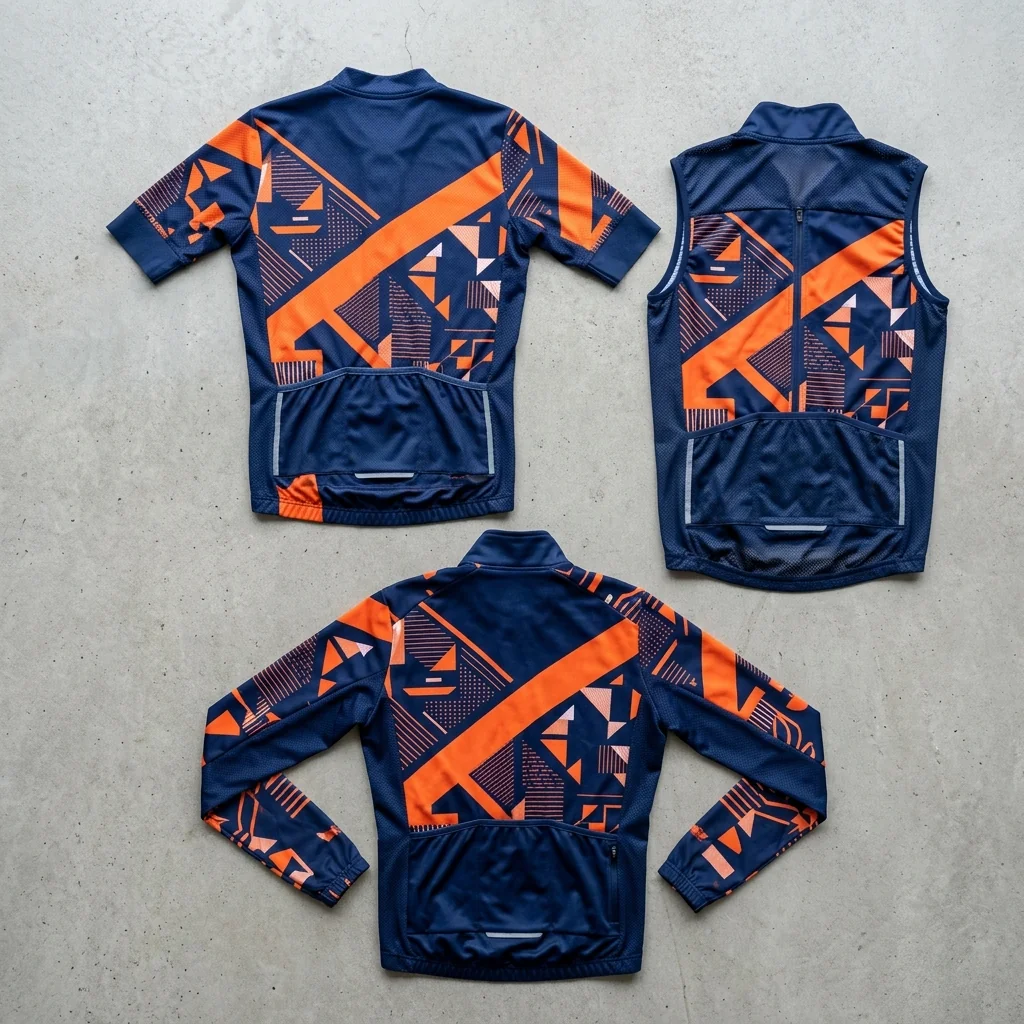
Three pieces off one reference. They are matched, and the residual difference is the one their surfaces make.
Why the Same Value Reads Differently
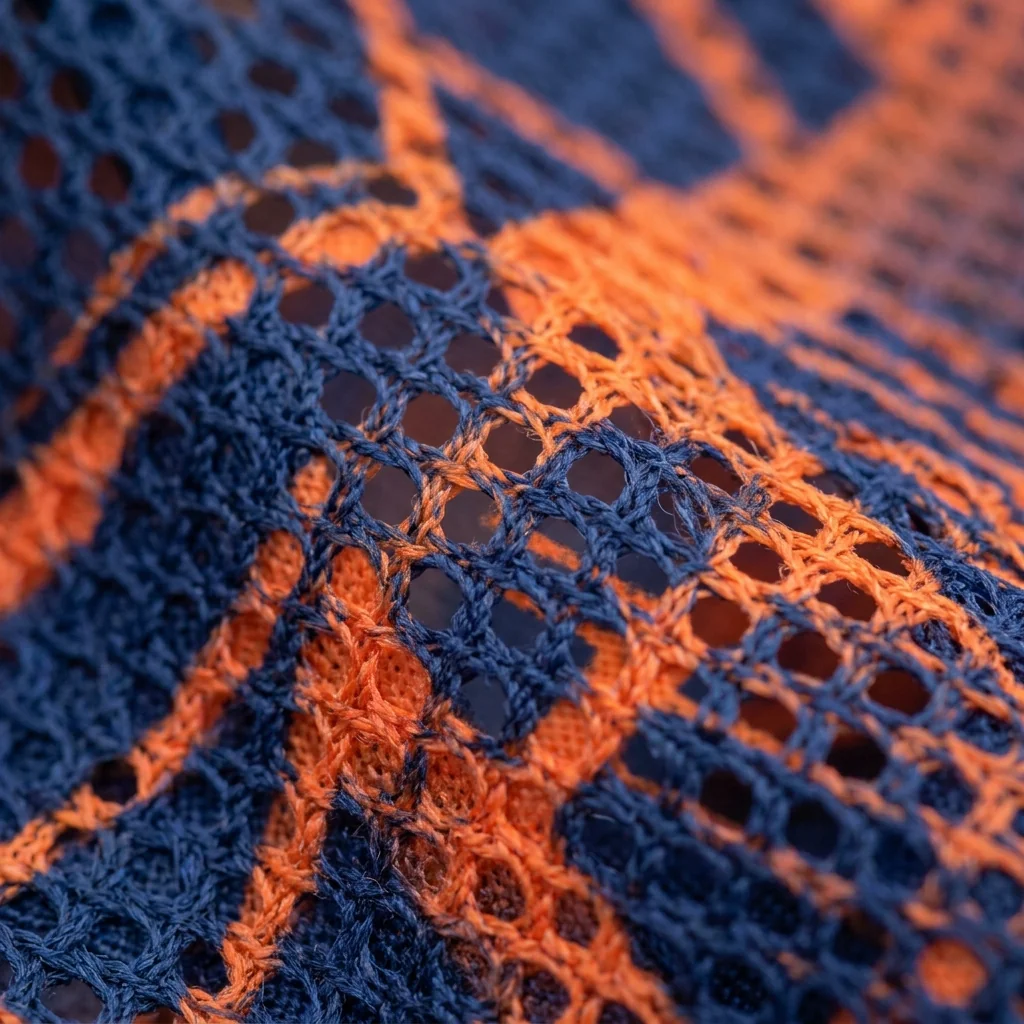
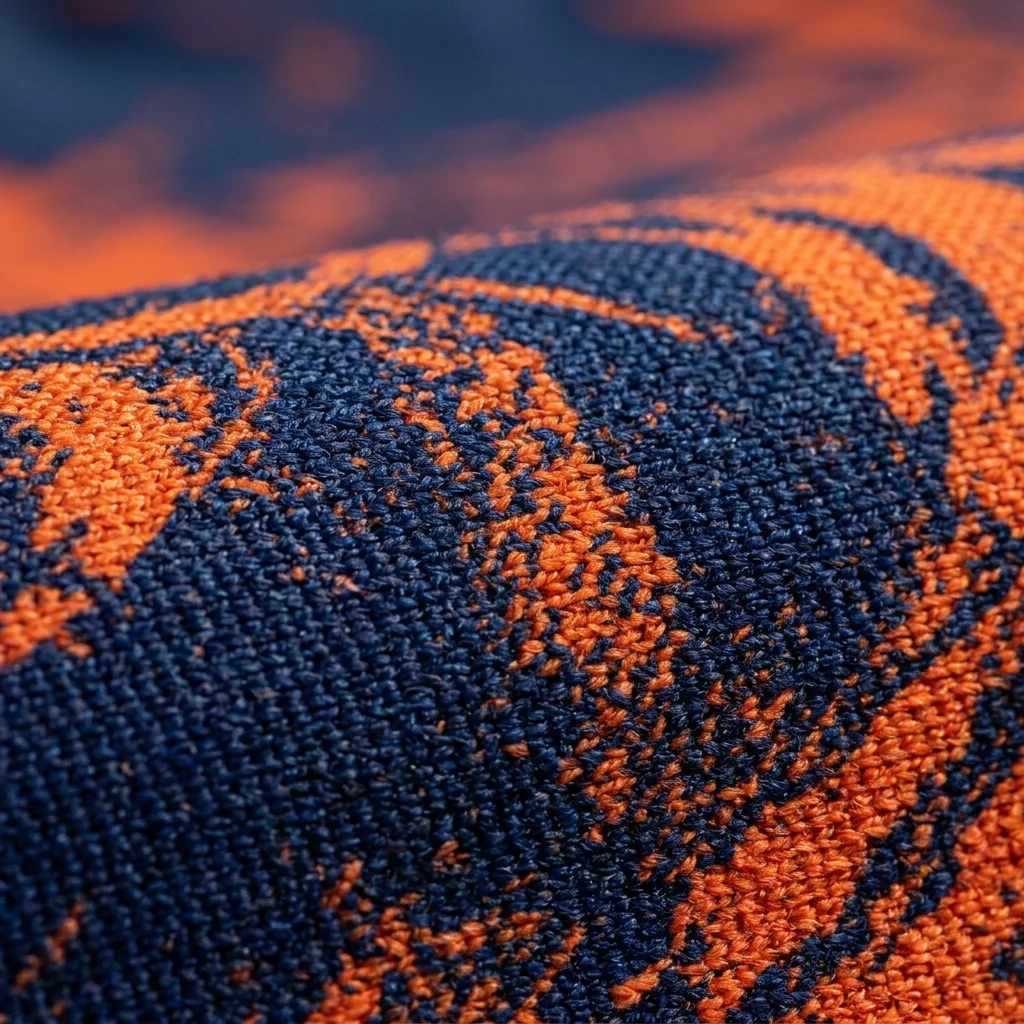
An open mesh scatters light and reads lighter. A dense mid-weight body fabric holds it. A laminated shell sits deeper and slightly cooler.
The value did not change; the surface did— and a buyer told this once at the start stops reading it as a defect at delivery.
Which surfaces are available, and how they are graded, is a subject of its own: it is set out on Custom Fabric Development.
How It Gets Judged
Side by side, on the actual fabrics, under one light, against the physical card.
Never on a screen, and never one fabric at a time on different days — two fabrics judged a week apart are being compared to a memory rather than to each other.
What We Will Not Say
That two different fabrics will come out identical. They come out matched to one reference, checked against it in daylight, and the difference that remains is the one the surface makes.
A supplier who promises identical has not dyed a mesh and a shell in the same programme.
Where the Arm Warmer Meets the Cuff, and Who Decides the Overlap
The most specific thing on this page. Two pieces have to share one measurement, and when a kit is bought piece by piece there is nobody whose job it is to set it.
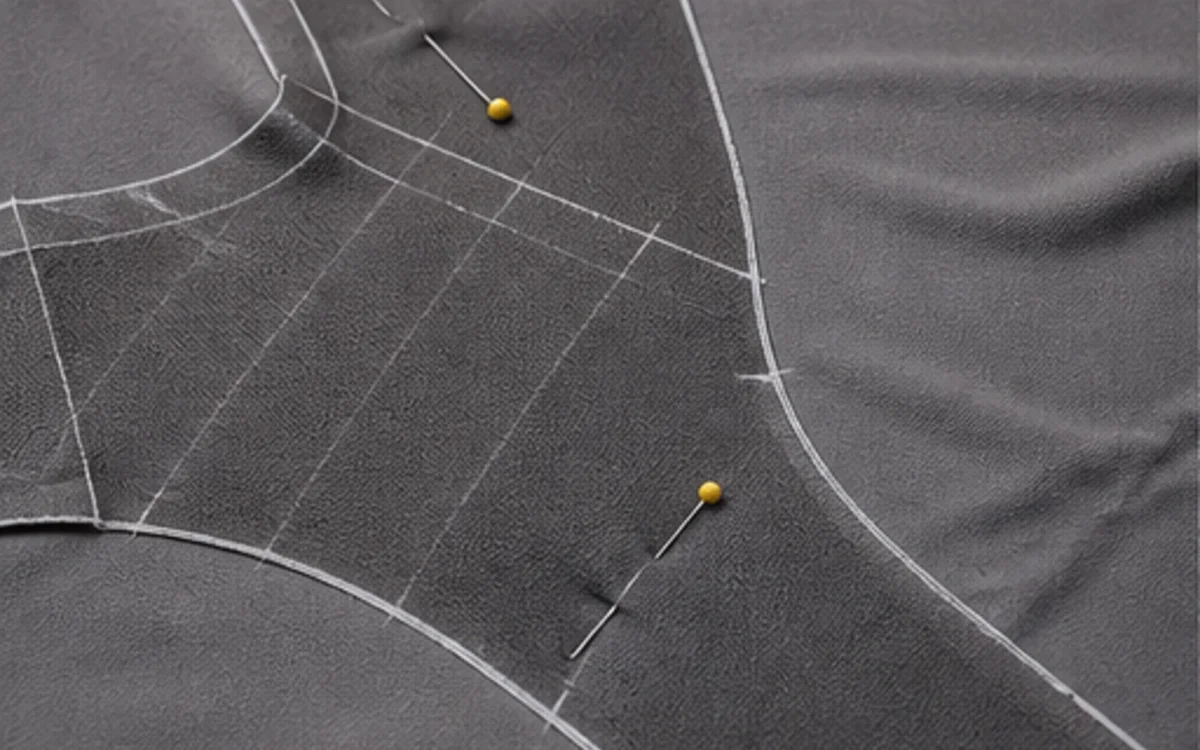
How far the two overlap.Set so the join stays closed when the arm is extended on the drops, not just when it is resting on the tops. A join measured on a still body is measured in the wrong position.
Where the gripper sits.Placed clear of the cuff seam. A gripper landing on a seam bunches, and bunching under a cuff is the complaint we get most about warmers.
Arm to cuff
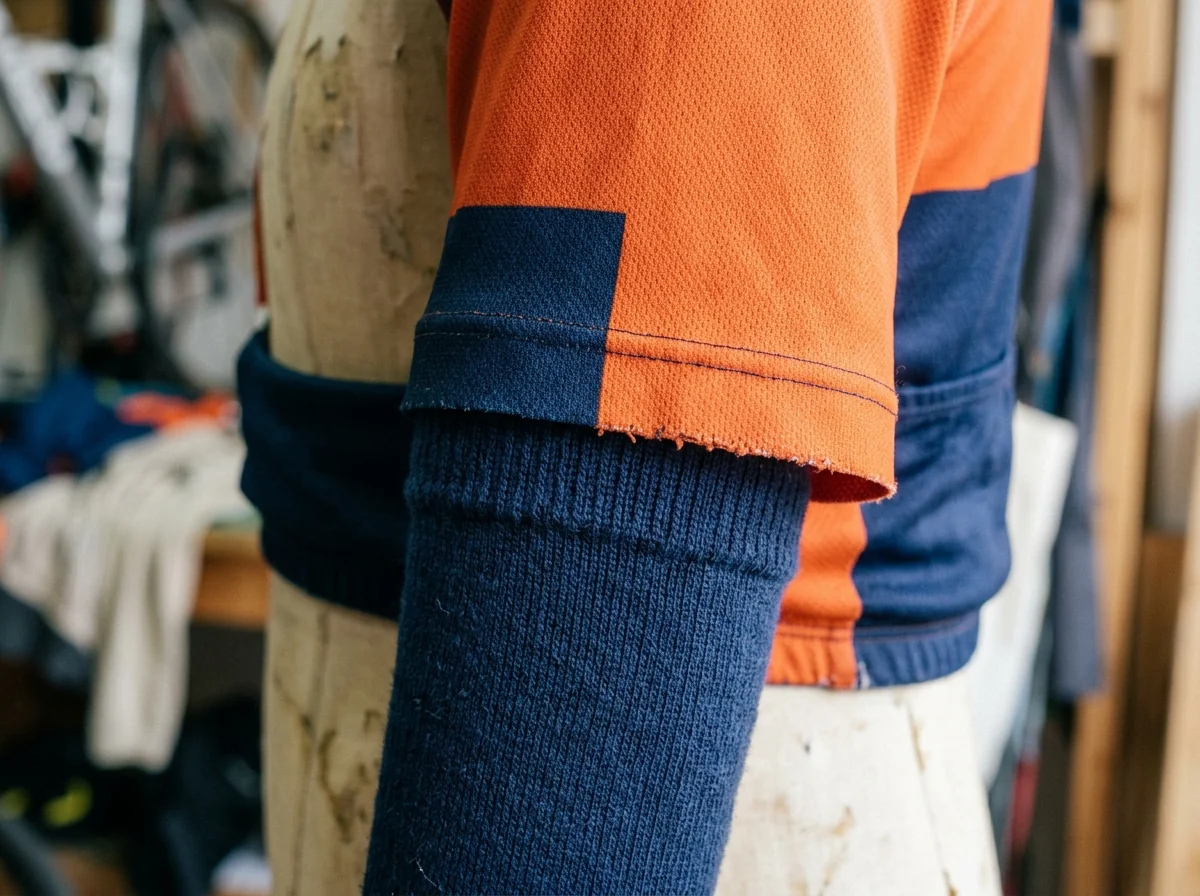
Closed at the cuff: the warmer runs up under the sleeve hem, so extending the arm pulls on cloth that is already held.
Overlap
Leg to hem
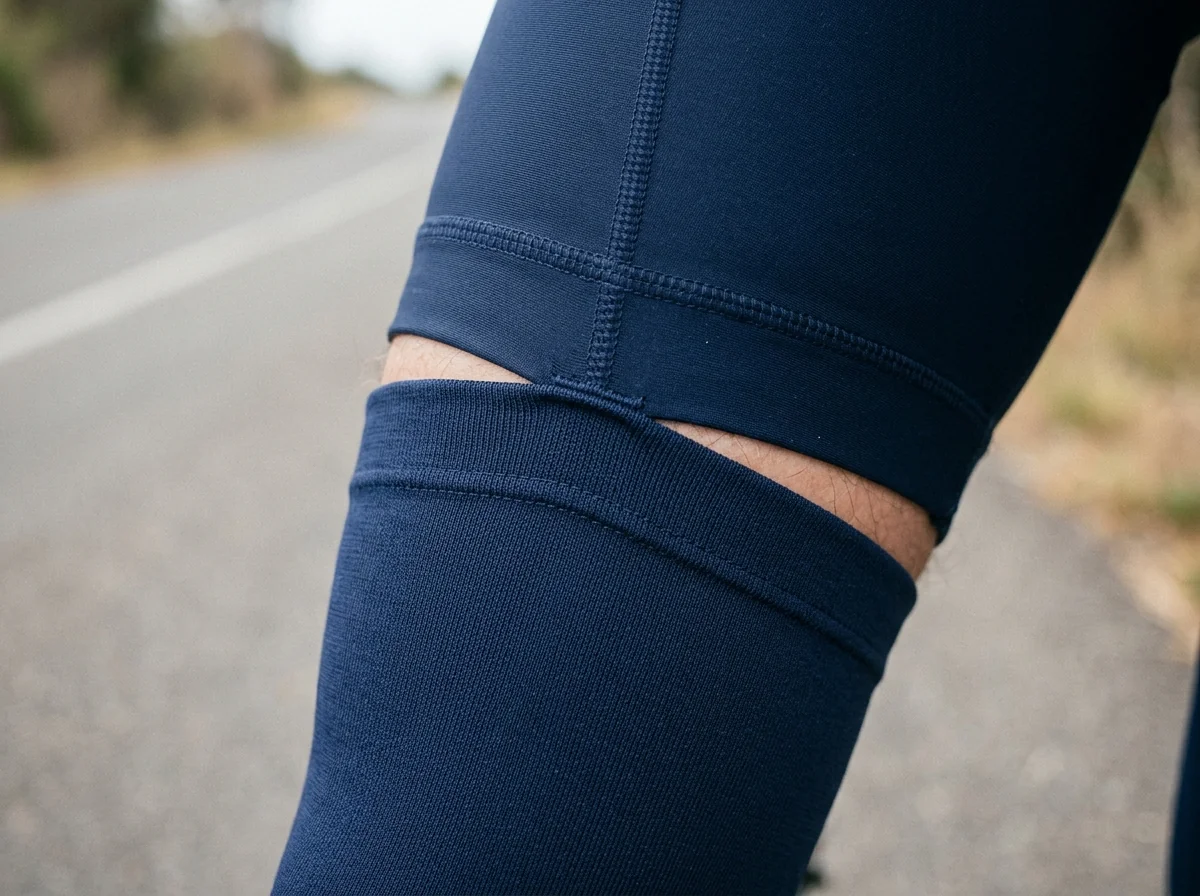
Open at the hem: the same two pieces cut to two tables, photographed in the riding position where the gap actually appears.
The join
The failure when nobody owns it
Where it is decided
Arm warmer to jersey cuff
A gap opens on extension, or the gripper bunches under the cuff seam
The size table, at pattern stage — not at packing
Leg warmer to short hem
The warmer slips down, or doubles up under the hem gripper
The same table, on the same sample body
Why Buying Piece by Piece Fails Here
Two suppliers means two size tables, and an overlap is a number that has to live in one of them. Neither party is wrong; the join simply has no owner. Inside one programme it has one.
The Colour Has to Clear the Join Too
A warmer and the cuff it meets are two different fabrics sitting a centimetre apart on the same arm, which is the least forgiving place on a kit to read a shade difference.
Both are matched to the programme's reference rather than to each other, and both are checked as a pair rather than one at a time.
What This Does Not Promise
A warmer bought here will not necessarily meet a jersey made somewhere else. We can only own the join inside the programme we cut both pieces for — and we would rather say that now than at fitting.
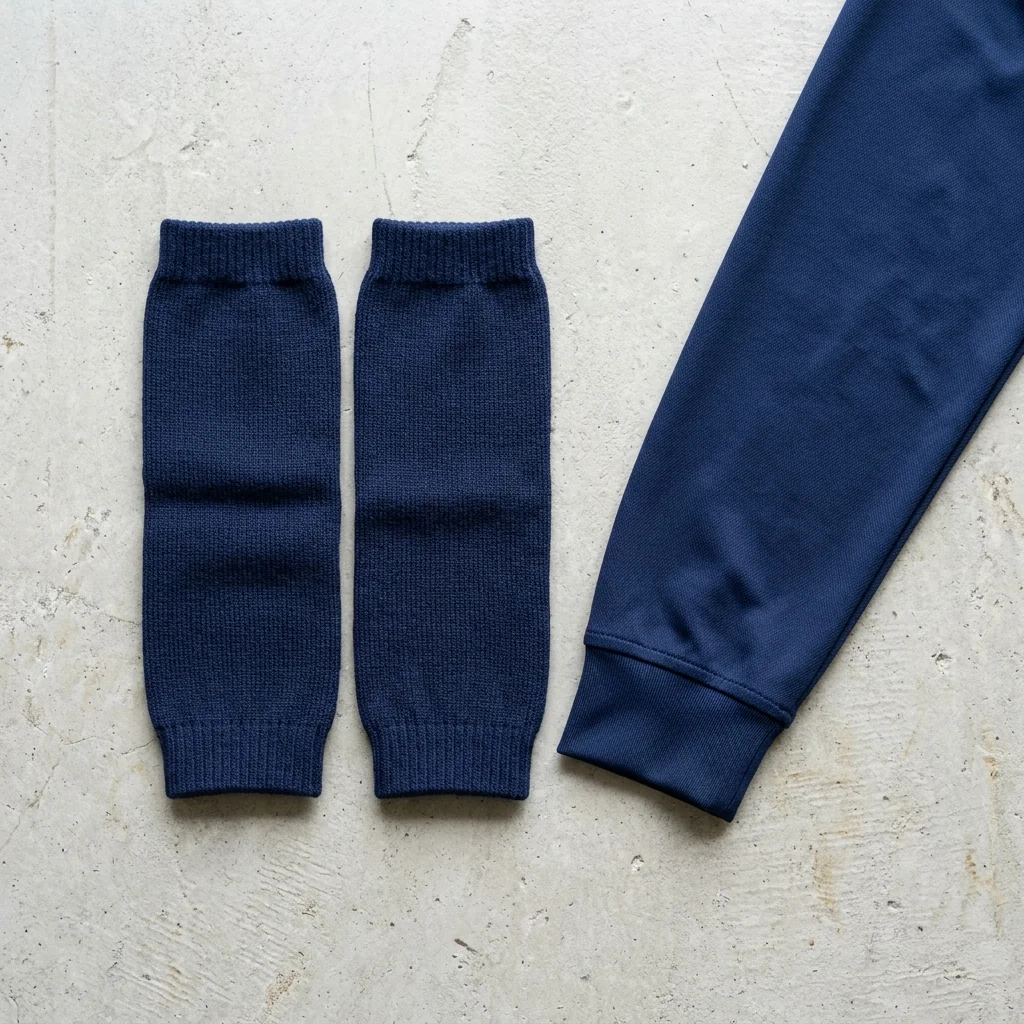
Warmer against sleeve, both read off the programme card.
How far one panel runs under the next is the number the table has to carry.
Warmers are counted in pairs, so they are cut and folded on their own count.
The only position the join can be judged in. On the drops the arm is at full extension, which is where a join that measured fine on a still body opens up.
One file, three structures
The Same Artwork, Landing on Three Different Fabric Structures
A logo approved on a flat proof is not yet approved on a mesh. Three surfaces, three ways the same file behaves, and the one step that stops it becoming a delivery argument.
Mesh
The structure interrupts the mark: a hairline rule closes up first, and small reversed-out type is the next thing to go.
Body
The reference case. This is the surface a proof usually gets approved on, which is exactly why it is not the one to stop at.
Shell
Denser and slightly cooler, so the same graphic reads a touch heavier at distance than it did on the proof.
The Step That Prevents the Argument
The decoration file is proofed on every fabric in the programmebefore bulk, not on one and assumed for the rest.
Where a detail cannot survive a surface, we say which detail and we say it before cutting — the alternative is saying it afterwards, about a carton that has already shipped.
Where the Process Choice Itself Lives
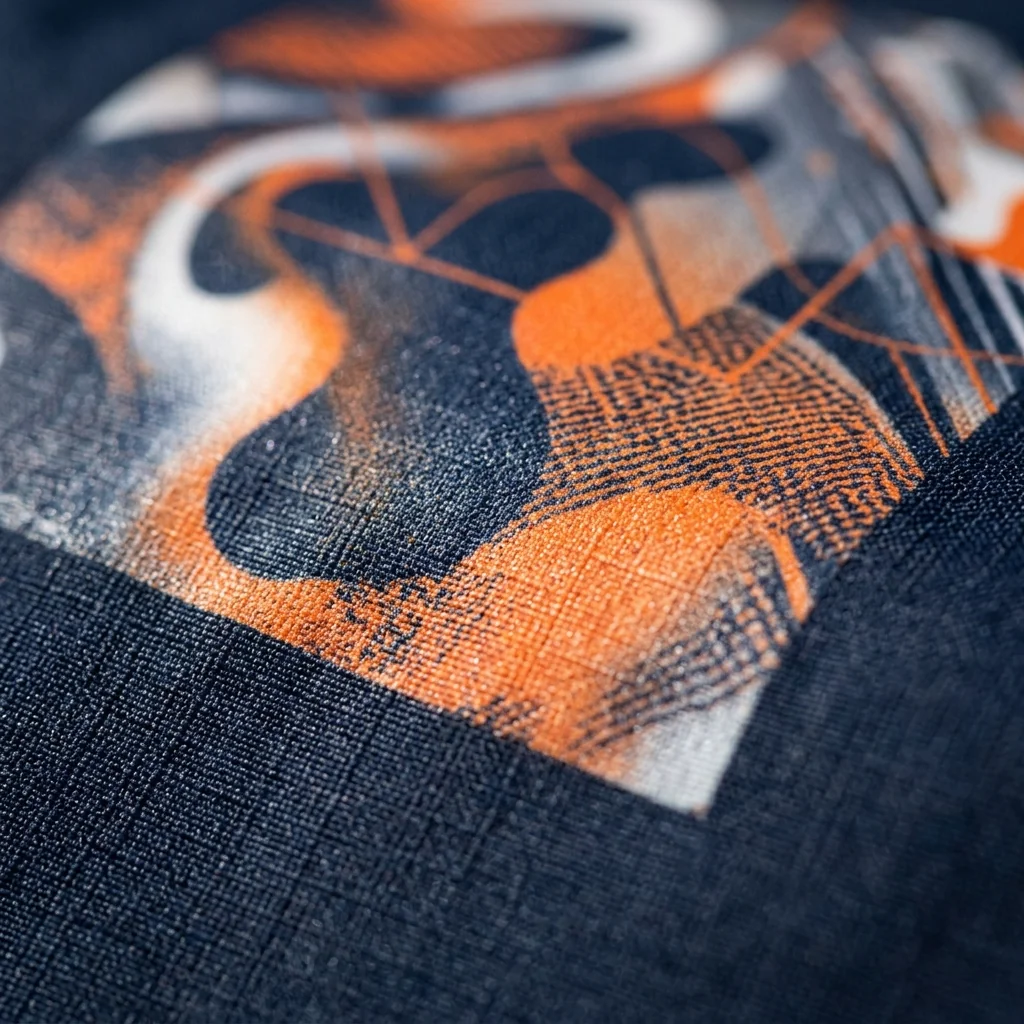
These three photographs are one decoration on three cloths, so they show a surface difference rather than a technique difference.
A kit is not six garments that happen to match. It is one specification cut six ways, and every place two pieces meet is a decision somebody has to own.
One window, not six queues
Six Pieces on One Development Window, Not Six Queues
Four numbers, and the one that decides your hand-out date is the third. Read them as one window for the whole kit rather than as a stage list per garment.
Stage
Days
What it covers
Working sample
5 to 7 days
The whole piece list, sampled together
Revisions
Two rounds
No additional sampling charge — they still spend calendar days
Bulk
20 to 30 days from sample confirmation
Not from the day artwork was approved
Compressed bulk
12 to 15 days
Only where the slot was confirmed in the schedule ahead of time
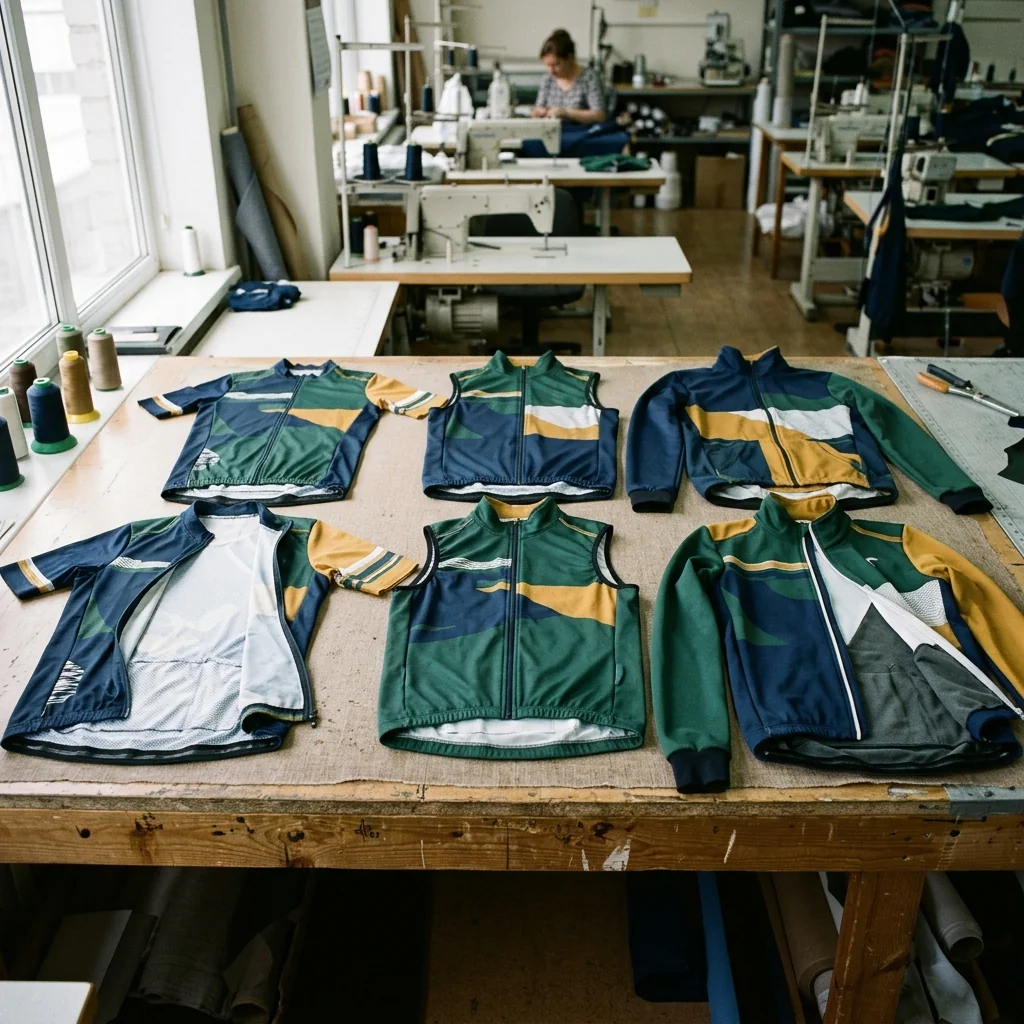
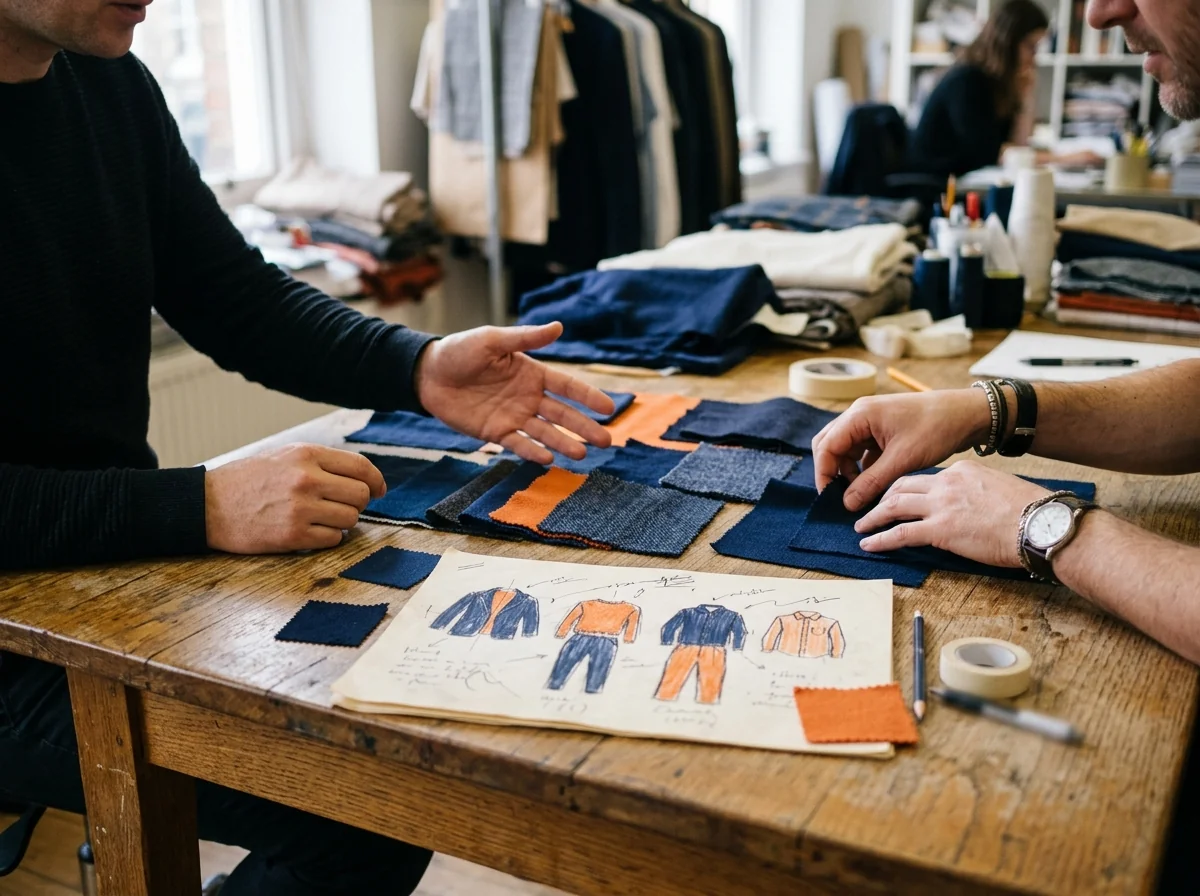
The sample set reviewed as a set. Every piece on the list is on the table at once, which is what makes it one window.
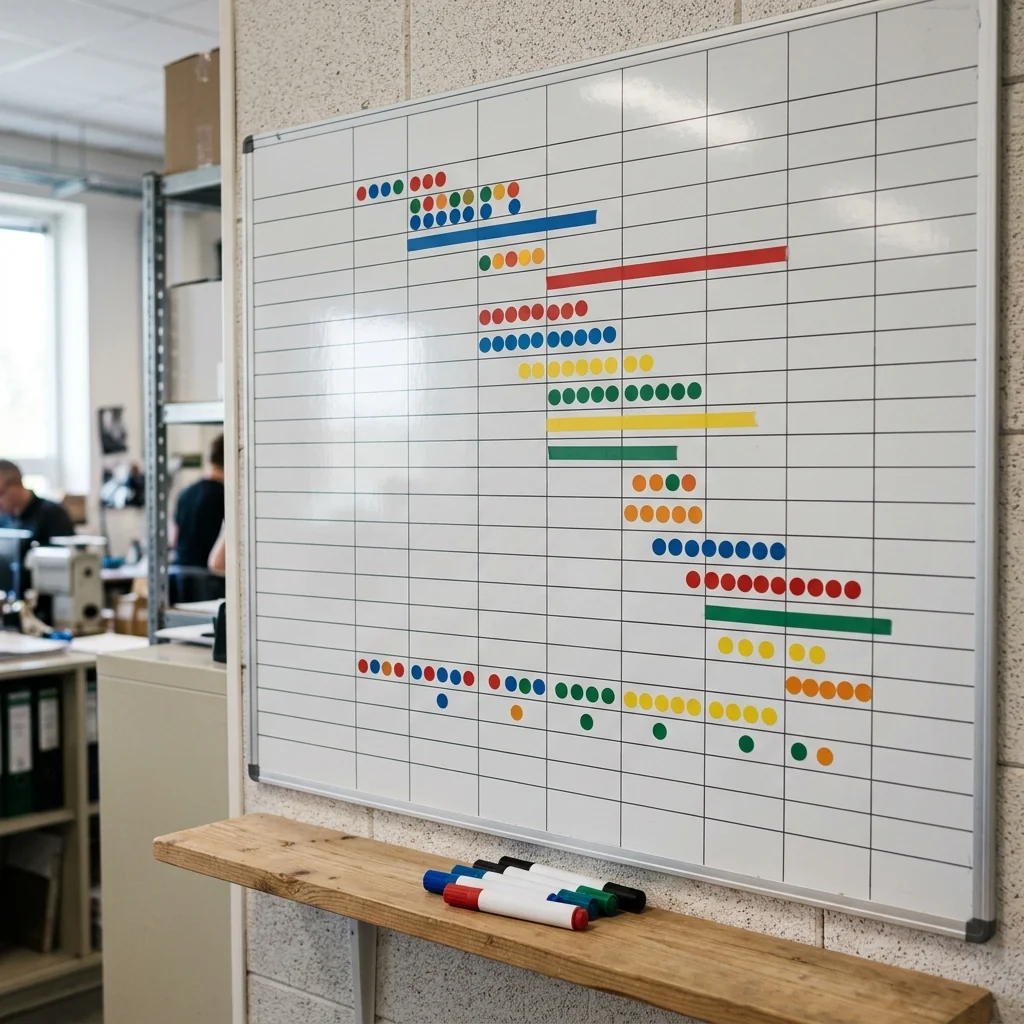
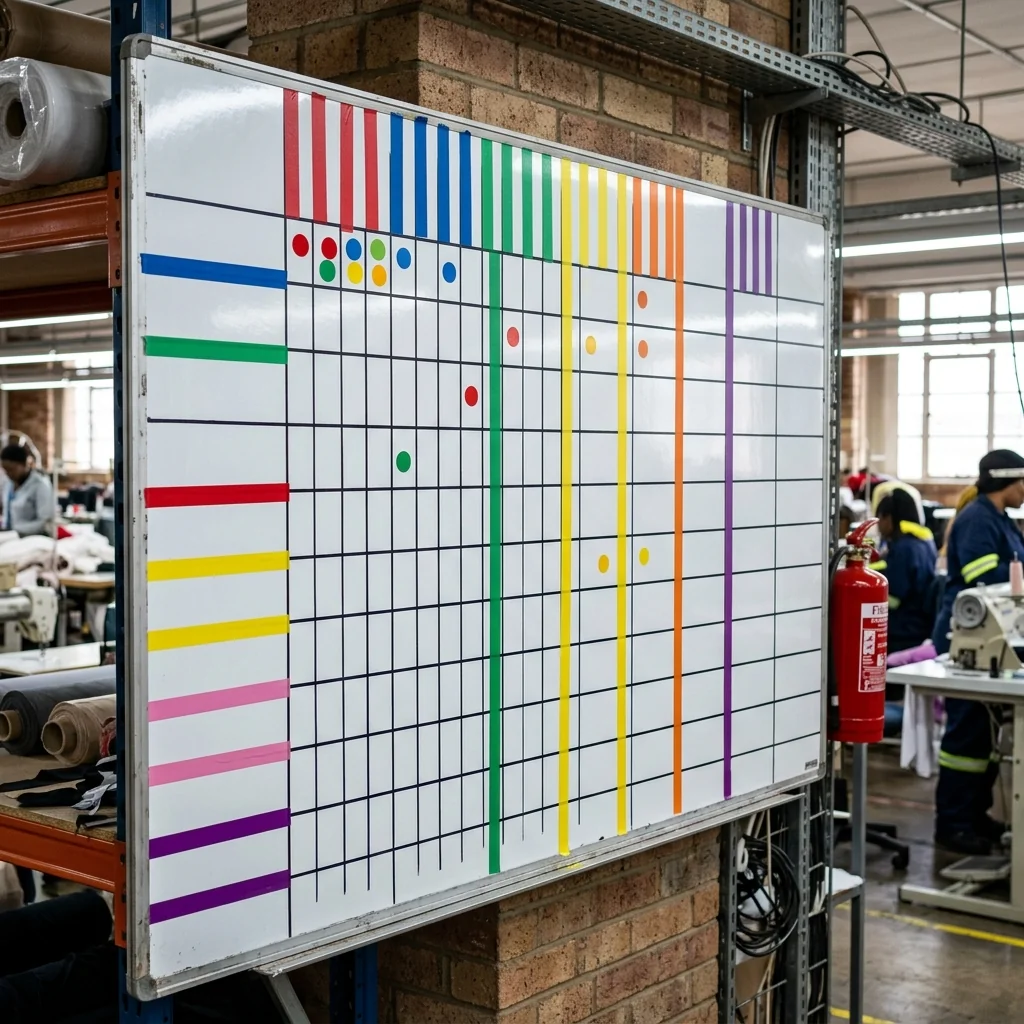
One kit occupies one lane on the board, so the last piece to sign off is visible before it becomes a problem.
The Piece That Sets the Date
The one that signs off last. Bulk opens when the whole kit is confirmed, not when the jersey is — so at brief stage we tell you which piece is most likely to hold the set up, and it is usually the one carrying the most artwork.
What Happens Inside the Window
Six inspection gates stand between cutting and the carton. Their order is fixed and published on Cycling Apparel Quality Control; this page does not repeat it.
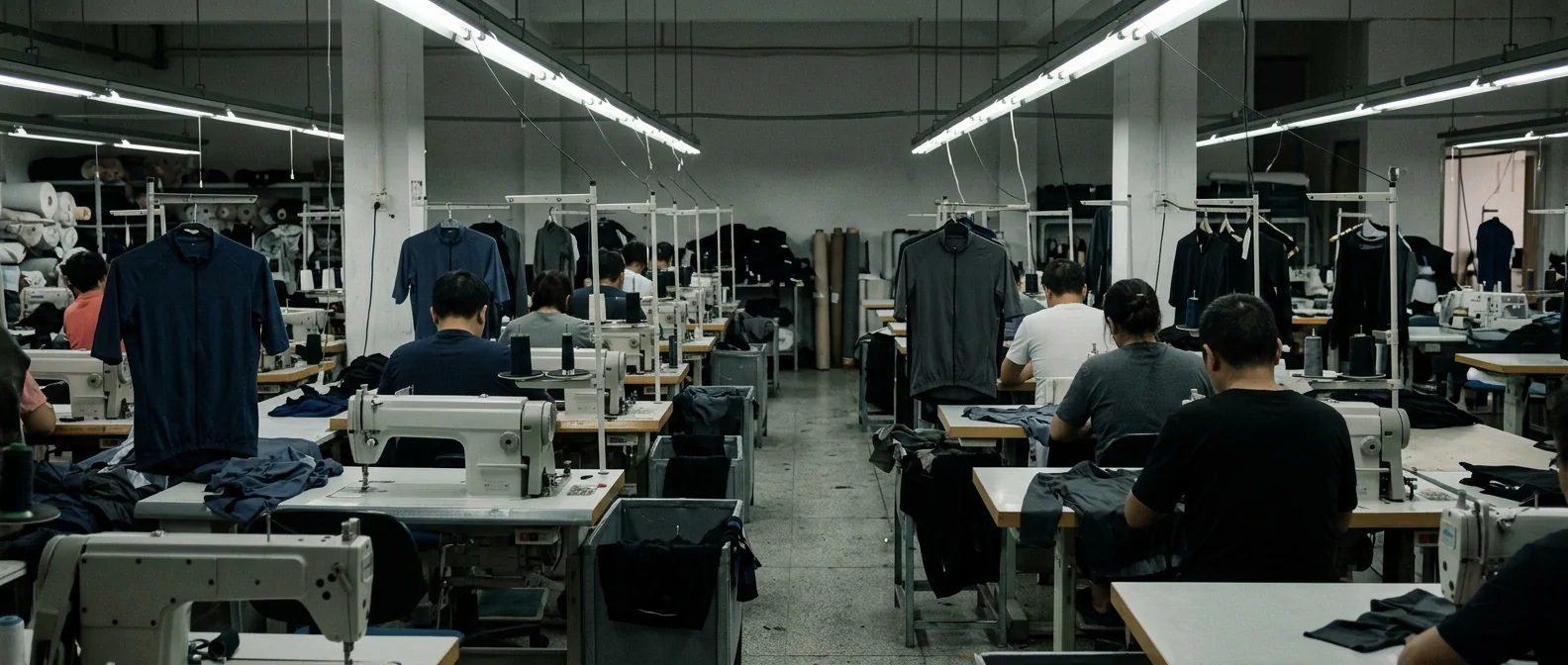
Bulk runs the whole kit through the same floor in one pass, which is why the window closes on the kit rather than on a garment.
What makes a brief answerable
One Person on the Programme, and the Five Things That Make a First Brief Answerable
Not a form-filling exercise. These five are what let a quote come back with numbers in it rather than with questions in it.
The piece list.Which garments, and which of them are Core rather than later additions.
A count per piece.Ranges are fine at this stage; the counts do not have to match each other.
A colour reference.Whatever you hold — a file, a card, a garment you already own.
A size intention.Our chart, or yours if your riders already order against one.
Artwork.Vector with fonts outlined, and a note of which pieces carry which marks.
What One Contact Actually Means
The same person answers for the join between two pieces and for each piece on its own. Where a kit is split across four desks, the joins are the part nobody is holding.
A kit brief is seldom a single document — several tech packs, a colour reference and a rider list tend to travel together, and that set belongs in a mail thread rather than in one upload slot. The form below takes text, and says so.
24 business hoursAn inquiry gets a reply inside this.
48 hoursA quote follows within this, once a complete tech pack is with us.
The five items, taken down once at intake.
One person carries the programme from brief to carton.
Artwork rarely arrives as one file. Two pieces, two drawings, one thread.
The reply times above are held on the same board the production lanes are.
Change One Thing, and These Are the Other Pieces It Reaches
Every kit programme gets two revision rounds. Knowing which pieces a change drags with it is how you decide what to spend them on.
Colour
Pattern
Artwork
What you change
What it reaches
What it costs the schedule
A colour value
Every piece in that colour, across every fabric — the reference file is re-issued once, not per garment
Re-dye, so it lands before bulk or not at all
A pattern detail
Only the piece it belongs to, unless it sits on a join — then the piece on the other side of the join comes too
One round, if it is caught at first sample
Artwork placement
Every piece carrying that mark, but nothing about the pattern
Re-enters at the print file, which sits after the pattern and before the cut
Where the Two Rounds Are Worth Spending
On the joins and on the colour, not on artwork nudges. A placement edit is cheap and late; a join edit is cheap only while it is early, because the pattern has to be re-cut behind it.
That asymmetry is the whole reason the table above separates what a change reaches from what it costs the calendar. A change can touch six pieces and cost nothing, or touch one piece and move the date.
What a change looks like on the pattern. The mark is cheap; re-cutting everything behind it is what spends the round.
Order of arrival
What to Order First, and When the Rest of the Kit Should Join It
Most clubs do not buy seven pieces at once, and they should not have to. The question is which pieces carry the identity, and what it costs to add the others later.
Core, ordered first
Extended, added later
A brushed face is the reason an Extended piece answers a season rather than a roster.
Core, ordered first
Extended, added later
Which pieces
Short-sleeve jersey · cap · base layer
Long-sleeve jersey · vest · jacket · arm & leg warmers
Why now
They carry the identity, and they are what riders are seen in most
They answer a season, and the season tells you the quantity
When to add
—
Before the weather turns, not while it is turning: bulk still runs 20 to 30 days from sample confirmation
Where the pattern comes from
Developed and confirmed in this programme
Pulled from the confirmed file— the later pieces are cut to the same table, not re-developed
The Reason Later Pieces Still Match
Because they are not a second project. They inherit the same colour reference and the same size table, and the join between a new warmer and last season's cuff was defined once, in the table both were cut from.
Why the Season Sets the Quantity
A Core piece is worn all year, so its count follows the roster. An Extended piece is worn in a window, so its count follows how many riders actually ride in that window — which is usually a smaller and much better known number by the time you order it.
That is the advantage of adding later rather than a penalty for it.
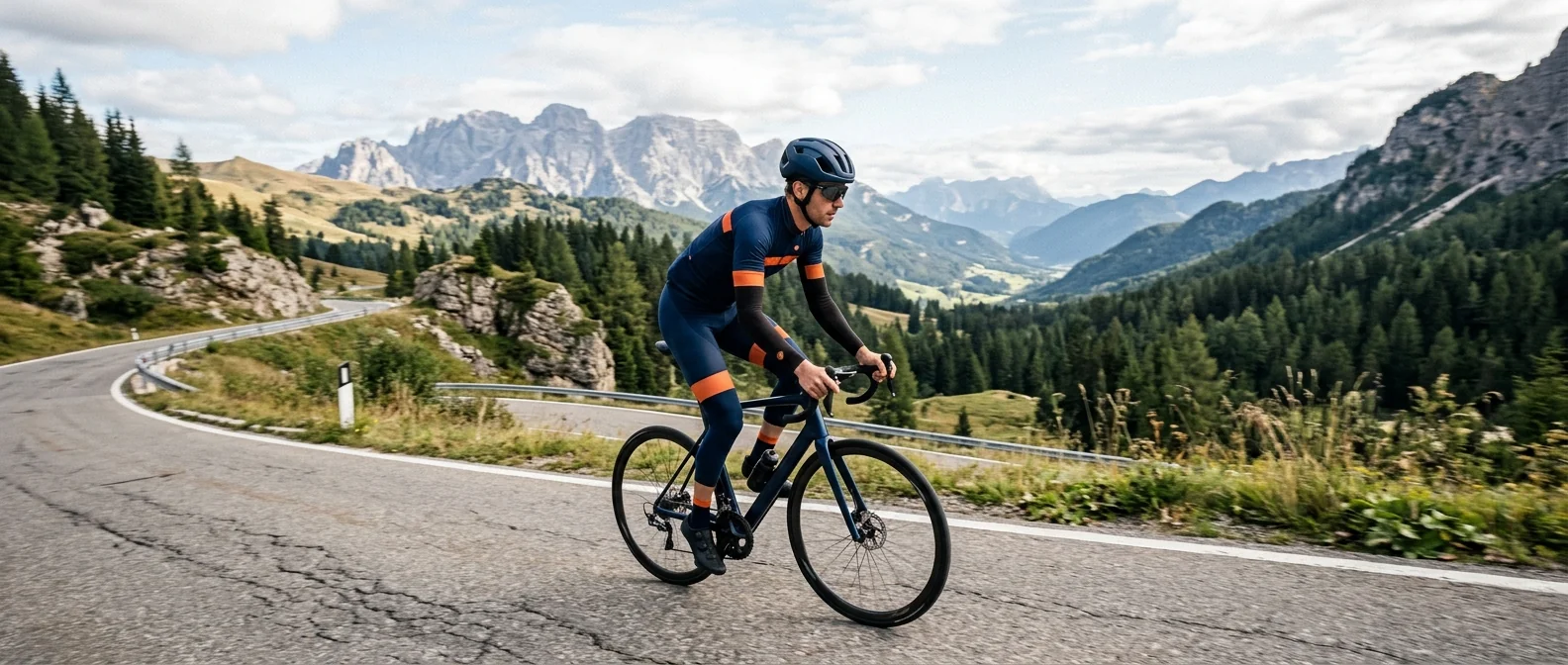
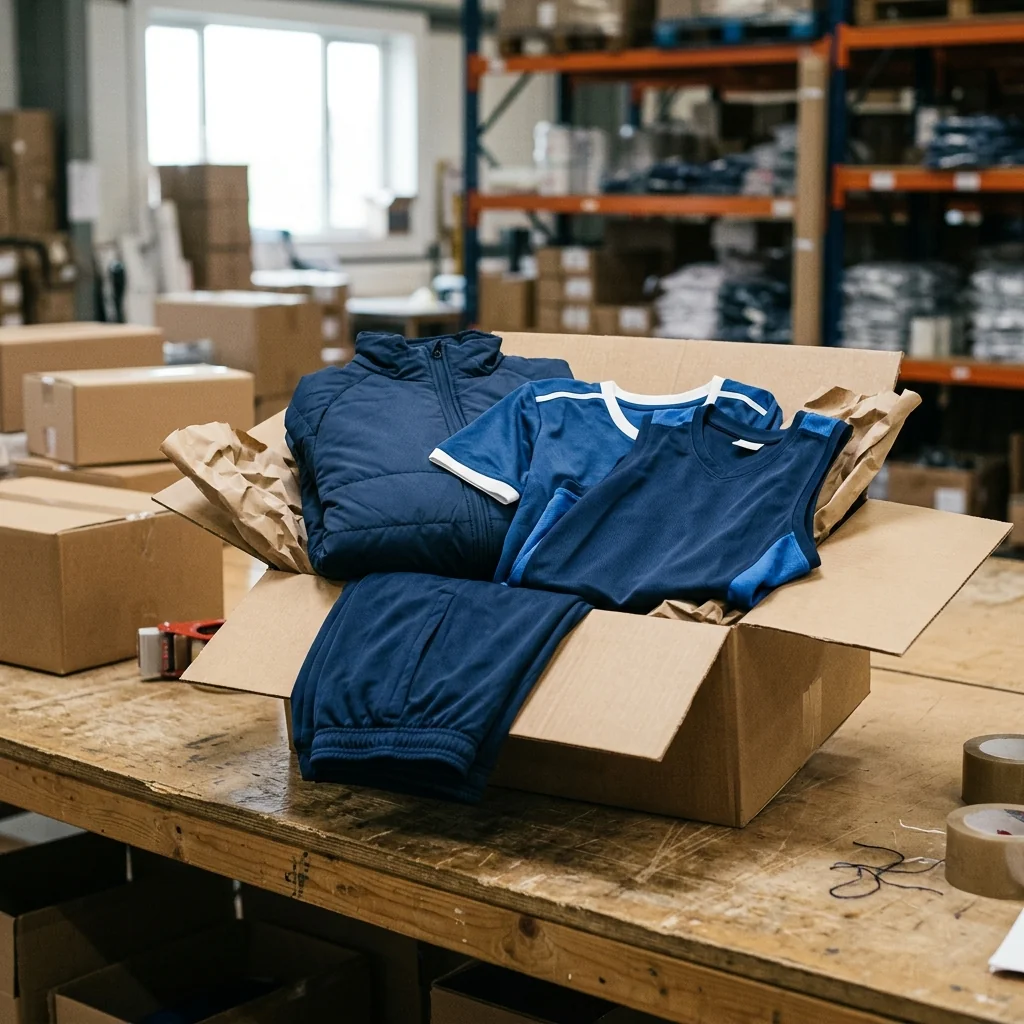
The Core group as it is first ordered. Everything added afterwards is cut to the table these were confirmed against.
The surface a later piece is cut from, chosen against the same reference as the Core group.
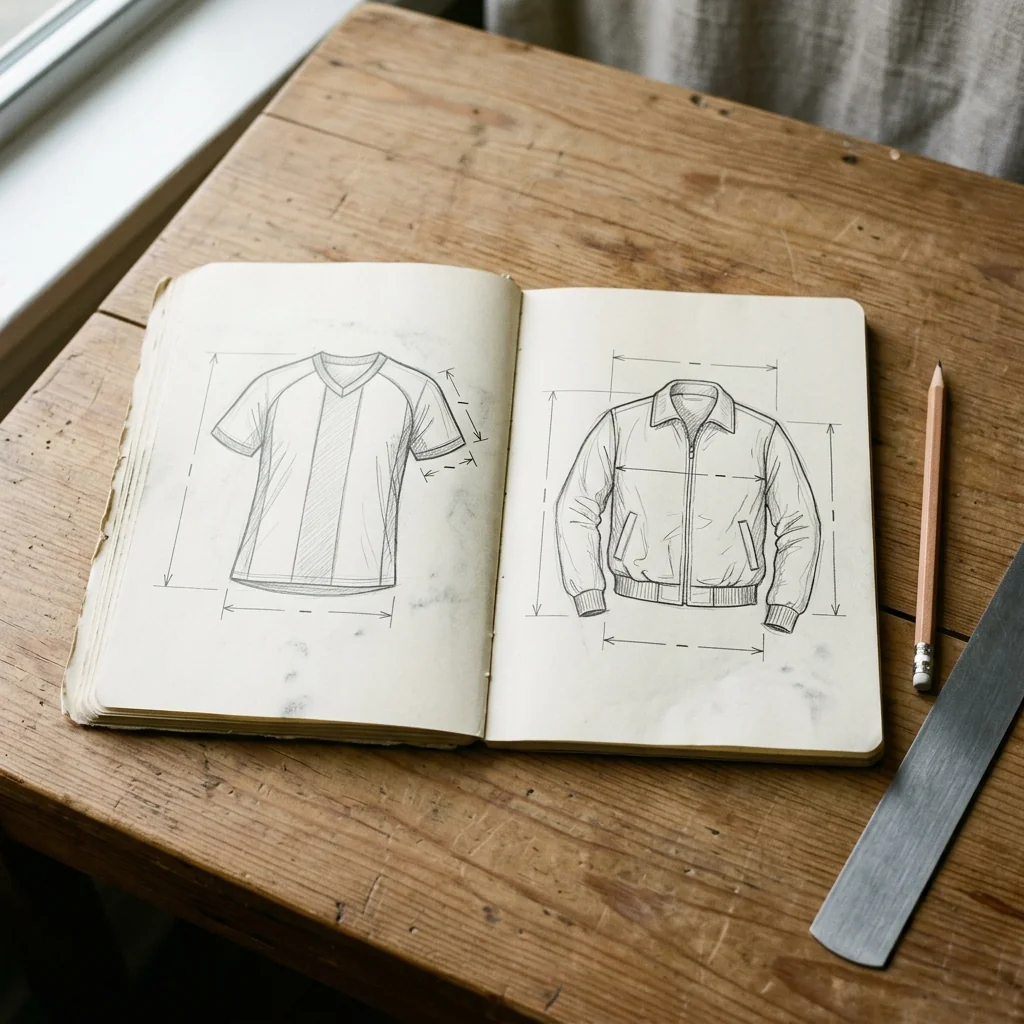
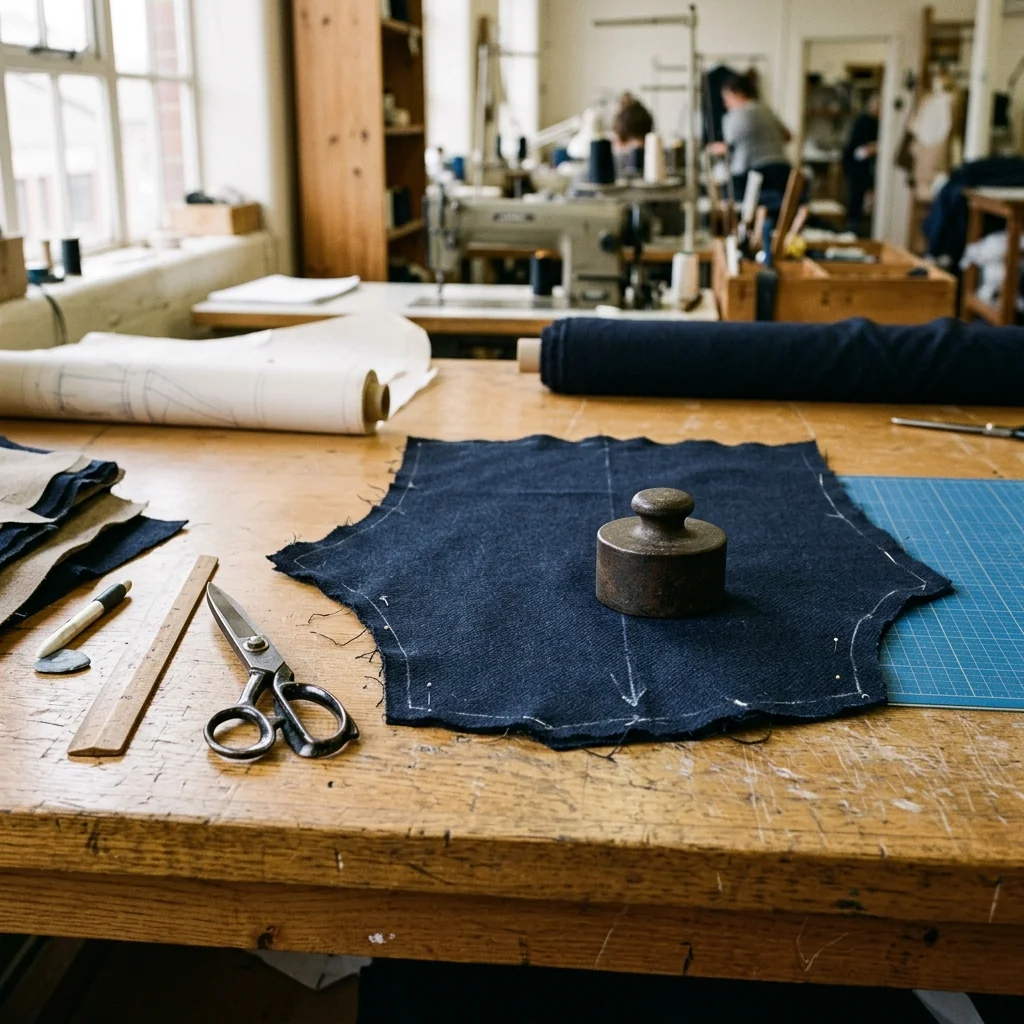
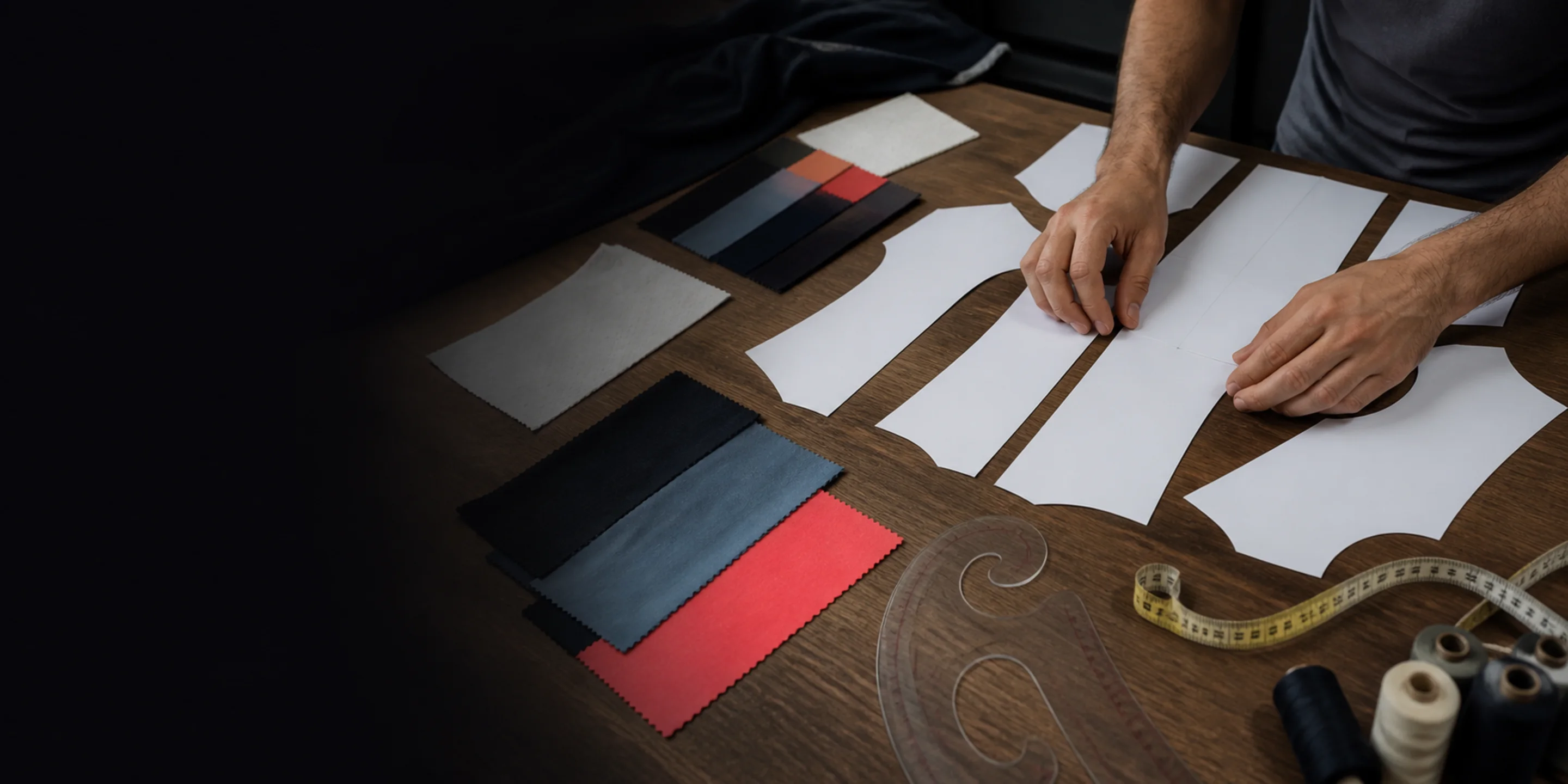
Where a later piece comes from: the confirmed file, marked out again rather than drafted again.
The second order
Adding Riders Next Season Without Reopening the Pattern
A reorder is the moment a kit programme either proves it was a programme, or turns out to have been six separate jobs.
Reorder
New colourway
What Stays on File
The confirmed pattern and spec sheet stay with us after the order ships, archived by buyer and by SKU. A reorder or a new colourway starts from that confirmed file — it does not reopen pattern development.
Because the pieces were confirmed against each other. Pulling one piece from the file brings the table its joins were defined in, so a warmer ordered next season still meets a cuff cut last season.
The Honest Limit
A fabric can be discontinued by its mill. When that happens we say so at quotation and re-match to the reference card, rather than substituting quietly and letting the difference arrive in the carton.
Archived by buyer and by SKU, so a reorder starts here rather than at a blank draft.
Pieces from different orders, packed to the same table they were all confirmed against.
What is handed back
What a Finished Kit Programme Hands Back to You
Four things, and only one of them is the garments. The other three are what make the next order a reorder rather than a fresh brief.
The card the fabrics were matched to, photographed with the panels it governed.The colour reference you can holdThe card the fabrics were matched to, so a future batch has something physical to answer to rather than a screen grab.
The confirmed sampleThe physical piece the bulk was measured against, signed and shipped back with the order.
Cartons split by piece and by sizeNot one mixed pallet — the split is arranged at packing, against the count you gave per piece.
The archived filesPattern and spec sheet on file by buyer and SKU, which is what the reorder starts from.
Why the Last Three Are on This List
Because they are the difference between a supplier and a programme. A kit that arrives without its reference and its files is a kit you can wear and cannot repeat.
Buyer questions
Questions From Buyers Ordering a Whole Kit
What clubs, teams and brands ask when the order is more than one garment.
Yes — each component is counted on its own. Sixty jerseys and twenty pairs of warmers inside one programme is a normal shape here.
30 pieces per style per colourway. On a kit programme the thing to notice is that the number is read per piece:
The jersey clears its own count and the vest clears its own. A kit is never one number spread across seven garments.
Bringing another piece into the programme brings another count with it — it does not top up a count you already have.
Colourway means the fabric colour, so one piece in one colour stays a single count however many marks get printed on it.
One colour reference file is issued before bulk dyeing and applied to every fabric in the programme at once, then judged against a physical card in daylight. We do not describe two different fabrics as identical— they are matched to one reference, and the difference the surface makes remains.
Yes. The confirmed pattern and spec sheet stay on file, archived by buyer and SKU, and a reorder starts from that file rather than from new development.
One window for the whole kit, not one per garment. The sample set takes 5 to 7 days and every piece is sampled inside it. Bulk then runs 20 to 30 days from sample confirmation — confirmation of the kit, so the last piece signed off is the one that starts the clock. 12 to 15 days is reachable where a slot was booked in advance.
Yes, and on a kit programme it matters more than it does on a single garment: your chart becomes the one table every piece is cut to, joins included. Our own base range is XS–3XL, men's and women's patterns held separately, and it steps aside when yours arrives.
Gloves, footwear of any kind including overshoes, helmets, and hardware such as computers and lights. None of those are garments and none are made here.
Bib-type finished goods are not a product line — bib and pad work is development and sampling against a pad specification you supply.
An inquiry gets a reply inside 24 business hours. Once a complete tech pack is with us, a quote follows within 48 hours.
Start Your Kit Programme
The piece list, a rough count per piece and whatever colour reference you already hold. That is enough for us to tell you which piece will set your date and what the sample set would cost you in days.
Tech pack, artwork and size list go by email to [email protected] — this form carries your details and your message only.
 Inherits The reference surface
 Inherits The fastest tell
 Inherits The first test
 Inherits The closest comparison
 Inherits The deepest surface
 Inherits The piece that has to meet another