Wholesale Cycling Clothing for Bike Shops, and a House-Brand SKU That Restocks Like Stock
You already know what sells at your till. The question is how much of it can carry your own name without tying up the season's cash in a rail nobody clears.
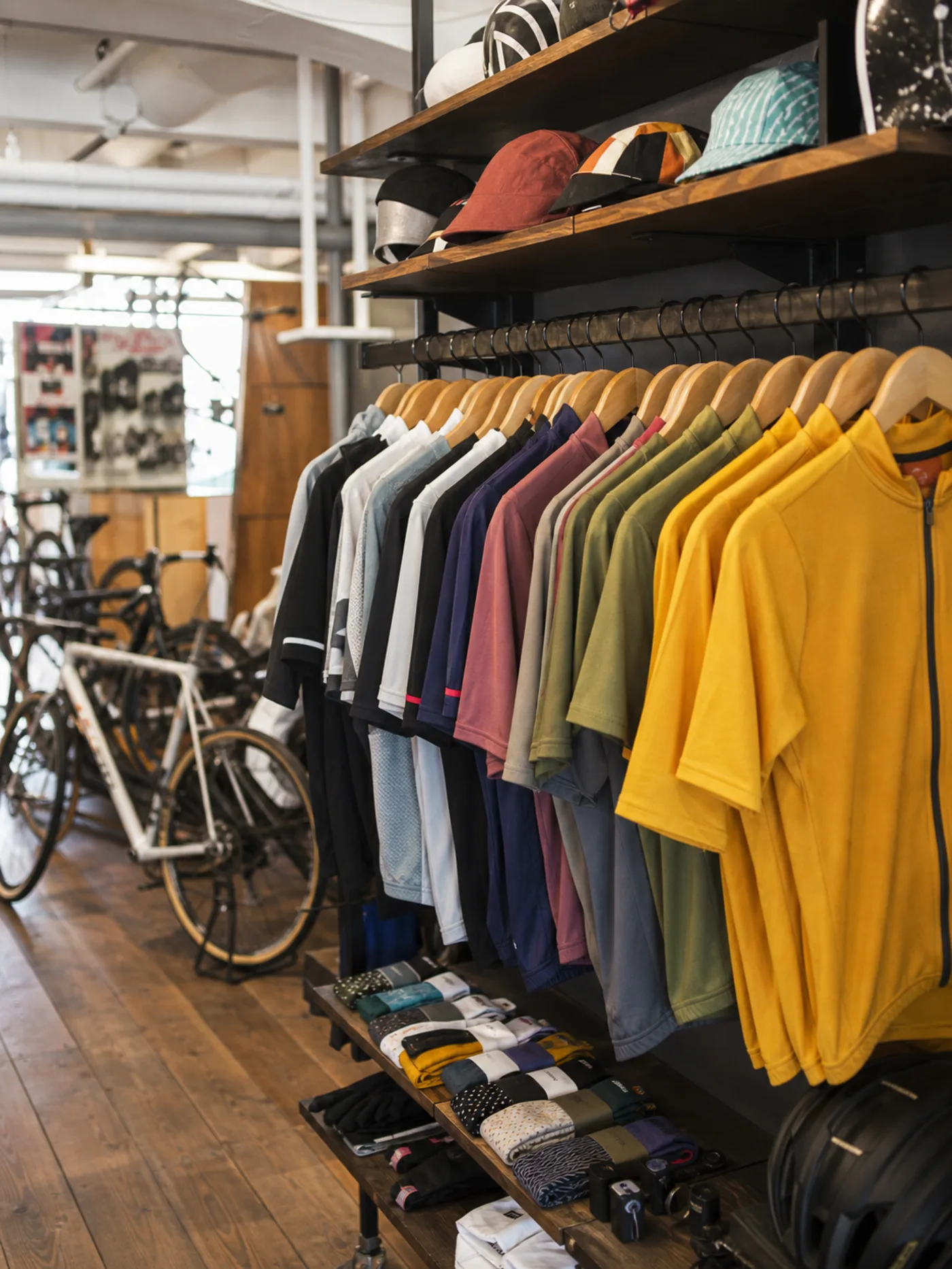
Plan Your Product and Size Mix Around Your Customer Base
Two shops on the same street rarely need the same assortment. Tell us which customers walk in and what has already cleared at your counter, and the first order gets built around that instead of a market average.
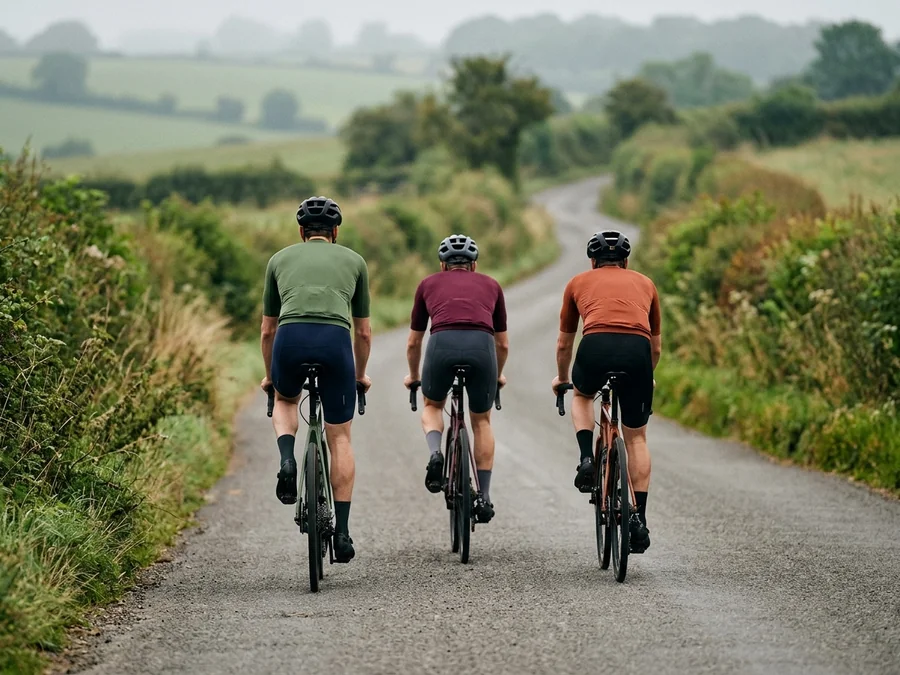
The differences between riding disciplines are set out on the scenario pages: Road, Gravel, Mountain Bike, Commuter and Triathlon. This section is only about which mix belongs on your rail.
- Commuter retail
- Road & club retail
| Customer type | Recommended product mix | Size mix considerations |
|---|---|---|
| Commuter-heavy, urban | Base layers, wind and water-resistant outer layers, reflective detail, pieces that read as normal clothing off the bike | A relaxed fit block covers a wider body range per label, so a shorter run with depth through the middle sizes usually clears. Race-cut sizing at the narrow end sits. |
| Club-adjacent, road-led | Jerseys in club-friendly cuts, vests, arm and leg warmers, standing colourways riders can match | Race-cut sizing covers a narrower body range per label, so the run needs more steps and real depth at the small end. Broad-fit casual pieces sit. |
Send the size and colour split of what has actually cleared at your counter and the first order gets built against it. Where there is no sell-through record yet, we work from your customer type and market instead — not from one averaged run applied to every shop.
Start Small, Scale After Market Validation
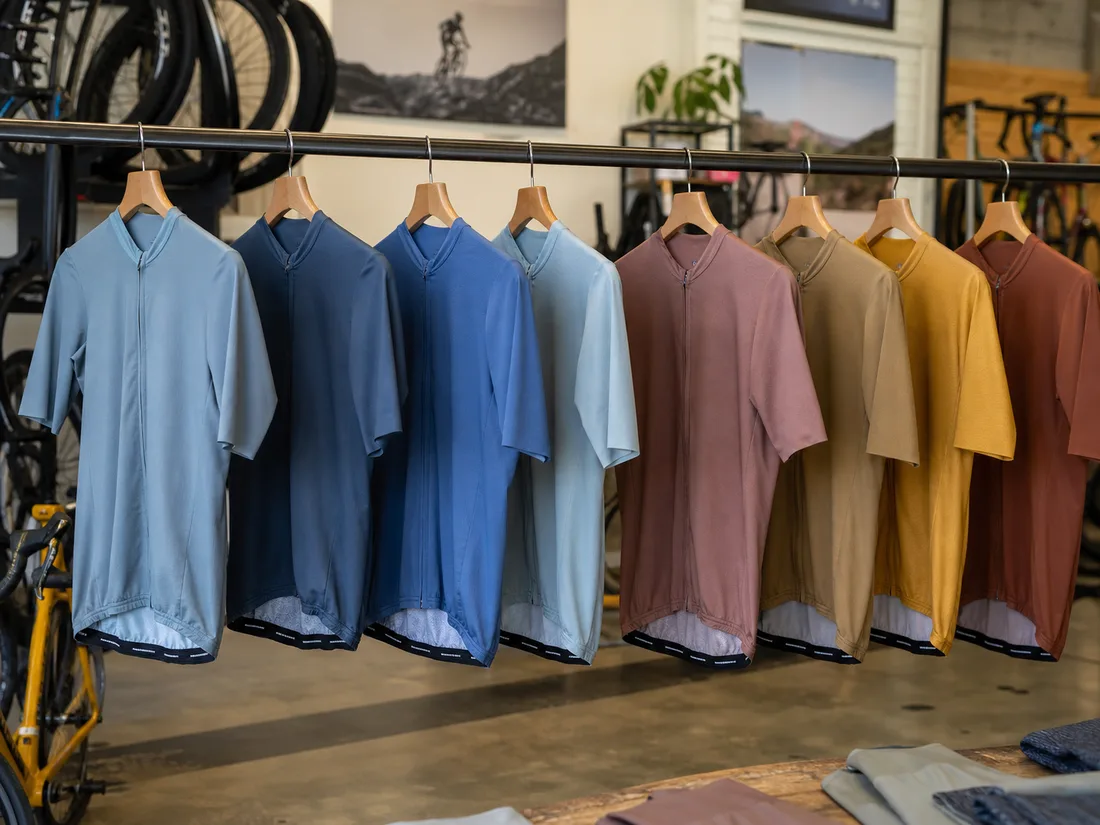
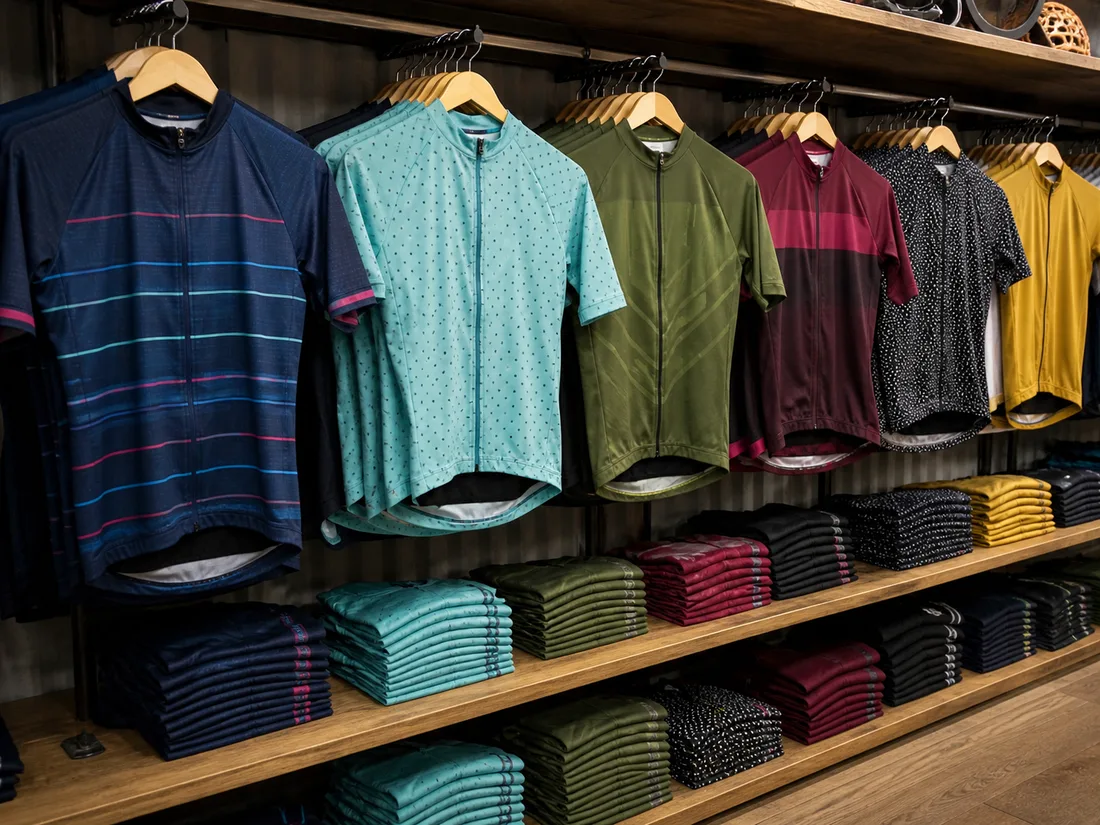
First order, sales feedback, repeat order. Three steps, in that order — so the money goes into the styles, colours and sizes your market has already answered for.
- 1. First order
- 2. Sales feedback
- 3. Repeat order expansion
| What you commit | First order | Repeat order, after sales feedback |
|---|---|---|
| Styles | One or two styles | Another style alongside the ones that cleared |
| Colourways | One or two colourways | An extra colourway where there is demand for one |
| Size range | The size band your till already supports | More depth in the sizes that actually cleared |
| Quantity | Shallow per size, enough to read a result | Scaled against the recorded sell-through, not a forecast |
Why the Repeat Order Is an Ordering Decision, Not a New Project
The development work — pattern, specification, colour standard, size chart — is done once and stays on file. Widening the second order draws on the same file, so there is no new sampling round and no second development lead time to absorb.

Know Roughly What Your First Rail Looks Like?
Send Your Assortment PlanWhat Can Be Customized for Your Cycling Brand
One question, answered in three parts: which parts of the garment are yours to decide. Design, materials and branding — each with what you specify and where the deeper detail lives.
- Product Design
- Fabrics & Construction
- Branding & Finishing
-
Product Design
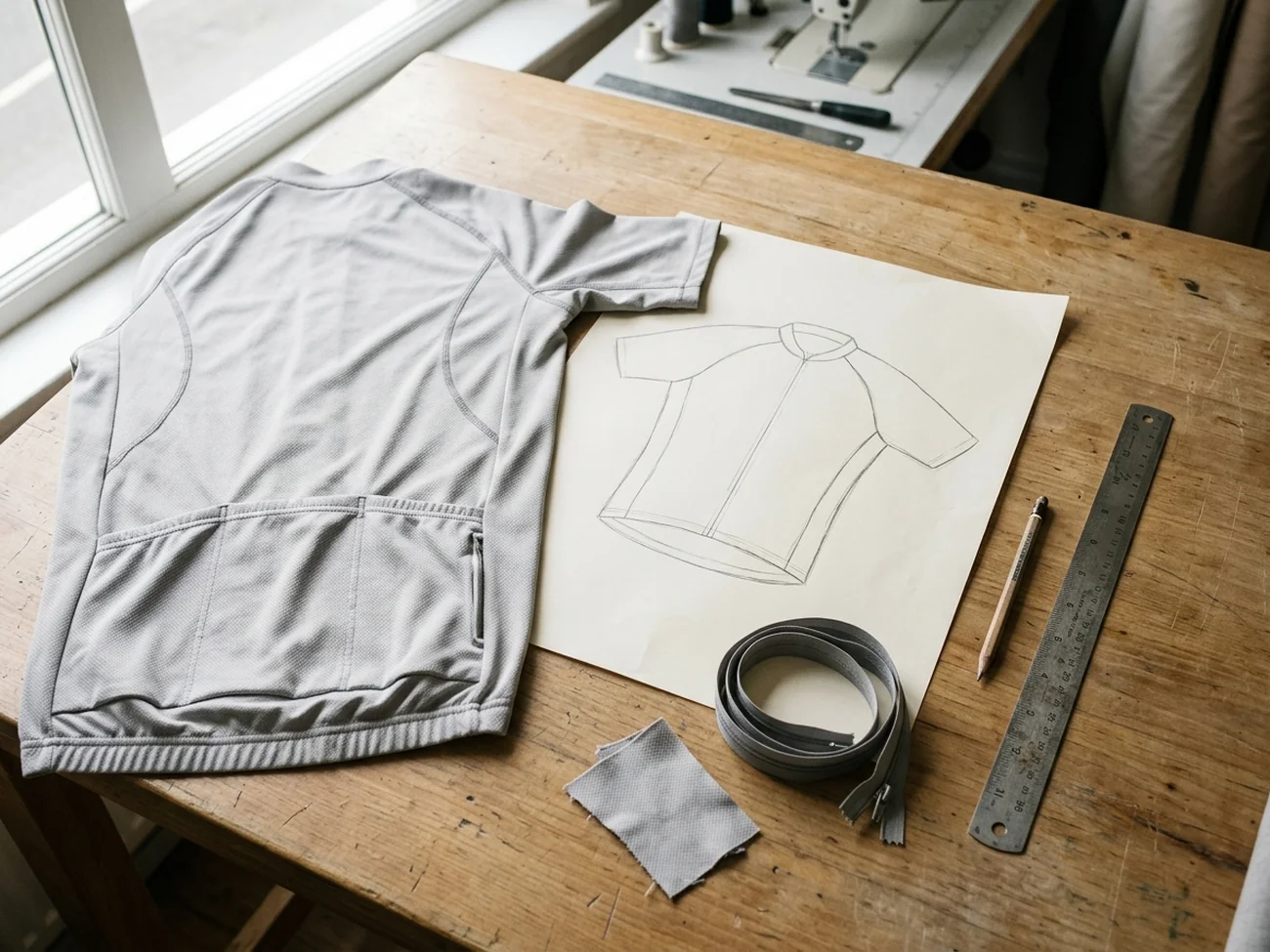
Cut and fit against the riding posture you sell into
- Panel layout and how many panels a graphic needs
- Pocket count, depth and placement
- Zip type and length, collar height, cuff and hem finish
- Sleeve length as a separate count, not a variant
Pattern method itself lives on Riding Fit & Pattern Development.
-
Fabrics & Construction
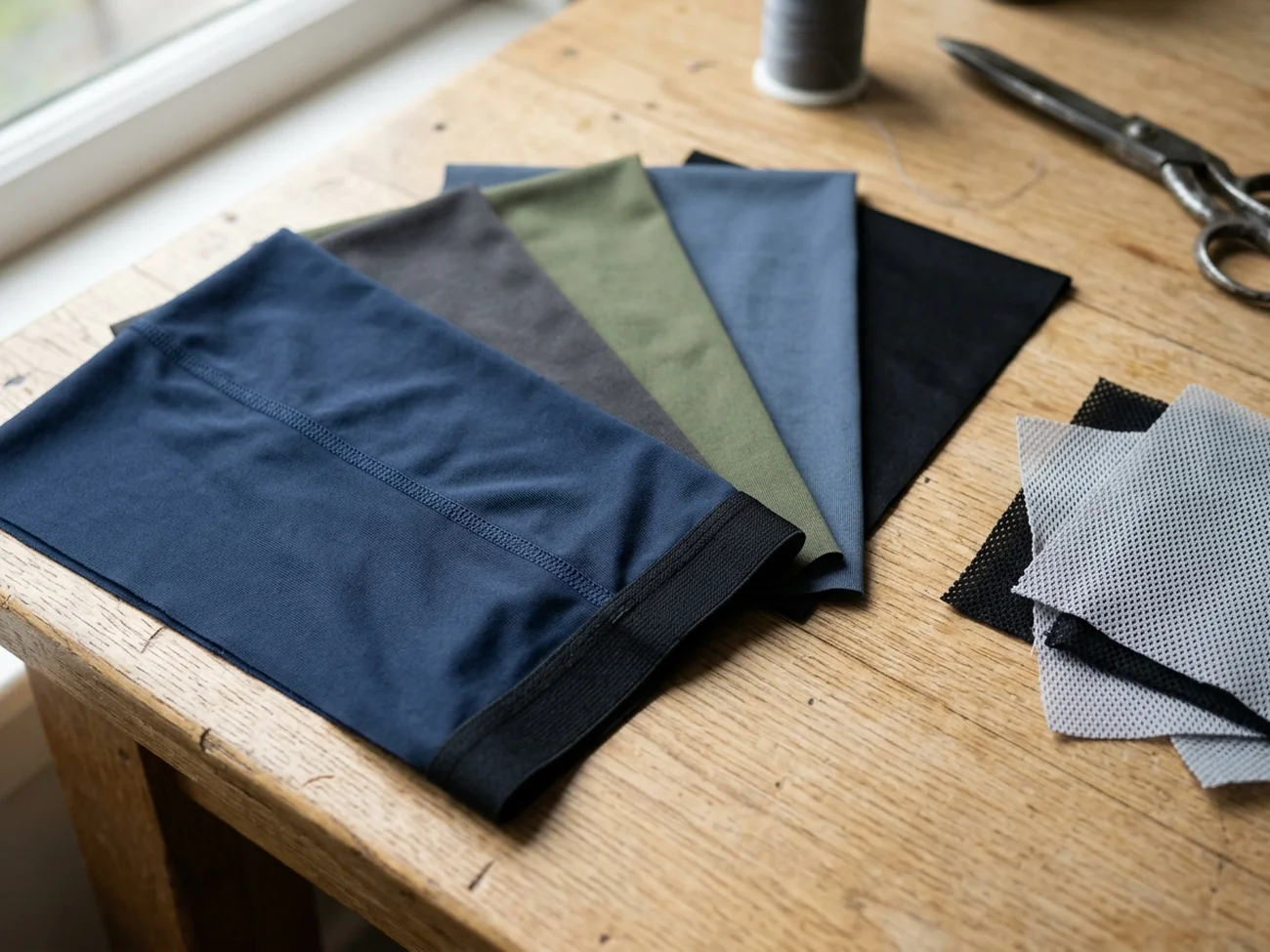
Weight, knit and colour, and how the pieces are joined
- Fabric weight and knit, per panel if the garment needs two
- Colourways, including a standing colour you can reorder
- Wind and water-resistant treatment where the piece calls for it
- Seam construction, elastic and silicone gripper
Fabric development detail lives on Custom Fabric Development.
-

Branding & Finishing
Where your mark goes, and how it is put there
- Full-width digital sublimation
- Heat transfer
- Computerised embroidery
- Reflective print and taping
- Silicone gripper embossing
- Woven neck labels, care labels and swing tags
Method comparison lives on Printing Methods.
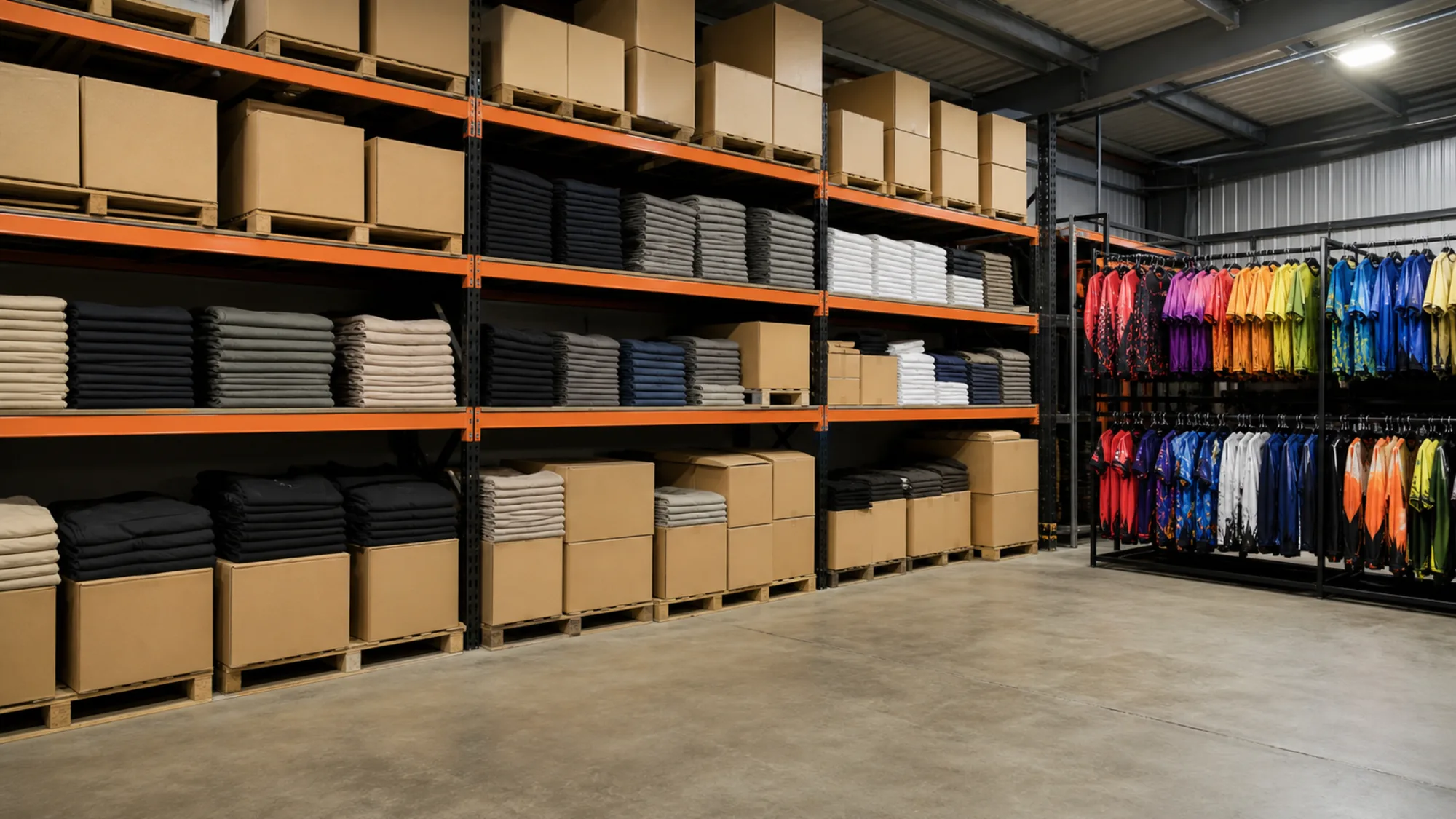
Manufacturing scope: garments only. Gloves, footwear of any kind including overshoes, helmets and hardware are not made here and will not be — a supplier offering them alongside this list is describing a trading operation rather than a factory.
On pads and bibs: chamois and bib development is something we do against a pad specification you bring, not a stock product we hold. Detail on Cycling Chamois Development.
Custom Size Runs: Sizing Built for the Market You Sell Into
A size plan is a purchasing decision, not a technical footnote. We develop against your own size chart, separate men's and women's patterns, and the size proportions your market actually buys — so more of the run sells at full price and less of it sits.
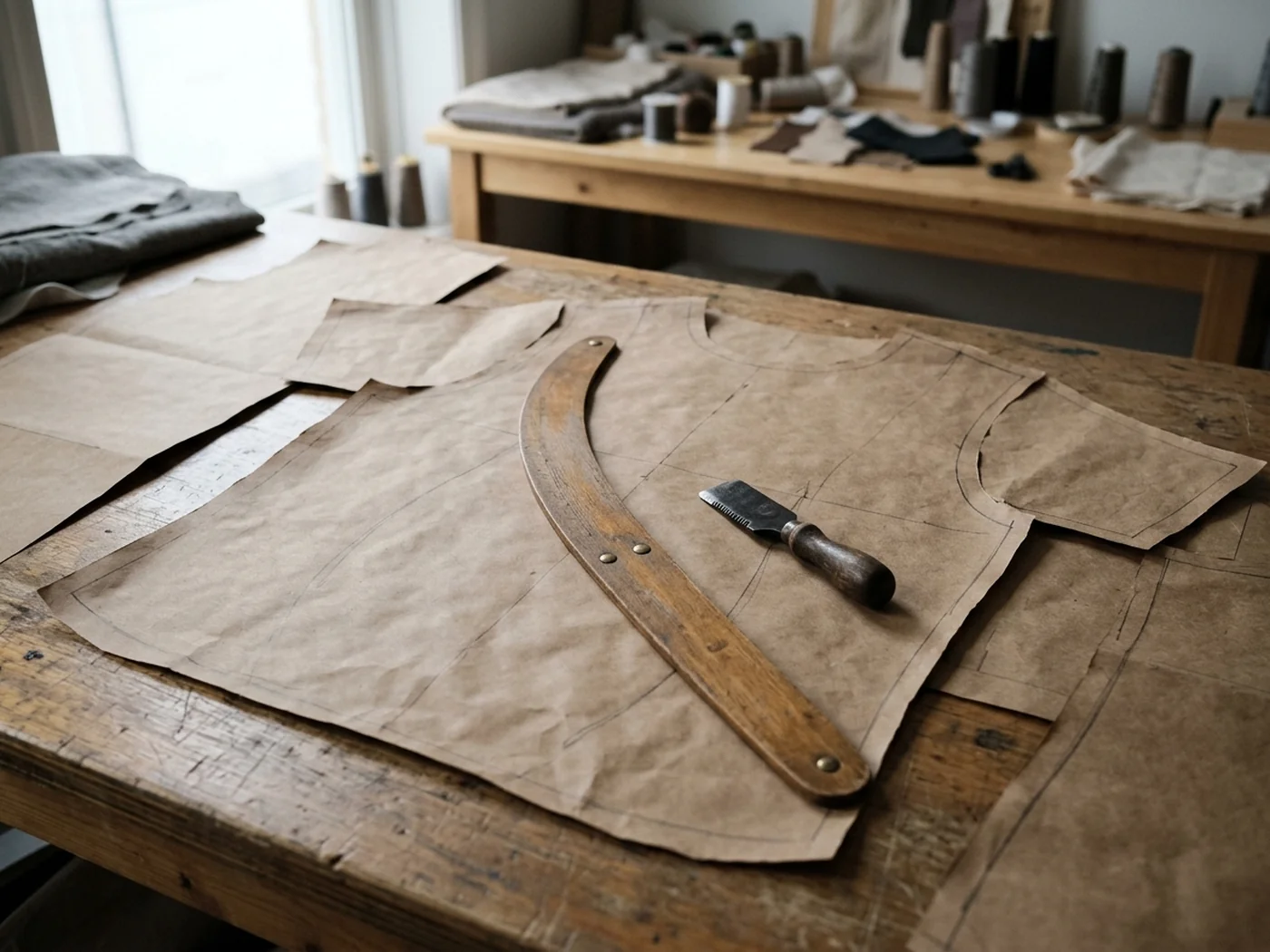
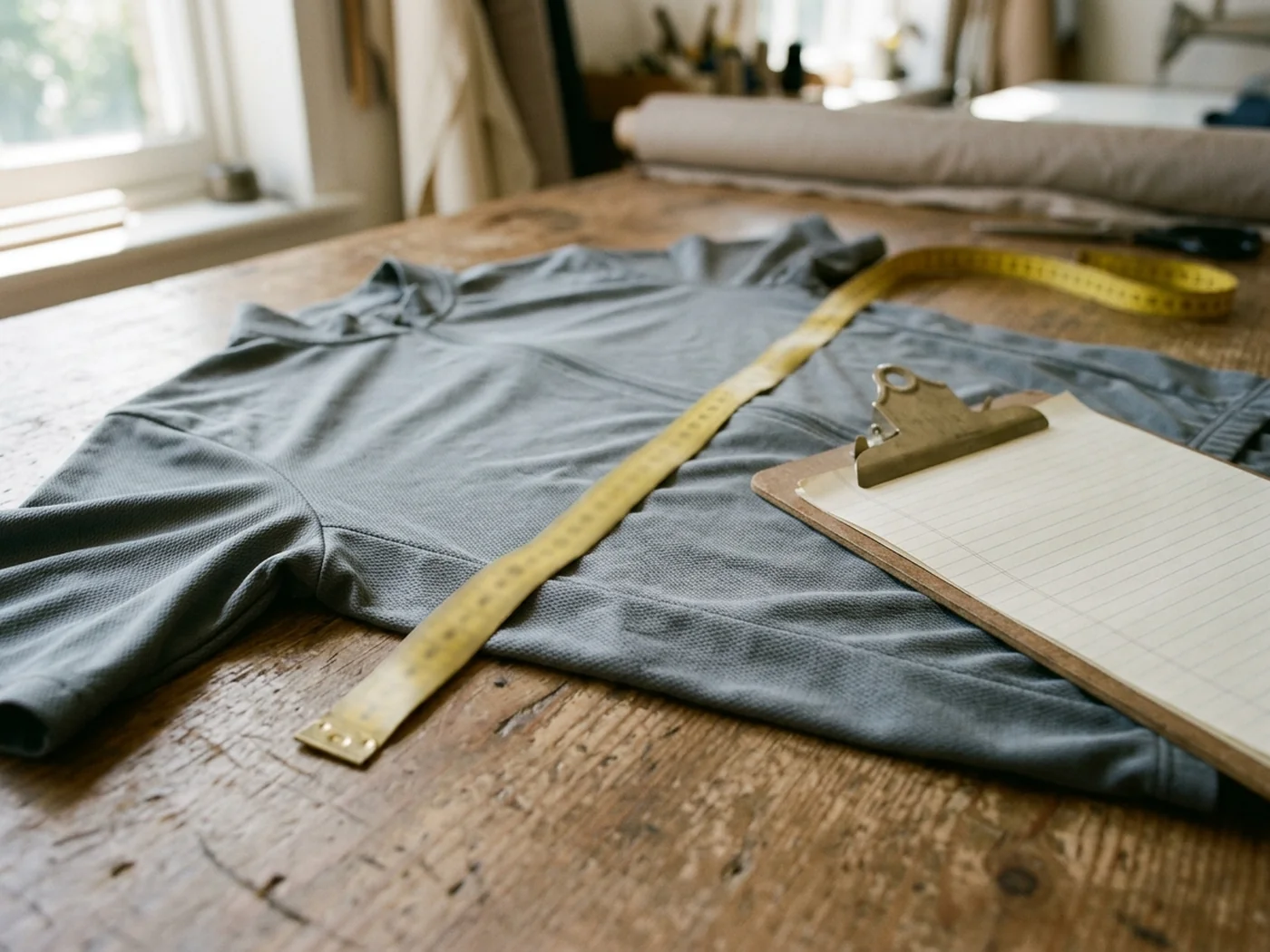
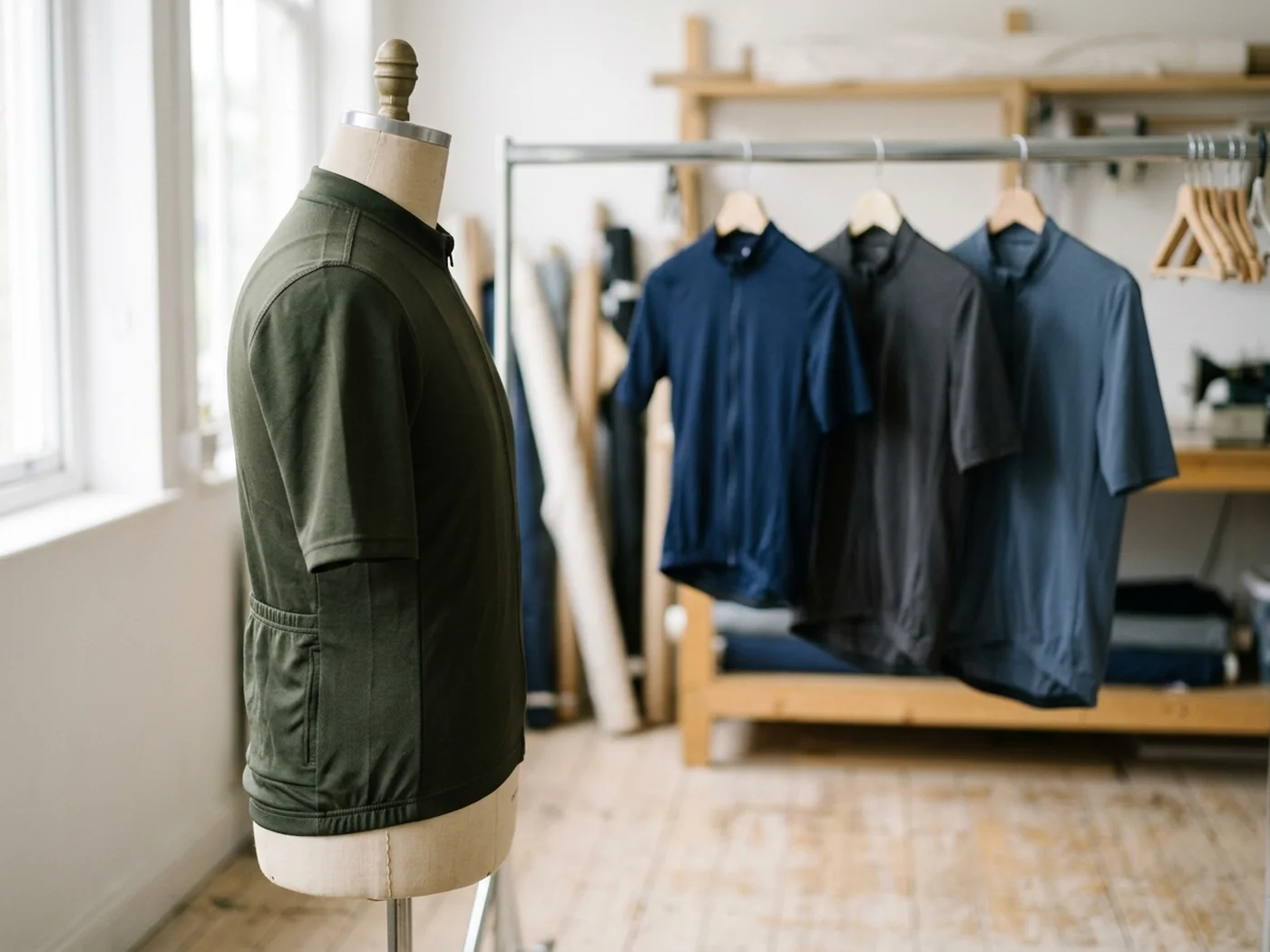
Pattern development method itself lives on Riding Fit & Pattern Development. What follows is only how sizing gets decided when the garment has to be resold.
| What you can specify | What it means for a resale rail |
|---|---|
| Size range | XS–3XL, developed as separate men's and women's patterns — not one set of blocks with different labels on it. |
| Your own size chart | If your customers already know what a "medium" means on your rail, send that chart and we develop against yours instead of ours. |
| Market size proportions | The same style sells on a different size curve in Northern Europe, North America and East Asia. Tell us the market and the run gets weighted for it rather than split evenly. |
| Mixed size runs | Within one style in one colourway, the size split is yours to set — weight it toward whatever your till says clears. |
| Multiple markets, one programme | One style can ship as two differently weighted size runs, so a second market does not need a second development round. |
What a fitted size run buys you
- A higher size-match rate — customers find their size in the size they expect, so fewer returns come back over the counter.
- Less stock risk — depth sits where it sells, so less of the order ends up in markdown.
- One programme across markets — the same specification carries different size weightings for different territories.
Why We Ask for Sell-Through Before Drawing a Size Run
Because the alternative is a symmetrical run. A symmetrical run looks reasonable and produces the same result everywhere: the middle sizes clear, the ends sit, and the ends are the part you paid for twice — once in stock and once in the markdown that eventually moves them.
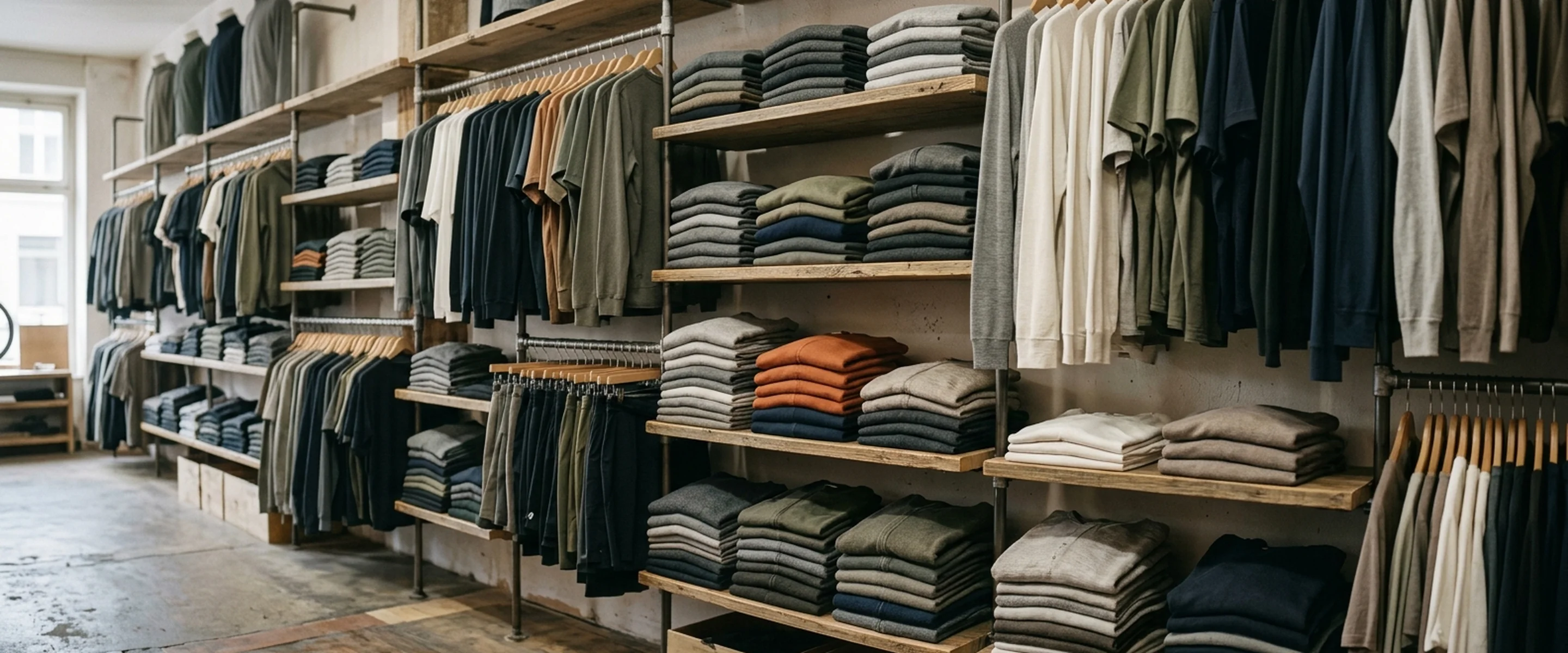
A club kit is bought once. A shop's rail has to be sold twice — once to you, and once again over the counter.
Retail-Ready: What Has to Be on the Garment Before It Can Go on a Rail
A club order can arrive in a bulk polybag and be handed out at a club night. A retail order cannot. Everything below is the difference, and it is specified at tech-pack stage rather than added afterwards.
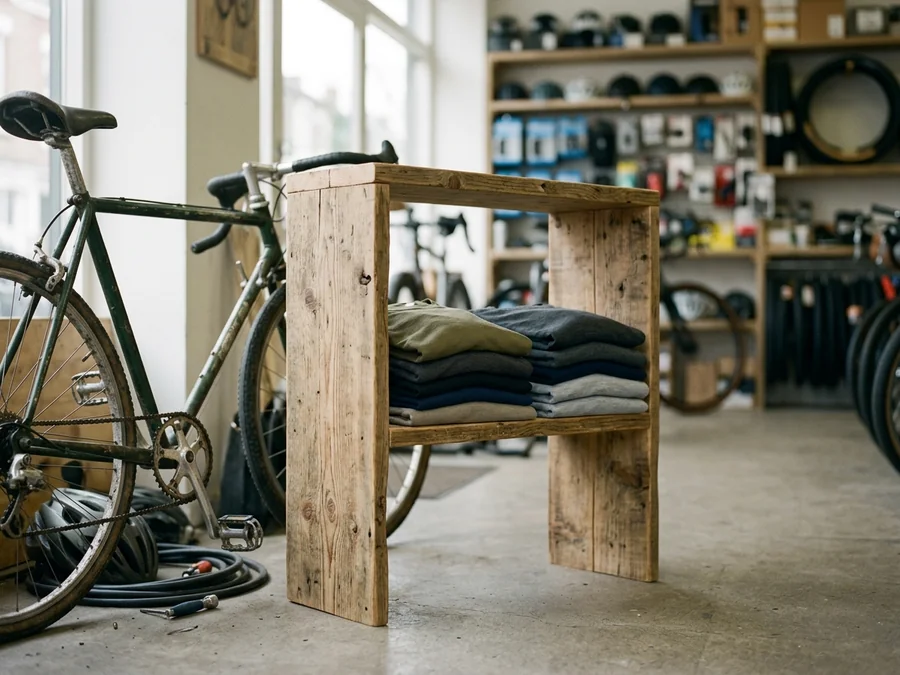
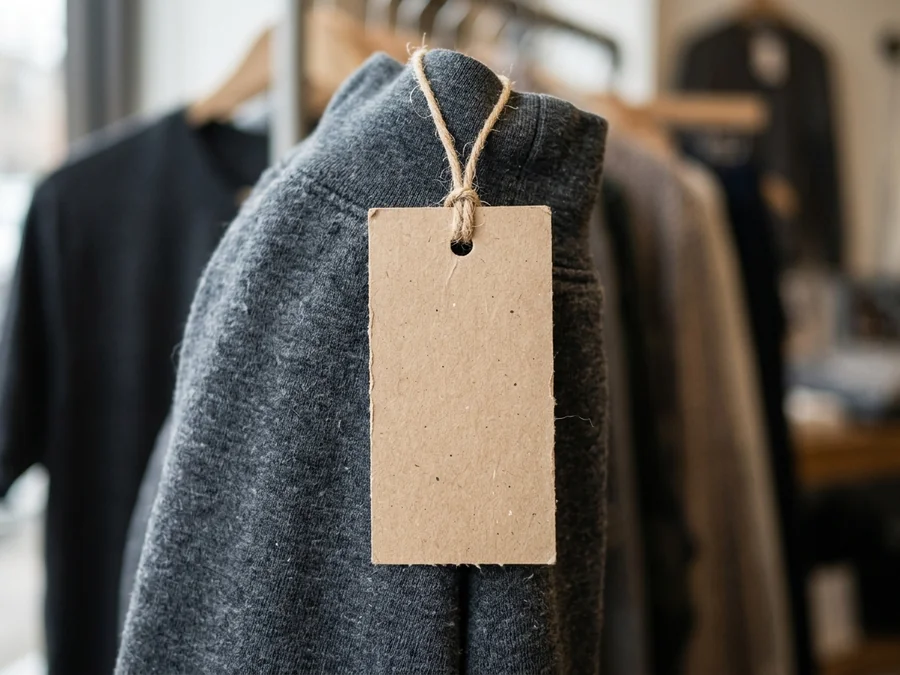
The Retail Pack, Item by Item
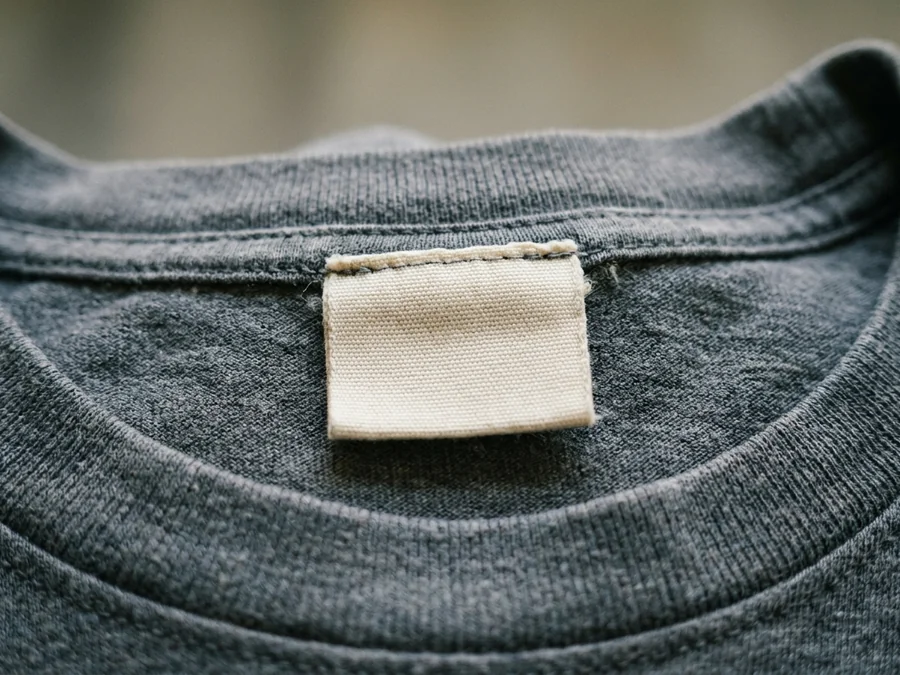
- Main label. Your own mark at the neck, woven or printed to your artwork.
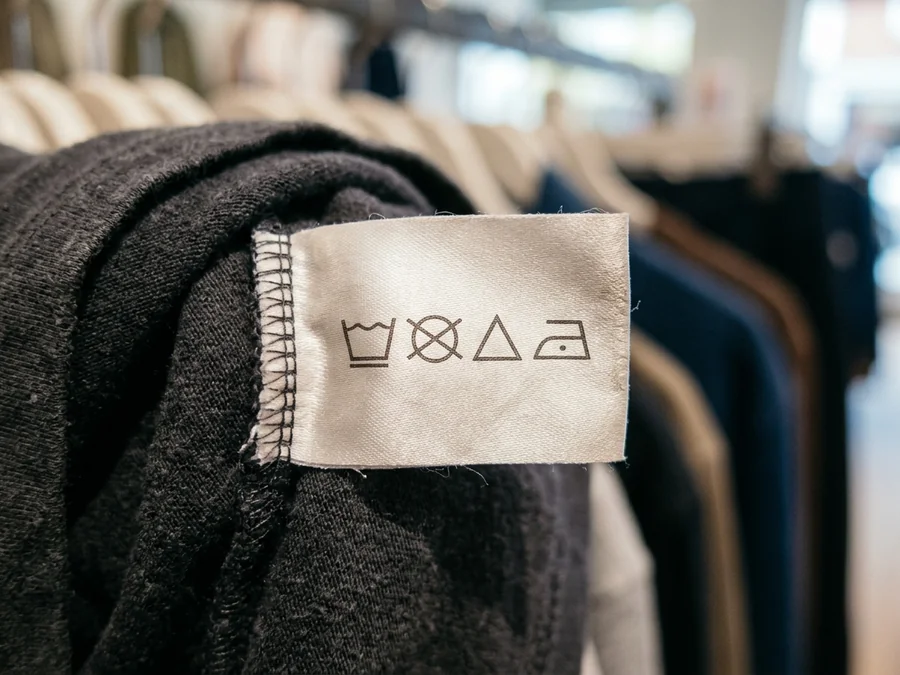
- Care and composition label. Fibre content and wash symbols, to the format the market you sell into expects.
- Hangtag. Your artwork, on the garment, ready for the counter.
- Size card or size marker. So a customer can read the size off the rail without unfolding anything.
- Individual poly bag. Per garment, so it reaches the shelf in the state it left the line.
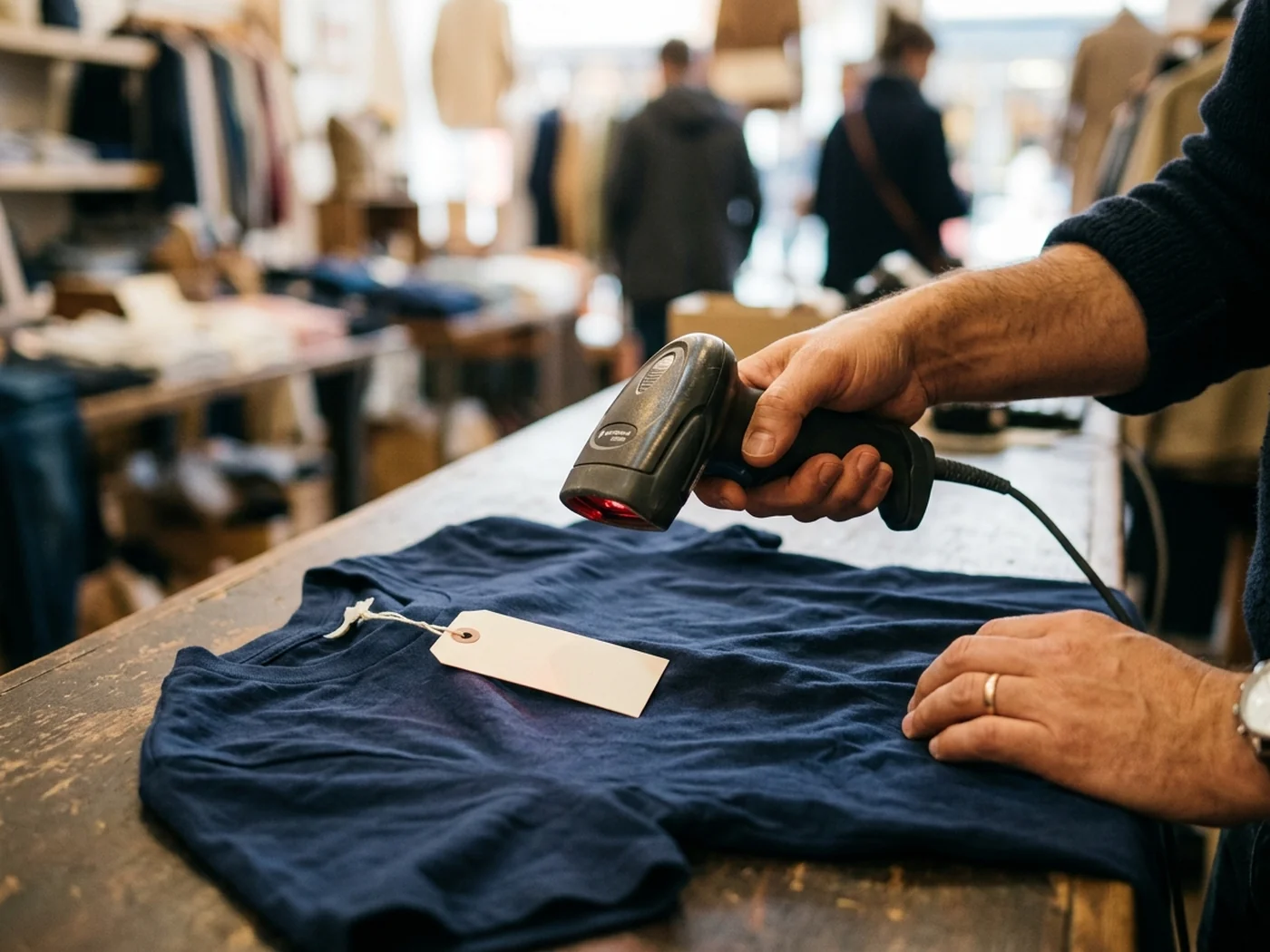
- Barcode position. We print the position and the code you supply. We do not apply for barcodes on your behalf and do not issue code values.
Where a Retail Pack Usually Goes Wrong
Not in the making. In the specifying: it is left off the first tech pack, discovered at delivery, and then applied by hand in the back of the shop on the week the range was supposed to go out. Every item above is cheap when it is on the tech pack and expensive when it is not.
What It Costs You to Skip
A garment without a main label and a care label is not a retail garment; it is a blank. It can still be sold, but it will be sold as an unbranded item on your rail rather than as your own line — which is the entire reason for developing a house-brand SKU in the first place.
Labelling for the Market You Resell Into
Country of origin, fibre content, care symbols. We produce to the labelling spec you give us — and we are deliberately not the party that decides what that spec is.
- Origin
- Composition
- Care
What We Do
Produce labels to your written specification. It goes on the tech pack, it gets checked at the same inspection gates as everything else, and it arrives on the garment rather than in a box beside it.
- Origin marking, to the wording your market requires
- Fibre composition, in the language and format you specify
- Care symbology, matched to the market you sell into

What We Don't Do, and Won't Pretend To
We do not give legal or regulatory advice, we do not certify your product for a market, and we do not act as your compliance agent. If a market requires a declaration we are not qualified to make, the honest answer is that you name the requirement and we build to it.
Why We Say This Out Loud
Because a supplier who implies they will "handle compliance" for you is selling reassurance rather than a service, and the reassurance evaporates at exactly the moment it matters. Naming the boundary now is worth more to a retailer than a comfortable sentence would be.
Sample, Trial, Bulk: Three Steps, Each One Smaller Than the Risk It Removes
Not a discount ladder — a sequence for finding out whether a thing sells before you own a lot of it. Sampling method lives on Sampling & Prototyping; the six shipping inspection gates live on Quality Control.
-
Sample 5 to 7 days
- What you get
- A working garment in your specification, with your labelling and decoration applied, so fit and finish are judged on the real thing.
- What it removes
- The risk of discovering at delivery that the cut is wrong for your customers.
- The boundary
- Sample pieces sit outside the order count entirely.
Fit judged on a garment, not on a drawing. -
Revisions 2 rounds
- What you get
- Two rounds of changes with no additional sampling charge. On retail work the changes are nearly always proportions and labelling, not construction.
- What it removes
- The pressure to sign off a sample that is nearly right.
-
Trial bulk, 20 to 30 days
- What you get
- A narrow, shallow production run — the first-order shape argued for earlier — counted from sample confirmation rather than from your first email.
- What it removes
- The risk of scaling a range before a single unit has crossed a counter.
-
Reorder the same file, a wider run
- What you get
- Production against the confirmed pattern and colour reference already on your account, so widening is an ordering decision rather than a fresh development.
- The honest boundary
- A reorder is still its own production order. It carries the same per-style, per-colourway minimum as the first — the figure is stated once, in the FAQ — and it runs the same bulk window. What you save is development, not the minimum and not the clock.

Rush: bulk can compress to 12 to 15 days where a production slot is confirmed in advance. Asking after a date has already slipped is a different and usually worse conversation.

Ready to Put a First Order Against This?
Talk to Our Development TeamThe Reorder Loop: Flagged, Ordered, Arrives, Back on the Shelf
A house-brand SKU only earns its rail space if restocking it is boring. Four beats, repeated — the same shape every quarter, so it stops being a project.
The Four Beats
-
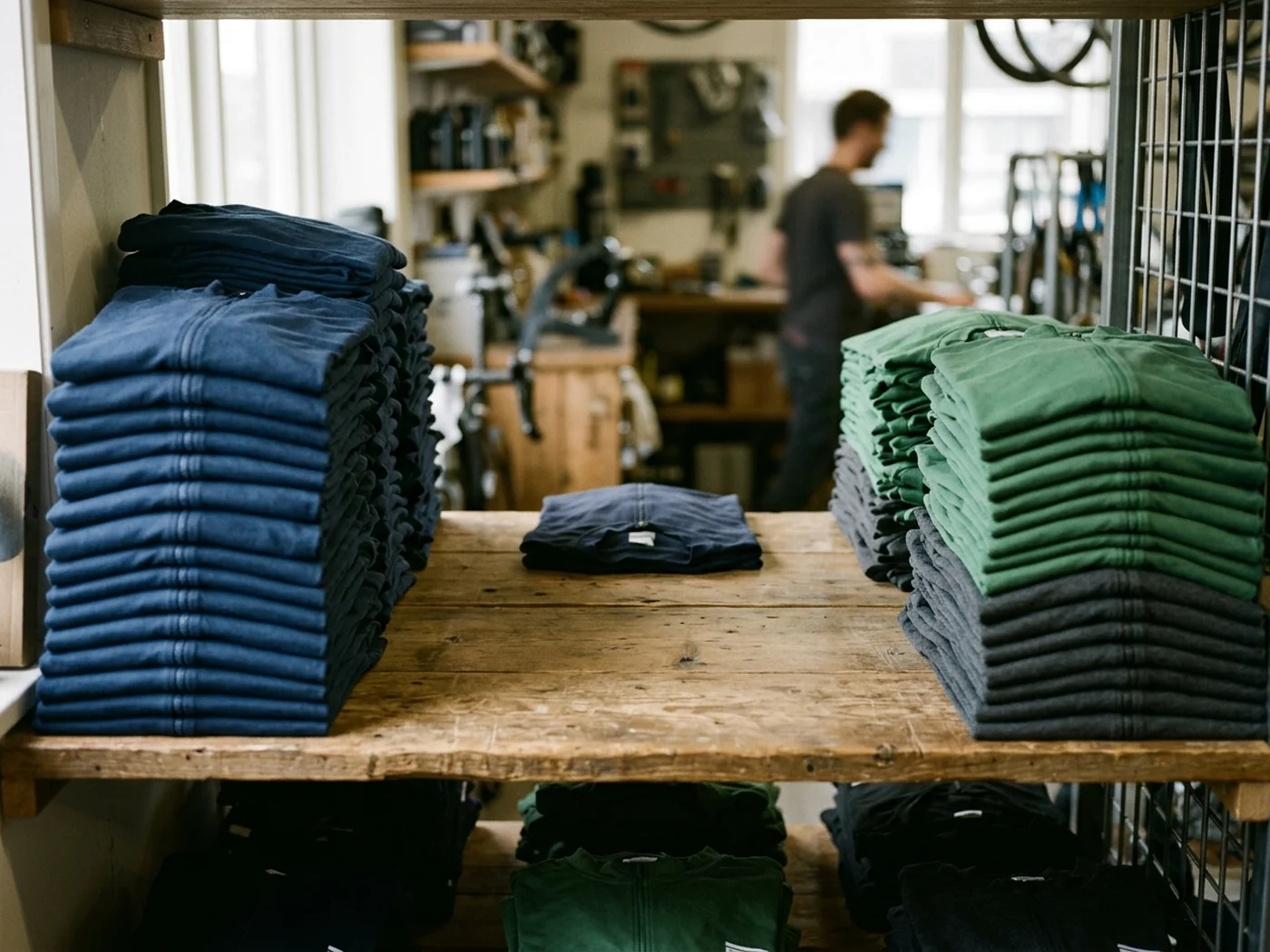
Flagged
A colourway drops below the level you set. The trigger is yours: you know your lead time and your turn, we do not.
-
Ordered
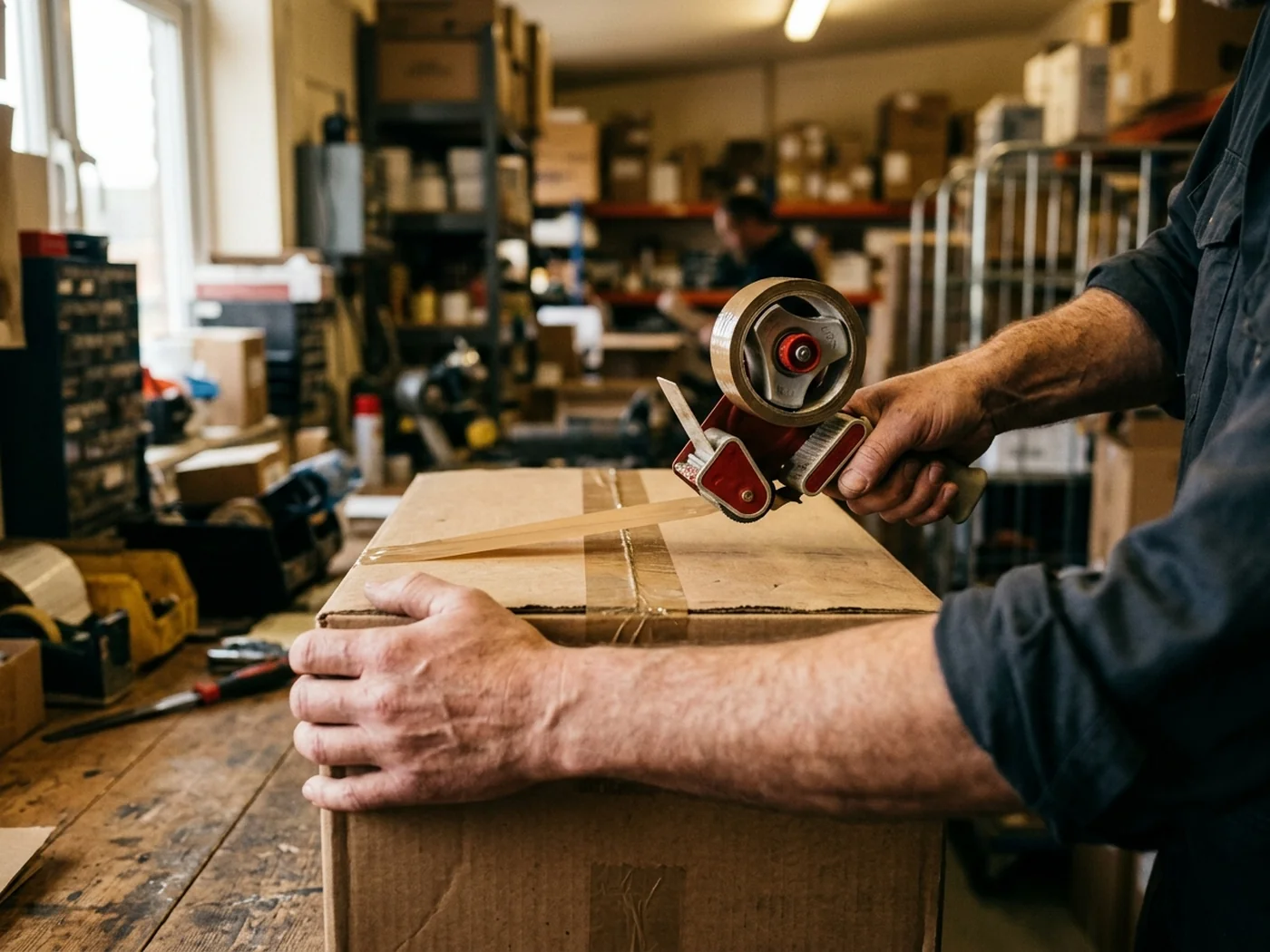
A restock is placed against the standing colourway already on file — same pattern, same colour reference, same labelling.
-

Arrives
Produced in the ordinary bulk window, counted from order confirmation because nothing needs re-sampling.
-

Back on the shelf
Same garment, same shelf position, same tags. The customer who bought one in March can buy the same one in September.
Why the Trigger Belongs to You
We can tell you the production window; we cannot tell you your own turn rate. A restock point that works is calculated backwards from your sell-through and your tolerance for an empty peg — which is why we ask for the level rather than proposing one.
What Shortens the Loop
Nothing about the physical production: the garments still get cut, sewn, decorated and inspected. What shortens it is that the pattern, colour reference and labelling are already confirmed on your account, so a restock skips development entirely and starts at production.
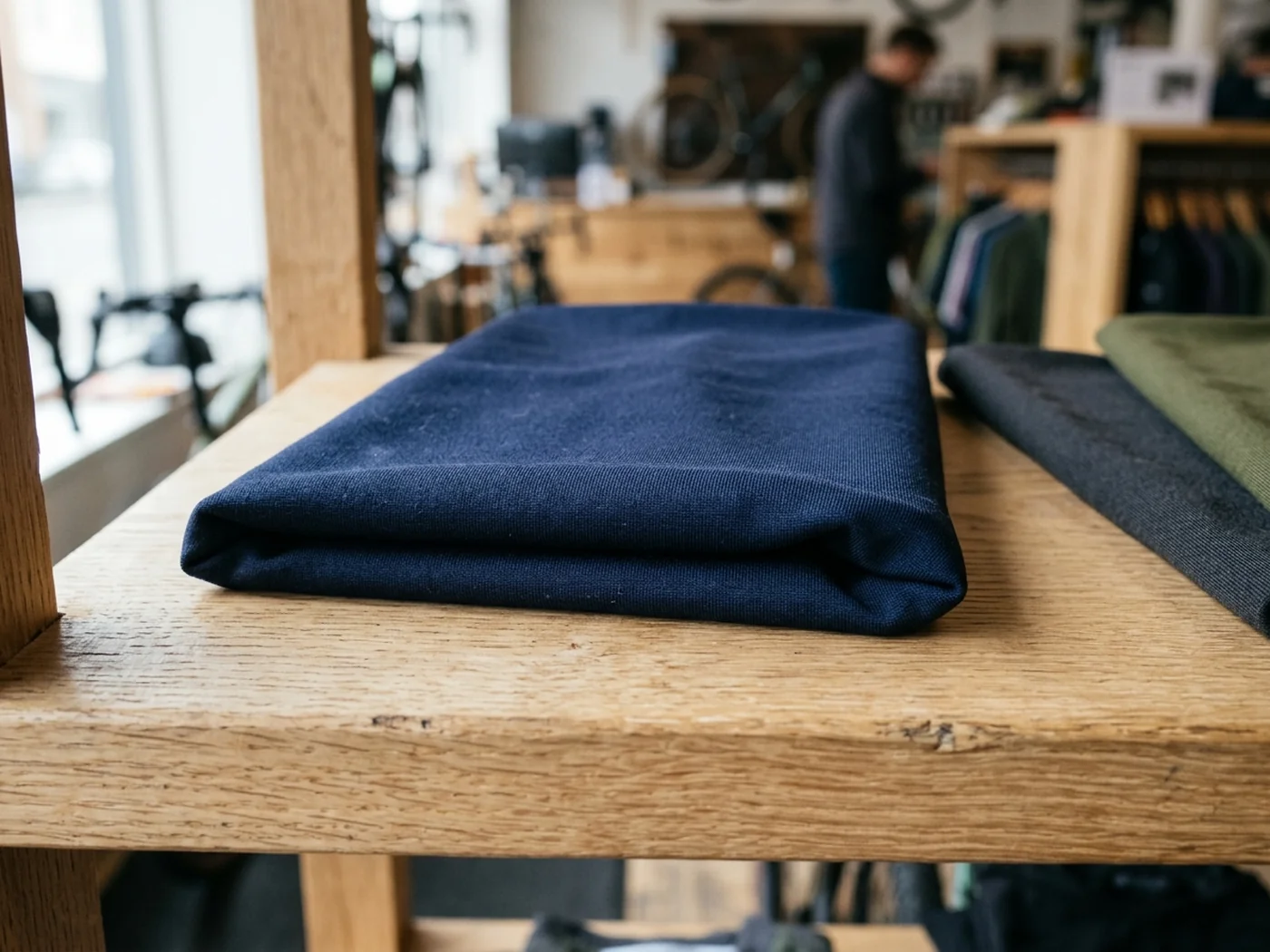
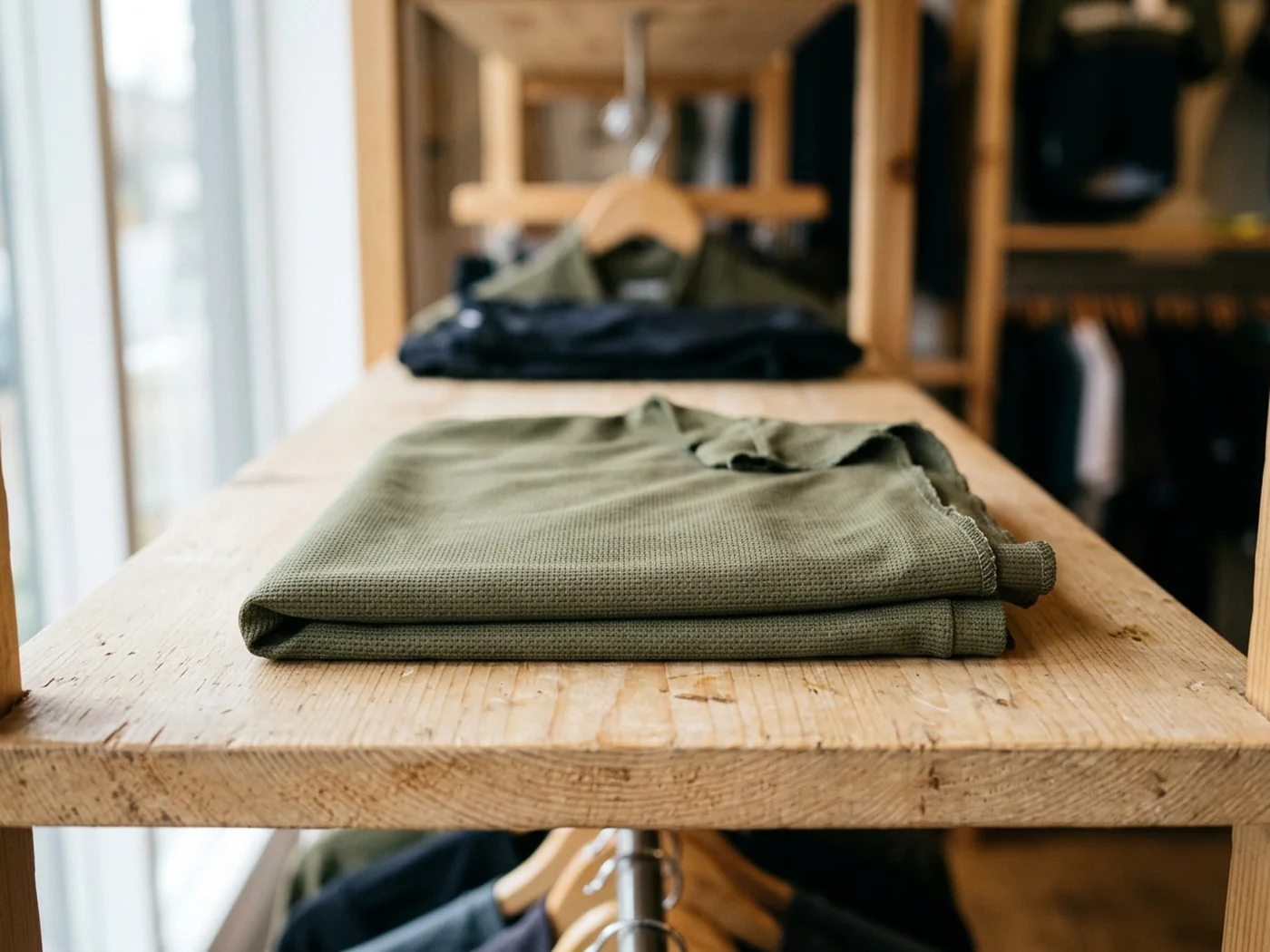
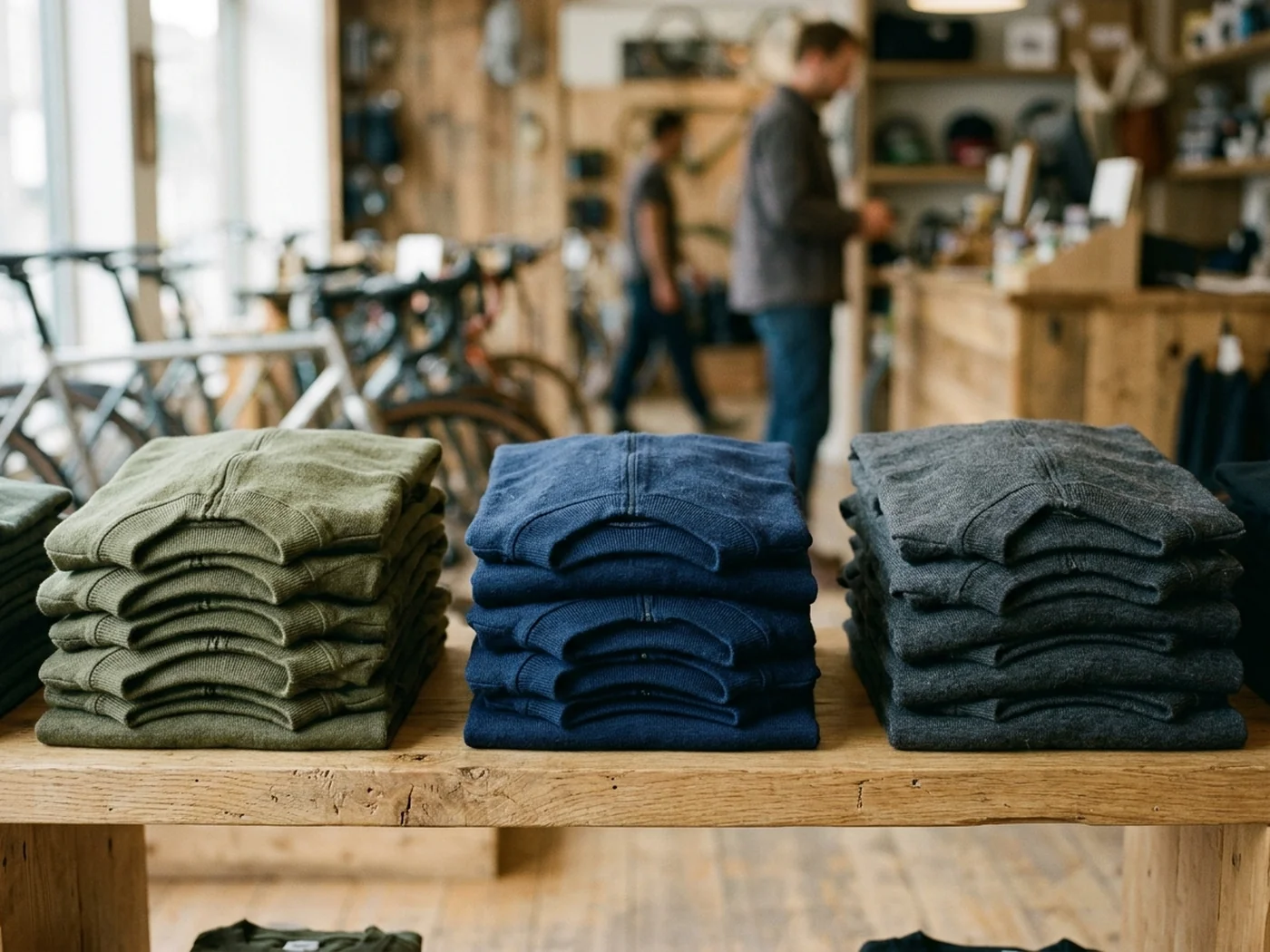
Same Navy Next Season: How a Standing Colourway Stays the Same
A customer who liked the navy last year will hold last year's garment up against this year's. Batch consistency is not a quality slogan here — it is whether that comparison passes at the counter.
What Actually Carries Between Batches
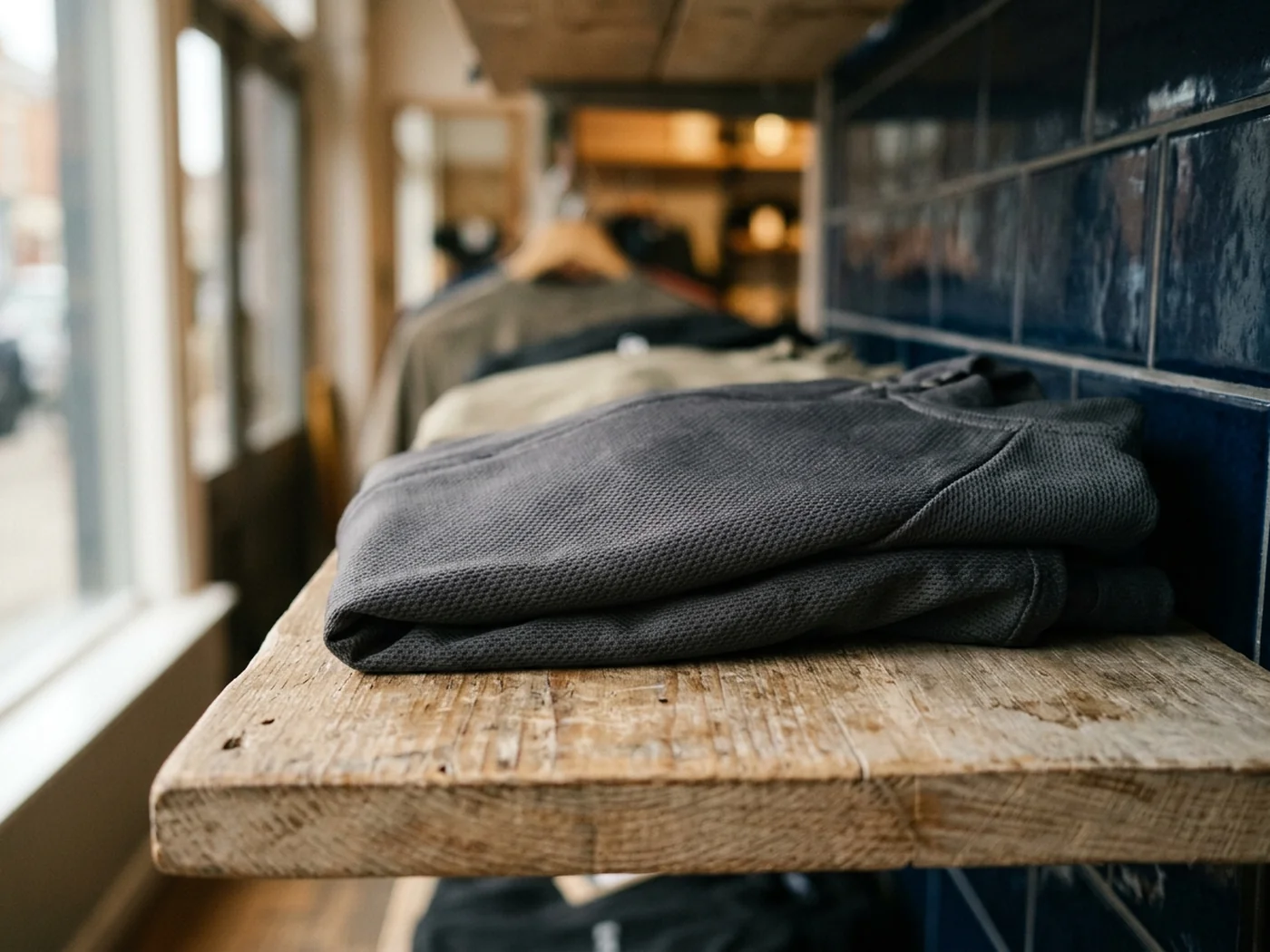
Not memory, and not goodwill: the confirmed pattern and the approved colour reference held on your account after the first order ships. A restock is produced against that record rather than re-derived, which is the mechanism behind everything else in this section.
Standing Colourways vs Season Colours
- Standing colourways are the ones you commit to keeping on the rail. They are worth holding a confirmed reference for, because they will be compared against themselves.
- Season colours are deliberately temporary. They can be adventurous precisely because nobody will hold one up against next year's.
Deciding which is which before the first order is the single most useful planning conversation a retailer can have with us, and it costs nothing.
Where Consistency Is Checked
At the same six inspection gates every order passes before shipping — set out in full on Quality Control and not repeated here. The one that matters for this section is the mid-run check against the confirmed reference sample, because that is where a drift gets caught while it can still be corrected.
What We Won't Claim
That two batches are identical. Cloth is dyed in lots and a lot has tolerance. What we will say is which reference the batch was matched against, that the reference is the same one your first order was approved on, and that the check happens before the goods ship rather than after you unpack them.
Fabric family grading — the weights and finishes a standing colourway is dyed into — is set out on Custom Fabric Development. Water-resistant outer layers use a DWR finish; that is the claim we make and the only one we make about them.
One Order, Three Stores: A Chain That Buys Together and Counts Separately
The only retail case on this site, described by structure and scale rather than by name. It is more useful read in depth than padded out with two more like it.
An Australian bike-shop chain: three stores ordering jointly, a store house-brand jersey held as a standing four-colourway set, restocked quarterly. The chain is described by type, scale and structure only; no name, no marks, no quoted staff.
Why Three Stores Order as One
Each store has its own customers and its own curve, but one development conversation covers all three. Ordering separately would mean three sets of samples and three approval rounds for what is structurally one garment in one set of colours.
What Each Store Keeps
Its own line inside the shared order: its own size split, its own depth per colourway, its own delivery. The joint part is the development, the colour reference and the production slot — not the numbers, which stay per store.


What the Shared Clock Buys Them
One restock cadence instead of three. The quarterly rhythm is set across the chain, so every store's stock is measured against the same calendar and one production run covers the lot.
What This Case Does Not Prove
It is one chain, in one market, with one product type. It says nothing about what any other shop's size curve looks like, and it is not evidence of a lower minimum — the four standing colourways each met the ordinary per-style, per-colourway floor on their own, which is exactly why four is the number.
What a Quote Actually Depends On, and What to Send Us
We do not put figures on this site, and this section is not a workaround for that. It is the list of what changes a quote, so the brief you send comes back with a real number instead of a range.
- Scenario
- Fabric
- Decoration
- Quantity
- Lead time
The Five Things That Move a Quote
- Scenario. What the garment is for changes the pattern and the make-up, before any material is chosen.
- Fabric. Weight and finish within our nylon/elastane family, chosen against the piece and the season.
- Decoration. Full-width sublimation, heat transfer, embroidery, reflective print — different processes, different work.
- Quantity. Depth per style and per colourway.
- Lead time. A standard window and a confirmed rush slot are not the same job.
What to Send for a Real Answer
- Which pieces, and roughly how deep per colourway.
- Your size split — ideally read off your own sell-through rather than estimated.
- Artwork as vector files with fonts outlined, plus a colour reference for each mark.
- Your labelling spec, if you have a market requirement.
- The date it has to be on the shelf.

How fast you hear back. Inquiries are answered within 24 business hours. A quote follows within 48 hours once a complete tech pack is in hand. Send files by email to [email protected] — the form on this page carries your details and message, it does not take attachments, and we would rather say that plainly than put a button on the page that quietly does nothing.
Questions From Bike Shops and Retailers
What retail buyers ask before sending a first wholesale brief.
30 pieces per style per colourway. Three things follow from that, and they are the three that matter to a shop:
- Sizes mix freely inside one colourway — you set the split, weighted to what your till says clears.
- Each additional colourway counts its own 30, so a four-colour standing set is four counts.
- Sample pieces sit outside the count entirely.
Reorders are counted the same way as first orders. The full ordering logic lives on MOQ & Wholesale Pricing.
Yes — that is the normal case here. Your own main label, care and composition label, hangtag, size card and individual poly bag, with a barcode position printed to the code value you supply. We do not issue barcode values or apply for them on your behalf.
XS–3XL, in separate men's and women's patterns. Your own size chart can replace ours during development, which is usually the better option for a shop with sell-through history behind its chart.
A working sample takes 5 to 7 days once the specification is complete, and two revision rounds carry no additional sampling charge. Bulk runs 20 to 30 days from sample confirmation. Rush production can compress to 12 to 15 days with a production slot confirmed in advance.
It is produced against the confirmed pattern and approved colour reference held on your account, and checked mid-run against that reference before shipping. We will not claim two dyed lots are identical — cloth has tolerance — but the reference does not change and the check happens before the goods leave.
Yes. Development, colour reference and production slot are shared; each store keeps its own line, its own size split and its own delivery.
We produce to the labelling specification you give us — origin, fibre content, care symbols, in your market's format. We do not give regulatory advice and do not certify products for a market. You name the requirement; we build to it.
Capacity is 60,000 garments a month across 5 dedicated sportswear lines, with 150+ staff including 10 in QC, and six inspection gates before anything ships — set out in full on Quality Control and not repeated here. We export to 20+ countries, and bike shops and retailers are one of the four buyer types this factory is built around.
Gloves, footwear of any kind including overshoes, helmets, and hardware such as computers and lights. None of those are garments and none come off our lines. We also do not hold finished stock — every programme here is produced against a specification.
Inquiries are answered within 24 business hours. A quote follows within 48 hours once a complete tech pack is in hand.

Start a Wholesale Conversation
Send which pieces, roughly how deep, and the date it has to be on the shelf. That is enough for a real answer rather than a brochure.
Tech pack, artwork, size list and labelling spec go by email to [email protected] — this form carries your details and message only.