About Cycling Apparel Factory: One Category, and the Parts We Say No To
- ISO 9001:2015
- OEKO-TEX® STANDARD 100
- BSCI-audited
- We do not make gloves, footwear, overshoes or hardware. Not as a capacity limit — those are different trades with different machines, and we would be learning them on your order.
- We do not hold environmental certification, and we do not calculate a carbon figure. What we can tell you about is the process itself.
- We do not decide your fit for you. We develop to a specification, and where there isn’t one yet we will tell you what we would assume before we cut anything.
- ISO 9001:2015
- OEKO-TEX® STANDARD 100
- BSCI-audited
We Only Make Cycling Apparel, and That Is a Decision Rather Than a Limitation
A factory that makes cycling kit, gym wear, hiking layers and workwear on the same floor is not lying about any of it. But every one of those is a different set of habits — where the seams go, how much the fabric is allowed to grow, which stitch survives being stretched over a shoulder that is rotating forwards for four hours. We only have one set of habits, and this is the one.
What Narrowness Actually Buys You
- The block already exists. Cycling patterns are the only patterns in the archive, so a road jersey does not start from a generic torso block that someone then adapts. There is no adaptation step, because there is nothing else to adapt from.
- The fabric list stopped growing. We run one material family, and we run it constantly — which means the answer to how does this behave after twenty washes comes from the same cloth we would cut yours from, not from a supplier’s leaflet.
- The operator has seen this seam before. The sewing floor makes the same handful of garment types all week. That is unglamorous and it is the single biggest reason a second order looks like the first one.
And What It Costs You
If your range needs gym wear, hiking layers, or anything with a hard component in it, we are the wrong factory and there is no version of this conversation where we are not. We would rather say that in the first reply than find out at sampling.
Full cycling kit — jersey, vest, outer layer, warmers, cap, and how they get developed as one set — is on Complete Cycling Kit Development.
Since 2011, and What Fifteen Years Actually Left Behind
- Since 2011
- 15+ years, one category
We have been making cycling apparel since 2011 — 15+ years in the same category, as of 2026. On its own that number tells you almost nothing, so here is what it turned into.
An Archive, Not a Memory
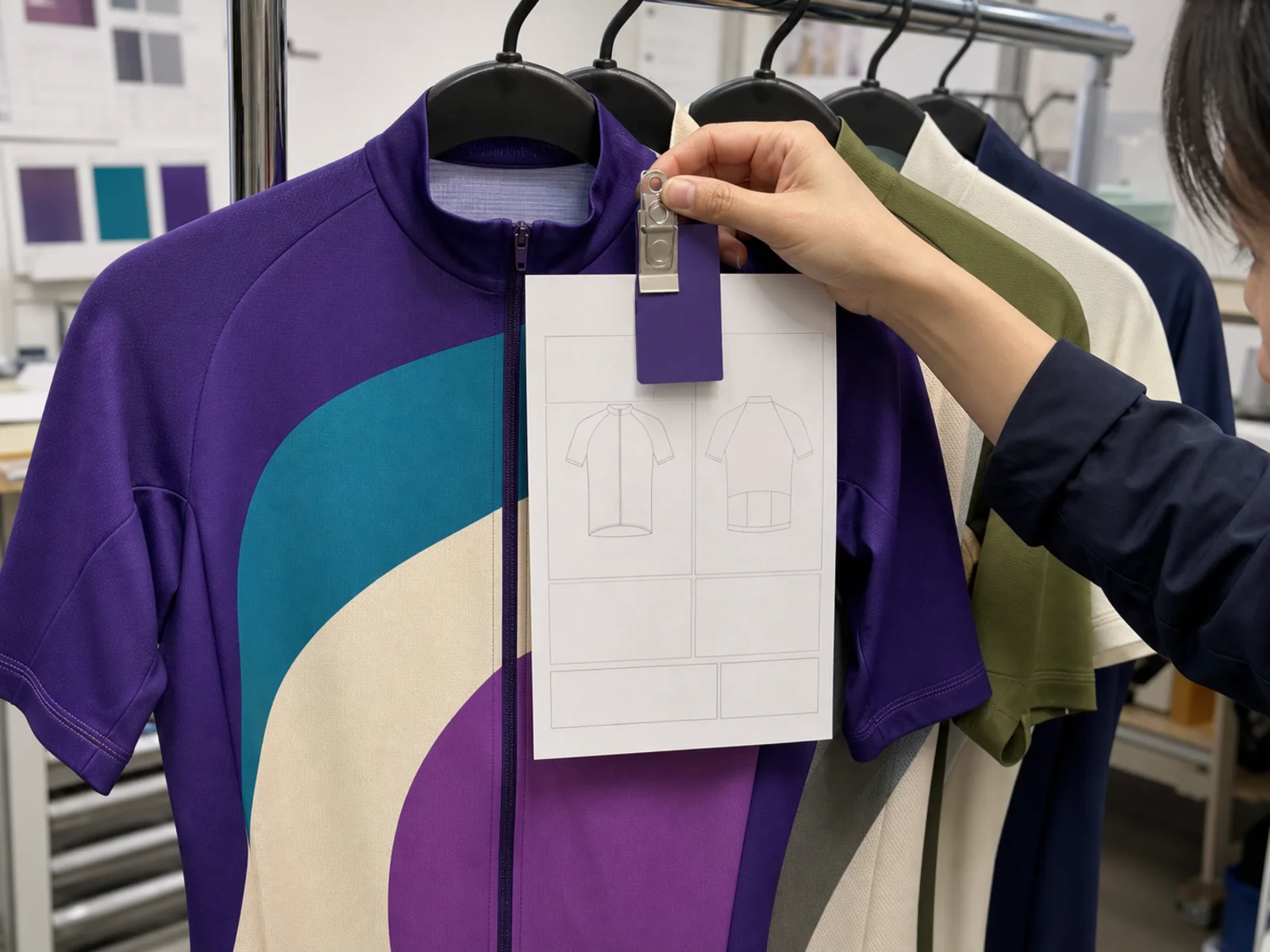
Confirmed patterns and spec sheets stay filed here after an order ships, by buyer and by style. Fifteen years of that means a returning buyer’s block is usually already on a hook rather than in someone’s head. What that does to a reorder is the whole of a later section on this page; it is not repeated here.
A List of Questions That Got Shorter
The useful residue of fifteen years is knowing what to ask before quoting rather than after. Fabric weight range, decoration method, the size spread of the roster, whether the sponsor artwork is final — a quote built on our assumptions instead of your answers is a number you cannot check, and every one of those questions is on the list because a quote once went out without it.
A Category That Stopped Moving
The honest version: we did not spend fifteen years expanding. Cycling apparel in 2011 and cycling apparel now are the same brief with better fabric. We did not add gyms, team sports, or hard goods, and the reason is in the section above.

Five Processes in One Building, and What Leaves Each One
- 5 stations
- One building
-
Station one
Cutting
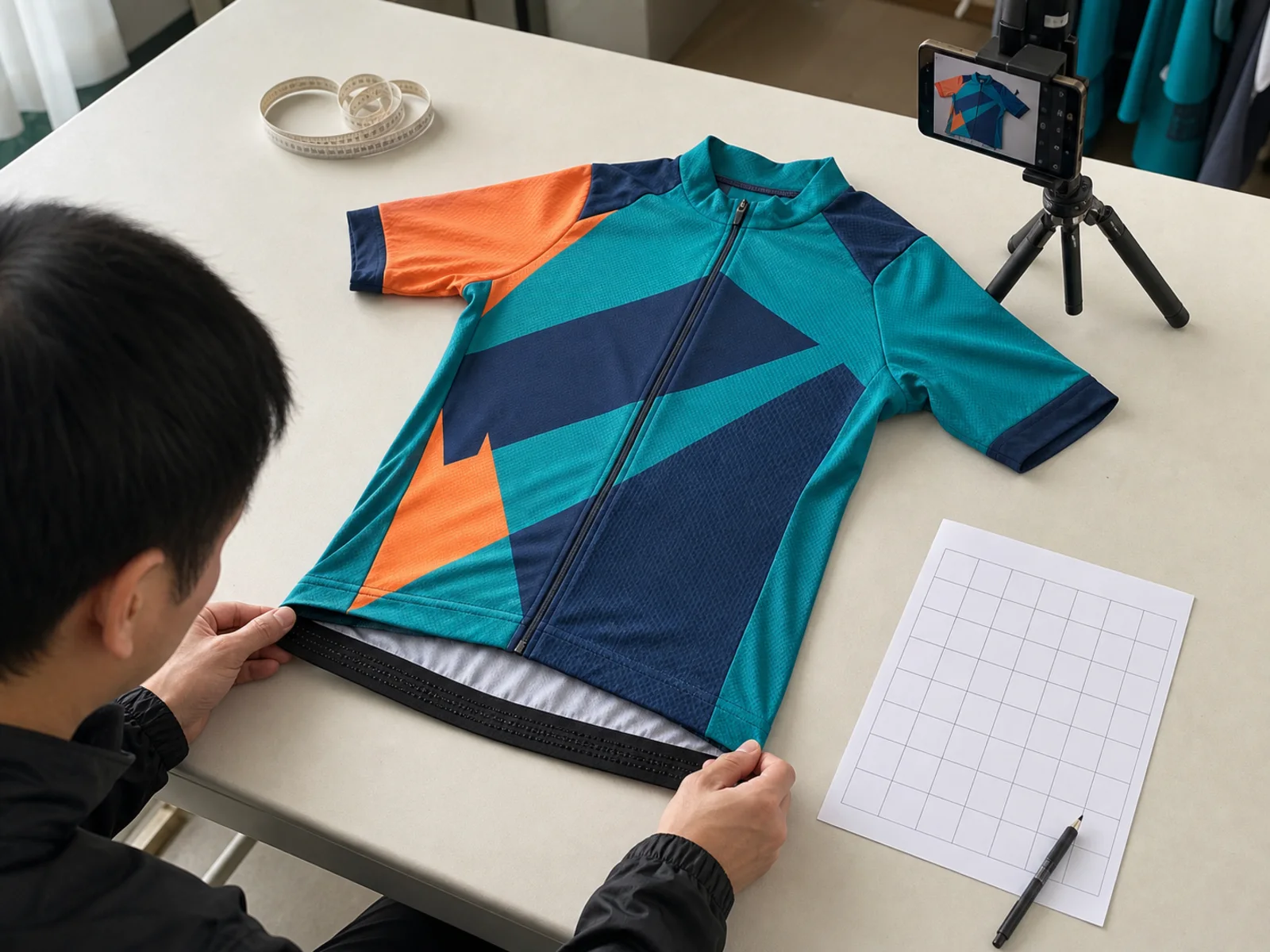
→ stacked panels, counted by sizeLaser and ultrasonic automatic cutting tables lay up and cut the marker. What leaves the station is a bundle of panels per size, not a roll of fabric and a plan for it.
-
Station two
Sewing
→ a finished garment bodyLockstitch, coverstitch and four-thread overlock machines, plus computerised embroidery; seam taping and seam-sealing equipment for the outer layers.
-
Station three
Printing & decoration
→ printed panels, before assemblyWhich is the point of it being here rather than at a subcontractor — see the section on decoration below. The methods are not listed twice.
-
Station four
Quality control
→ a release, or a holdOne signature either lets the batch move or stops it. What a hold actually costs you is its own section further down; it is not repeated here.
-
Station five
Packing
→ a sealed carton with its paperworkLabels, hangtags, poly bags and the carton documentation, matched to the signed sample.
Why the Corridor Matters More Than the Word “Integrated”
When you ask can the print run across that seam, the answer is a walk down the corridor. It is a small thing that shows up as days: a question that would otherwise go out to a second supplier and come back as a maybe gets answered the same afternoon, by someone who can go and look.
The Three Figures, and Where They Are Explained
These are here for scale reference and nothing else — the argument of this section is the handoffs above, not the size of the building.
- 5,000 m²of floor
- 5dedicated sportswear lines
- 60,000garments a month
What they mean for your delivery window — where your order sits in the schedule, and what changes when an order is large — is worked out on Factory & Production Capacity. We do not re-derive it here.
Who Draws It, Who Judges It, and Who Signs It Off
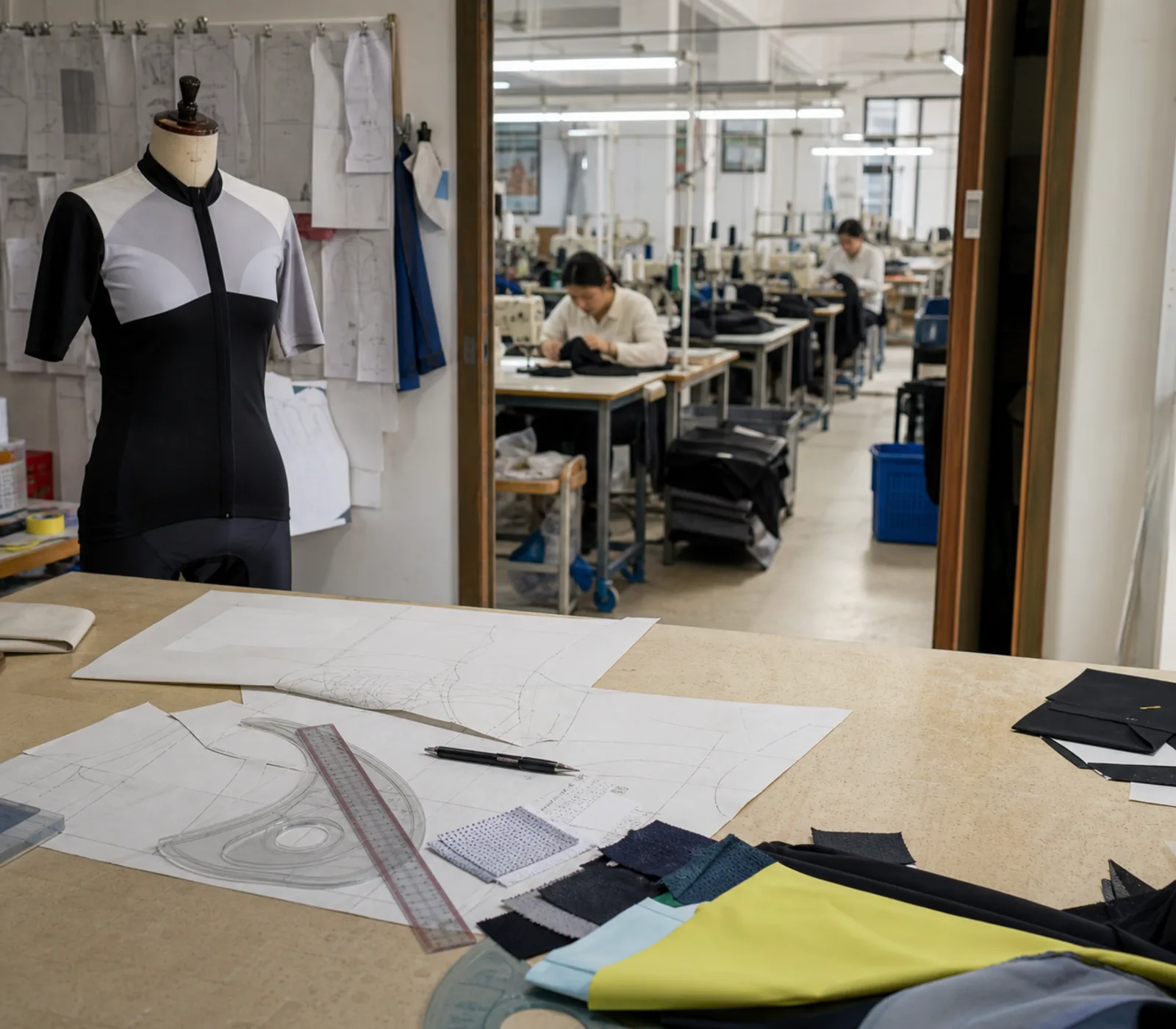
There are 150+ people here. What matters to your order is not that number — it is that these three jobs are held by different people. The reasoning is in the open, because putting three named faces on an about page gives you three names you cannot reach; writing down how the decisions are split gives you something you can actually use before you order.
- Who draws it. The pattern team develops the block: from your tech pack if you arrive with one, or from your concept and reference garments if you don’t. Riding position, panel layout and grading come from here. How that work is actually done is on Riding Fit & Pattern Development.
- Who judges it. The sample gets read against a reference — the signed sample, or the garment you sent us — not against an opinion about whether it looks right. This is the separation that matters most: the person who sewed it does not get to decide whether it passed.
- Who signs it off. Nothing moves to bulk on a verbal yes. The confirmed sample is the reference every later inspection measures against, and it is the thing your order is produced to.
What We Are Not Telling You Here
We are not going to introduce you to a founder, a head of fit, or a head of QC by name, with a number of years set next to it. Partly because a name on an about page is a name you cannot reach; mostly because the reply to your enquiry comes from the development team, and which individual writes it is not a promise we can keep for a year. What we can keep is the separation above.
Fifteen years in one category buys you a shorter conversation, not a longer brochure.
Inspection Is a Separate Desk, and a Hold Is Supposed to Cost Something
- Six checkpoints
- 10 QC staff
The Separation Is the Whole Mechanism
QC sits at its own desk, and the batch is read against the signed sample rather than against the operator’s judgement of their own work. That is not a compliment to anyone; it is an admission: a person who has just spent two hours sewing a thing is the worst available judge of whether it is right. So they don’t get asked.
The One Kind of Fault We Cannot Catch for You
We cannot inspect against a specification that does not exist. If the tech pack does not say how much a panel may deviate, then the sample becomes the specification by default — and “it looks like the sample” is the only test anyone can run afterwards. Which is why the signed sample matters more than any inspection count on this page.
What a Hold Costs, Said Out Loud
A hold takes days. Not hours — the batch stops, the cause gets found, and depending on what it is, panels get re-cut or a run gets re-sewn. Two things follow from that, and the second is the one that matters:
- We would rather hold than ship it. A carton that leaves with a known fault becomes your problem in a country we cannot reach.
- You hear about it while it is happening, not on the delivery date. This is the actual commitment in this section: if your date is at risk, the message goes out when we know, not when it is due. We are not going to absorb it silently and hope the days come back somewhere else.

One Fabric Family, Which Is Also the Reason We Cannot Sell You a Recycled Polyester Story
- Two-component
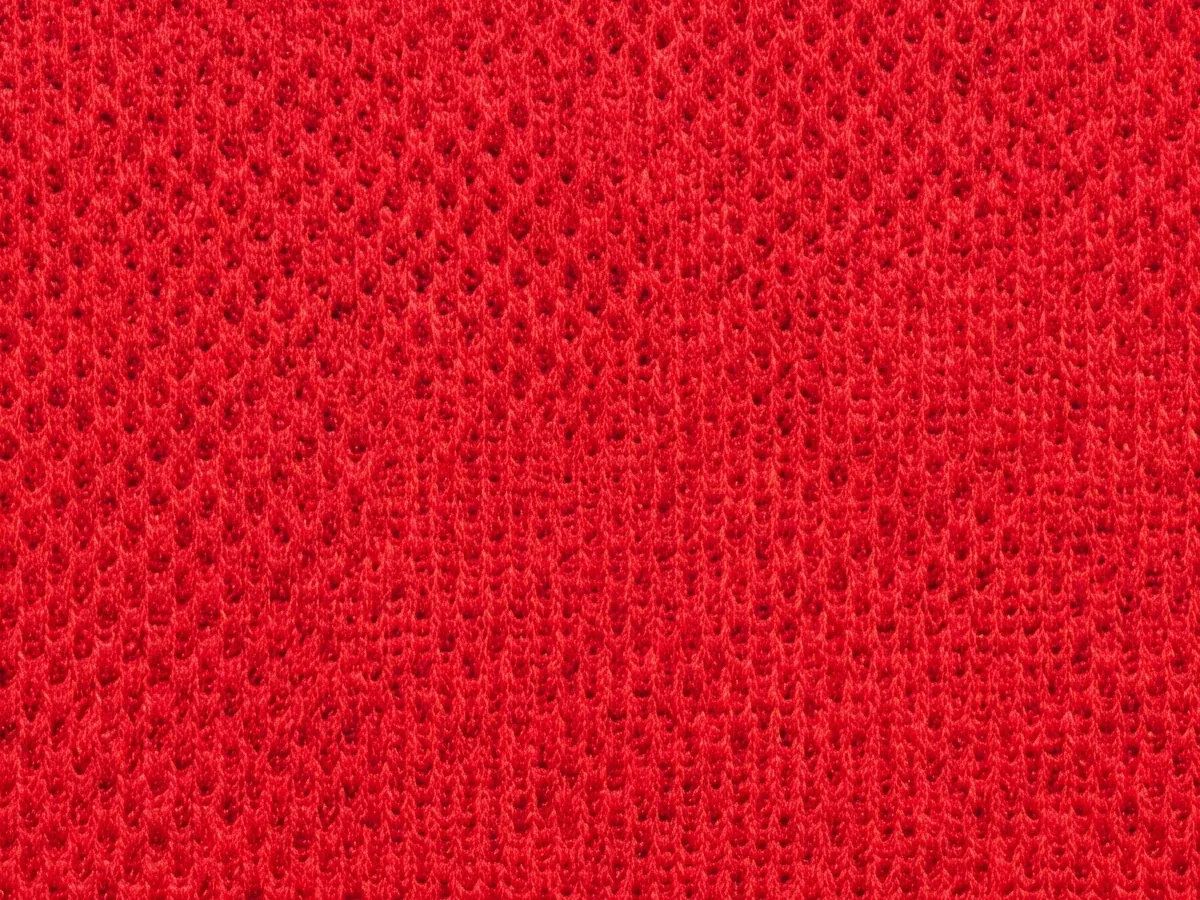
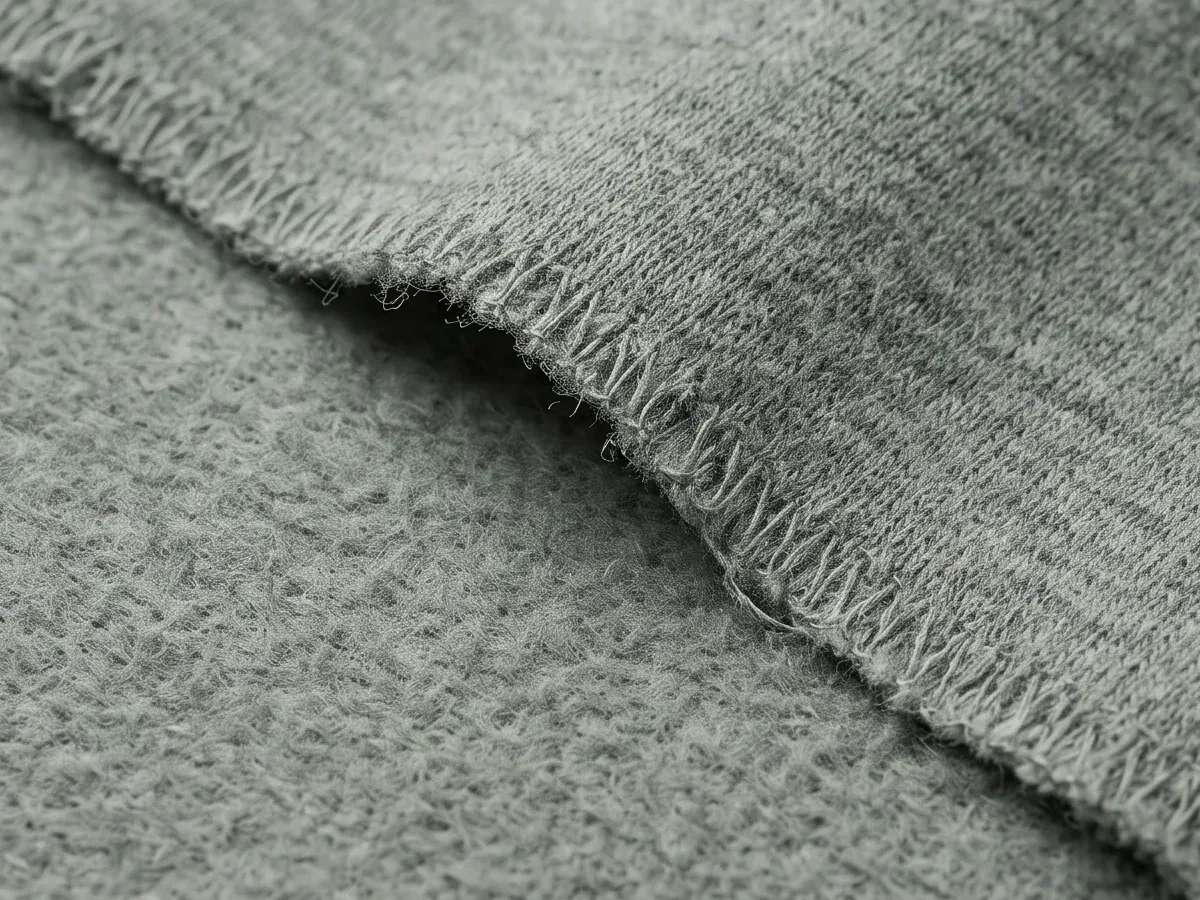
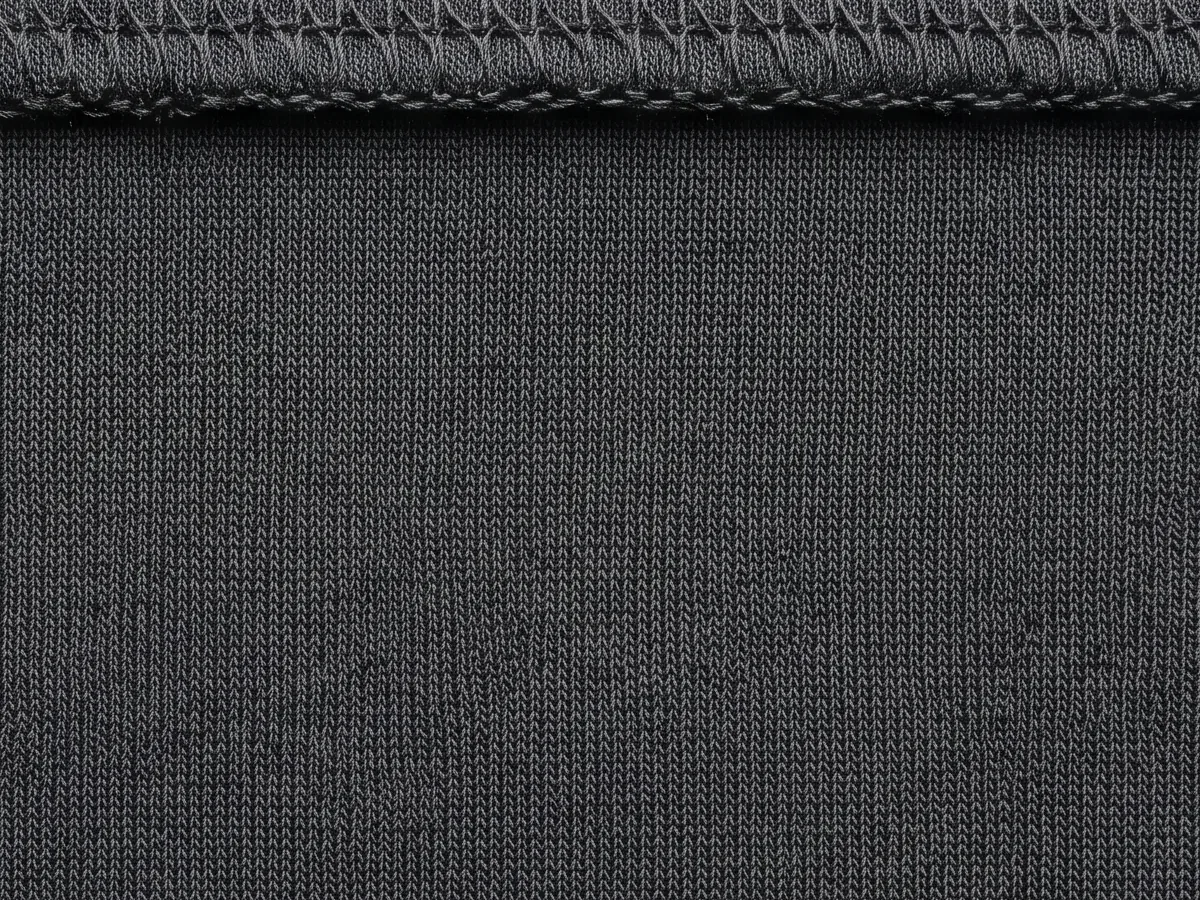
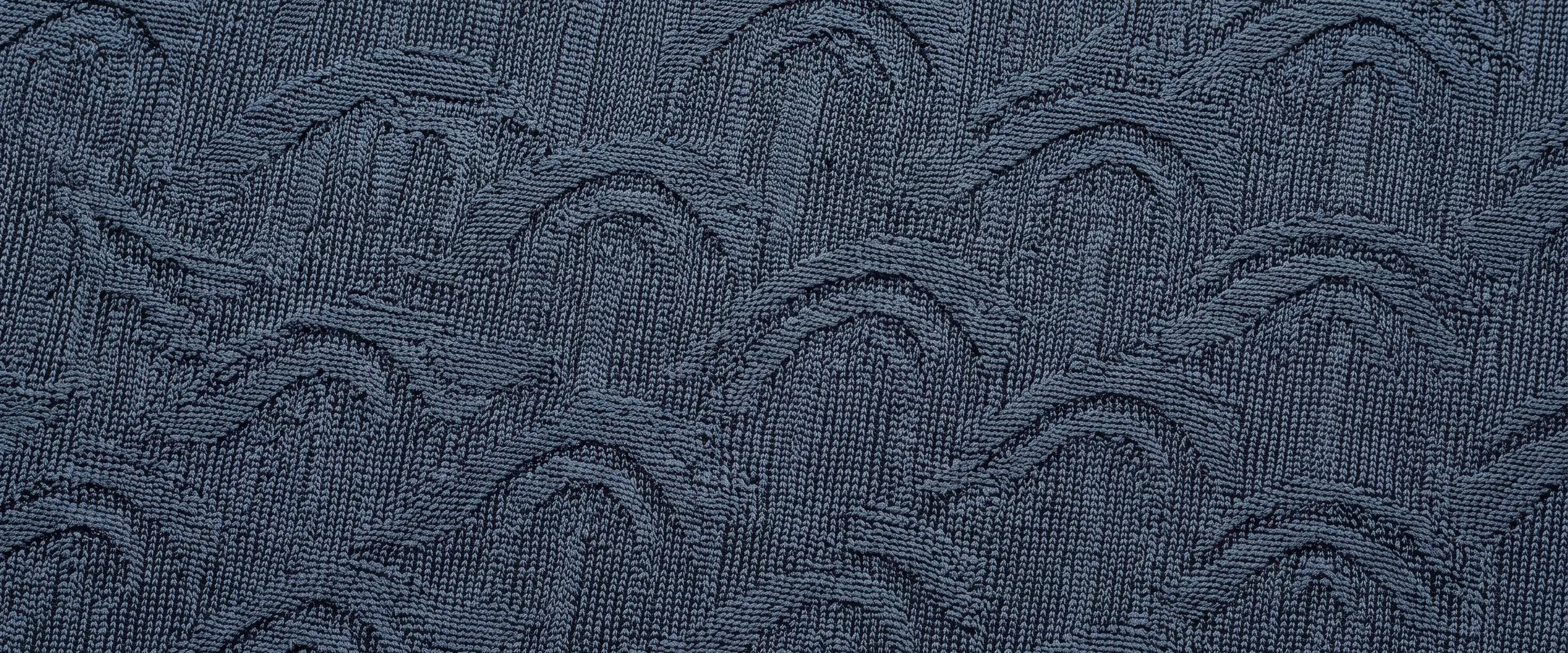
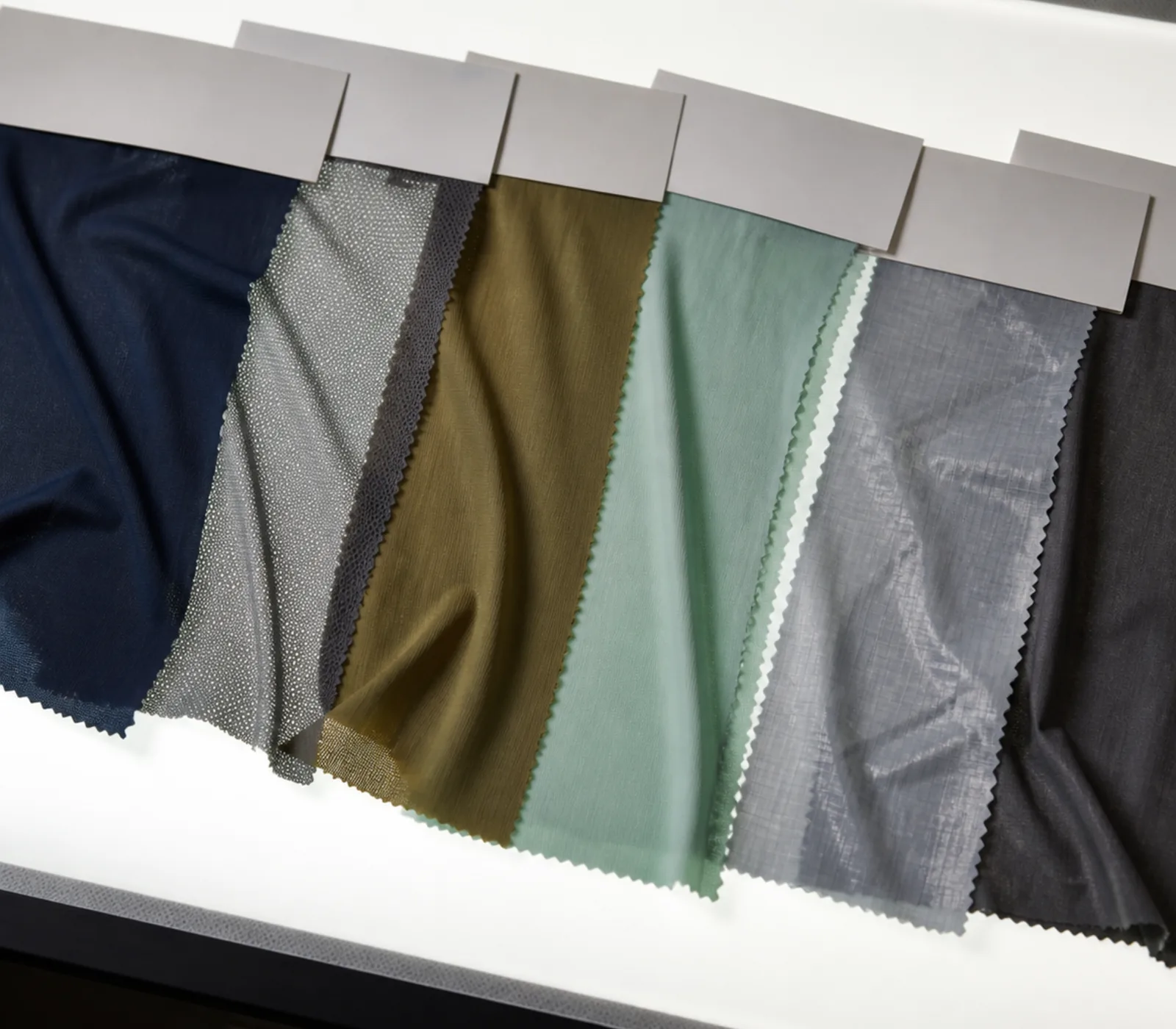
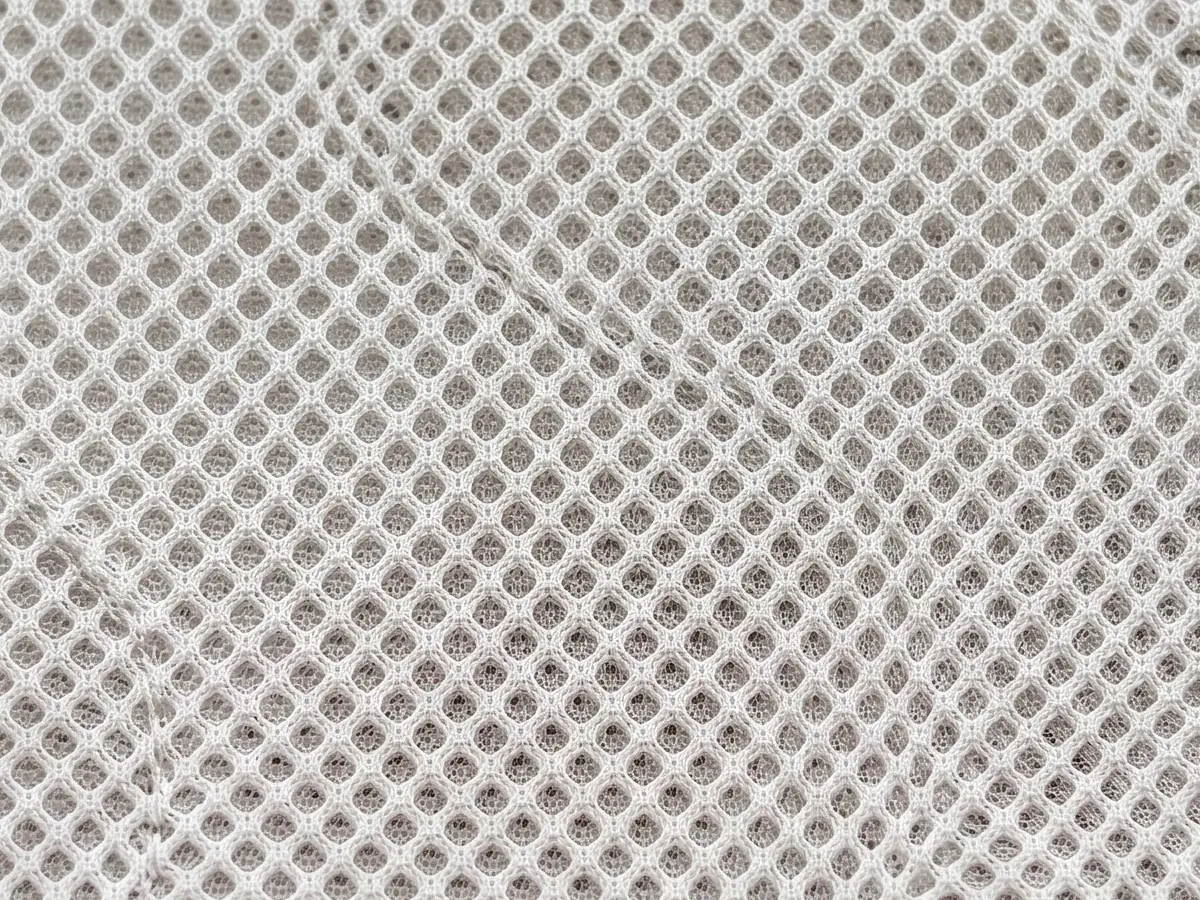
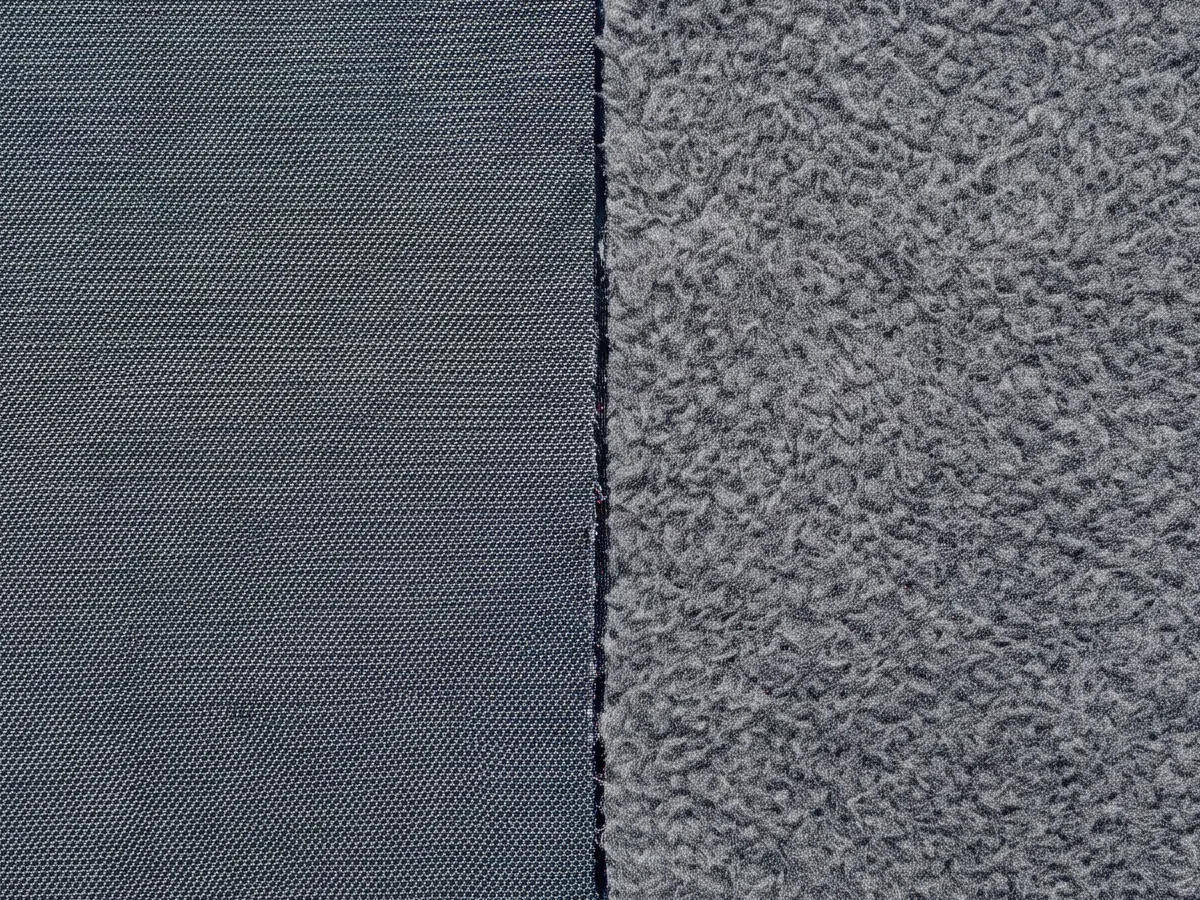
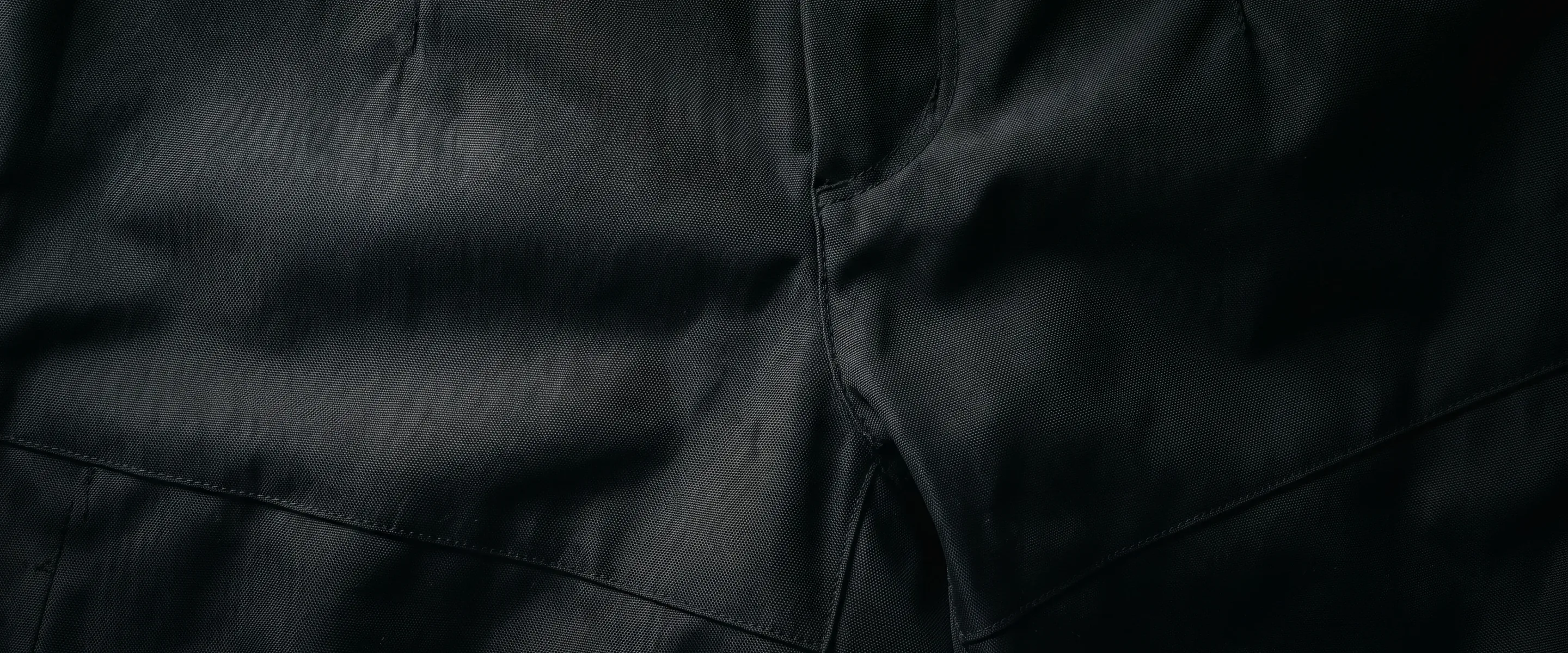
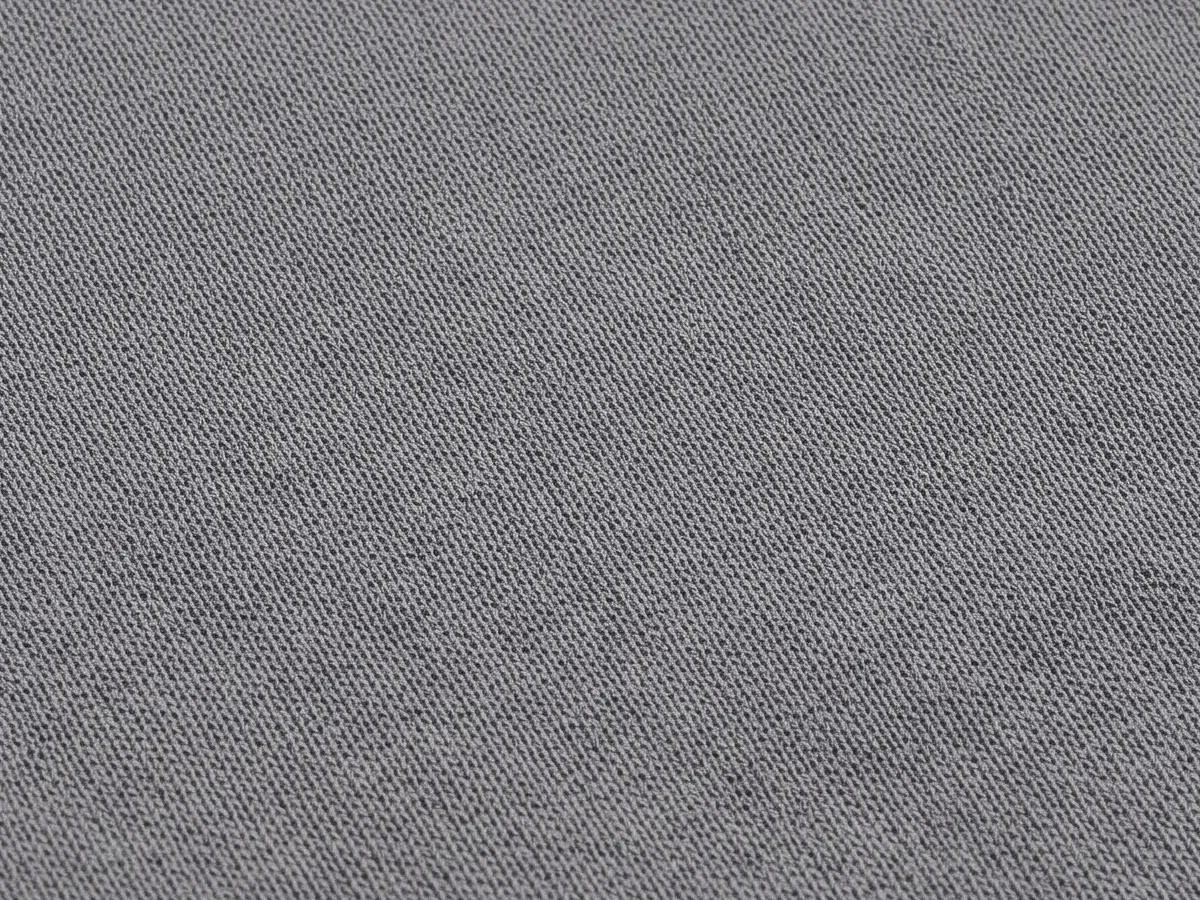
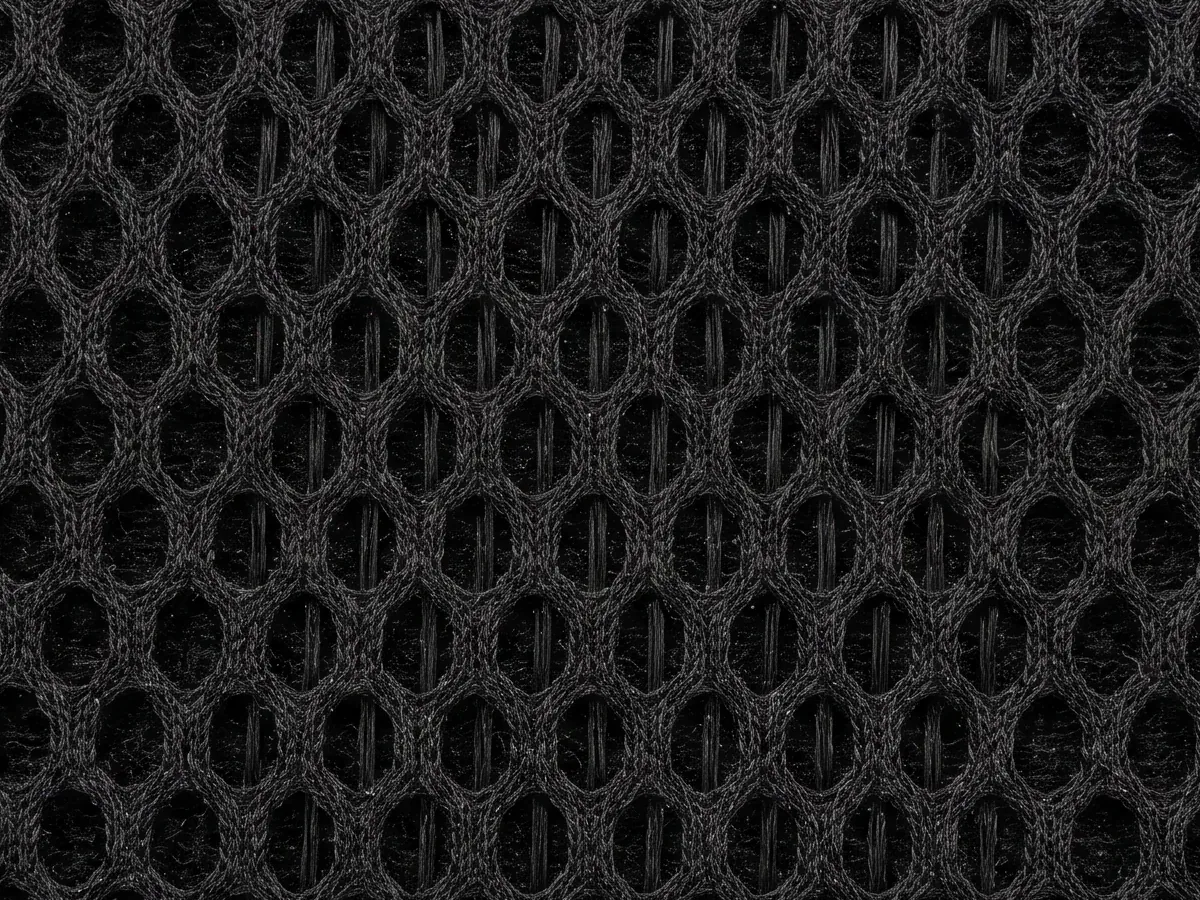
The main-body cloth here is nylon/spandex, two-component, in 88/12 · 90/10 · 91/9. Sorted by weight and finish it becomes a lightweight summer mesh, a mid-weight stretch body cloth, or a wind-layer laminate — but the laminate’s base cloth is still the same two-component knit. It is one family wearing three coats, not three materials.
So Here Is What We Cannot Do
- No recycled polyester, and therefore no rPET story. The page brief we were handed asked for one. There is no rPET product line here, so writing it would have been the single most checkable false claim on this page — a buyer asks for the certificate and the conversation is over.
- No merino, no natural-fibre blends, no three-component blends. One family means one family, and it does not quietly grow when a brief asks for something else.
- No third-party fabric brand names. We are not an authorised converter for any of them, so we do not put their trademarks on our pages. Everyday durability gets answered with the cloth’s own behaviour instead.
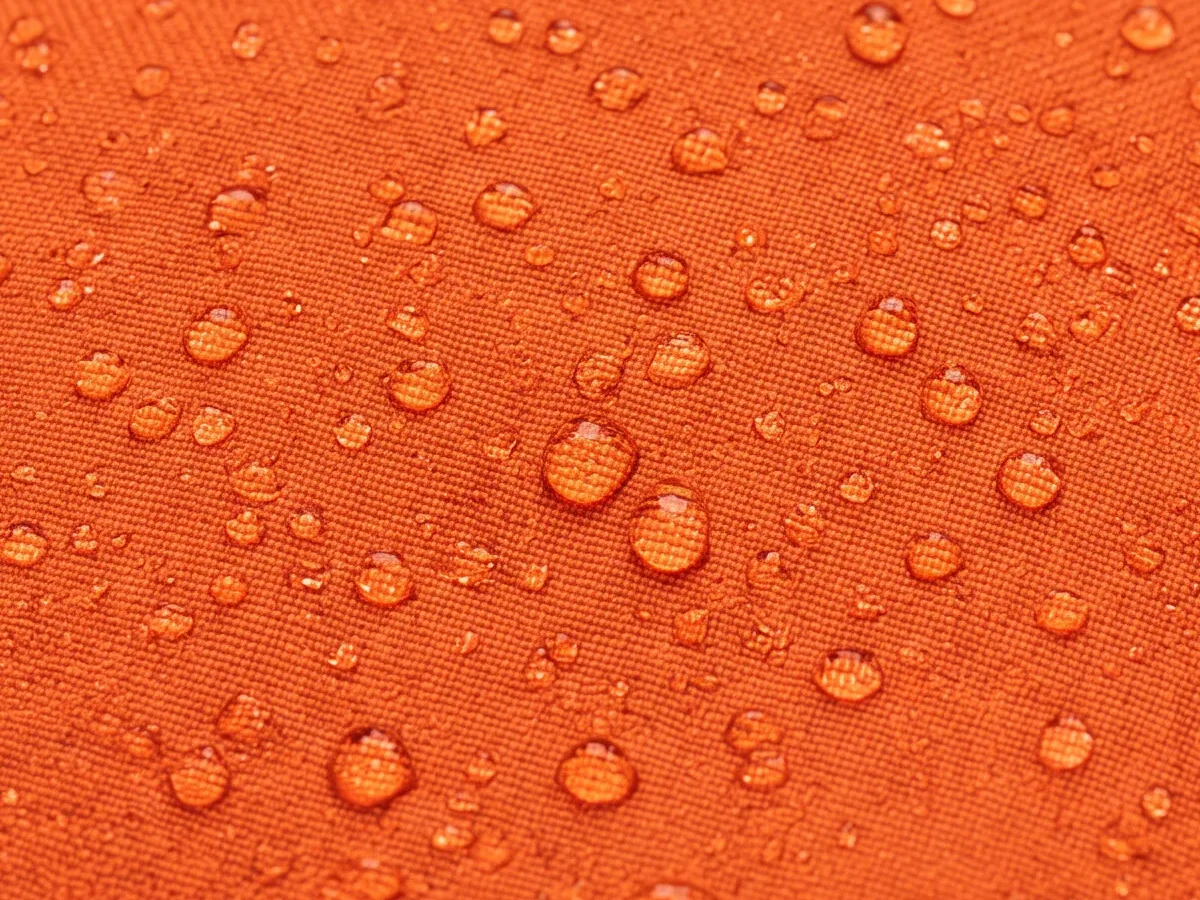
- No waterproof claim. Outer layers are water-resistant with a DWR finish, and the laminate is not waterproof. Ordinary stitching on water-resistant fabric still lets water through the needle holes unless the seam is taped — which is a thing our seam-sealing equipment can do, and a thing the fabric cannot do by itself.
Where the Fabric Conversation Actually Happens
Fabric development — what gets tested, what a buyer’s own mill can and cannot be substituted in, and how a weight gets chosen for a scenario — is on Custom Fabric Development. If your range needs a fibre we do not run, that page will tell you sooner than a sales call will.
How We Decorate It, and the Conclusion We Refuse to Draw From It
Decoration here is full-width digital sublimation, plus heat transfer, computerised embroidery, reflective print and reflective tape, and silicone grip print at cuffs and hems. Sublimation is the default for team kit because the colour goes into the cloth rather than sitting on top of it, which is why an all-over sponsor block does not stiffen a panel or crack along a fold.
And Here Is Where We Stop
Digital printing gets described almost everywhere as significantly reducing water use, and water-based inks as lowering VOC emissions. We are not writing either of those sentences, and the reason is not modesty:
- We have no measurement of our own water or emissions figures. A comparative claim with no baseline behind it is the same structure as a certificate number you cannot look up — it survives right up until someone asks for the report.
- The brief asked for five sustainability bullet points. Four of them were claims we cannot evidence and one of them was a fibre we do not run. So the sustainability module is not on this page at all.
What You Can Take to Your Own Compliance People
The process description above — full-width digital sublimation, heat transfer, computerised embroidery, reflective print, silicone grip print — is a factual list of what the machines do, and you can use it as such. Anything that turns those facts into an environmental outcome has to come from a test we have not run.
Artwork preparation, colour matching and how a sponsor block gets laid across panels is on Cycling Kit Design & Branding; the methods themselves are compared on Printing Methods.
What We Don’t Make, Listed Because You Would Otherwise Have to Ask Twice
- Not made
- Development only
Not Made Here, Full Stop
- Gloves. A small part with a padded palm and a grip structure — a different set of machines and a different skill.
- Footwear of any kind, including overshoes. Foot-enclosing goods are not a cut-and-sew garment problem.
- Hardware. Helmets, computers, lights. Not garments, not made here, not sourced on your behalf either.
Development and Sampling Only — Not a Product Line
This is the distinction that gets blurred everywhere else on the internet, so plainly:
- Bib-type goods and chamois pads. We can develop and sample against a pad specification you supply — your pad supplier’s spec, your tech pack. We do not have a finished bib product line, have not mass-produced one, and do not have a delivered case to show you. The development side is on Cycling Chamois Development.
- Tri suits, one-piece and two-piece. Same rule exactly: development and sampling against a pad specification you supply. Not a product line, not in stock, and we are not a “triathlon suit manufacturer” — we are a cycling apparel OEM/ODM that can develop one. It is set out on Custom Triathlon Suit.
What Is Actually on the List
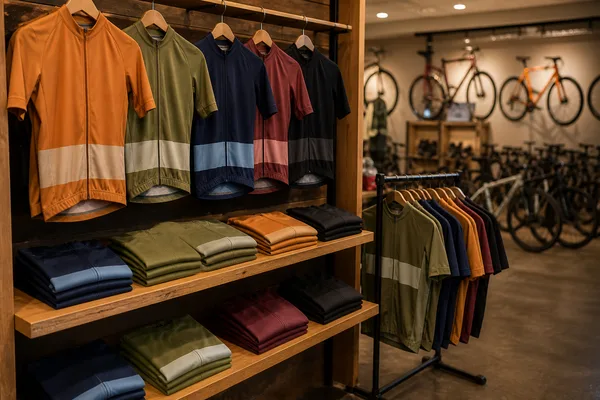
Cycling jerseys short and long sleeve, cycling vests, wind and water-resistant jackets, arm and leg warmers, cycling caps, and team kit sets built from those. Plus the flat-sewn soft goods that run on the same lines: base layers, commuter trousers and cropped trousers without a pad, reflective vests, and headbands and neck gaiters.
What We Don’t Have — and What to Do About Each One
- We don’t have
-
No decision made on your behalf about fit
- What that means
- We develop to a specification. We do not decide your fit for you, and we do not pick a size chart for your riders.
- → What to do instead
- Send the specification, or send a garment your riders already own and say which parts are wrong. Where there is no specification yet, we tell you what we would assume before anything is cut.
-
No environmental certification, and no carbon accounting
- What that means
- There is no environmental claim we are entitled to put on a label, and no figure we can calculate for you.
- → What to do instead
- If your retailer or your market needs an environmental claim on the label, that claim has to come from a certified mill or a certification body, not from us. Tell us the standard early: it usually constrains the fabric, and fabric is the longest lead item in the whole project.
-
No fabric test reports, and no certificate numbers on this site
- What that means
- We hold no lab reports, so there is nothing on file to forward you.
- → What to do instead
- We can develop to a standard you name and produce against a spec you supply, but the report has to be commissioned — by you, from a lab. Ask us for the fabric’s construction and finish instead; that we can put in writing today.
-
No cross-buyer fit database
- What that means
- We cannot tell you what “runs small for European riders” means as a statistic, because we do not pool one buyer’s fit records into a dataset and we would not want to be a factory that did.
- → What to do instead
- Send a garment your riders already own. A physical reference removes the question of how a measurement was taken, which is the actual source of most fit disputes.
-
No legal or compliance opinion, and no certification brokering
- What that means
- We produce labels to the market rules you specify — country of origin, fibre content, care symbols — and we will not tell you whether that specification is correct for your market.
- → What to do instead
- That one belongs with your own compliance contact or your importer. Give us the label spec, and we will follow it exactly.
-
No retail channel of our own, and no consumer sales
- What that means
- Everything here is made for someone else’s label. There is nothing on this site you can buy one of.
- → What to do instead
- If you found this page looking for a jersey to wear, we have nothing to sell you, and the nearest useful thing is a bike shop.
Why This Section Exists at All
Because every item on it is something you would otherwise discover after placing an order, and each one is cheaper to discover now. It is not a list of things we are working on; there is no roadmap behind it.
Three Certifications, and What Each One Actually Covers
- System
- Fabric
- Site
- ISO 9001:2015 — the quality system, not the garment. It audits whether we do the same thing the same way and can show the records for it. What it does not do is certify that any particular jersey is good. A system audit and a garment inspection are different objects, and conflating them is the most common misreading of this badge.
- OEKO-TEX® STANDARD 100 — at fabric level, Class II (apparel). Tested for harmful substances in the cloth itself. It travels with the fabric, which is why it is the one worth quoting to a retailer asking about skin contact.
- BSCI — the social audit of this site. Working conditions, hours, safety and grievance handling. This is the one that changes daily practice rather than paperwork, so it gets its own section immediately below.
Three Things Not on This Page
- No certificate numbers. Site-wide rule, and the reasoning is worth stating: a number is the one field on a page with a cheap public verification path — a buyer looks it up, and if it does not resolve, the order is gone. Nobody has ever placed an order because of a certificate number. Unlimited downside, no upside; we don’t put it up.
- Nothing beyond those three. If a standard is not in the list above, we do not hold it. There are two in particular that a cycling brief will often ask a factory for, and the honest answer for us is no — which is easier to read here than to work out from silence.
- No certification logo wall. Those are third-party trademarks and we are not licensed to use them as decoration. The badges above are our own line icons with the certification name set in text next to them.

What the Social Audit Changed Day to Day — Four Things, and Only Four
- Hours are recorded line by line, not estimated afterwards. The log is kept as the work happens. Retro-fitting a timesheet at month end is the single easiest thing to fake in this industry, which is exactly why the practice is written this way round.
- Safety training happens before the floor, not during it. A new operator goes through the equipment-specific hazard briefing — cutting tables and heat presses in particular — before starting, not in the first week.
- There is a grievance route that goes past the immediate supervisor. A complaint channel that runs only through the person you might be complaining about is not a channel. This one is deliberately not that.
- Protective equipment is provided at the point of use, not on request. It hangs where the work is. Nobody has to ask for it, because having to ask is how it stops being used.
What This Section Is Not
It is not an ethical claim about the industry, and it is not a comparison with anyone else’s factory. It is four operational practices that a social audit checks and that you could verify by standing in the room.
There is no fifth practice. If you read one somewhere else on this site, it is wrong and it should be reported rather than believed.
Four Kinds of Buyer, and Why the First Step Is Different for Each
- Routing
- 20+ countries
| Who you are | What the first step actually is | The page written for you |
|---|---|---|
| Cycling club or team | Settle the roster and the size spread before the design. A club order is usually one style across many bodies, so the size range decides more than the artwork does | Cycling Clubs & Teams |
| Brand or DTC label | Decide how many colourways your first season really needs. This is the single biggest cost lever a new label has, and it is easier to change now than after the artwork is signed | Cycling Brands & DTC Startups |
| Bike shop or retailer | Start from the shelf, not from the garment. What the packaging, labelling and size cards have to look like on arrival shapes the whole spec | Bike Shops & Retailers |
| Event or corporate organiser | Work backwards from the fixed date. The date is the constraint everything else bends around, including how late the sponsor artwork can still change | Cycling Events & Corporate Orders |
Where the Kit Goes
Buyers in the US, Europe (UK, Germany, France, the Netherlands, the Nordics) and Australia — 20+ countries in total. It is on this page for one practical reason: shipping to that many markets is why we ask about labelling early rather than at packing, and it is why the label spec is your call and not ours.
Routing, Not Screening
There is no answer to “which are you” that gets a shorter reply. It exists so the message reaches whoever already knows your situation. If none of the four describes you — a distributor, a university team, a tour operator — say so in your own words.
Five Riding Scenarios, and What Each One Changes on the Garment
- Road — the back. Riding position is the most forward-rotated of the five, so the pattern’s whole job is that the back hem still covers when the rider is down on the drops. Details on Custom Road Cycling Apparel.
- Gravel — abrasion and pockets. Longer unsupported days, rougher surfaces, more carried. The trade-off runs between cloth weight and how much it will take. Details on Custom Gravel Cycling Apparel.
- Mountain bike — the cut. A looser body over protection, and sleeves that have to clear a much wider arm movement than a road fit ever sees. Details on Custom Mountain Bike Apparel.
- Commuter — visibility and everyday wear. Reflective placement follows the moving joints and the angle a car approaches from; the garment also has to survive being worn as clothing. We do not quote hi-vis standard numbers — placement logic we can explain, a standard we can develop to if you name it. Details on Custom Commuter Cycling Apparel.
- Triathlon — development and sampling only. Tri suits, one-piece or two-piece, developed against a pad specification you supply. Not a product line, not in stock. Details on Custom Triathlon Suit.
Why There Isn’t a Sixth
Because two of them were removed from this site rather than quietly kept. If a scenario page is not here, it means we decided we could not say enough about it to be useful — which is a better reason to remove a page than most.
Nothing on this page is a reason to choose us. They are the things you would otherwise have had to find out after the first order.
From Enquiry to Shipment, With the Clock on Each Part
- 24 business hours
- 48h after a complete tech pack
| Stage | The interval | What it is measured from |
|---|---|---|
| First reply | 24 business hours | Business hours means Monday to Friday, 9:00–18:00 (GMT+8). A message sent Friday evening is answered Monday, not overnight |
| Quote | 48 hours | From a complete tech pack — the 48 hours start when it is with us, not when the first message arrives |
| Sampling | 5–7 days | Two revision rounds carry no additional sampling charge. What counts as a revision versus a new round is on Sampling & Prototyping |
| Bulk | 20–30 days | From sample confirmation, not from order date. This is the interval most often quoted wrongly by everyone, including us if we are careless |
| Rush | 12–15 days | Requires scheduling confirmed in advance. It is not a service level you can invoke after the fact |
| Sample pieces | Do not count toward the order minimum | Sampling runs independently, before bulk — so a sample round never eats into the quantity you are ordering |
Why the Conditions Are Printed Next to the Numbers
Because a lead time without its starting point is not information. “20–30 days” measured from the wrong event is how a delivery date slips by three weeks while both sides believe they agreed on something.
The First Reply Usually Does Not Have a Price In It
And if it did, it would be a guess in a technical voice. A quote before the questions have been answered is a number that changes, which is worse than waiting a day for one that does not.
What a quote gets built from — riding scenario, fabric, decoration process, quantity, lead time — is set out on MOQ & Wholesale Pricing. We publish no prices, no ranges and no payment terms anywhere on this site.
What a Reorder Starts From, and Whose File It Is
- Yours
- Someone else’s
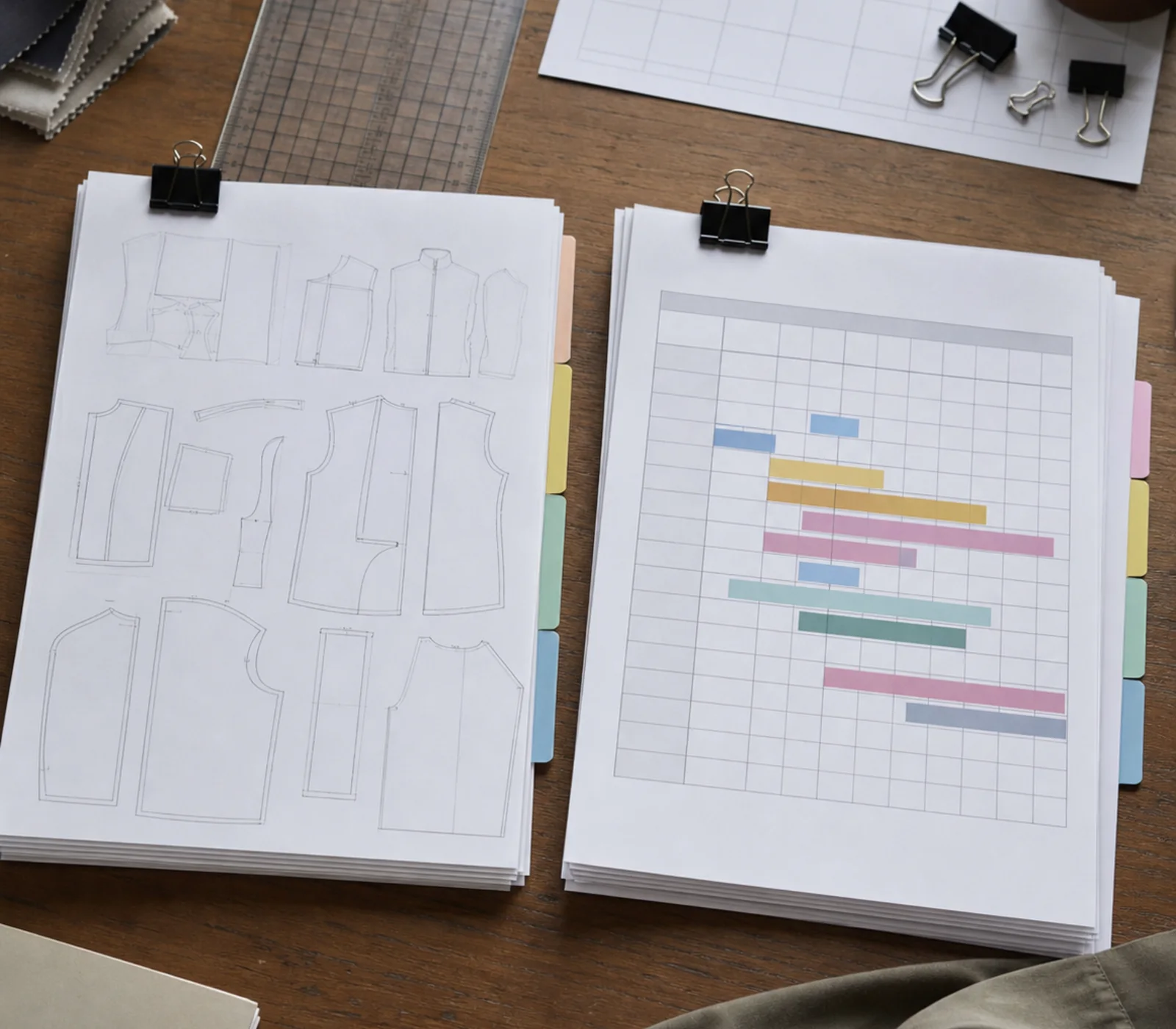
The confirmed pattern and spec sheet stay filed here after your order ships, archived by buyer and by style. So a reorder — or the same style in a different colourway — starts from a confirmed file rather than reopening development. That is what makes “the same as last time, in navy” a workable instruction a season later instead of a conversation that starts over.
What Your File Is Not Used For
It does not go onto another buyer’s order. Not the pattern, not the spec sheet, not the fit notes that go with it.
If you arrive with a complete tech pack, the original is yours; we keep one working copy to produce against and it is not licensed for anyone else’s order. If the pattern and spec sheet get developed here instead, from your concept, then once the sample is signed off that file is your deliverable and holds exactly the same way: we do not put one buyer’s developed pattern onto another buyer’s garment.
Two Things a Reorder Does Not Get You
- A reorder is still a fresh minimum. There is no reorder exemption and no reduced minimum for a repeat — the minimum is on MOQ & Wholesale Pricing and it applies the same way the second time.
- A retained pattern is not a frozen price. The file removes the development step; it does not fix what the cloth costs next season. We are not going to imply otherwise by staying quiet about it.
The Size System, and Why You Might Want to Replace It
- XS–3XL
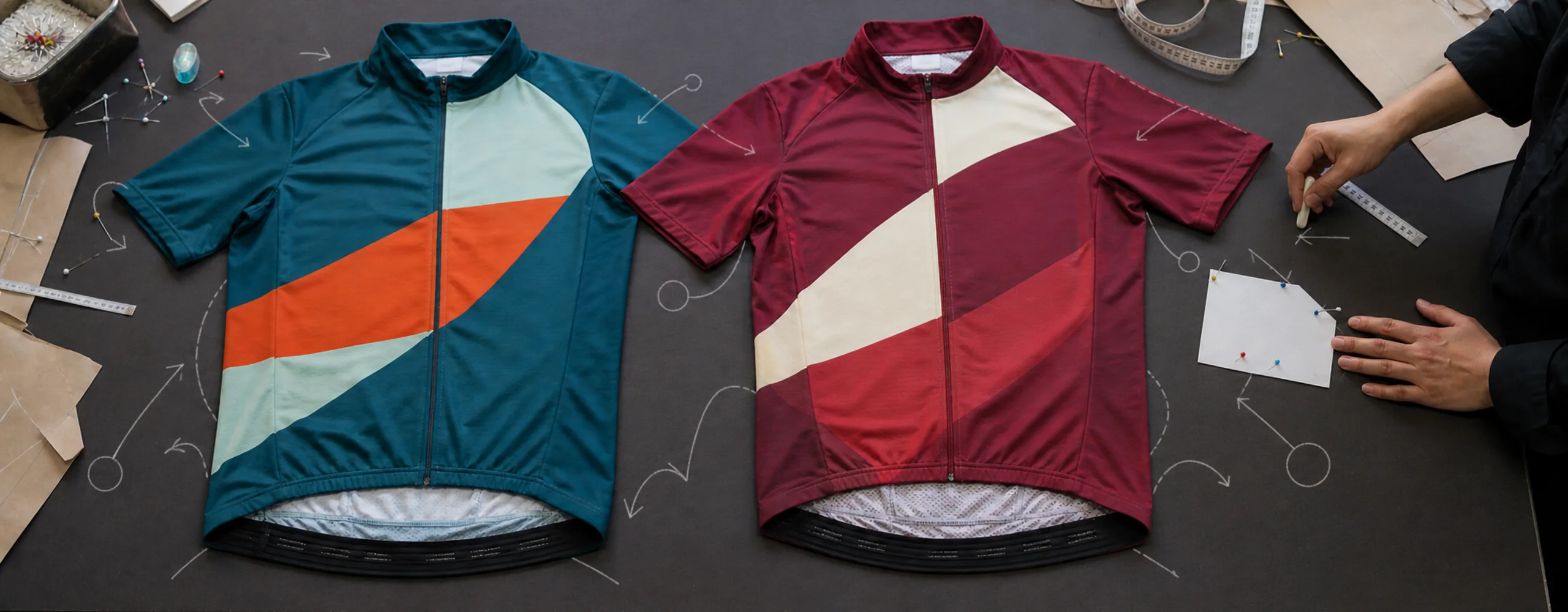
Our own base range is XS–3XL, with separate men’s and women’s patterns — not one block with the measurements shifted, which is the shortcut that produces a women’s jersey nobody in the roster wants to wear.
The Question Worth Asking Instead
“Is your sizing accurate” has no answer, because accurate against what? A size chart is a claim about a population, and yours is not ours.
If you already have a size chart your riders are used to, we develop against that one and our base range never enters the conversation.
- Clubs and teams — you usually already know your roster’s spread better than any chart does. Send the spread, not the sizes.
- Brands and retailers — you likely have a chart your returns data already argues with. That chart wins; we will not quietly substitute ours.
- What we cannot do is tell you what your market runs like as a statistic. We have no cross-buyer fit dataset and would not want one — see the section on what we don’t have.
The One Thing That Removes Most of the Guessing
Send a garment your riders already own, and say which parts are wrong. A physical reference removes the question of how a measurement was taken, which is where most fit arguments actually start. How that turns into a graded pattern is on Riding Fit & Pattern Development.
Retail-Ready Packaging and Labels, If That Is Where the Kit Is Going
- Optional
- Your spec
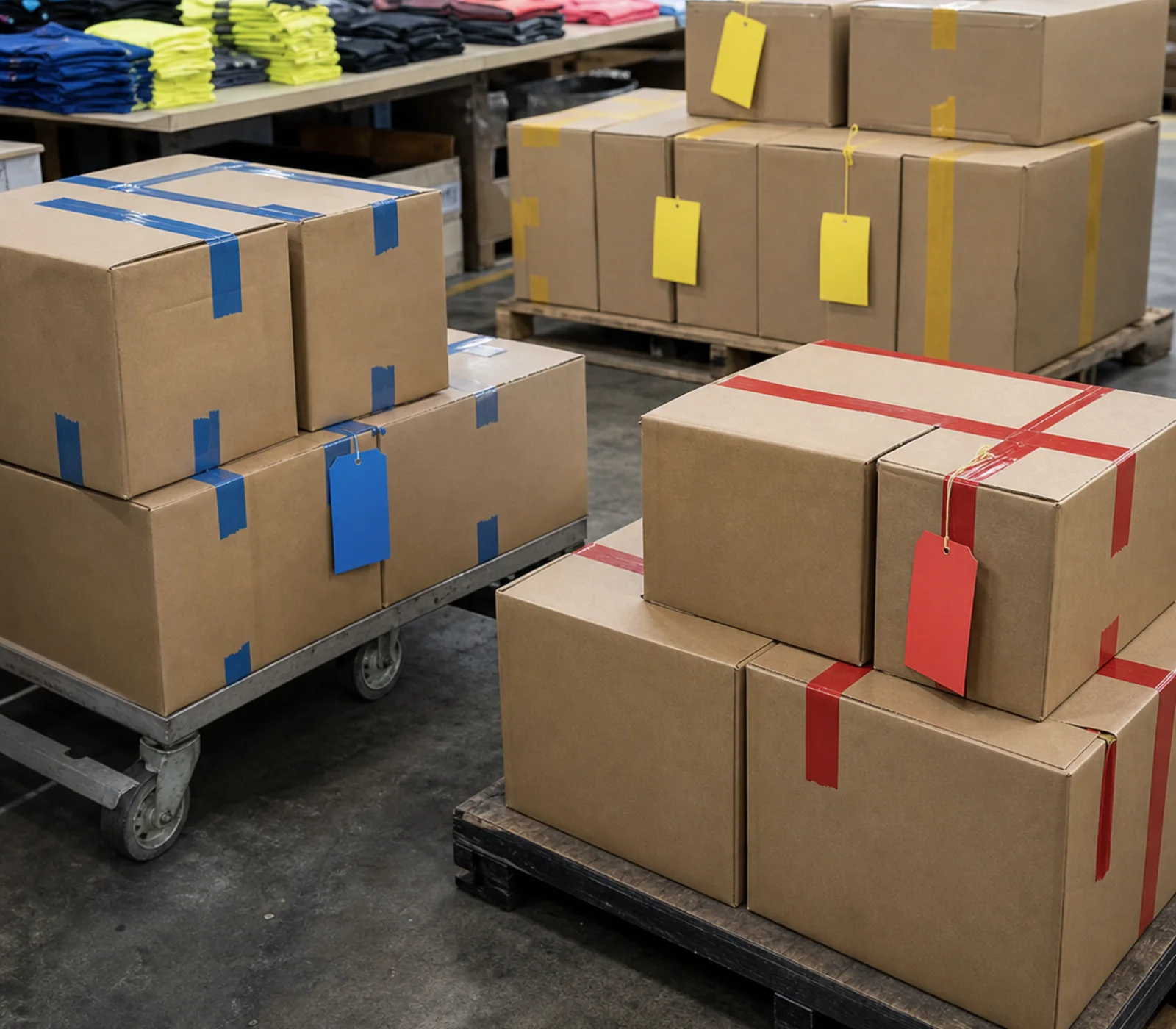
Retail-ready packaging is optional and built to your specification:
- Own main label, plus care and composition labels to the wording you give us.
- Hangtag and size card, in the format the shelf needs rather than the format the carton needs.
- Individual poly bag and a barcode position — with the barcode value supplied by you.
The list exists because “packaged” means five different things to five buyers, and the difference shows up on arrival rather than in the quote.
Where Our Responsibility Stops
Labels for resale are produced to your specified market rules — country of origin, fibre content, care symbols. We do not tell you whether that specification is right, and we do not offer a legal or compliance opinion on it. We also do not apply for barcodes on your behalf.
Give us the label spec and we follow it exactly; that exactness is the whole of what we are offering here.
What Actually Goes Wrong at This Stage
Not the labels — the counting. A shop order is usually one style across four colourways and a full size run, and it arrives as cartons that somebody has to check against a packing list on a delivery bay. So the carton documentation is checked against the signed sample at the last inspection point, not assembled from the order file afterwards. The shelf-side version of all this is on Bike Shops & Retailers.

Four Orders We Can Describe, Written the Way They Were Recorded
- As recorded
| The buyer | What the order was | What it is not |
|---|---|---|
| A North American amateur cycling club | 8 squads, each ordering 30 pieces per season of squad kit (jersey + vest + arm warmers) — 240 pieces across the 8 squads. Reordered for 3 consecutive seasons, with the pattern and the marker retained and reused | 3 seasons, not 3 years. A season is not a year and we do not convert one into the other to make the relationship sound longer |
| A newly founded DTC cycling brand | First season of 6 private-label SKUs, each in 2 colourways, each colourway at 30 pieces — 360 pieces in the first season, including own main label and packaging | Not a case study with a growth curve on it. What happened in season two is not something we have recorded here |
| An Australian bike shop chain | 3 stores ordering together, with a store-own jersey style kept in 4 colours and restocked quarterly | No store names, no revenue figures, no margin structure |
| A European amateur road event organiser | Finisher jerseys for participating teams — a single order of 1,800 pieces, delivered in 2 batches on day 22 and day 28 | Both dates fall inside the standard 20–30 day bulk window. It was not a rush job and we are not presenting it as one |
Why There Are No Names and No Quotes on This Page
Because a named customer saying something flattering is the one element on an about page that is simultaneously the most persuasive and the easiest to invent. Putting words in a named party’s mouth is worse than inventing a number — a number is wrong, a fabricated quote is somebody else’s voice.
So the cases above are described by buyer type, quantity and working pattern, and that is deliberately all.
Six Questions People Ask Before They Write to Us
Do you make bib shorts or chamois pads?
Not as a product line. We can develop and sample against a pad specification you supply — your pad supplier’s spec and your tech pack — but there is no finished bib product here, nothing mass-produced, and no delivered case to show you.
Tri suits fall under exactly the same rule. The detail is on Cycling Chamois Development and Custom Triathlon Suit.
Is our order too small to be worth starting?
There is a minimum, it is counted per style per colourway, and the reasoning behind it — how sizes and colourways are counted, and how a first small run works — is written out on MOQ & Wholesale Pricing.
Send the enquiry either way: if the honest answer is that your order suits a different route, we would rather say so in a reply than have you guess from a number on a page.
Can you work from a photograph instead of a tech pack?
Yes, and it is often better. A garment your riders already own, with a note saying which parts are wrong, is a usable brief — a tech pack is not the entry fee.
It matters at quoting time rather than at first contact, because the quote window starts from a complete one — the timing is in the schedule further up this page.
Do you sell direct to riders?
No. Everything made here carries someone else’s label, and we have no consumer channel, no online shop and no single-piece sales.
If you are looking for a jersey to wear rather than a jersey to sell, a bike shop is the right place and we are not.
What do you need from us before you can quote?
Riding scenario, fabric direction, decoration method, quantity and the delivery window — those five are what a quote gets built from, and they are set out on MOQ & Wholesale Pricing.
The questions come back before the quote does, on purpose: a quote built on our assumptions instead of your answers is a number you cannot check.
Can you send fabric test reports or a certificate for a specific fabric?
No. We hold no lab reports and we publish no certificate numbers, so there is nothing to send.
What we can do instead: state the construction and finish in writing, produce against a standard you name, and develop to a specification you supply. If your market requires a tested figure, that test has to be commissioned from a lab — and it is worth doing before the fabric is chosen rather than after.
Start a Kit Enquiry
Start here
Nine boxes and four of them are optional. Two sentences in the message box is enough to get a useful first answer.