Custom Triathlon Suit Development: One Garment, Three Media, No Change in Between
A swim skin comes off. A jersey gets changed. A tri suit does neither — it goes into the water and comes out of the run in the same piece. That single constraint sets every decision on this page.
Where a Tri Suit Sits: Three Media, One Garment
Every other garment on this site answers to one surface and one posture. This one answers to three, in sequence, without a stop in between.
- Water
- Chlorine or salt, and the suit is already soaked before the first pedal stroke. Whatever it holds coming out of the water is what the bike leg begins with.
- Bike
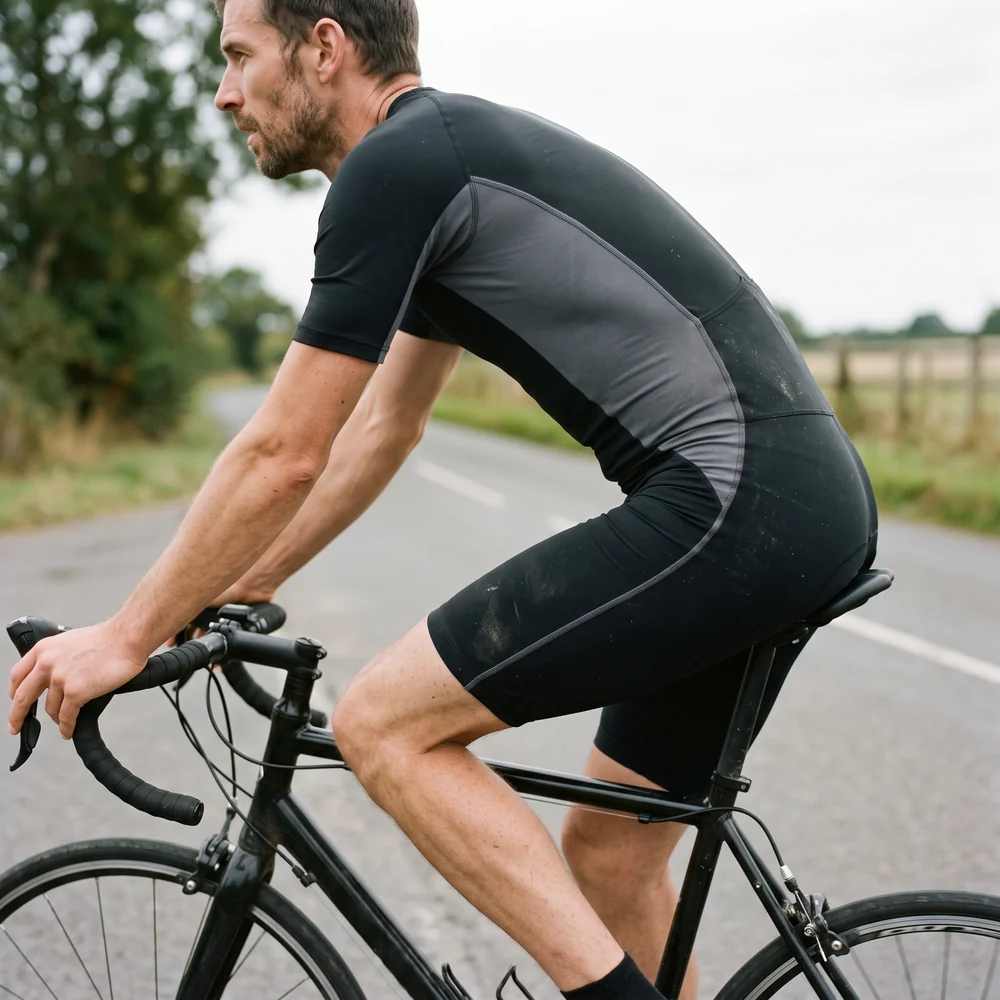
- A forward, loaded position for the longest leg of the race. The torso wants compression that holds; the pad wants to sit where a seated rider actually bears down.
- Run
- Upright, higher cadence, drying as it goes. Every seam the bike leg pressed flat is now moving against skin at a different angle.
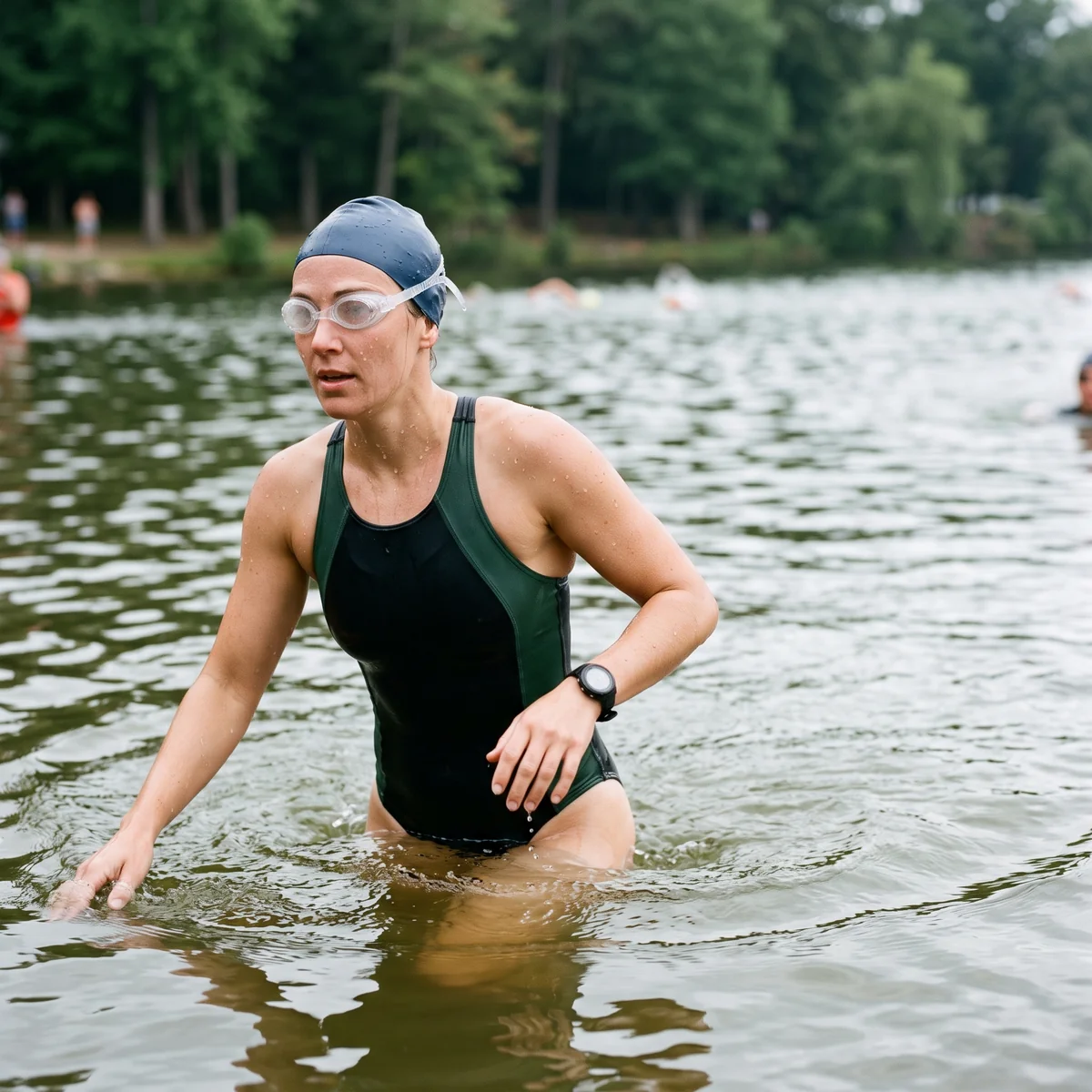
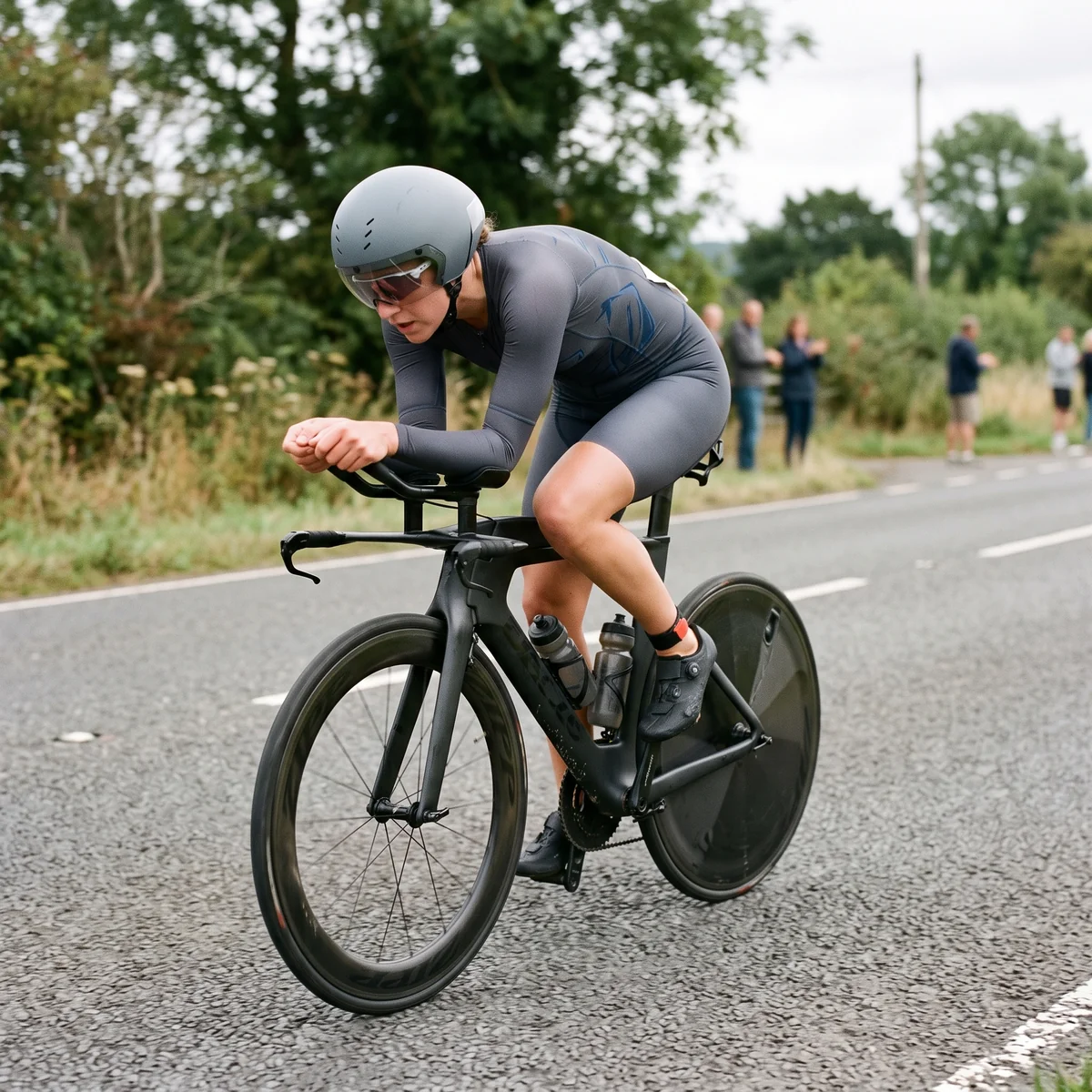
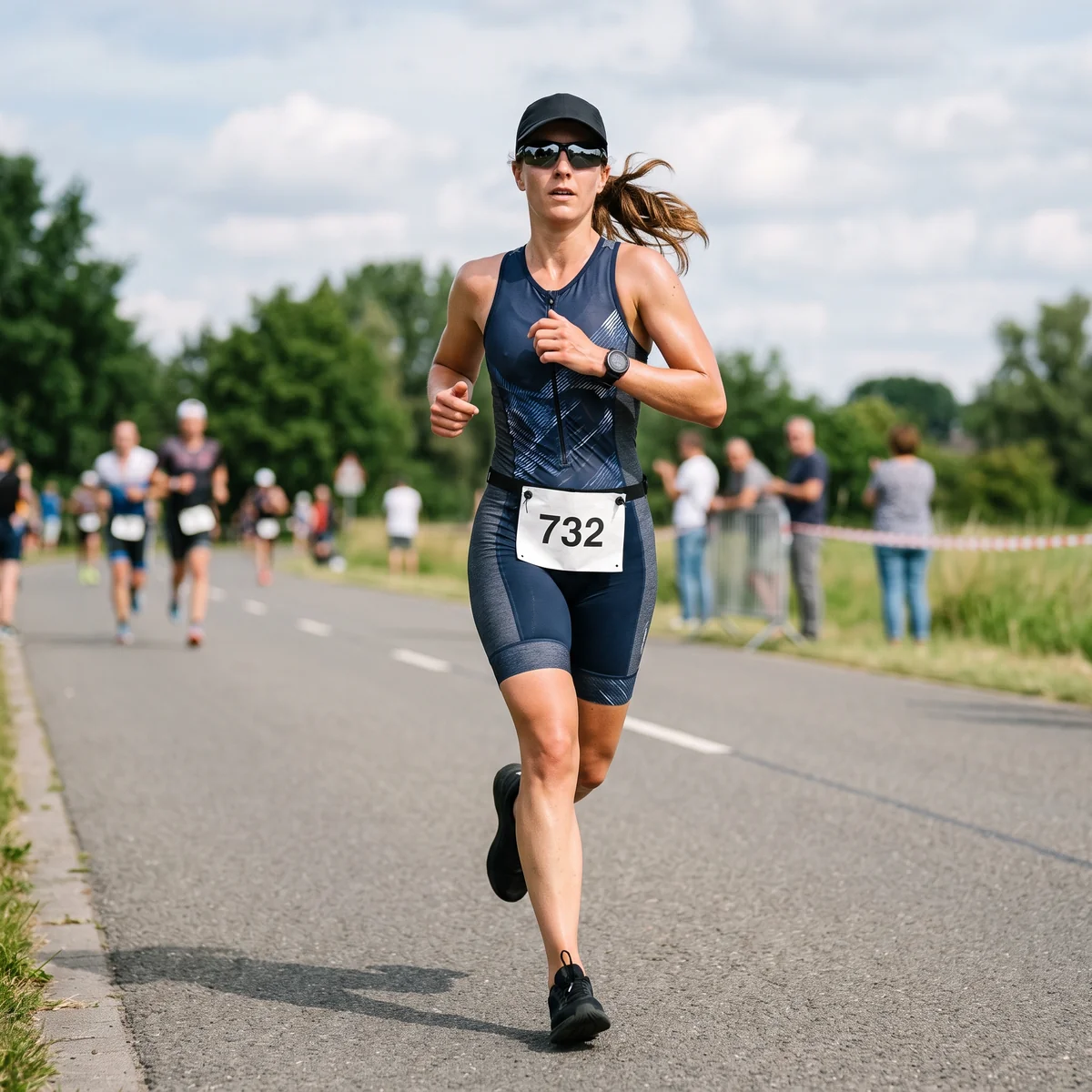
Three sets of demands, one garment. A cycling kit only has to answer one of them. A tri suit has to hold across all three, in order, with no changing tent in between — and that ordering is what the rest of this page is built on. This section places the three; it solves none of them.
The Wet-to-Dry Window Is Where Tri Suits Fail
Not wet, and not dry. The failure lives in the transition between the two, and it reports itself an hour later on the run.
Coming Out of the Water, Straight Onto the Bike
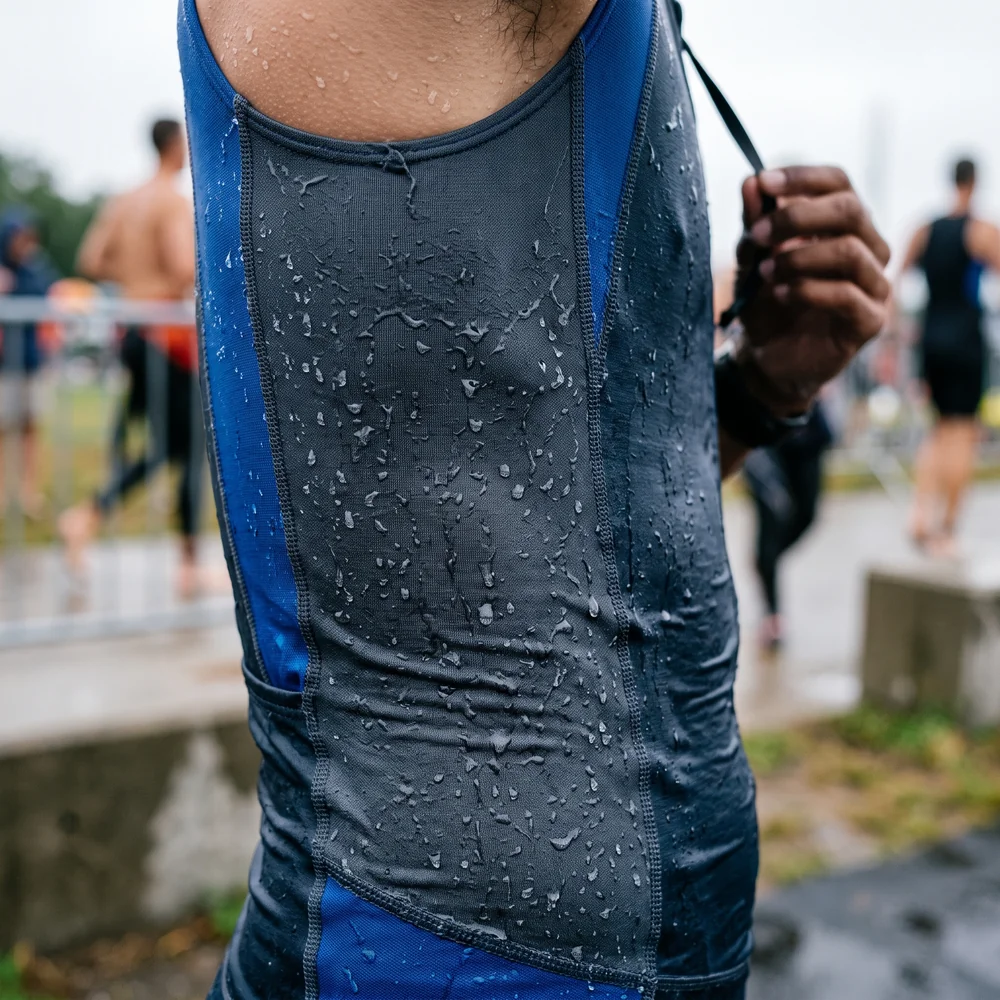
A soaked panel sits flat against skin under load. Seam allowances that clear the body when dry press in when the fabric is heavy and the rider is folded forward.
Nothing hurts yet — this is the setup, not the failure.
The Middle of the Curve
As water leaves the fabric, surface friction climbs before it settles. A damp seam grips where a wet one slid and a dry one glides.
That climbing-then-settling curve is the whole problem, and it runs for most of the bike leg.
Where It Reports: the Run
The three zones that come back in feedback, in order of frequency:
- Underarm — highest cycle count of any seam on the garment, and the last zone to dry.
- Neckline and collar edge — already abraded by a wetsuit collar before the bike leg starts.
- Sleeve and leg hems — a silicone gripper that holds correctly when dry can drag when the fabric under it is still damp.
Other failure modes exist — UV fade, print crocking, zip breakage — and they get checked; they are not what this section is about.
What we do with it: the wet and on-bike review step is run damp, not dry on a hanger.
One-Piece vs Two-Piece Triathlon Suit: A Three-Way Trade-Off
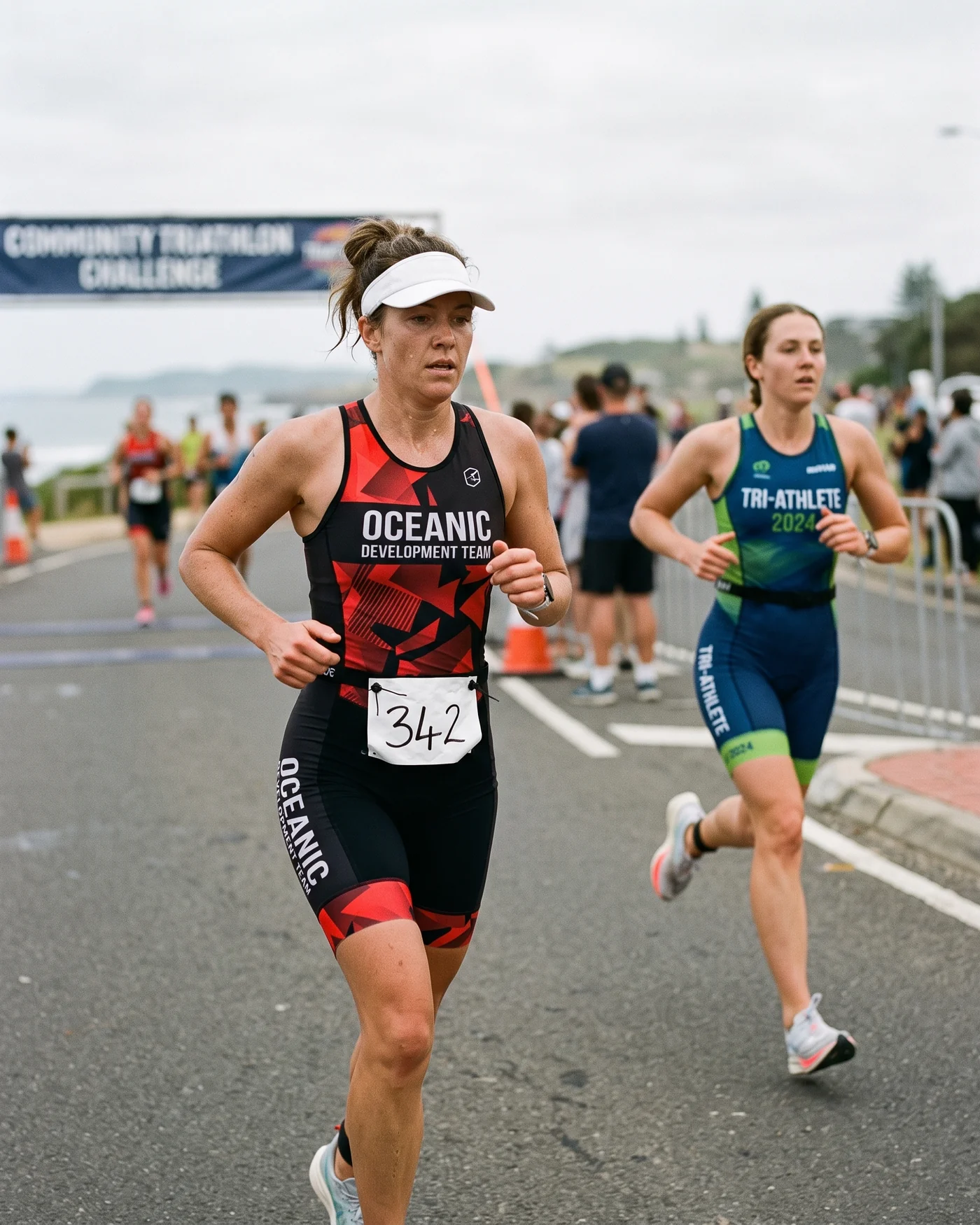
Not a pattern preference. Three separate constraints pull in different directions, and the answer changes with the race, not with taste.
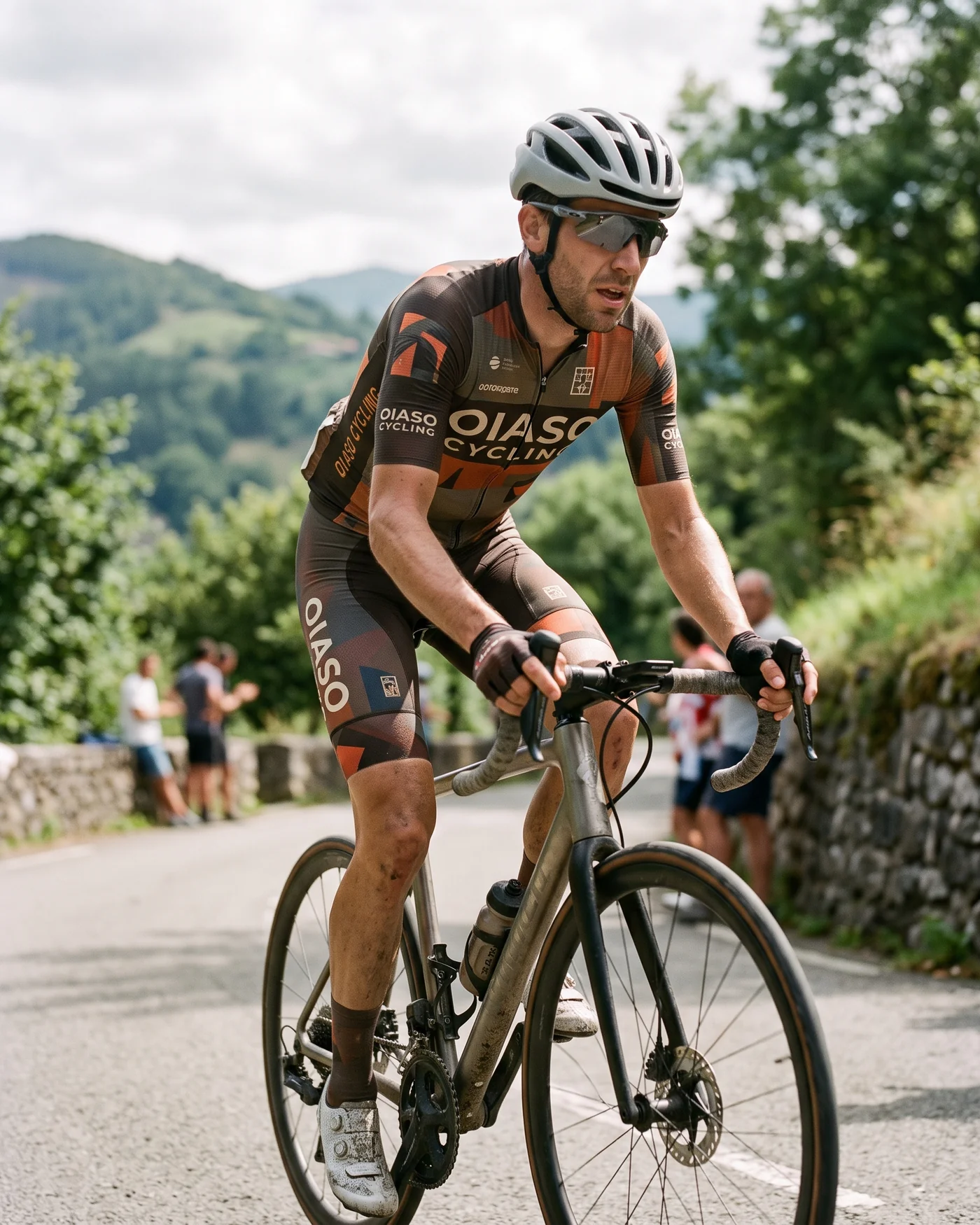
| Axis | One-Piece | Two-Piece |
|---|---|---|
| Race rules | A continuous body reads as one garment to officials; torso coverage is fixed at design time and can't be adjusted on race morning. | Coverage is adjustable on the day, which matters where a series enforces a torso-cover rule unevenly across events. |
| Fuel storage | Pocket volume has to be cut into the back or side of a continuous panel, so it competes with the torso print area. | A separate top carries pockets without touching the lower panel, and the waistband itself becomes a storage edge. |
| Transition time | Nothing to align in T1 or T2 — there is no hem to pull down and no waistband to seat. | Two pieces means two chances to catch fabric while wet, which is where transition seconds actually go. |
Why We Don't Rank These
A club buying for one fixed-format race series and a brand building a season-long range are optimising different axes, and the same recommendation would be wrong for one of them.
We build to whichever call you've made, and say plainly when that call fights something else in your tech pack.
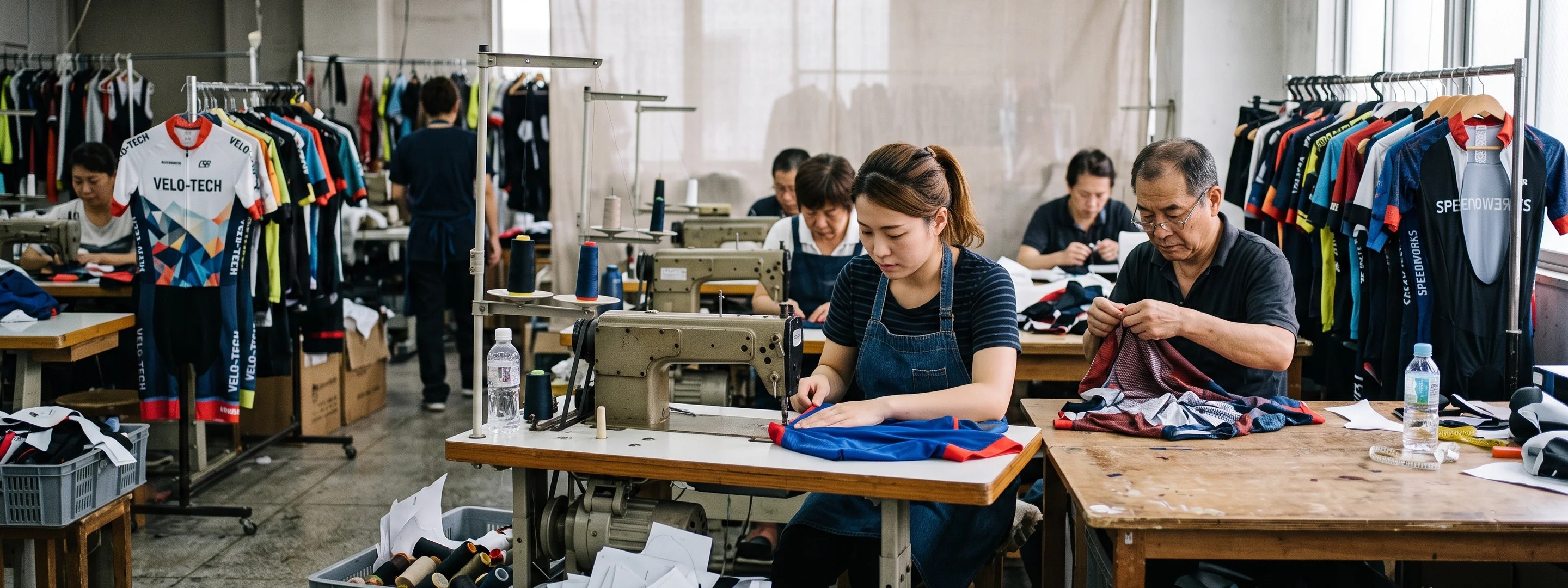
Have a Tri Suit Tech Pack Already?
Send it across and we'll tell you which parts we build in-house and which parts have to be developed against a spec you supply.
Send Your Tech PackPrinting Across a Continuous Torso Panel
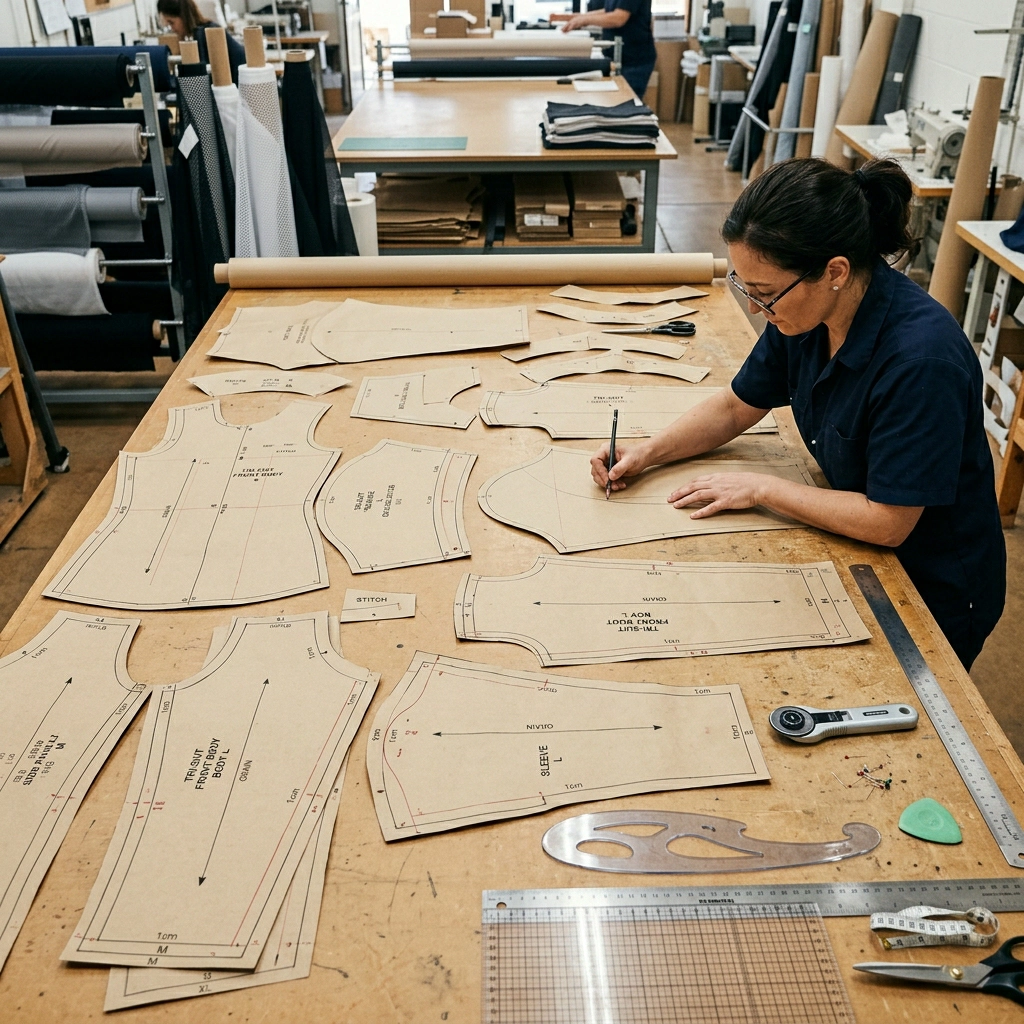
On a one-piece body the torso is a single uninterrupted canvas. That is the part of a tri suit build we genuinely own, and the part that goes wrong at the pattern table rather than at the printer.
Why Misregistration Happens
The print goes on flat, the garment does not stay flat. A graphic crossing a seam is printed on cut pieces, not on the assembled garment.
Two adjacent pieces are printed, then sewn. Any difference between where the print sat on the panel and where the panel ends up in the seam shows as a step in the colour block.
Three Places the Step Comes From
Each one is invisible on a plain panel and obvious across a hard edge:
- Nesting drift. Pieces laid out for fabric yield rather than for print continuity put the two halves of one graphic on different parts of the printed roll.
- Stretch at assembly. A knit panel eased into a curved seam moves the print with it, so a line that matched flat no longer matches sewn.
- Seam allowance drift. A few millimetres of allowance variance is invisible on a plain panel and obvious across a hard-edged colour block.
Where We Hold It
All three are held at the pattern and nesting stage — before a metre of fabric is printed.
Graphics that cross a seam are split against the actual pattern piece, with the allowance already accounted for; matched pieces are nested adjacent on the roll; hard-edged blocks are routed away from the most-eased seams wherever the tech pack allows.
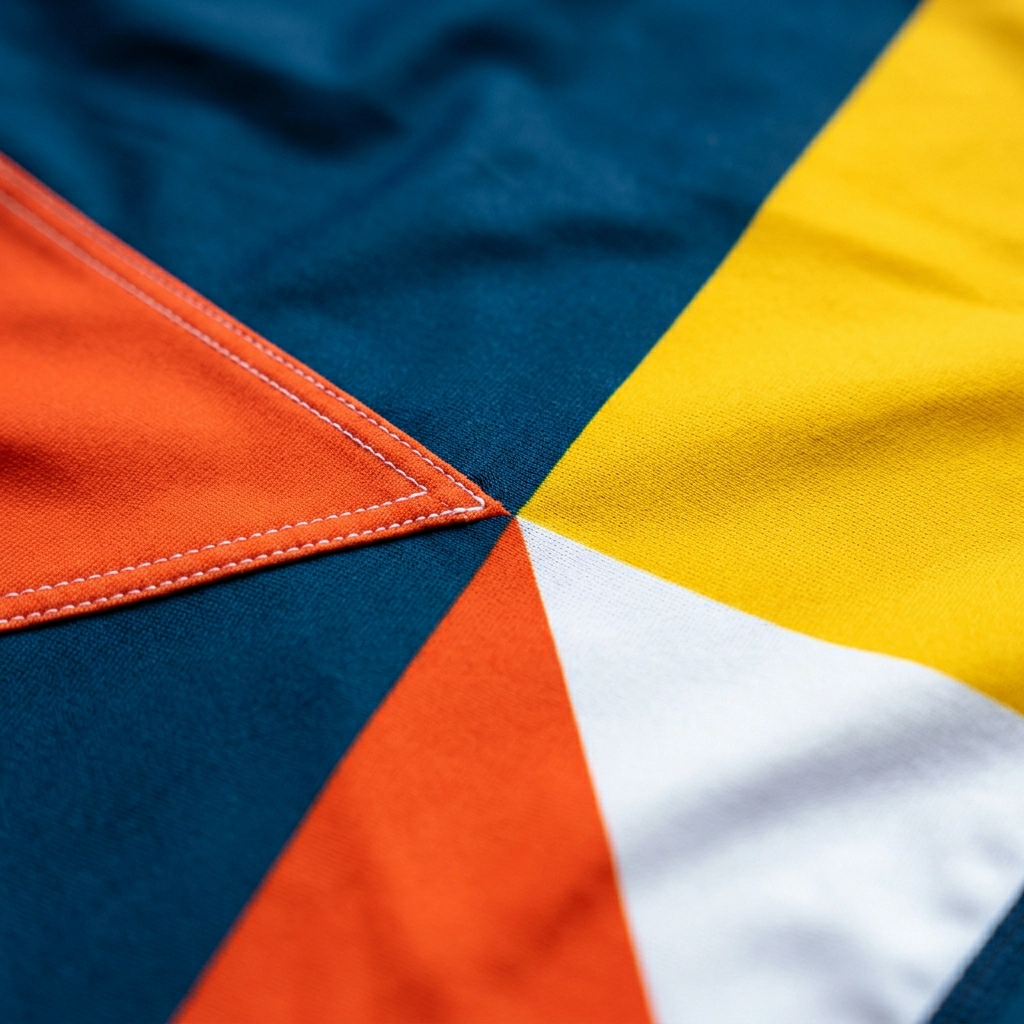
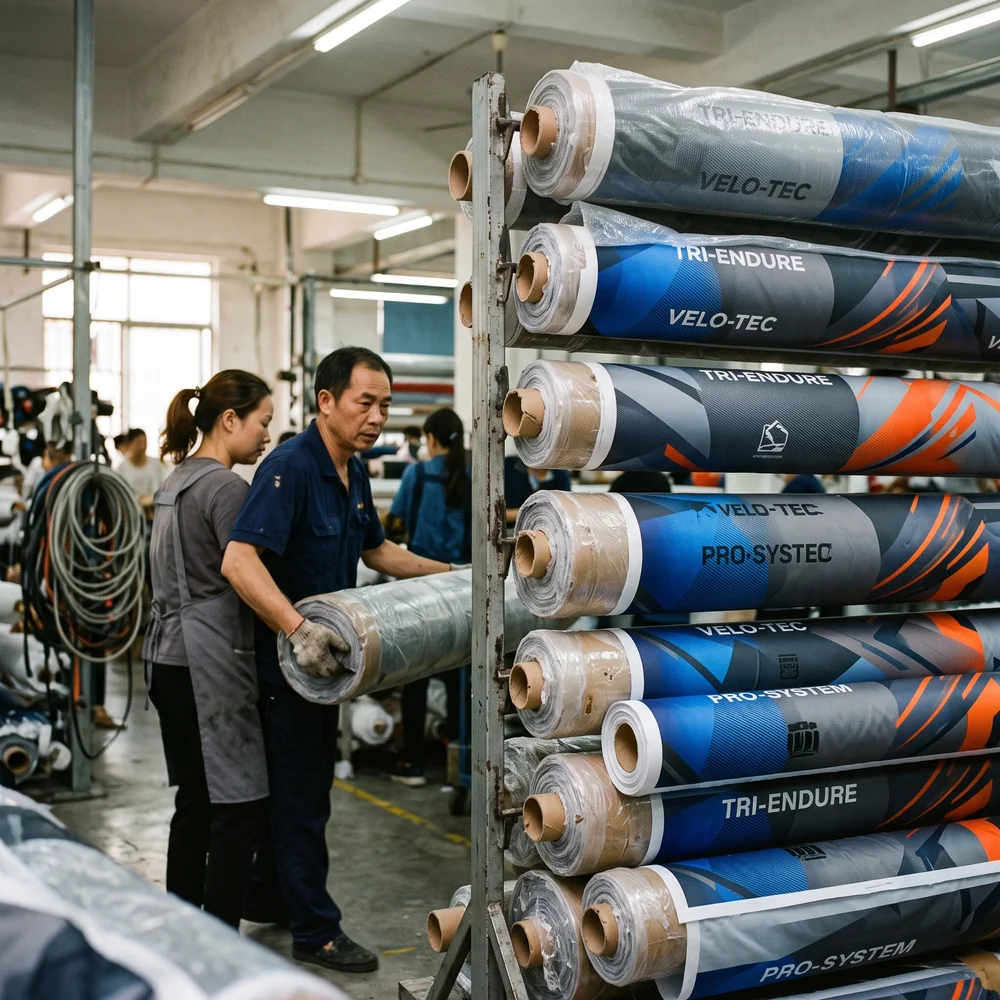
Our own capability here is full-width digital sublimation on the binary nylon/spandex knits described below, plus heat transfer, embroidery, reflective and silicone gripper work. Registration is a pattern problem we solve, not a printer setting we promise around. Method-by-method detail lives on Printing Methods.
What We Make In-House vs. What We Develop to Your Spec
The most important section on this page. Read the right column before you send a brief — if it changes your mind, it saved both of us a sampling cycle.

| Built in-house, from our own library | Developed only to a specification you supply |
|---|---|
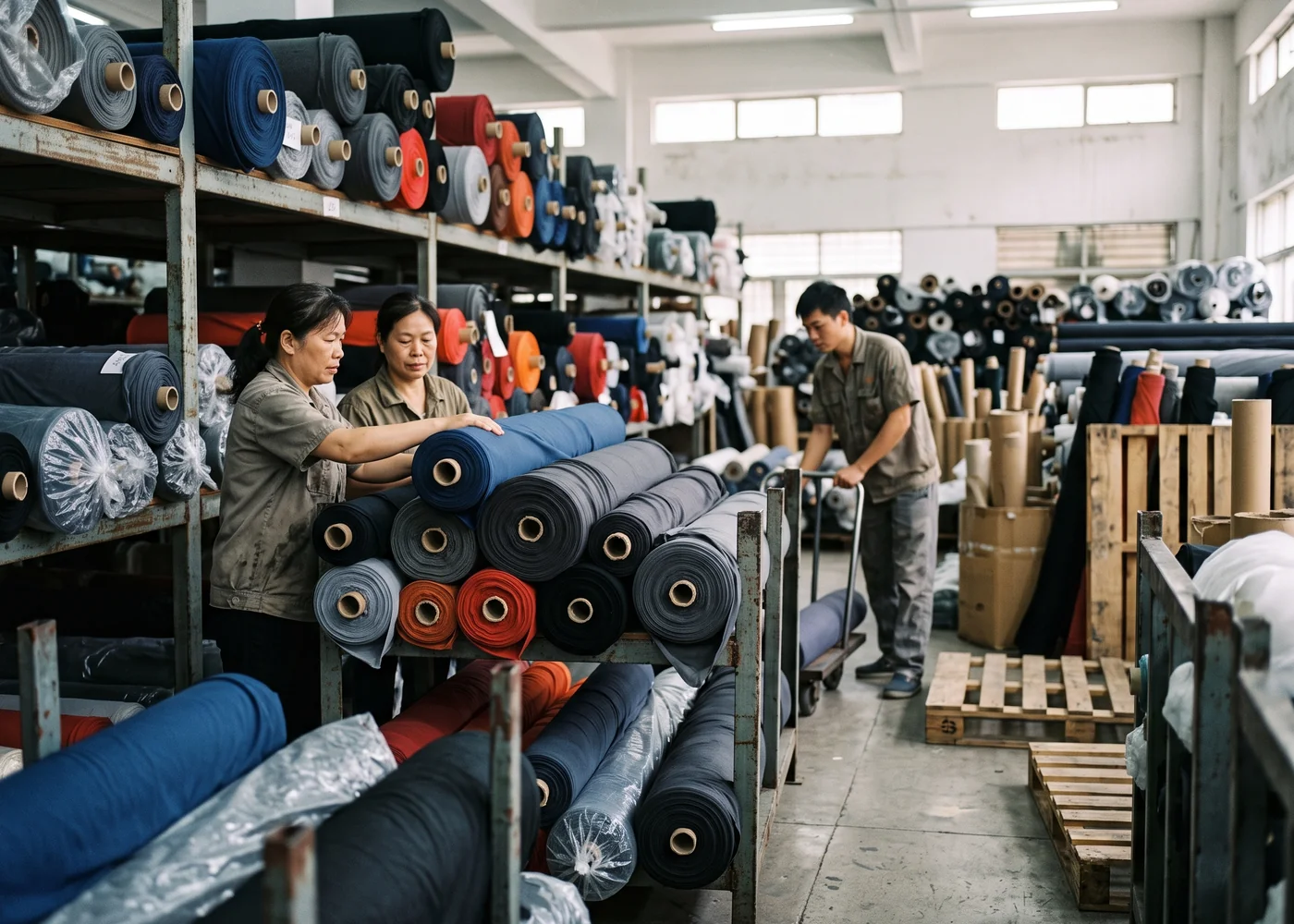
| Binary nylon/spandex knits — 88/12, 90/10, 91/9 — separated by weight and finish | Chamois pads. We hold no pad line and no house pad. Development runs against your own pad supplier's documentation |
| Full-width digital sublimation, heat transfer, computerised embroidery | Chlorine-resistant base cloth. Chlorine tolerance is decided by base-yarn chemistry, and our own library is binary nylon/spandex. A chlorine-rated base has to be developed against a mill you specify |
| Reflective print and taping, silicone gripper embossing | — |
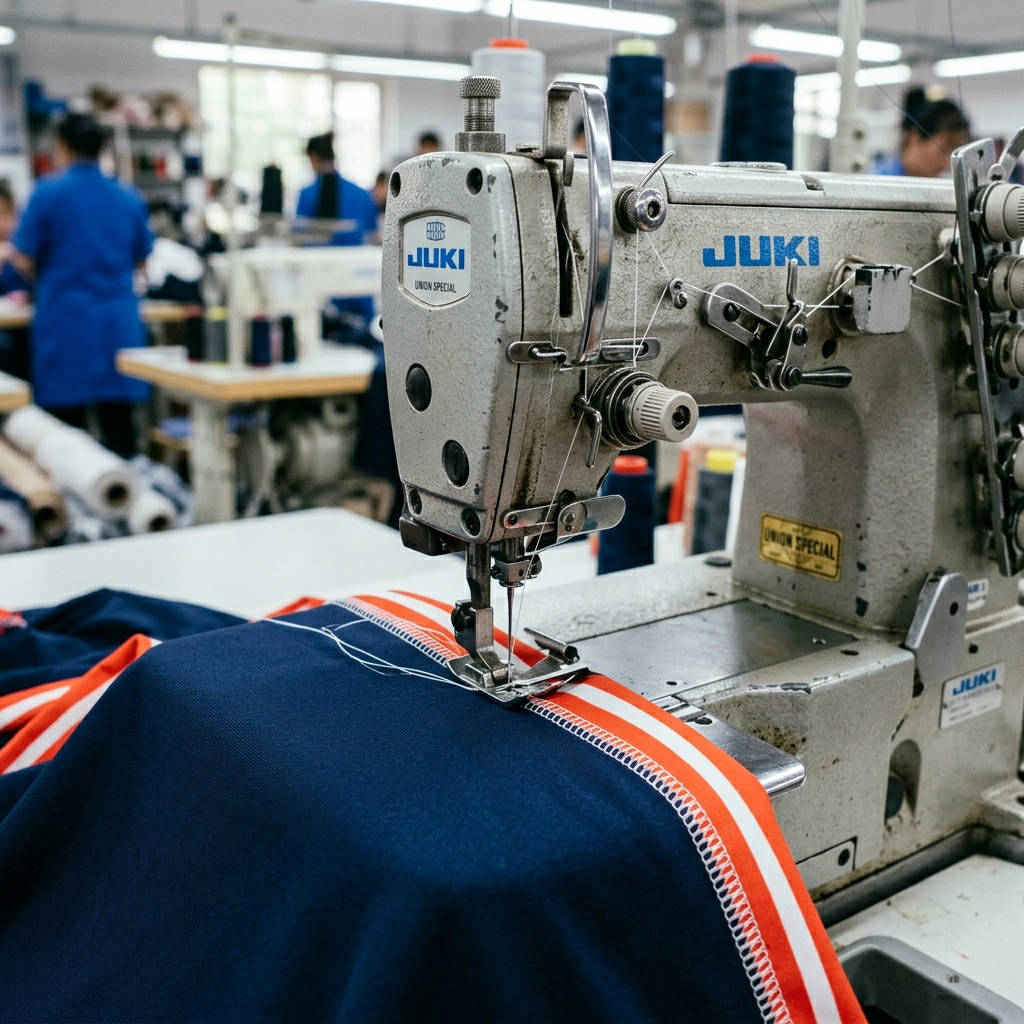
| Flatlock and ultrasonic seam construction, seam taping | — |
Why We Say It This Way Round
Two claims are easy to make and expensive to be caught on: an in-house pad, and an in-house chlorine-resistant fabric. We make neither. Stating the boundary before you commit is more useful to a buyer than a capability list that quietly assumes both.
Pad structure itself — how a pad and the pattern constrain each other — is not opened up on this page. That work has its own page: Cycling Chamois Development.
Monthly output through our own lines runs to 60,000 garments — jerseys, vests, jackets, arm and leg warmers. That figure explicitly does not include chamois-parameter products, because those are not a product line here.
What a Binary Nylon/Spandex Blend Does — and Doesn't
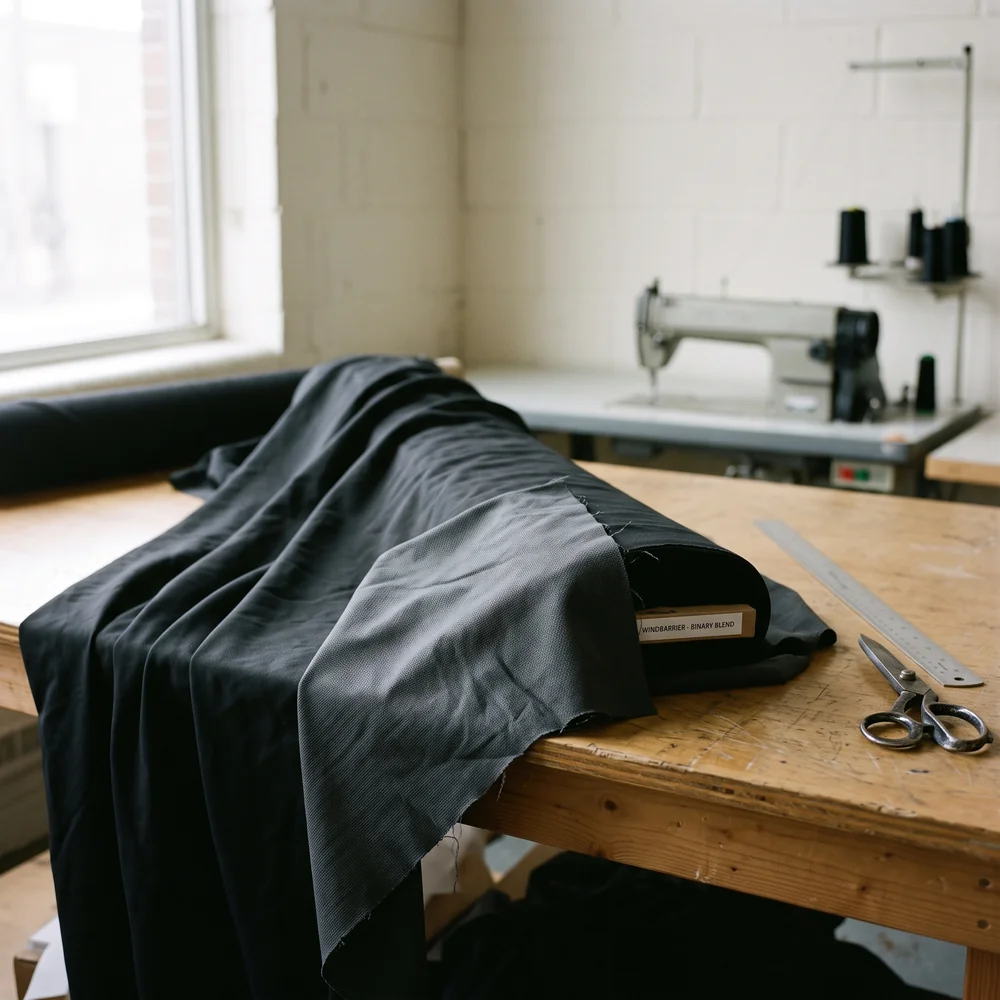
One family of knits, three tiers separated by weight and finish. Here is what each tier is asked to do on a tri build, and the one thing none of them is.
| Tier (by weight and finish) | What it does on a tri build | What it isn't |
|---|---|---|
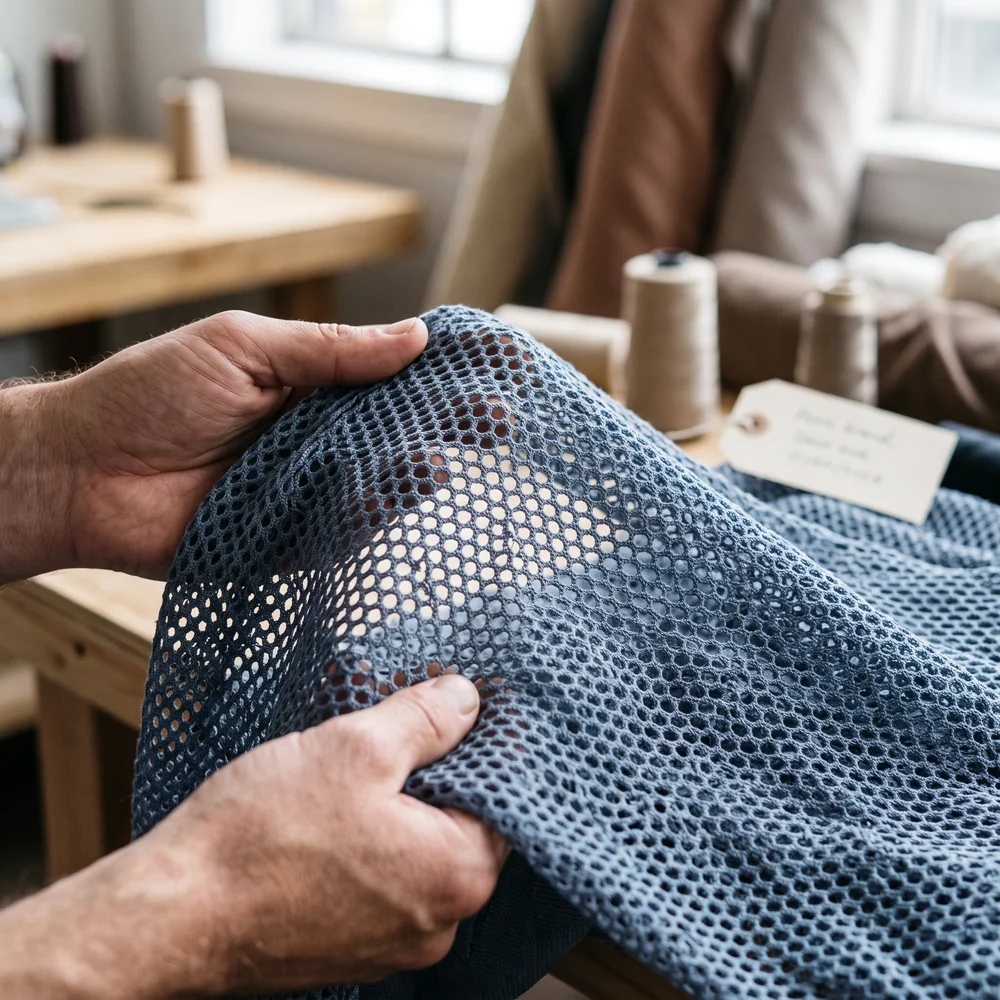
| Lightweight summer mesh | Carries the open zones — upper back, inner sleeve — where the wet-to-dry curve needs to finish fastest | Not a compression tier; it will not hold a torso panel under load |
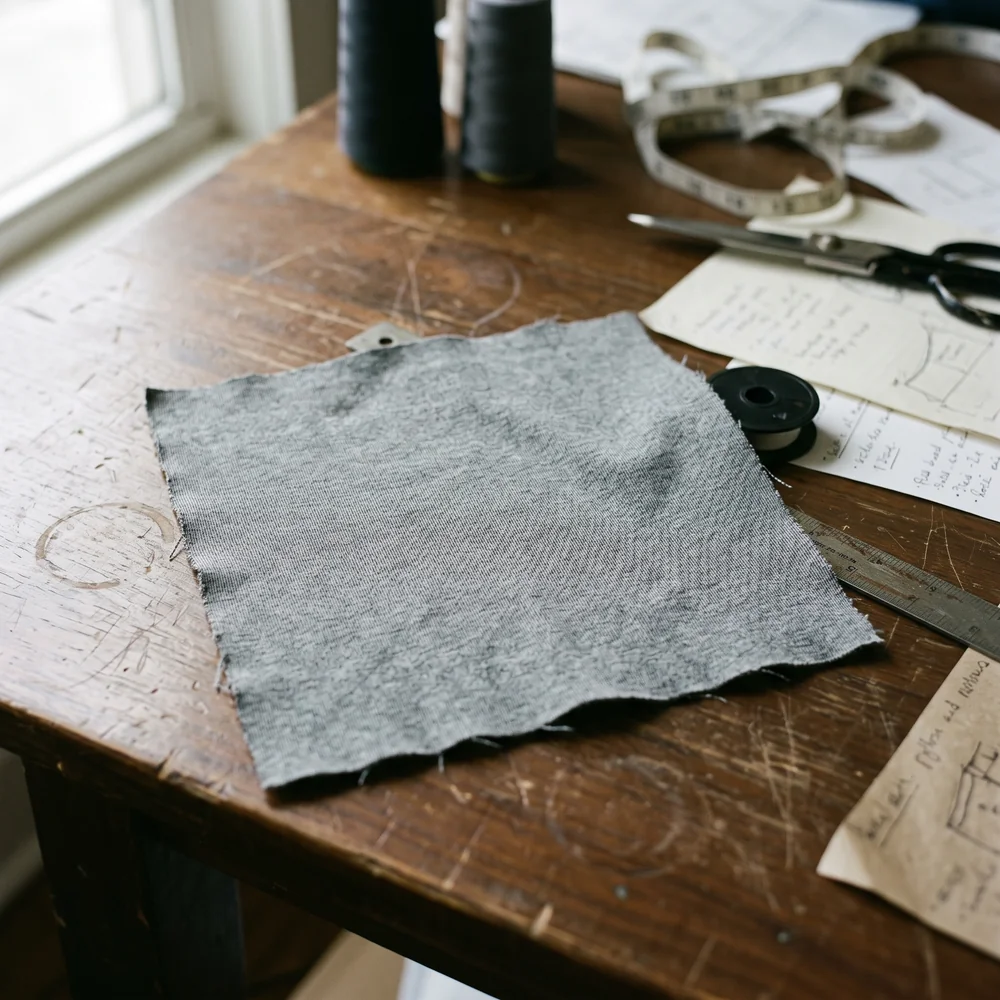
| Mid-weight stretch body | The main torso and leg panels: the tier that holds shape through the bike leg and takes full-width sublimation cleanly | Not a wind layer; it is not asked to block anything |
| Wind-resistant laminate | Optional over-layer for cold-water events, on a binary-blend base cloth like the others | Not a separate material family, and not waterproof |
The Chlorine Question, Answered Straight
Chlorine tolerance is a property of base-yarn chemistry, not of a finish that can be added afterwards. Our library is binary nylon/spandex, and we do not represent any of it as a chlorine-rated cloth.
If your programme is pool-dominant, chlorine resistance becomes a sourcing decision inside your tech pack: you name the mill and the base, we develop and sample against it. That is a real service — and it is not the same sentence as “we have chlorine-resistant fabric.”
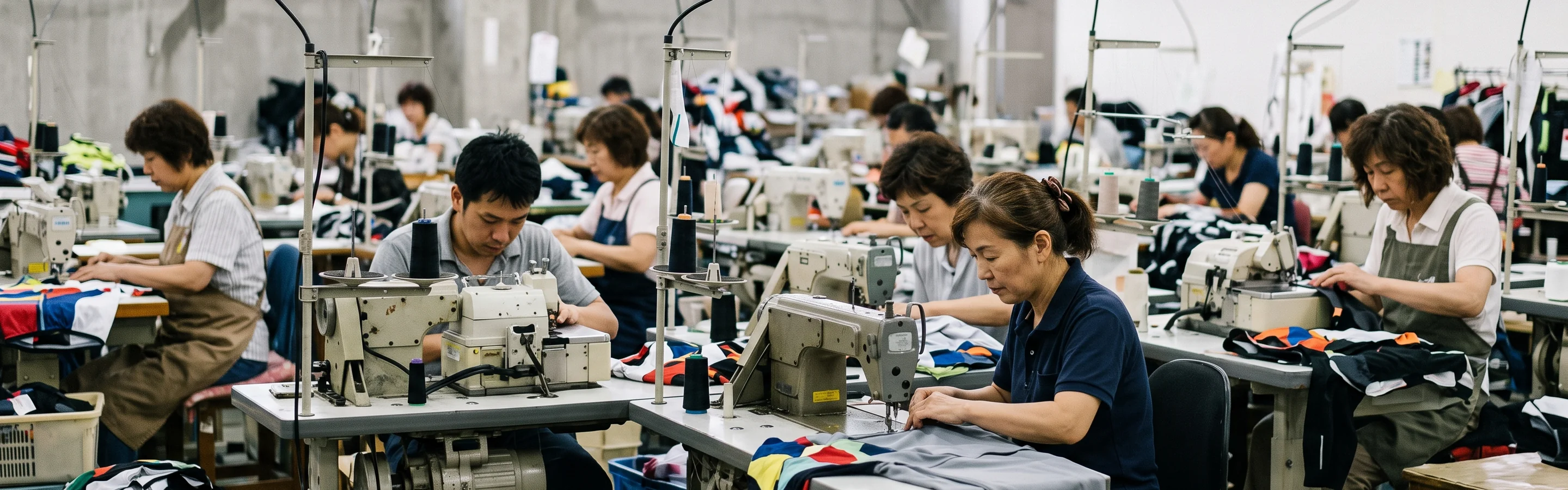
We develop and sample triathlon suits to a buyer's tech pack. We do not hold them as stock, and we never have.
How a First Tri Suit Program Actually Runs
Seven steps, each with what you get at the end of it and what it can't tell you yet. This is not the site's generic kit sequence — every step below has a tri-specific decision inside it.
-
1
Inquiry
You describe the event format, the field size, and whether the programme is pool- or open-water dominant.
a straight answer on whether the brief sits in our in-house column or the develop-to-your-spec column.
-
2
Spec Handover
Pad documentation, base-cloth preference, and the one-piece or two-piece call from the trade-off table above.
without pad documentation the build cannot start, and no description substitutes for it.
-
3
Pattern Development
The tri-specific decision here is that the pattern is drafted for the bike position and then checked against the run position, rather than drafted once for a single posture. General riding-fit method lives on Riding Fit & Pattern Development.
-
4
Sampling 5–7 days
a working sample in your specified base cloth with your pad integrated.
anything about wet behaviour, which is what the next step exists for.
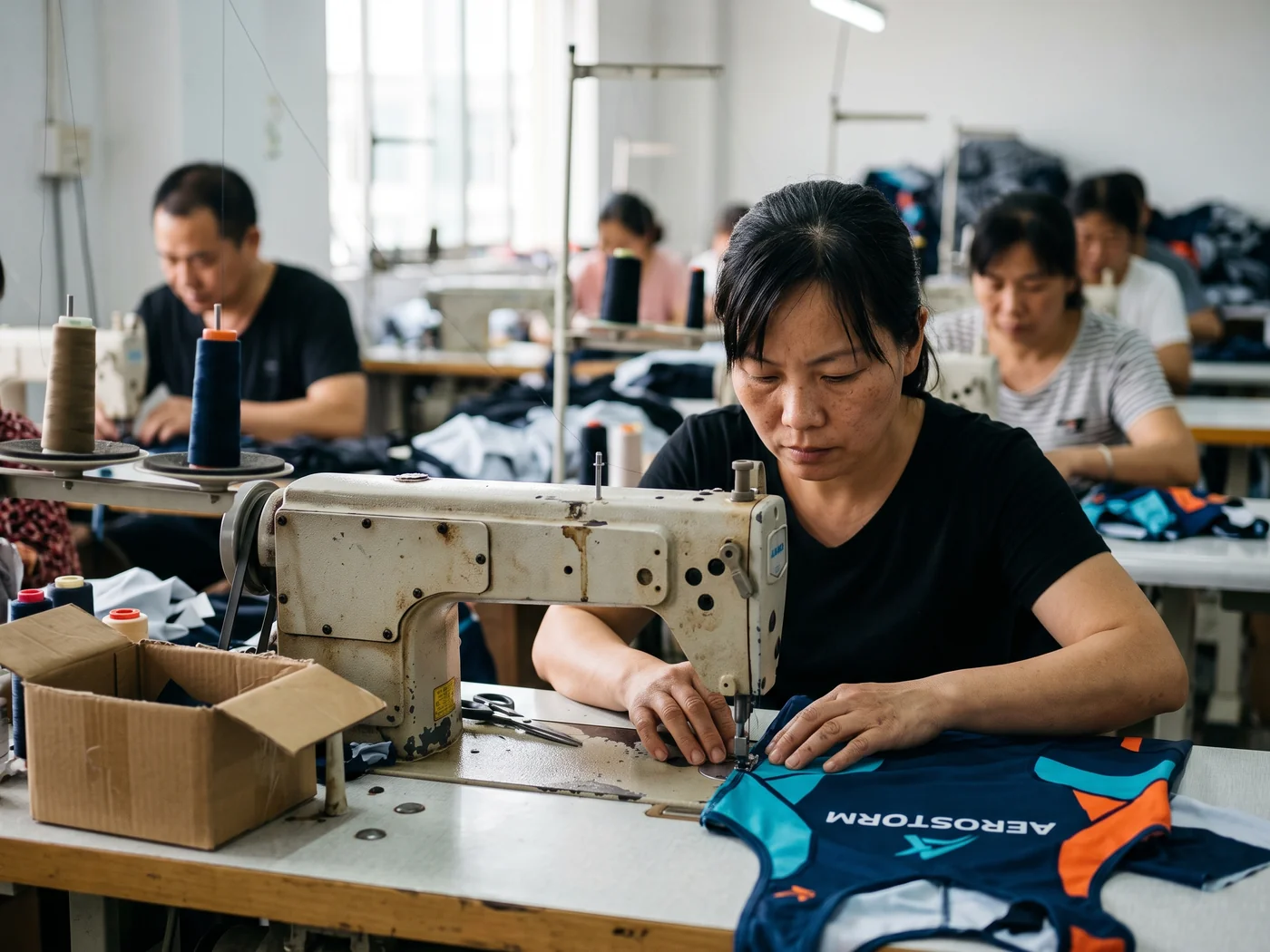
The working sample, sewn in your specified base cloth. -
5
Wet and On-Bike Review
The sample is soaked, then ridden, then walked — reviewed damp rather than dry. This is the step that catches the wet-to-dry window failures while they are still a pattern correction.
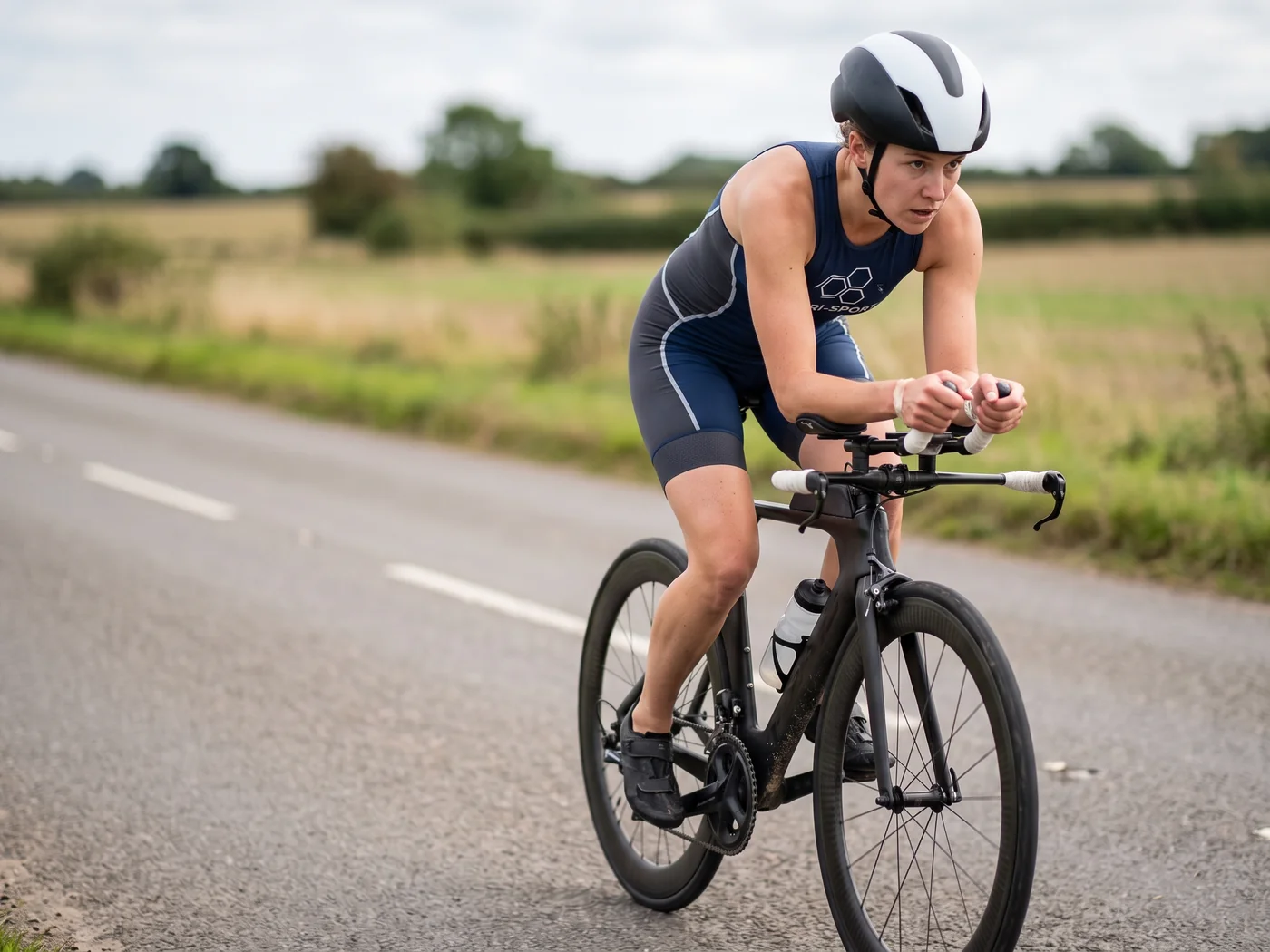
Reviewed on the bike, in position, still damp. -
6
Revisions 2 rounds
Two revision rounds carry no additional sampling charge.
if the pad reference itself changes, that restarts pattern work rather than counting as a revision.
-
7
Bulk 20–30 days
Counted from sample confirmation, not from the date of your first message.
The One Inspection That Catches Chafing Before It Ships
Six inspection gates run before any order ships — set out in full on the Quality Control page. One of them does most of the work on a tri suit, so that is the one opened up here.
In-Line Sewing Inspection: Where It Sits
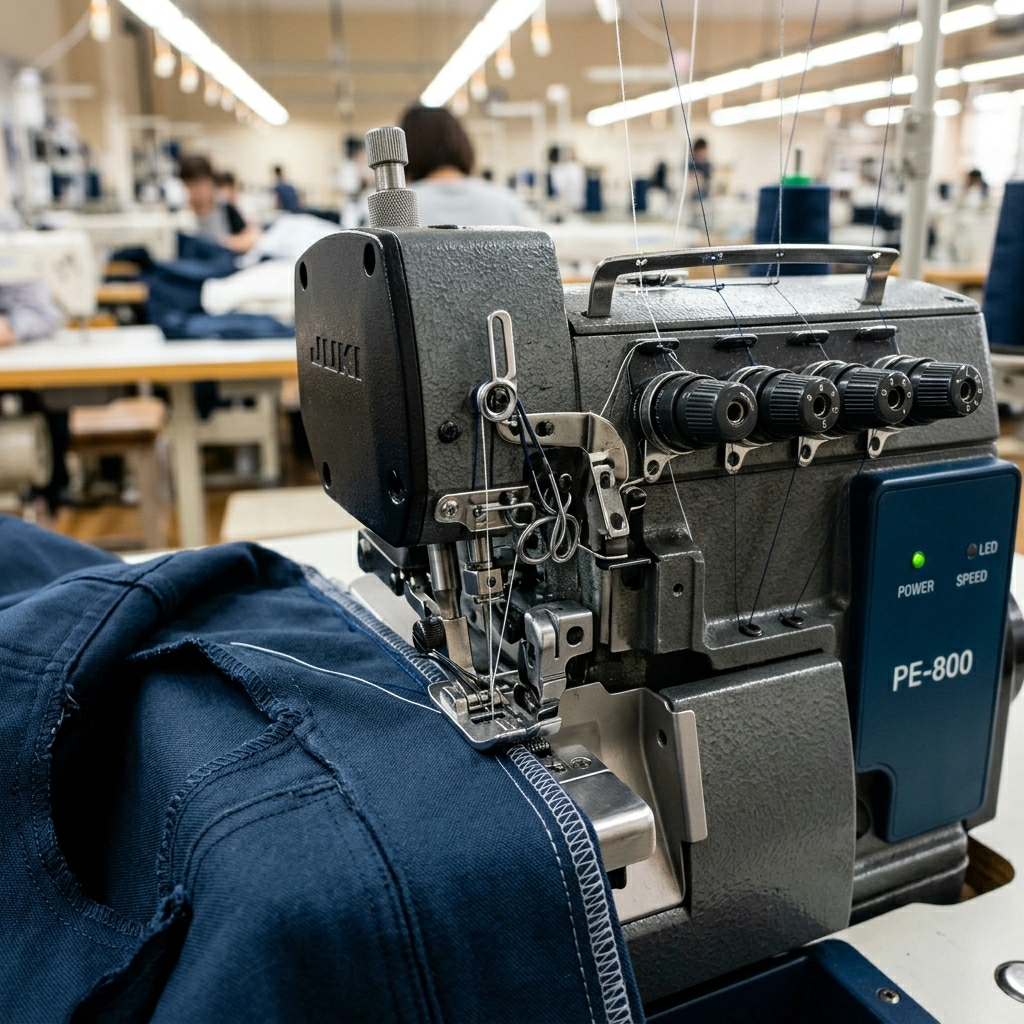
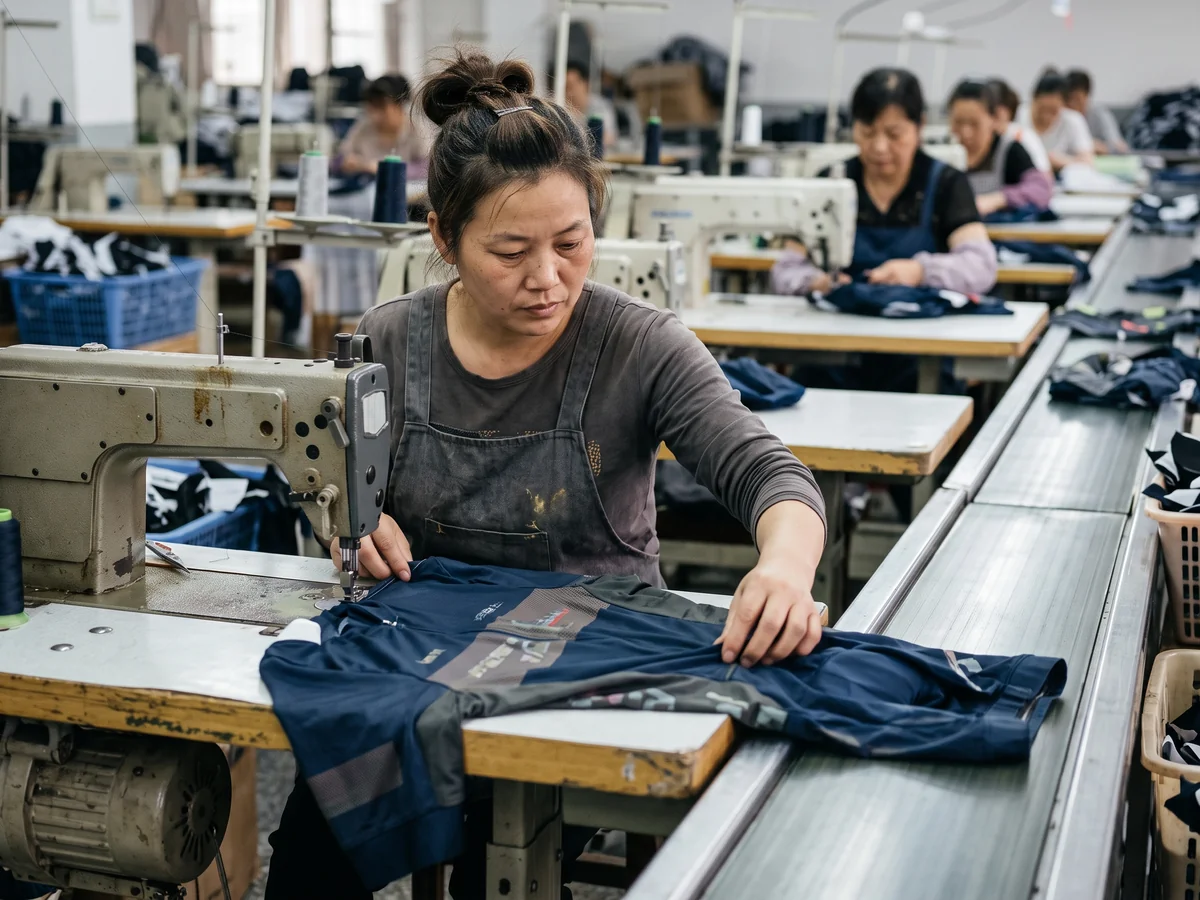
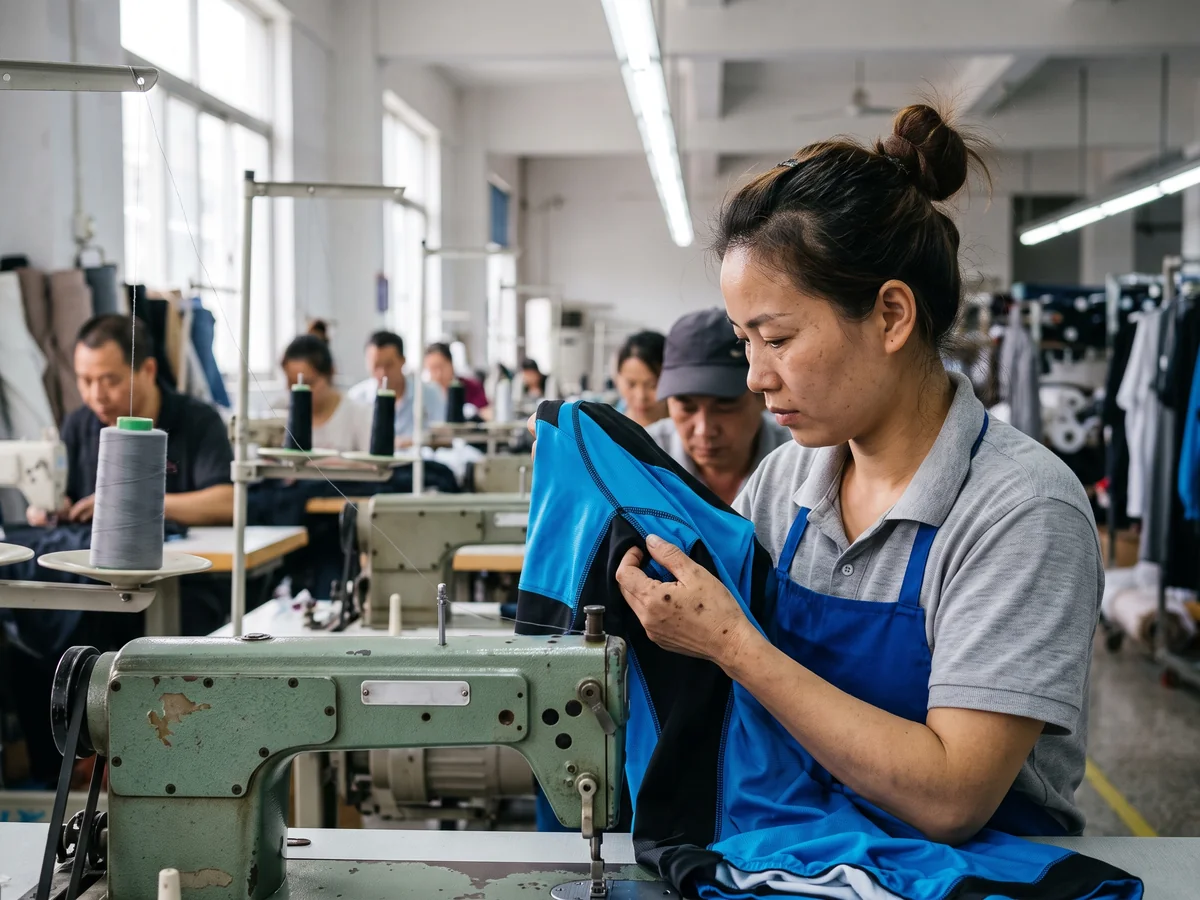
It happens while the line is running, between cutting and mid-production sampling — not at the packing bench.
That timing is the entire point: a seam flagged in-line costs a re-sew, and the same seam flagged at final inspection costs a re-cut.
The Three Places Checked
Each one is chosen because it is where a tri suit chafes, not because it is easy to reach:
- Underarm — highest cycle count on the garment, and the last zone to dry. Checked for allowance consistency and flatlock lay, not just stitch count.
- Inner seams — the run of seam that is loaded and damp simultaneously for the longest continuous stretch of the race.
- Cuffs and hems — gripper adhesion and edge finish, checked on a stretched cuff rather than a relaxed one.
Stop the Line, or Take It as a Concession
A defect inside tolerance is recorded and released; a defect outside it stops that station until the cause is corrected, rather than being written up and passed downstream. The distinction is a documented call, not an inspector's mood.
What You Actually Receive
An in-line inspection record naming the station, the three zones, the defects found and the disposition of each.
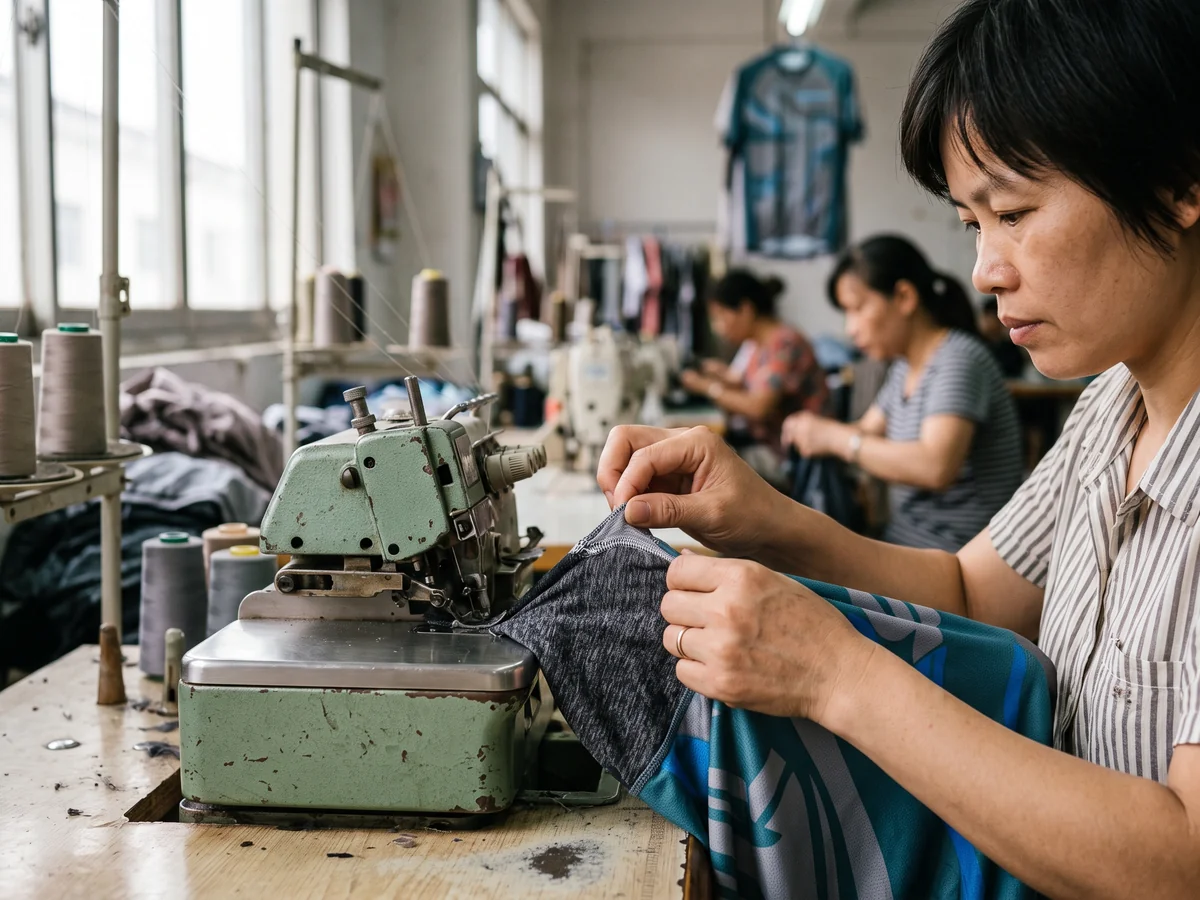
Ten QC staff run these checks across the factory's lines.
What Transfers From Our Cycling Programs — and What Doesn't
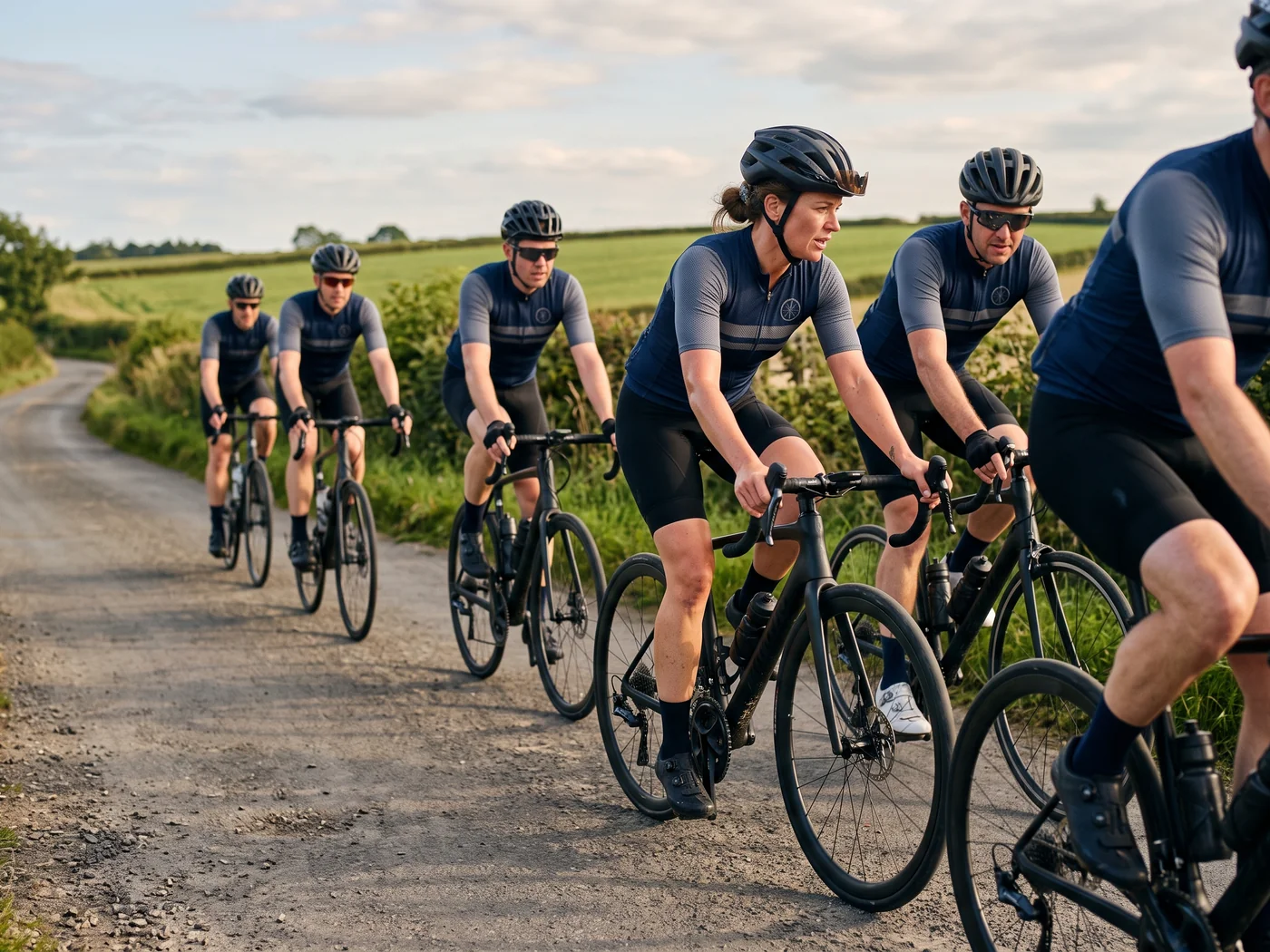
There is no tri suit case study on this page, because there isn't one to tell. What there is: two real cycling team-kit programmes, and an honest account of which parts of them carry over.
Amateur Club, North America
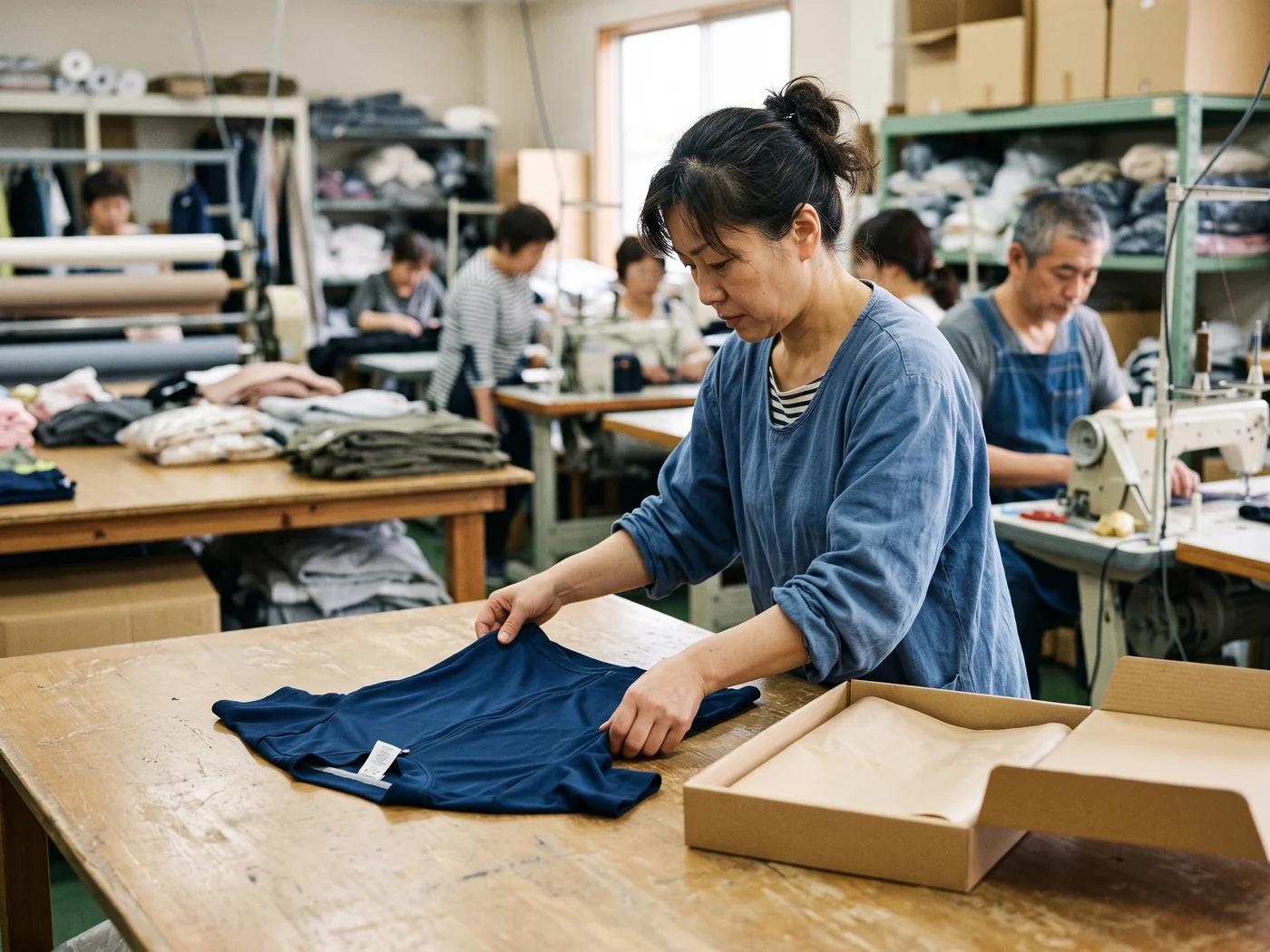
Programme: 8 sub-teams, 30 garments per team per season — jersey, vest and arm warmers — 240 across the club, reordered for three consecutive seasons with patterns and screens kept on file.
What transfers: multi-team colourway control across one season, and reorder work that starts from a confirmed pattern instead of reopening development.
DTC Brand, First Season
Programme: 6 private-label SKUs, 2 colourways each, 30 per colourway — 360 pieces in a first season, with the brand's own main label and packaging.
What transfers: running a first-season range as one graphic system, and private-label finishing on a garment carrying someone else's brand.
What does not transfer. A continuous one-piece body with a pad integrated into it is new work for this factory. The seam construction, the sublimation registration and the private-label finishing all carry over. The specific combination — one-piece, pad-bearing, worn wet — does not have a delivered precedent here, and we are not going to imply that it does.
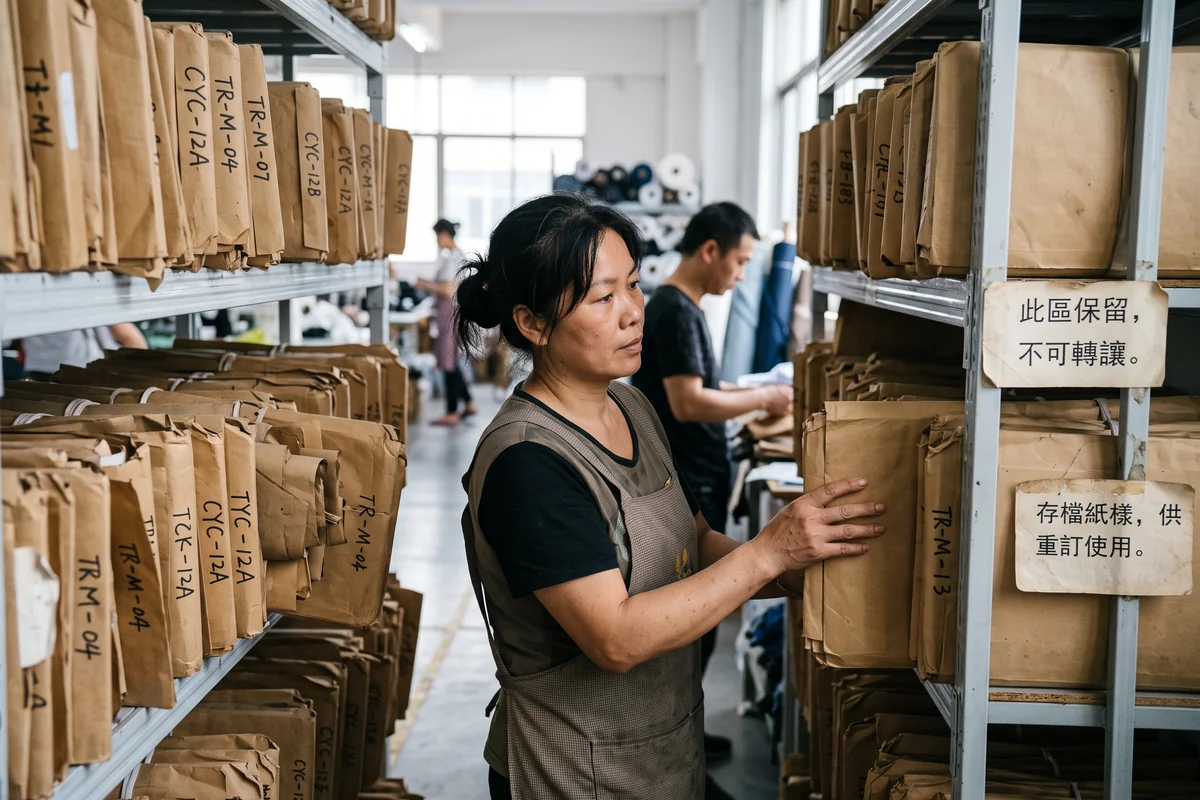
Where that leaves a first tri programme: the development sequence above is the mechanism for closing the gap, and its wet and on-bike review step exists precisely because there is no prior tri build to lean on.
Who This Fits — and Who Should Look Elsewhere
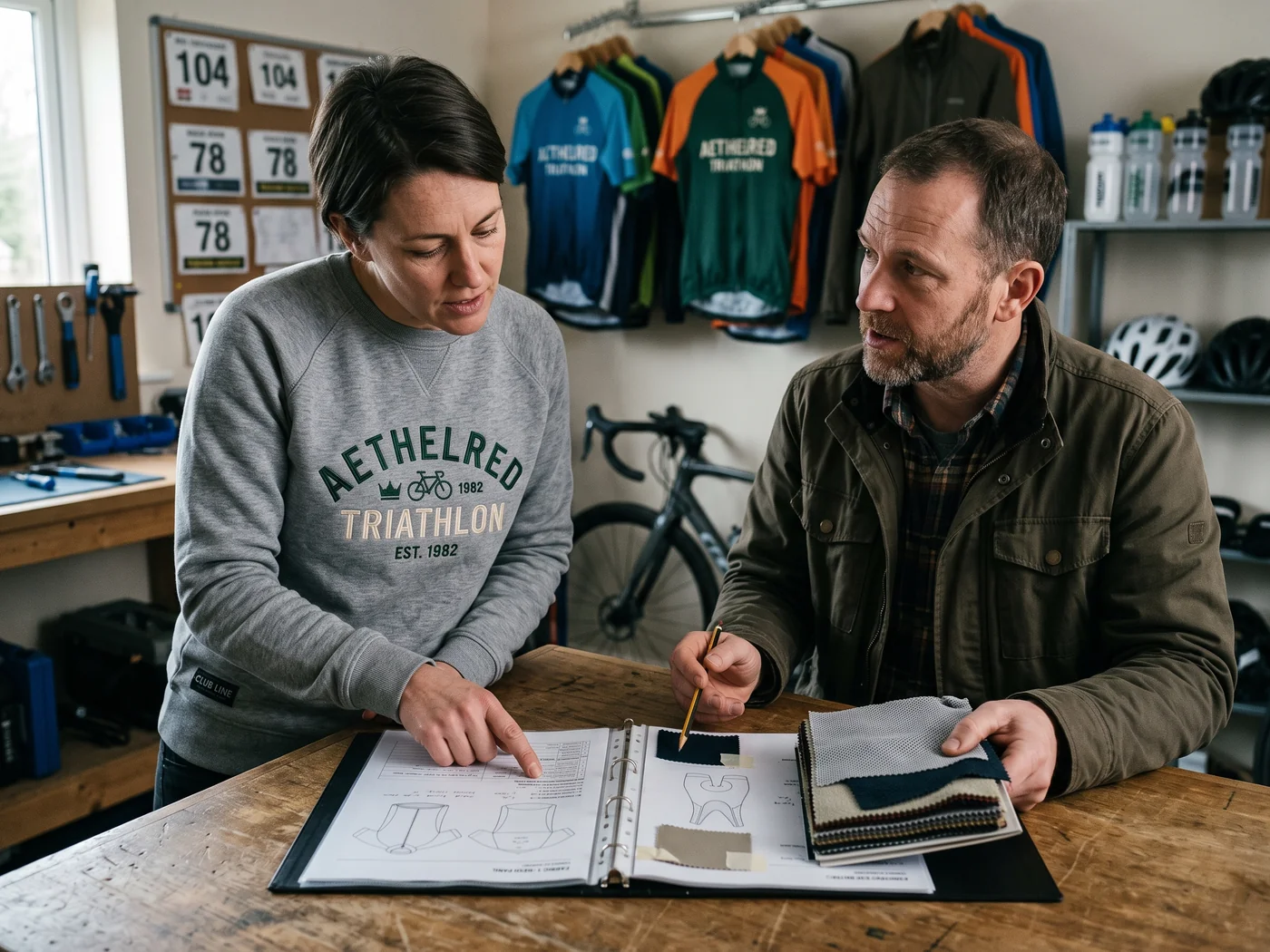
The second list is not a softened version of the first. If you're in it, another supplier is a better use of your time.

| This fits you if | Look elsewhere if |
|---|---|
| You have pad documentation from your own supplier, even partial | You want a finished tri suit pulled from a range — there is no range here |
| You have a tech pack, or you're prepared to develop one with us | You have neither pad documentation nor any intention of developing a spec |
| You're a club or brand with a season behind the order, not a one-off request | You need stock delivered on a timeline shorter than a first sampling cycle |
| Your programme can absorb a sampling round before bulk | Your buying decision depends on seeing a delivered tri suit reference from us |
Why the Right-Hand Column Exists
Every entry in it is a project that would fail late rather than early — after a sampling cycle, and after both sides have spent real time. Saying it here costs us some inquiries and costs you none.
If your programme is cycling rather than triathlon, our scenario pages cover that directly, and Complete Cycling Kit Development is the better starting point.
Four Places Tri Suit Projects Go Wrong
All four are specific to a suit worn across three media. Naming where the mismatch happens is more useful than promising it won't.
- FlatThe graphic signed off as artwork, not against pattern pieces.
- SeatedThe pad placed for the bike leg only.
- DryThe size confirmed on an unloaded body.
- LateThe pockets positioned after the graphic locked.
1 · The Torso Graphic Is Signed Off Flat
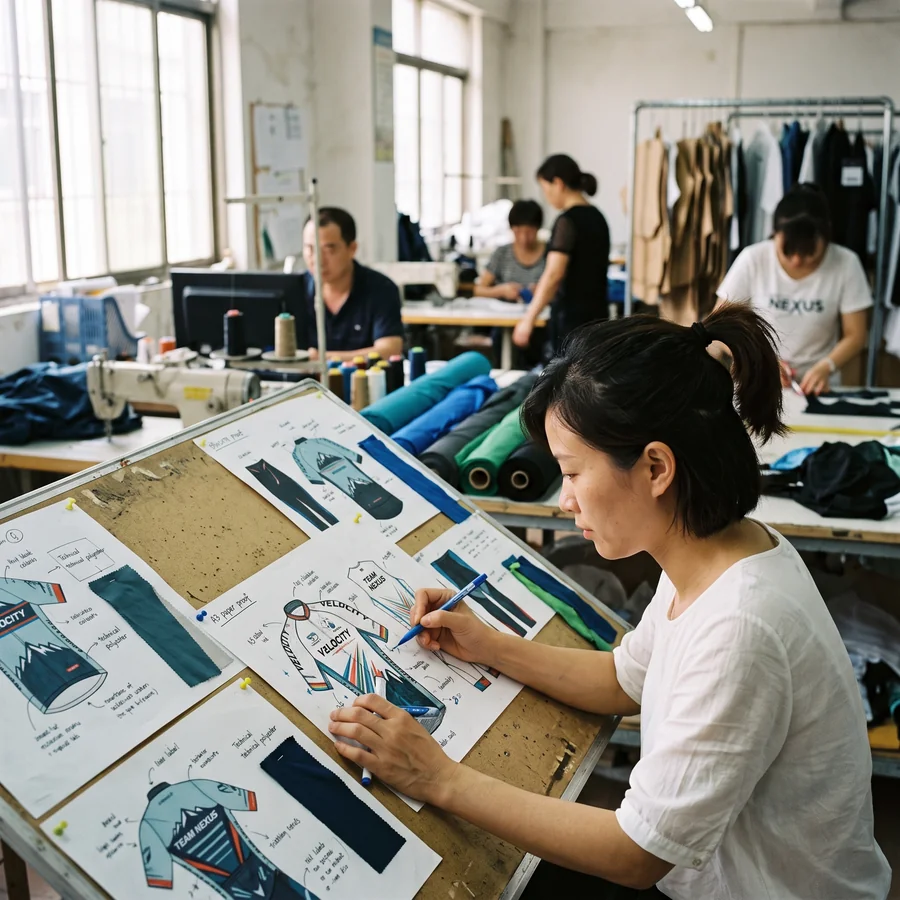
A design approved as a flat artwork file has not been checked against the pattern pieces it will be split across.
That is where the colour-block step described earlier gets built in — long before anything reaches the printer.
2 · Pad Position Is Set From the Bike Position Alone
A placement judged only in a seated, forward posture is judged for one leg out of three.
How pad and pattern constrain each other belongs to Cycling Chamois Development, not here — but the placement brief has to name the run.
3 · Sizing Is Confirmed Dry
A suit fitted on a dry body behaves differently once the fabric is loaded with water and the panels have shifted.
The wet and on-bike review step exists for exactly this, and it is the one most often skipped to save a week.
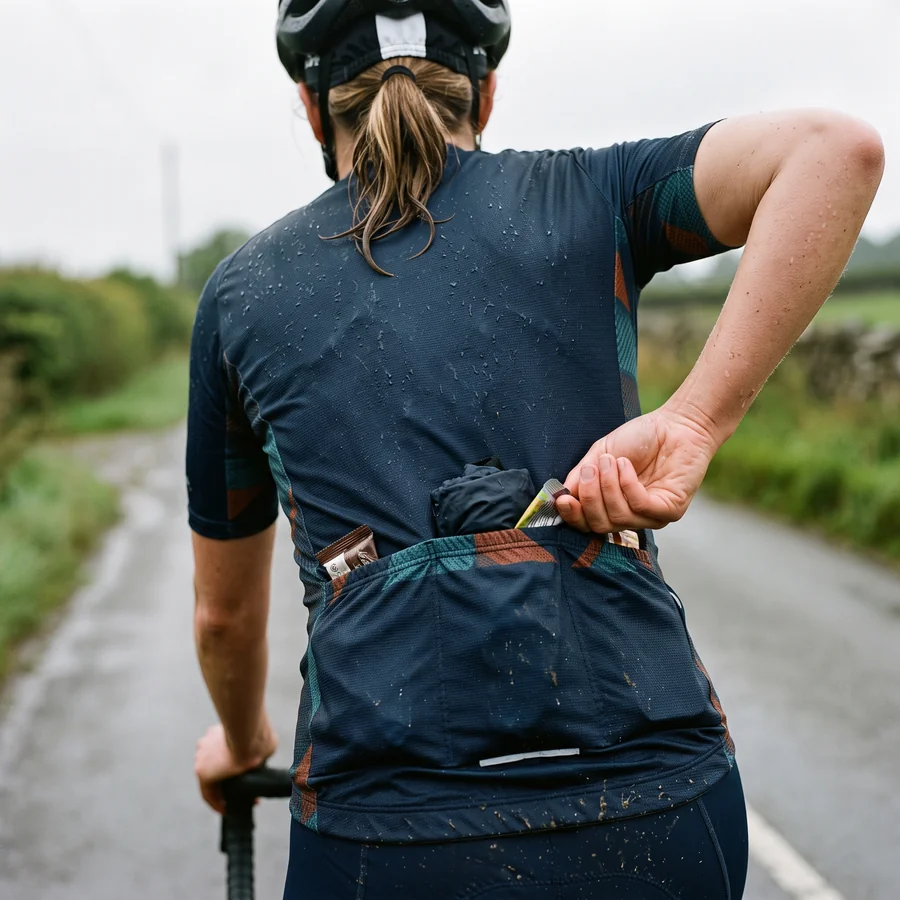
4 · Transition Pockets Are Placed Last
Pocket position on a continuous panel competes with the print area for the same space.
Decided after the graphic locks, one of the two gives — usually the pocket, which ends up somewhere the rider can't reach wet.
The Pattern Across All Four
Each is a decision taken in one condition for a garment that works across three. Catching them costs a pattern revision; missing them costs a delivered order.
Sponsor Panels on a One-Piece Body
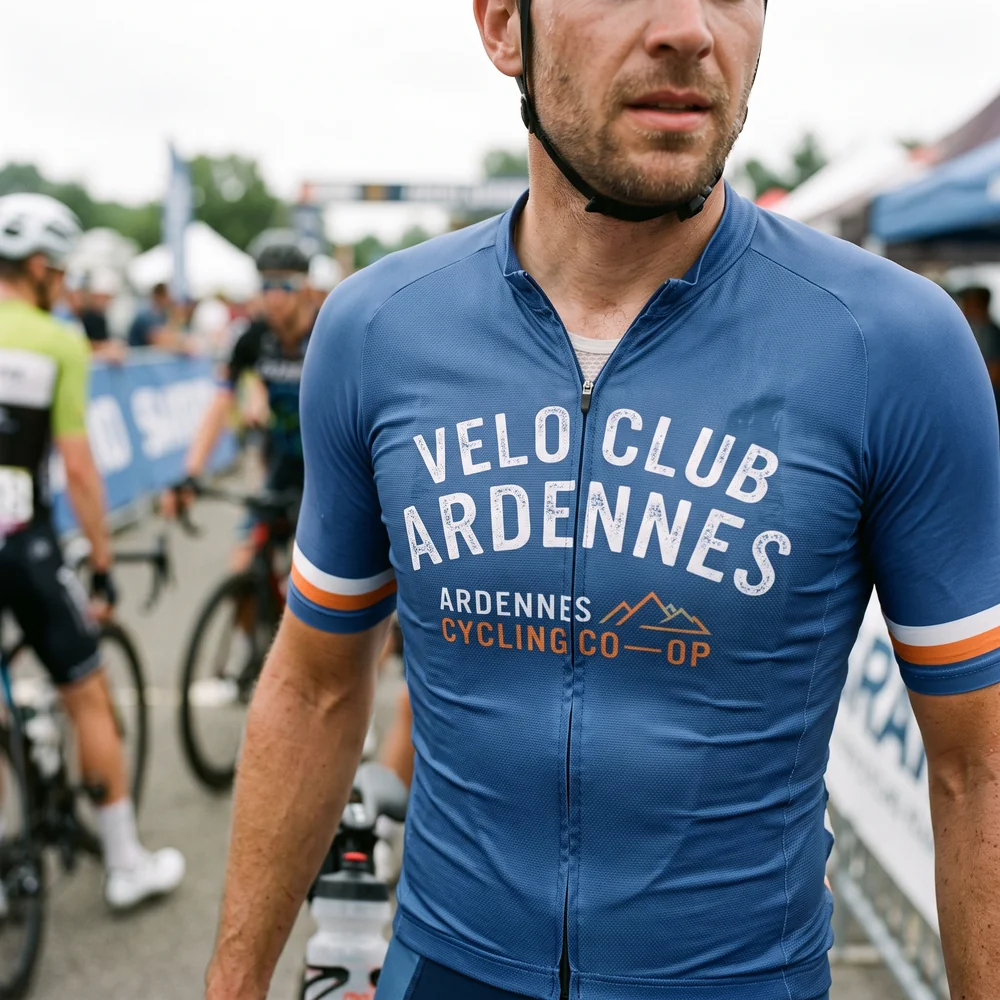
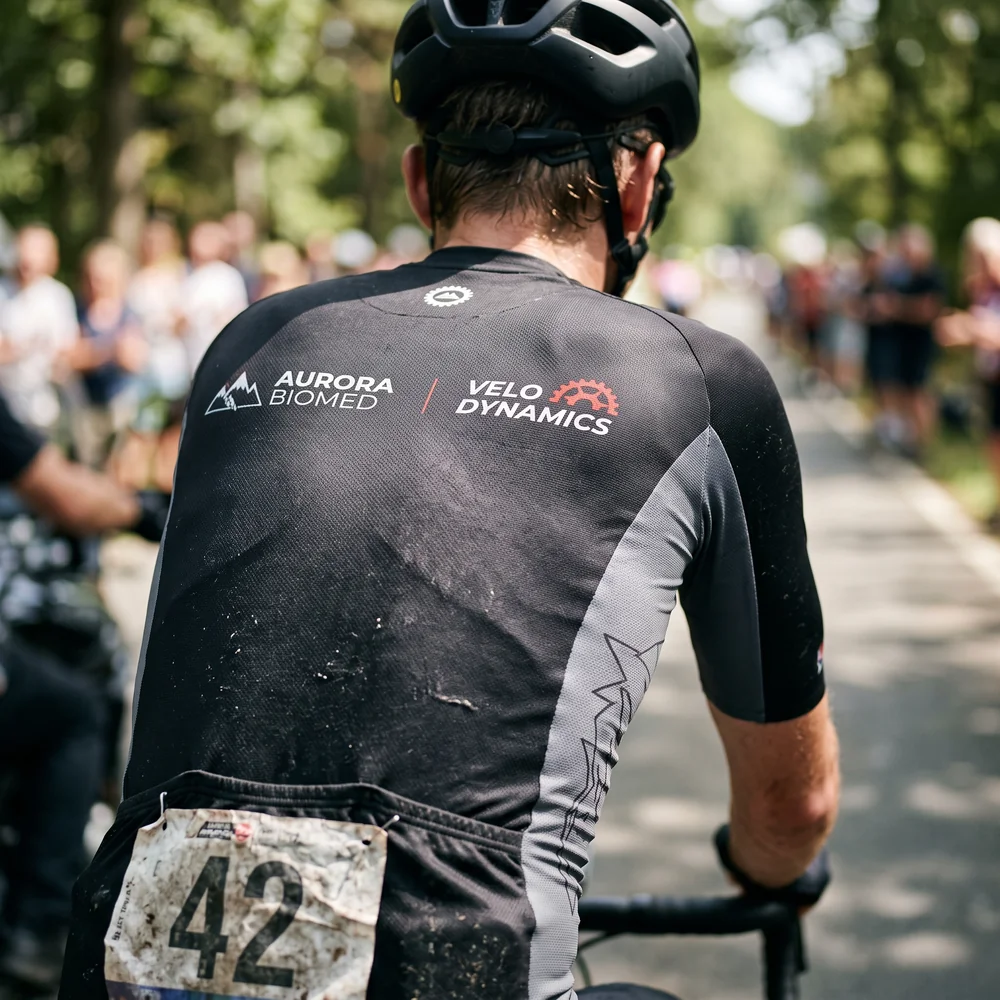
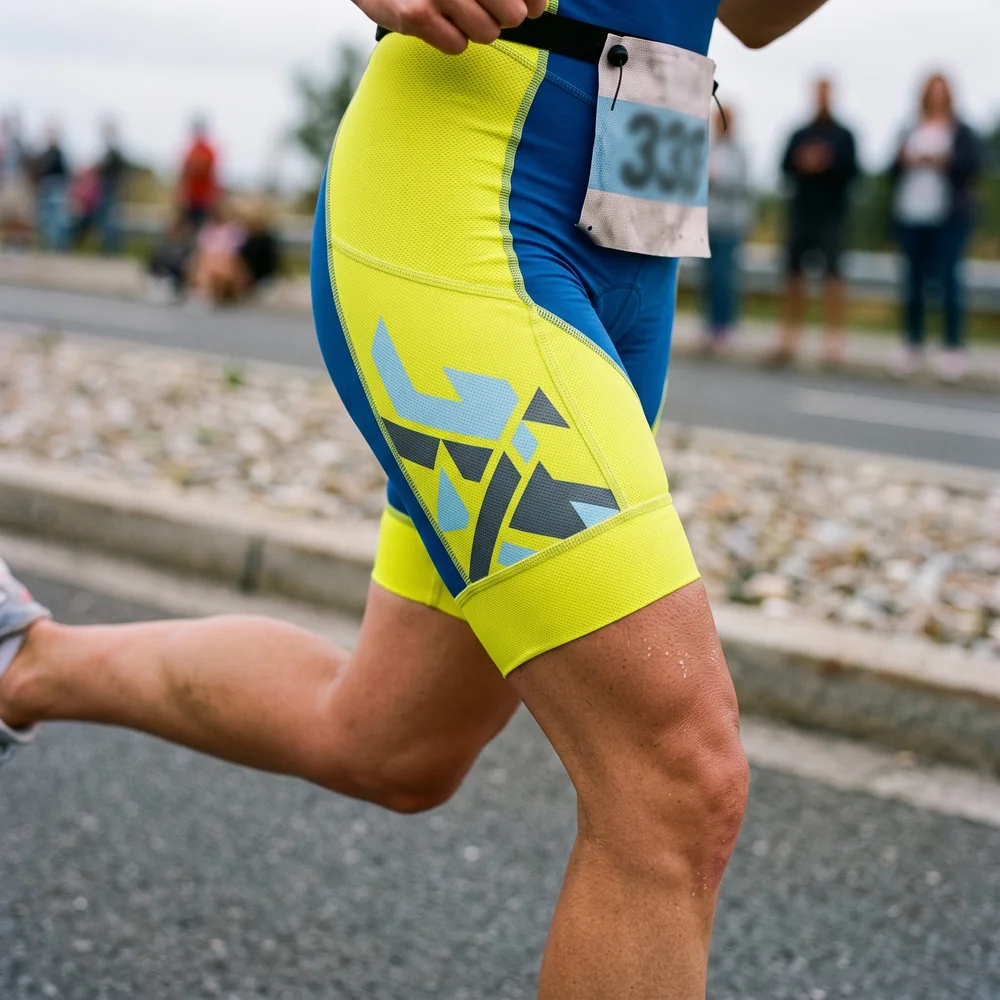
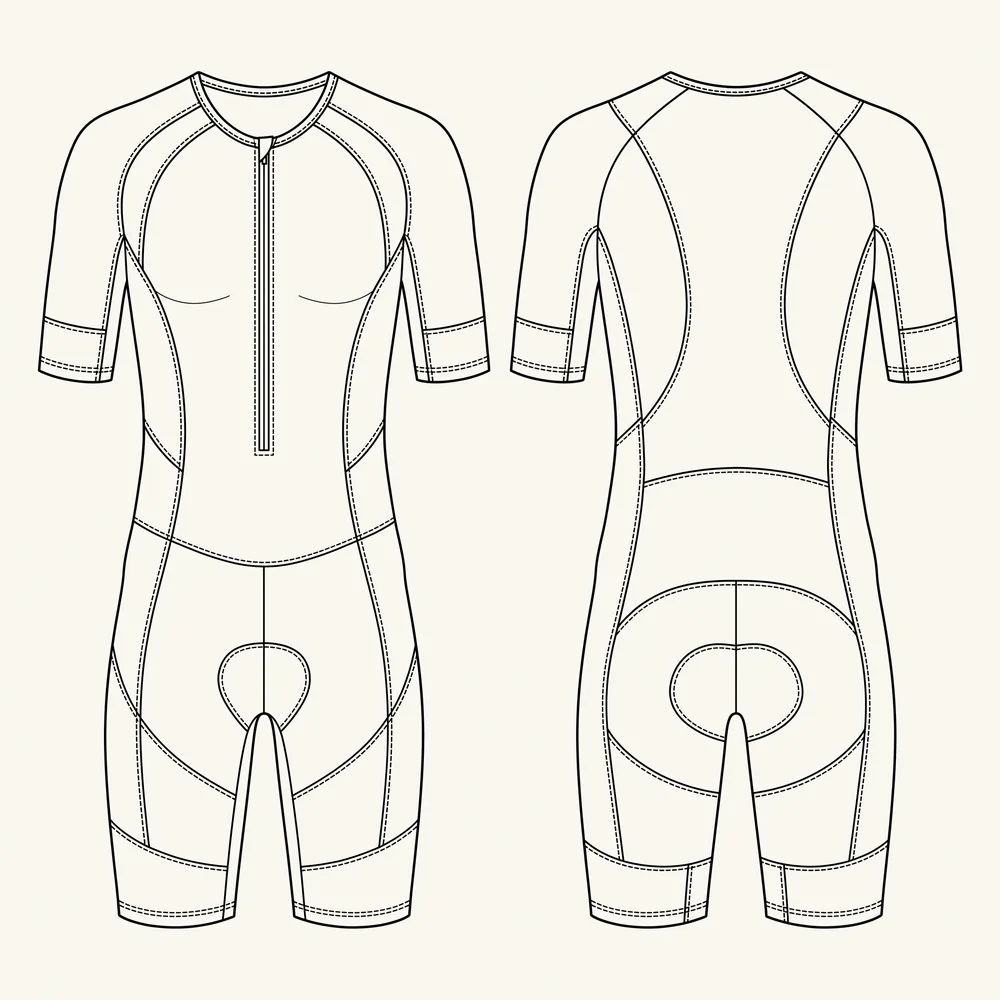
On a continuous body, a sponsor panel isn't placed on a piece — it's placed across a system.
| Panel | Where it reads |
|---|---|
| Chest | Flat and visible in all three positions — the only panel that is. |
| Upper back | Read on the bike leg, largely lost on the run. |
| Thigh | High visibility running, foreshortened on the bike. |
| Side seam | A two-piece splits it; a one-piece keeps it whole. |
Placement on a continuous body is decided against the seam map, not the flat artwork — the same registration discipline, applied to someone else's logo.
Triathlon Suit Development Questions
What buyers ask before sending a first tri suit brief.
- Sizes mix freely inside one colourway.
- Each additional colourway counts its own 30.
- Sample pieces sit outside the count entirely.
Start Your Tri Suit Development Conversation
Send the event format, the field size, and whatever pad documentation you already have. That's enough to get a real answer back.