Custom Team Cycling Kits for Clubs Where the Roster Isn't All One Shape
Your club has a rider who races on Sunday and a rider who stops for coffee. One order, one pattern set, and a size run that has to look intentional on both of them.
- XS
- S
- M
- L
- XL
- 2XL
- 3XL
- Your chart
The Job Nobody Wrote a Description For
You said you'd "sort out the kit this year." Somewhere between that meeting and the season opener it turned into a second job, and nobody is paying you for it.
Here is what actually lands on the kit coordinator, in roughly the order it ruins your evenings:
- Sizes The size spread is real, and it is wide. A rider who has been racing since the nineties and a rider who joined in March do not wear the same size or want the same cut. The order has to look deliberate on both.
- Collection You are the collection point. Sizes, name spellings, squad allocations and the sponsor's artwork all arrive at you — in nine different formats, mostly after ten at night, several of them as photographs of a handwritten list.
- Sponsor The sponsor looks at the sleeve. Not at your spreadsheet. A mark that comes back thin, off-colour or cut across a seam is the version of your club they carry into the renewal conversation.
- Late joiners People join after you close the list. Someone always does. They join two days after you send the final numbers, and they are perfectly nice about it, which somehow makes it worse.
What This Page Is Not About
It is not about fabric weights, aerodynamics or how a chamois is built. Those are real questions and they are answered properly elsewhere on this site.
The reason they are not the subject here is that a club order rarely fails on the cloth. It fails on the list, the dates and the handover — which is what the rest of this page is about.
Is This Your Club? Two Questions Before You Read On
Reverse qualification, up front. Two questions decide whether the rest of this page is written for your situation or for someone else's.

| The question | If yes read on | If no the better page |
|---|---|---|
| Will you order roughly like this again next season? | Everything below is built around the repeat: one pattern set, updated by colourway and roster, reused season after season. | A single fixed date with no expectation of ordering again is a different problem. Cycling Events & Corporate Orders is built around exactly that case. |
| Is one order covering more than one squad? | Each squad keeps its own colourway, its own size breakdown and its own line in the same order. That is the normal shape here, not an exception. | A single roster ordering a single kit still works fine — you can skip the squad-structure section and go straight to sizing. |
Who Should Not Send This Form
- An individual rider after one custom jersey. We are a factory: we produce against a specification, hold no finished stock, and every style and colourway carries a minimum (figure in the FAQ).
- A bike shop buying to resell. Bike Shops & Retailers is written for your economics rather than a club's.
Saying that here costs us a few inquiries and saves you a week.
A Club Is a Set of Squads, Not One Roster
Most clubs that order together are actually three or four smaller groups that happen to share a name, a crest and one very tired coordinator.
- Pace
- Category
- Gender
The Three Splits That Show Up Most
- By pace group. A fast bunch and a social bunch, each with its own ride night and its own idea of what club kit should feel like on.
- By race category. Squads entered in different competition categories, each with a roster that is managed separately through the season.
- By gender. Men's and women's squads running as distinct rosters under one club name — which matters here because our size tables are separate patterns rather than one chart with different labels.
Same Base, Different Accent
Squads inside a club almost never want identical kit, and almost never want unrelated kit either. One base design, one graded pattern set, and an accent colourway per squad.
- Reads as one club
- A junior squad and a senior squad are obviously the same club at fifty metres, and still told apart.
- Tracked separately
- Each squad's colourway is its own line inside the one order, with its own size breakdown and its own entry in the pattern file.
- Changed independently
- Change one squad's kit next season and the others are untouched.
Two Things That Surprise First-Time Club Buyers
- Squads don't grow at the same rate
- The newest squad moves most; a long-established one can hold the same headcount for years. A club total is several growth rates added together — which is why we ask per squad, not for one figure.
- More than one person feeds one order
- Each squad captain collects their own sign-ups, so several people supply names and sizes into the same account. That is fine. It needs one person nominated to confirm.
The Size Spread of a Real Roster
The single most common reason a club order goes wrong is not the design. It is a size list built out of guesses, and it is entirely fixable before anything is cut.
Complementary scope: this section covers how one club's sizes get settled. Pattern development method itself lives on Riding Fit & Pattern Development and is not repeated here.
Where Your Number Actually Comes From
A club reordering is not starting from nothing: last season's confirmed size chart is the baseline, adjusted for who joined and who left. That adjustment is almost always smaller than it feels.
A first-time club does collect self-reported sizes from the roster. That first spread is the one worth checking properly before bulk — it is the only one with no history behind it.
The Six Sizing Rules, in One Table
| Rule | What it means for your roster |
|---|---|
| Size range | XS–3XL, developed as separate men's and women's patterns — not one set of blocks with different labels on it. |
| Your own chart | If your riders already trust your club's chart, send it and we develop against yours instead. Replacing ours during development costs nothing. |
| Mixing sizes | Within one style in one colourway, sizes mix however your riders fall. Heavy on L and XL with two XS and one 3XL is one line item. |
| Fit confirmation | Confirmed against a size-set sample before the roster's kits enter production — not discovered on delivery day. |
| If a size runs wrong | Handled as an exchange against the size chart confirmed for that order, not a fresh negotiation each time. |
| A rider's size changes | The chart and the pattern file are the same record across seasons, so it is a one-line update rather than a new fit conversation. |
- XS
- S
- M
- L
- XL
- 2XL
- 3XL
A run heavy on L and XL with two XS at one end and one 3XL at the other is a single line item, not several. Nobody in your club is a penalty for being at the end of the table.
Each colourway does carry its own minimum — the figure and the counting rules are set out once, in the FAQ below, and in full on MOQ & Wholesale Pricing.
Already Know Which Squads Are In?
Send the squads and rough rider counts and we will tell you what is still missing before a quote can be real.
Send Your Squad ListOne Club, Many Riding Styles: Getting the Cut Right for Everyone
The fastest rider in your club and the one who rides for the café stop want genuinely different things from the same kit. Choosing between them is a club decision, not a technical one.
Complementary scope: this section covers how a mixed roster picks a cut. Fit engineering for each riding scenario belongs to Road, Gravel, MTB and Commuter — not repeated here.
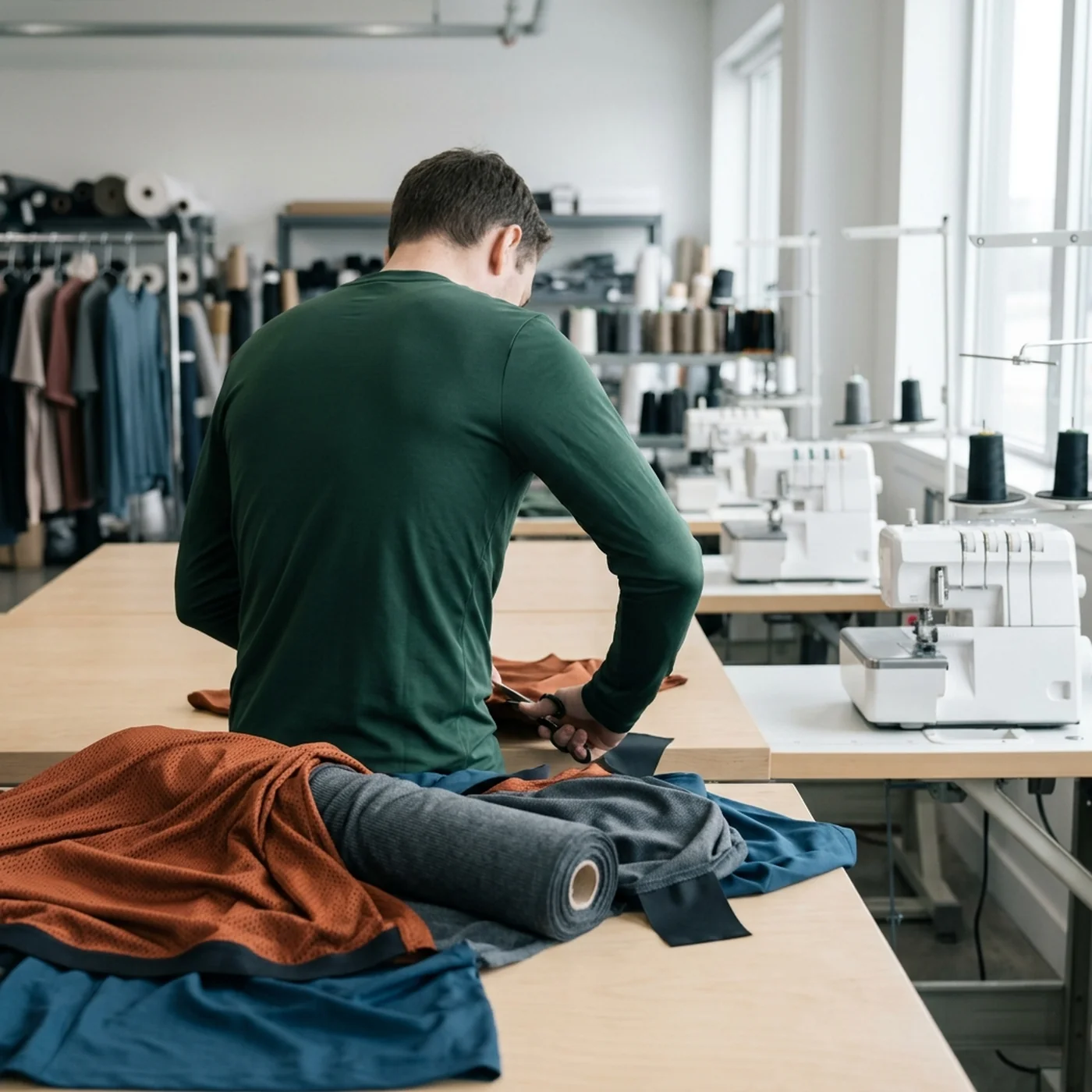
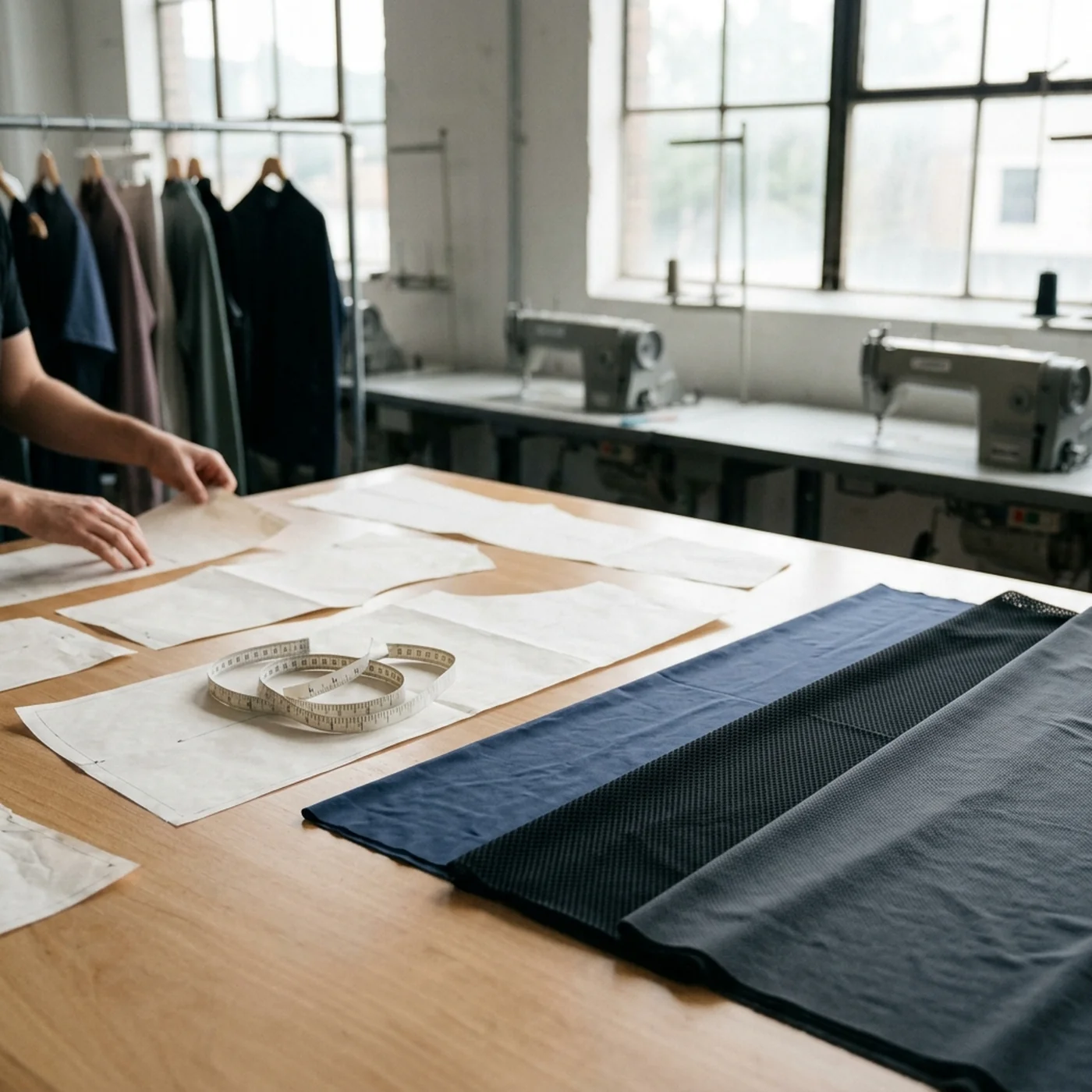
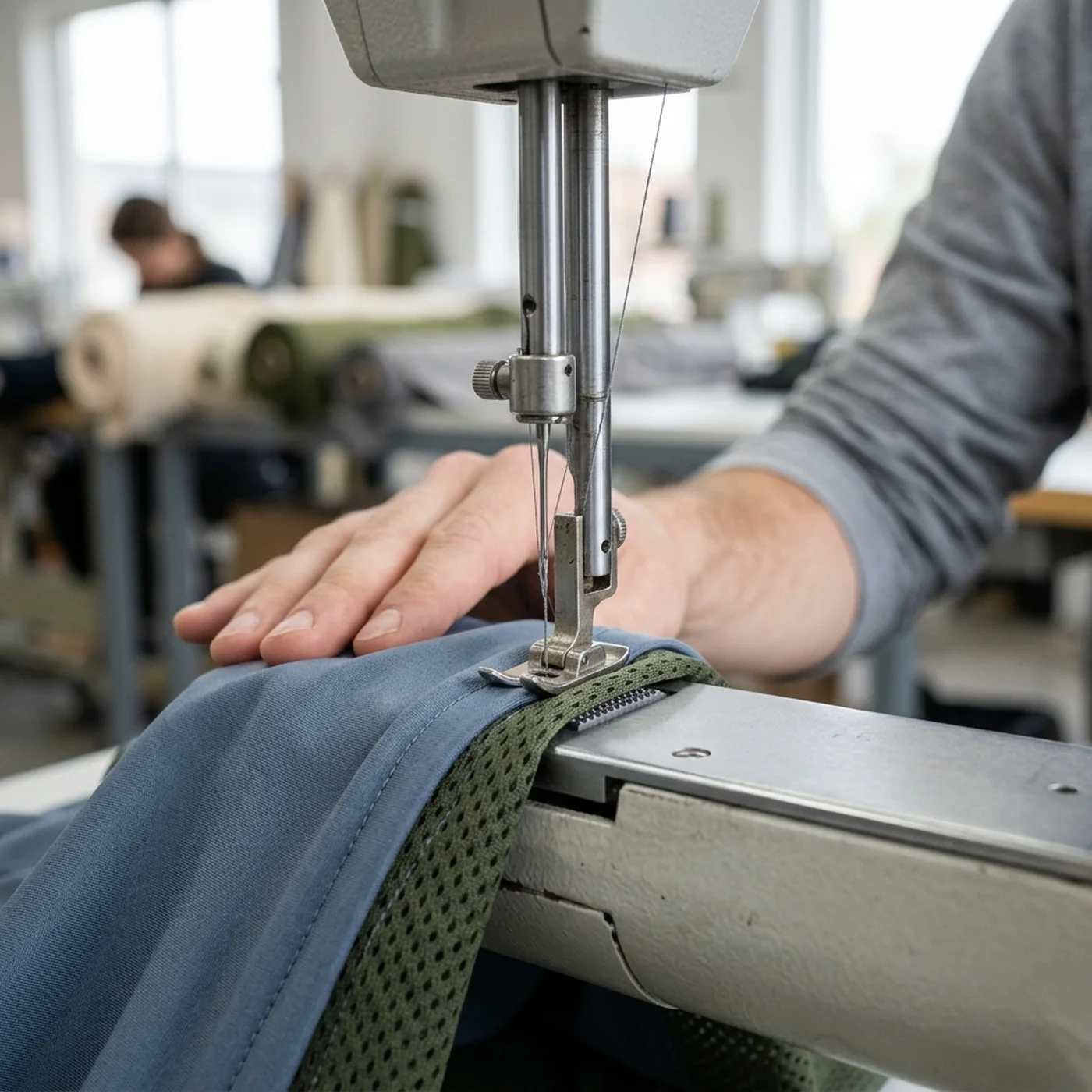
| Race-cut | Club-cut | |
|---|---|---|
| Who it suits | Riders who spend most of their time in a low, sustained position and want nothing moving | A roster with a wide range of body shapes, ages and ride intensities |
| On the bike | Close through the chest and back, sleeves that stay put under effort | Close enough to stay quiet, cut with room across the middle and at the shoulder |
| Standing at the start | Reads as competition kit, and shows every detail of what is underneath | Reads as team kit, and is a great deal easier to hand to sixty people |
| What it costs you | Riders at the wider end of the table opting out and buying their own | A few tenths nobody in your club was going to notice |
"Tighter Means More Professional" Is the Expensive Myth
It is the single most common instruction we get from a first-time club, usually passed along from one fast rider on the committee, and it is the one most likely to produce an order where a third of the club quietly never wears the kit.
A competition cut is right for a squad that races and wrong for a club whose Sunday ride is three hours with a stop in the middle. If both exist in your club — and they usually do — there are two ordinary answers:
- One club-cut across everyone. Simplest to order, and nobody at the wider end of the table opts out.
- A race-cut second style for the squad that wants it, sharing the club's base design and decoration layout.
Pretending one cut suits everyone is what produces unworn kit.
Pads and Bib Shorts: What We Can Actually Do
Straight answer, because it affects what you can ask us for. Chamois and bib development is something we do to a specification you bring: you name the pad supplier and grade, we develop and sample against it.
- No pad tiers of our own to choose from, and no upgrade path for individual riders — the pad specification is part of the style.
- Two pad specifications in one season = two styles, each carrying its own minimum (see FAQ).
Construction detail sits on Cycling Chamois Development.
The Sponsor Sees the Sleeve, Not Your Spreadsheet
Your sponsor's renewal decision is made partly on how their mark looked on a wet Sunday in March. That is a decoration decision taken months earlier, at artwork stage.
Complementary scope: this section covers sponsor and club marks on a team kit. Decoration process detail belongs to Printing Methods; visual identity and colour development to Cycling Kit Design & Branding. Neither is repeated here.
The Four Ways a Mark Goes On
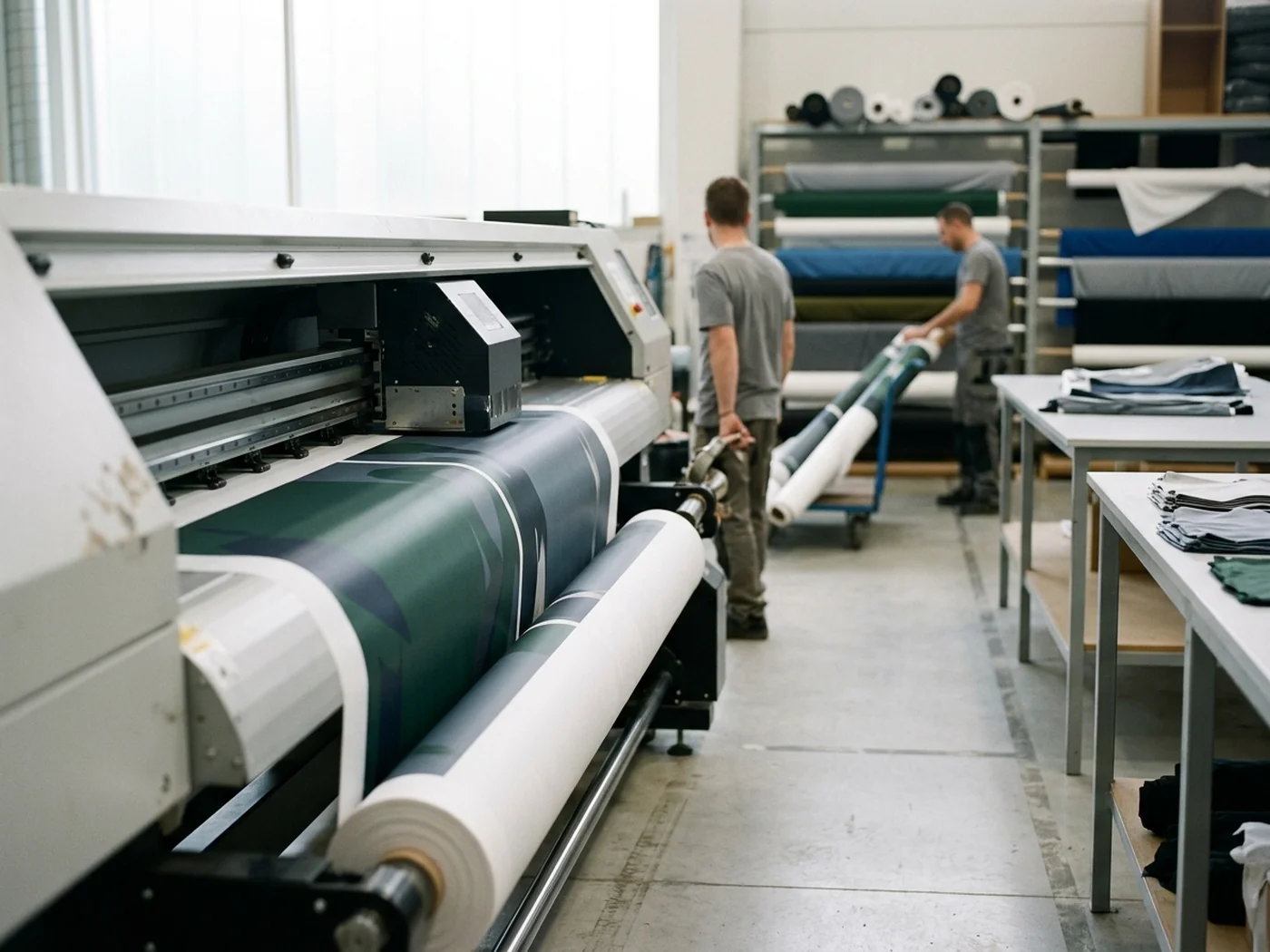
-
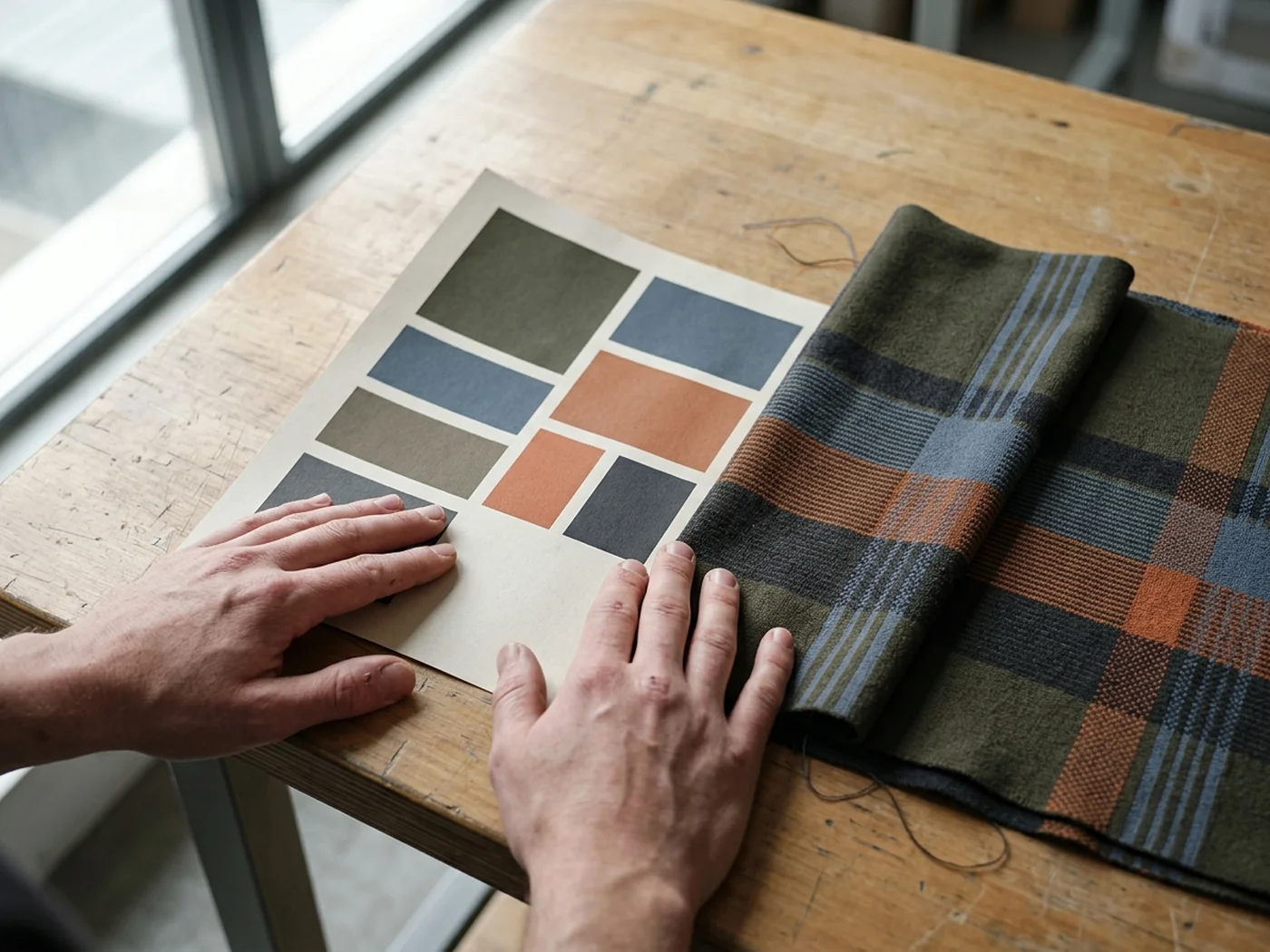
Full-width sublimation
Dye goes into the fibre rather than sitting on top, so the graphic does not crack, peel or stiffen a panel. How club-wide artwork and large sponsor blocks are normally carried.
-
Heat transfer
Used where a single mark sits on an otherwise plain garment, or where a late sponsor arrives after the main artwork is locked.
-
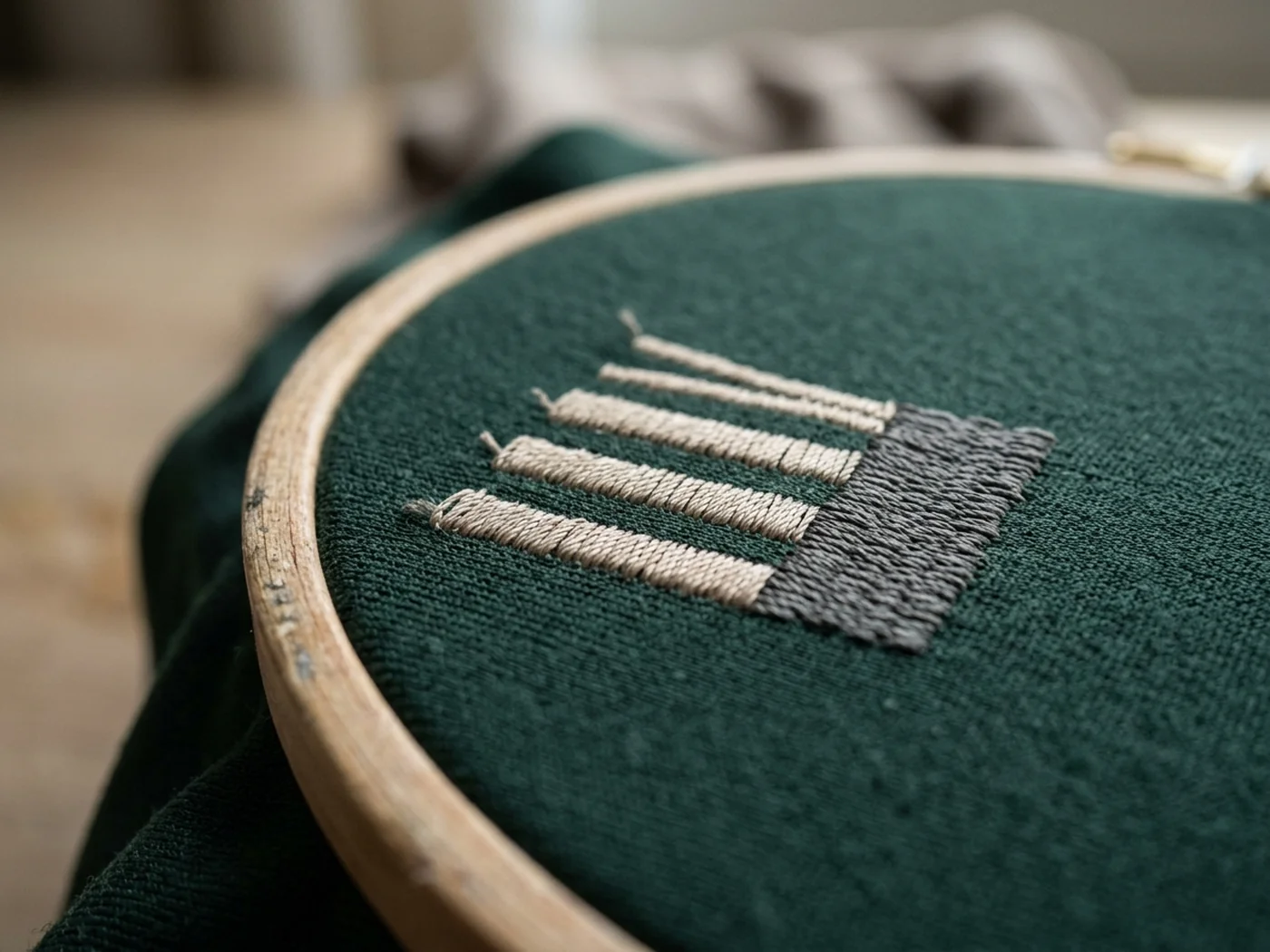
Computerised embroidery
Right for a club crest on a cap or a chest badge, where texture reads as permanence. Wrong for fine text or a logo with a gradient in it.
-
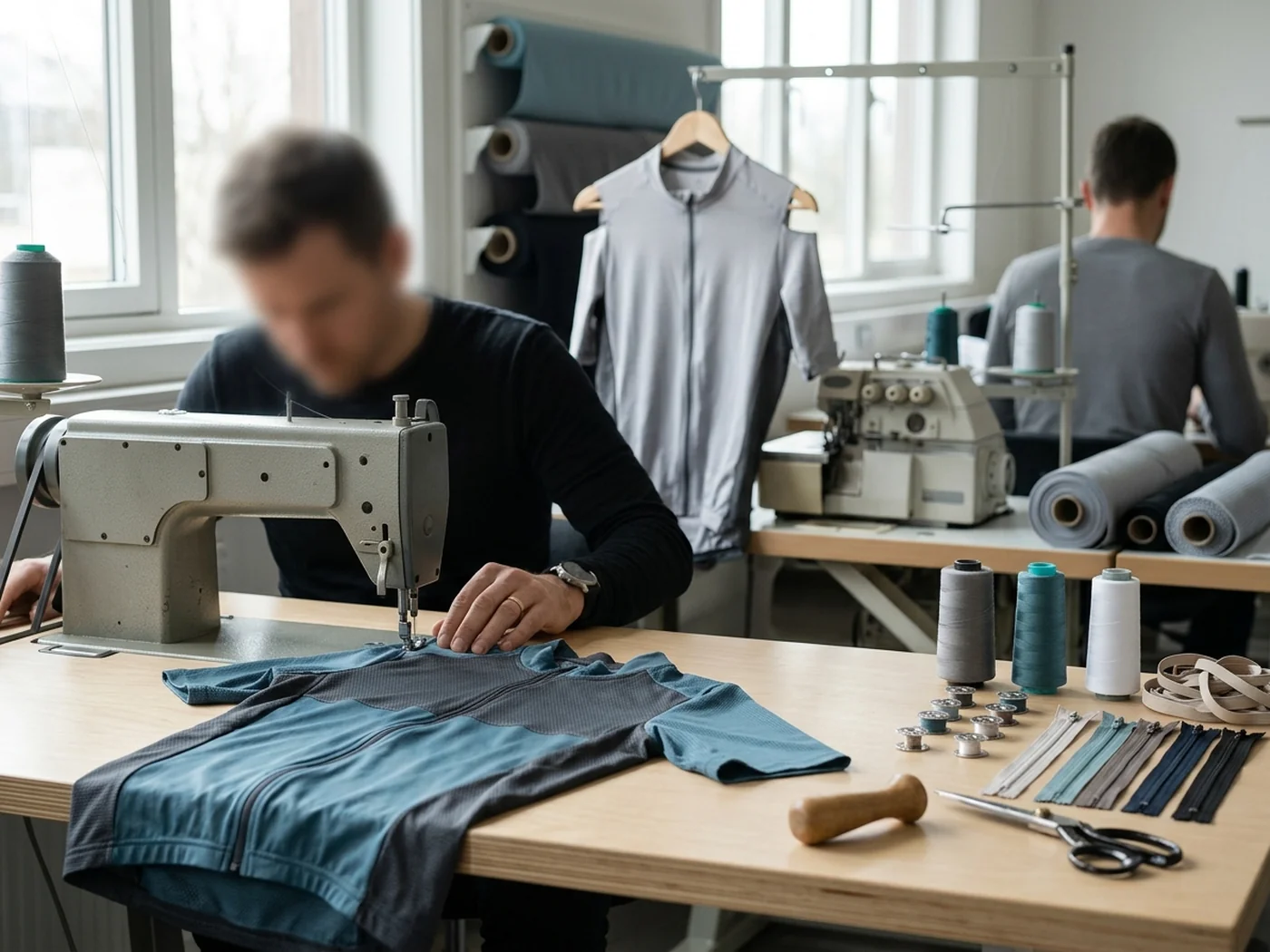
Reflective print and taping
Placed for visibility rather than decoration, and worth deciding before the graphic layout — it competes for the same real estate.
The Four Things That Actually Wreck a Sponsor Logo
Every one of these is cheap to fix at artwork stage and expensive to fix after sampling:
- Fine text below legible size. A strapline that works on a business card disappears on a sleeve at speed. Sponsors rarely ask for it to be dropped; they just notice it looks poor.
- A gradient handed to embroidery. Thread does not blend. Either the logo goes on by sublimation or transfer, or it gets simplified for thread — and simplifying somebody else's brand mark needs their written sign-off, not yours.
- A mark crossing a seam, a zip or a pocket opening. It will break, and it will break in the photograph the sponsor uses.
- Raster artwork. A screenshot of a logo pulled from a website cannot be re-scaled. Vector artwork with fonts outlined is what we need, and asking your sponsor for it early is a two-line email that saves a week.
Where Marks Sit on a Club Kit
Four positions survive both the riding posture and a group photograph:
- Chest
- The club crest, in almost every case.
- Upper back or sleeve
- The title sponsor takes whichever of the two is more visible from behind in a bunch.
- Sleeve and rear pocket panel
- Smaller supporting sponsors, sized down without being hidden.
More sponsors than good positions? Have that conversation before the design is drawn — the answer is usually a hierarchy, not shrinking everything equally.
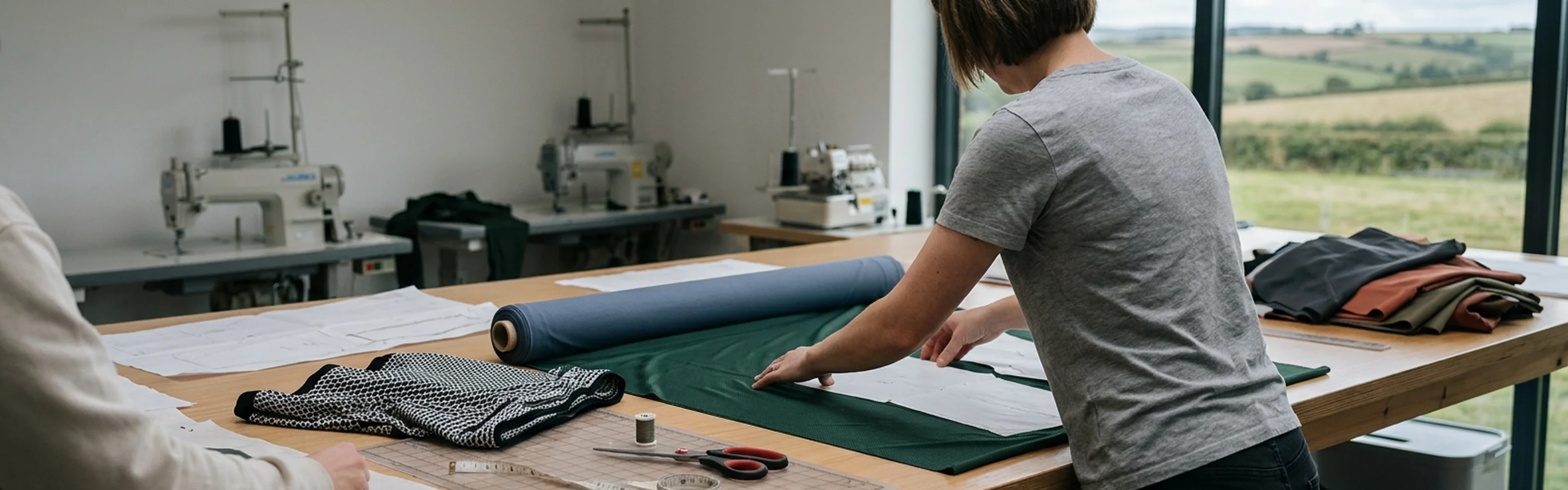
A club kit is not judged once. It is judged again every season, by people who did not choose it.
Counting Back From Your Season Opener
Nobody's season starts on the same date, so there is no universal month to order in. What there is, is a fixed number of days between "specification complete" and "kits in hands" — and you can count backwards from your own opener with it.
Complementary scope: the six pre-shipment inspection gates live on Quality Control and the sampling method on Sampling & Prototyping. Both get a sentence here and no more.
The Loop, Not the Line
A club year runs as a loop: an off-season gap, a pre-season run-up, an in-season stretch, then straight back into the off-season. There is no separate "planning season" carved out anywhere in it.
Off-season is the planning window — it is when you can decide whether next year is a colourway update or a fresh look, with no opening-day pressure sitting on the conversation. And because competition calendars do not line up, the shape is the same everywhere; where it sits on the calendar is not.
Four Dates, Counted Backwards
-
1
Kits in riders' hands
With a buffer before the opener itself — not the opener date. Everything below is counted back from this line.
-
2
Bulk production starts 20–30 days
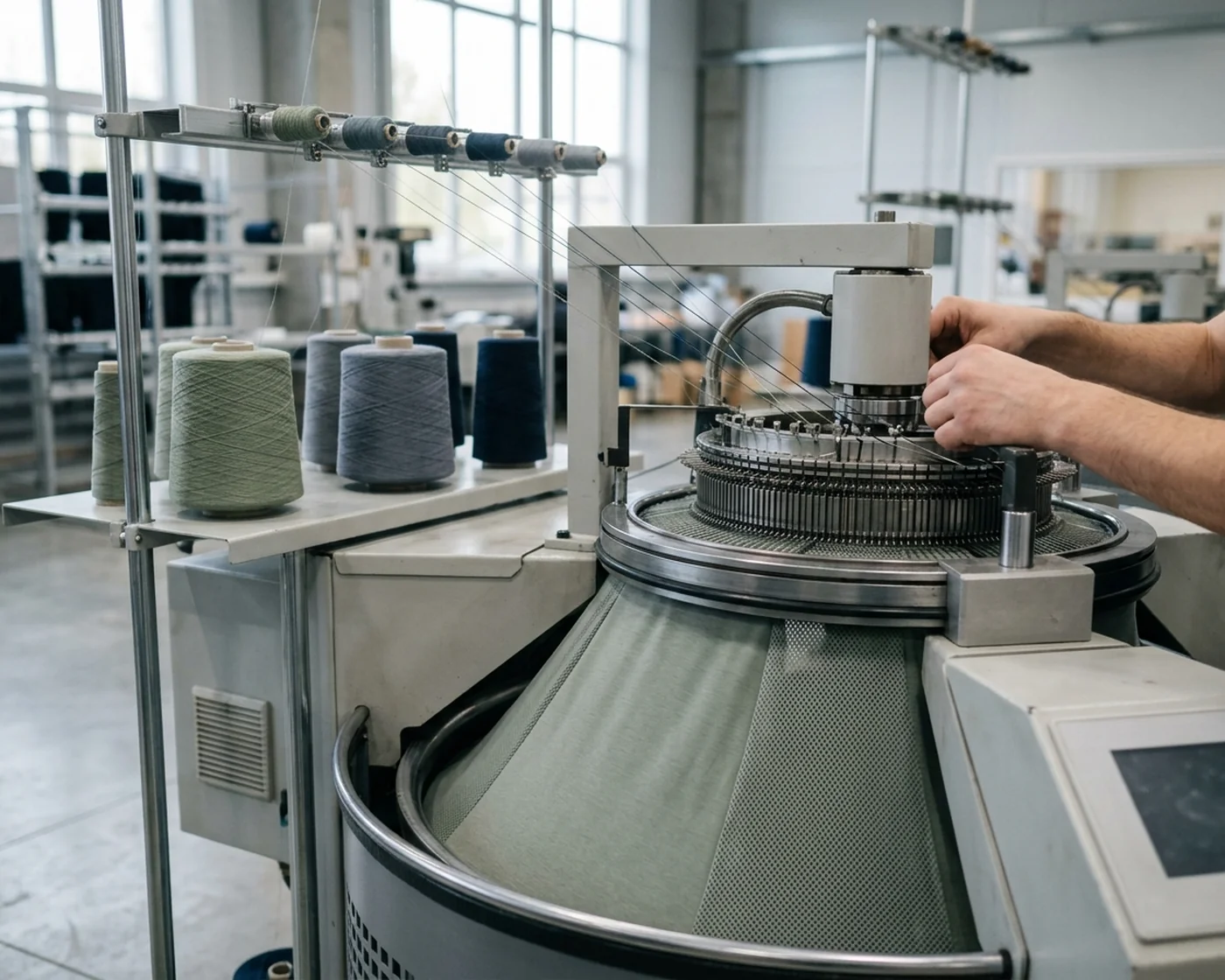
Bulk runs 20 to 30 days, counted from sample sign-off rather than from your first email. Six inspection gates run before anything ships; they are set out in full on Quality Control and not repeated here.
Bulk is counted from sign-off. -
3
Sample signed off 5–7 days
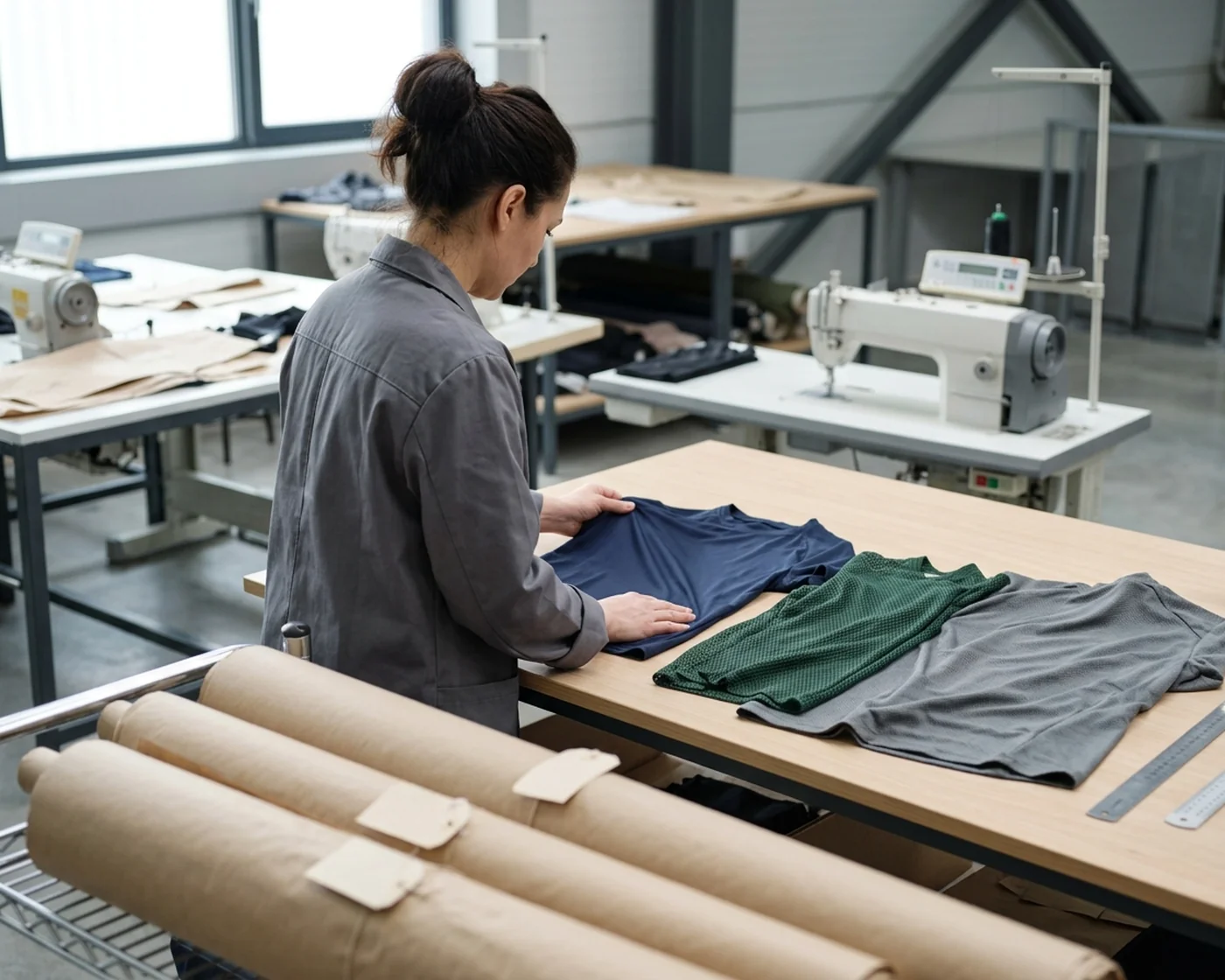
A working sample takes 5 to 7 days to produce, plus however long your committee takes to agree on it. Two revision rounds carry no extra sampling charge; they also carry calendar time, which is the part people forget.
The stage a committee slows down. -
4
Specification complete
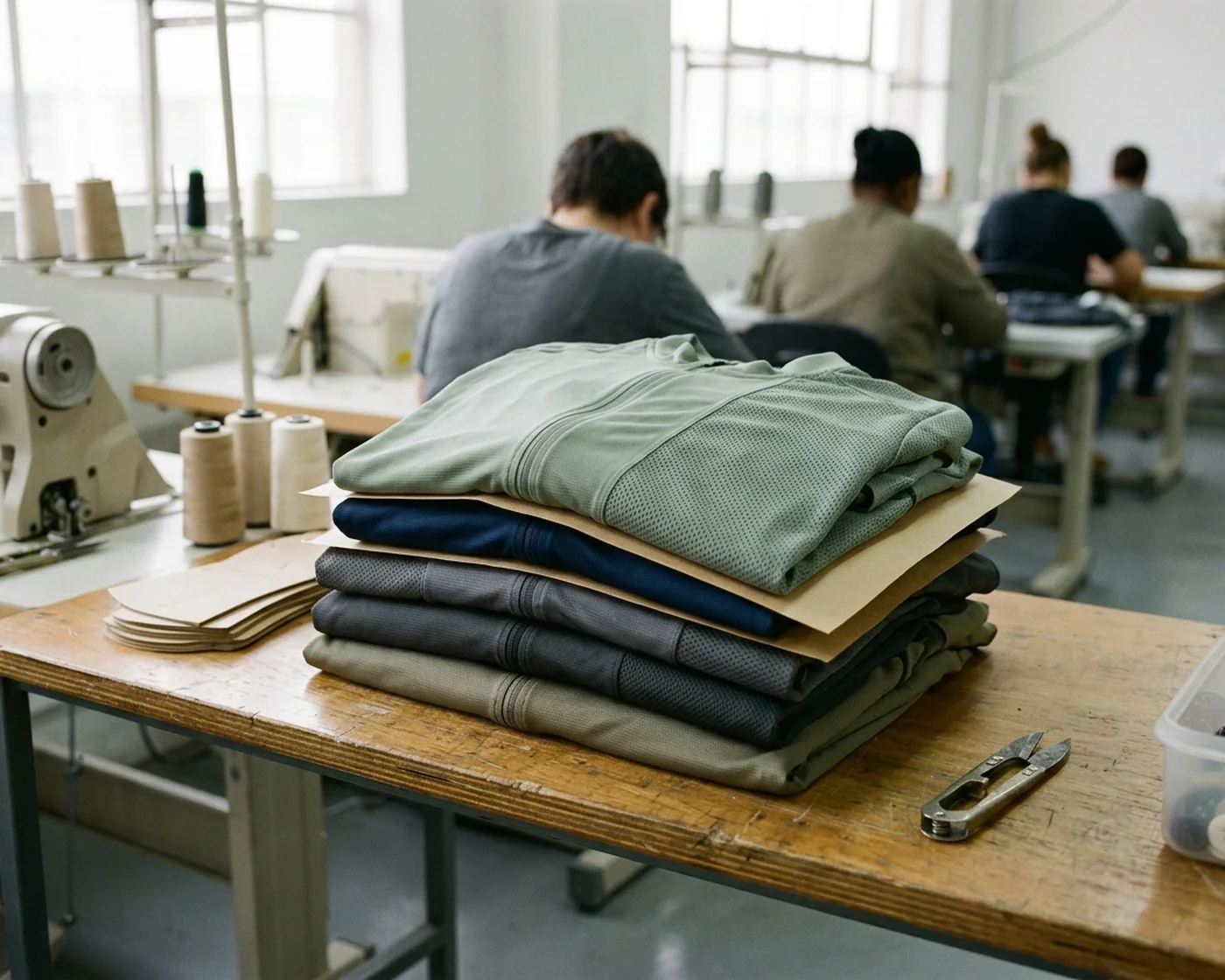
Artwork, size list, squad allocation and garment list all in one place. Everything downstream starts here.
The far end of the same clock.
What Slipping Does, Honestly
If sign-off slips a week, the bulk start moves a week, and because bulk is what you counted backwards from, that week comes off the buffer in front of your opener — not out of production. Nothing quietly absorbs it.
Rush production can compress bulk to 12 to 15 days where a slot has been confirmed in advance; asking for it after the date has already slipped is a different and usually worse conversation.
Reordering Clubs Skip the Front, Not the Clock
If your file is already on record and this season is a colourway or roster update, the specification stage is much shorter, because the pattern and decoration files are not being rebuilt.
Sampling and bulk still run their normal course — the garments still have to be cut, sewn, decorated and inspected. Reordering shortens the front of the timeline; it does not skip the production behind it.
People Change Faster Than the Kit Does
Two kinds of turnover hit a club order: the riders wearing the kit, and the volunteer ordering it. Neither should require starting over.
- Riders
- Committee
Riders: the List Changes, the Pattern Doesn't
A club roster is not a staff list. A junior moves up to the senior squad, a masters rider steps back to the social group, three people join in April and one name turns out to have been spelled wrong on last year's kit for an entire season.
None of that touches the design. All of it touches the list of names, numbers and sizes that goes onto it.
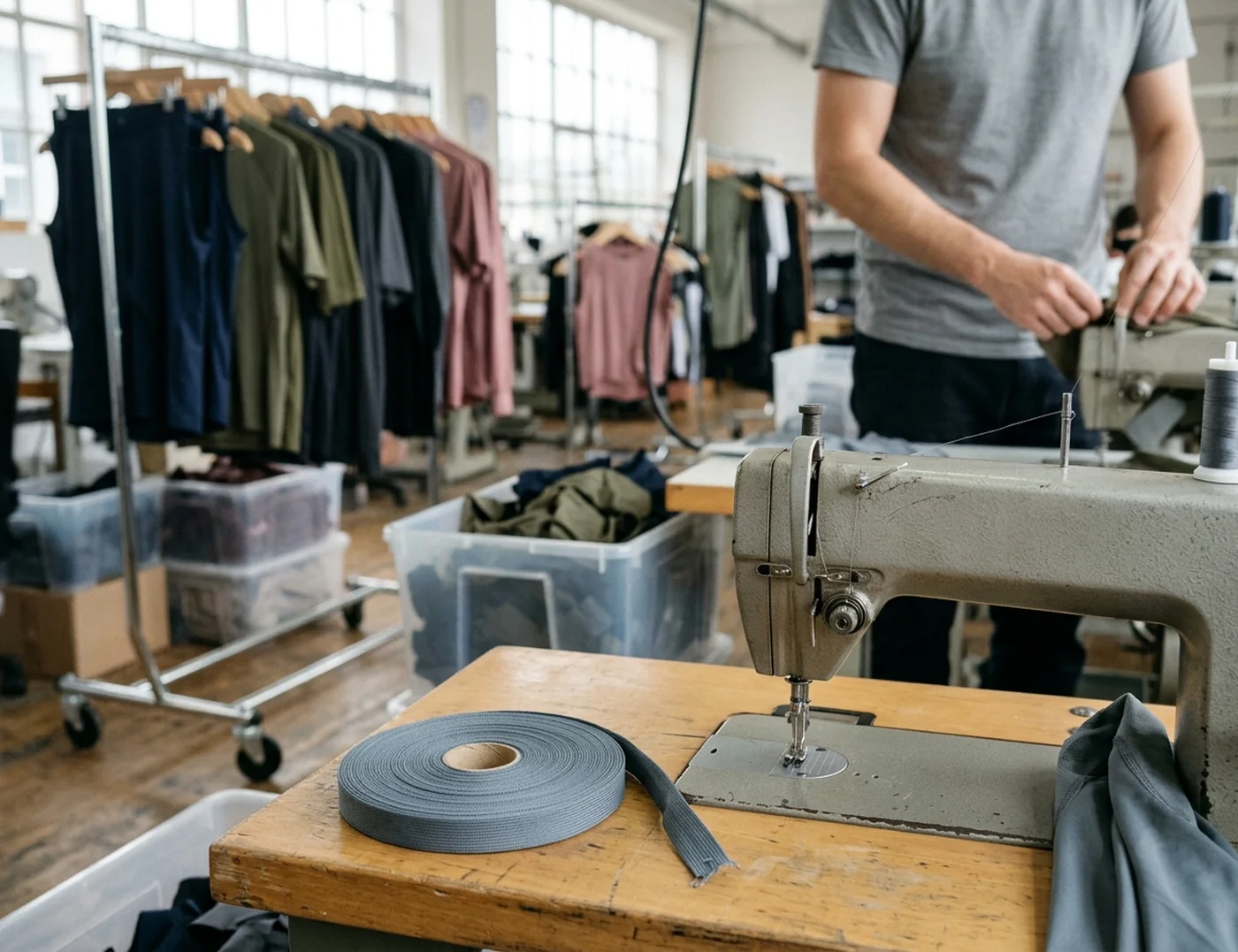
- What updates. Quantities and the name-and-number list, read against the record already on file.
- What doesn't. The graded pattern. A roster change does not reopen it, and does not trigger a new sampling round.
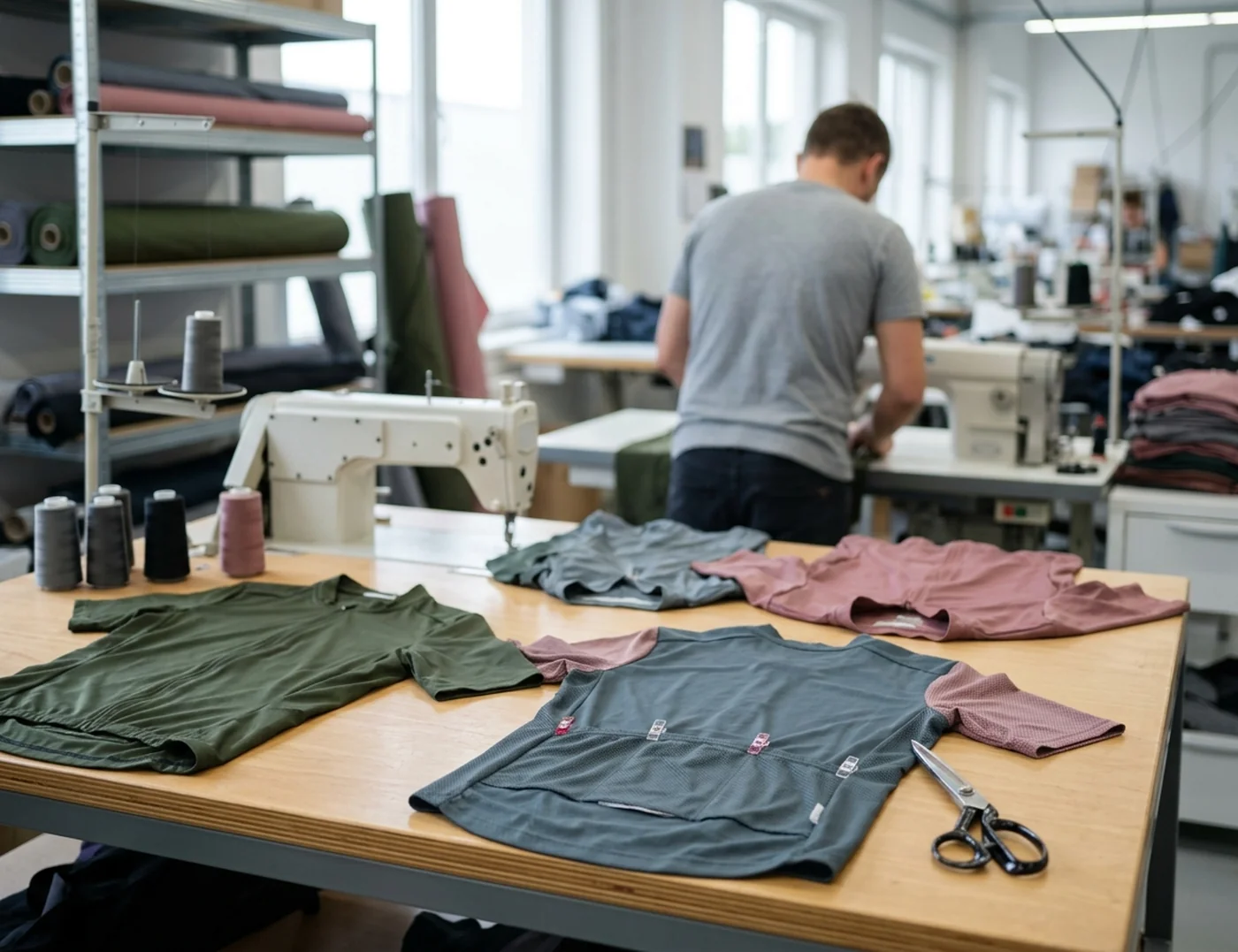
Committees: the Record Doesn't Live in Someone's Notebook
Club kit is usually handled by a volunteer whose term is shorter than the life of the pattern file. That is the normal case, not an unfortunate one.
It only becomes a problem when the only complete picture of last year's order — which colourway, which sizes, which sponsor sat where — lives in one person's inbox and leaves with them.
The record sits on your club's account instead, so an incoming volunteer needs no notes handed down to place a reorder. That matters more for a club than for a company team, where the same contact usually stays for years.
The same file answers the request regardless of who is asking.
Who Reports What
- The squad captain closest to a roster is the one who knows who is new, who has gone and whose name spelling changed. That is who should send those changes.
- One person named as the confirmer for the club as a whole, so that four squads feeding one order does not become four people approving four different versions of it.

Ready to Put This Season's Numbers Against It?
Tell us the squads, the rough counts and the date, and we will tell you whether the date works before anything is drawn.
Talk to Our Development TeamYour Pattern File, and What a Reorder Actually Skips
The strongest argument for ordering from the same factory twice is not a discount. It is that the second order starts from a confirmed pattern instead of a blank page.
Complementary scope: this section covers how the file is kept and reused between two orders. Ownership terms for OEM and ODM files belong to OEM / ODM & Private Label Services and are not restated here.
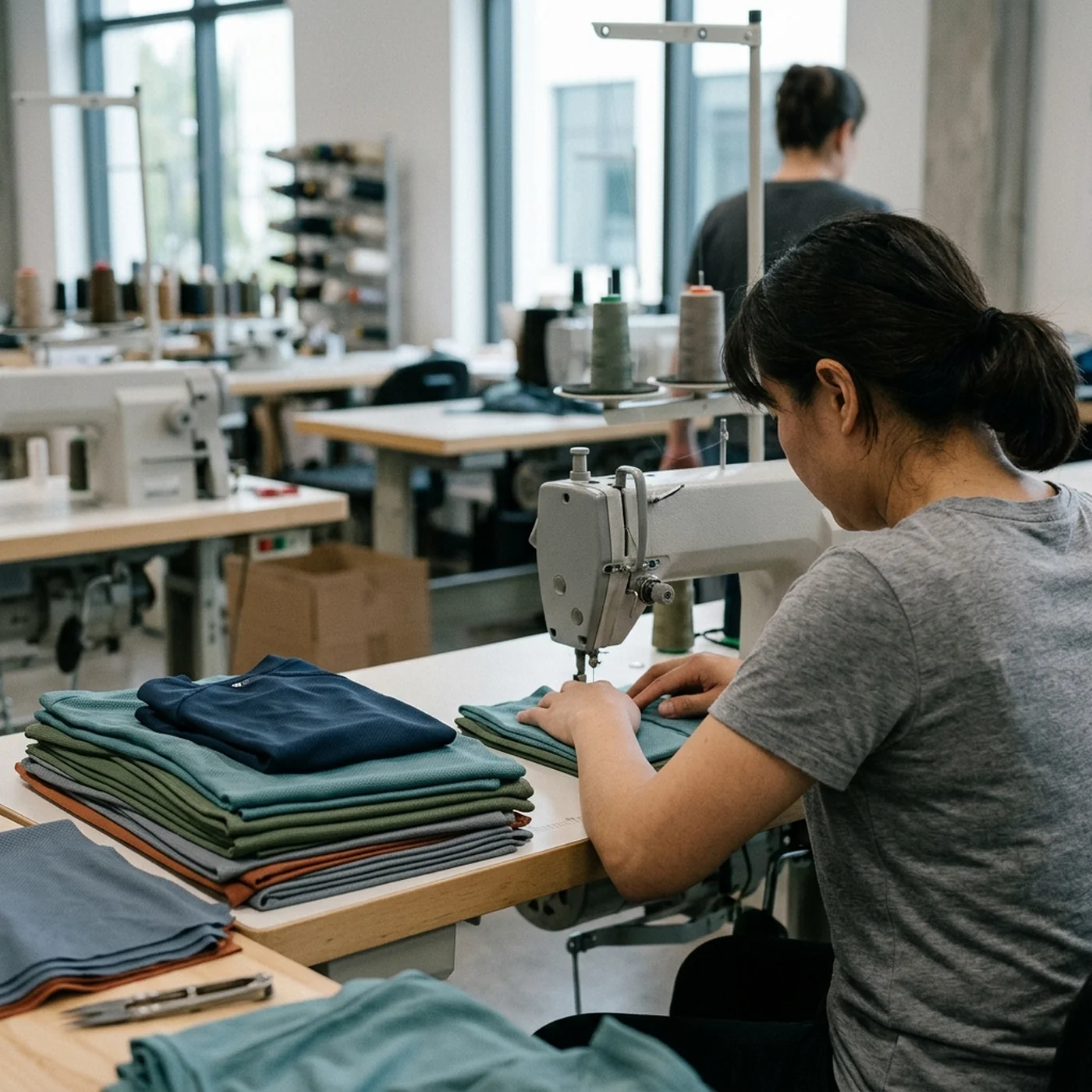
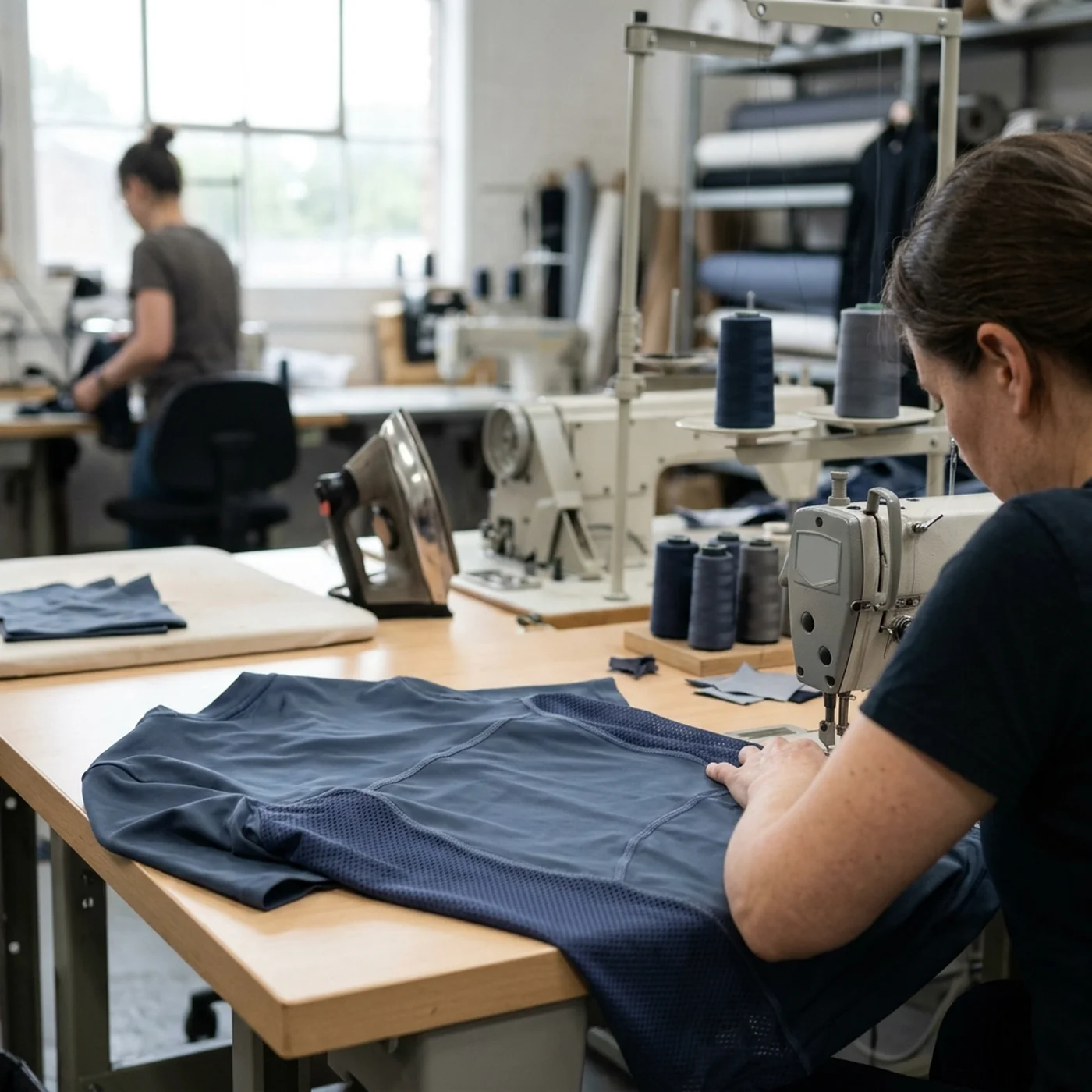
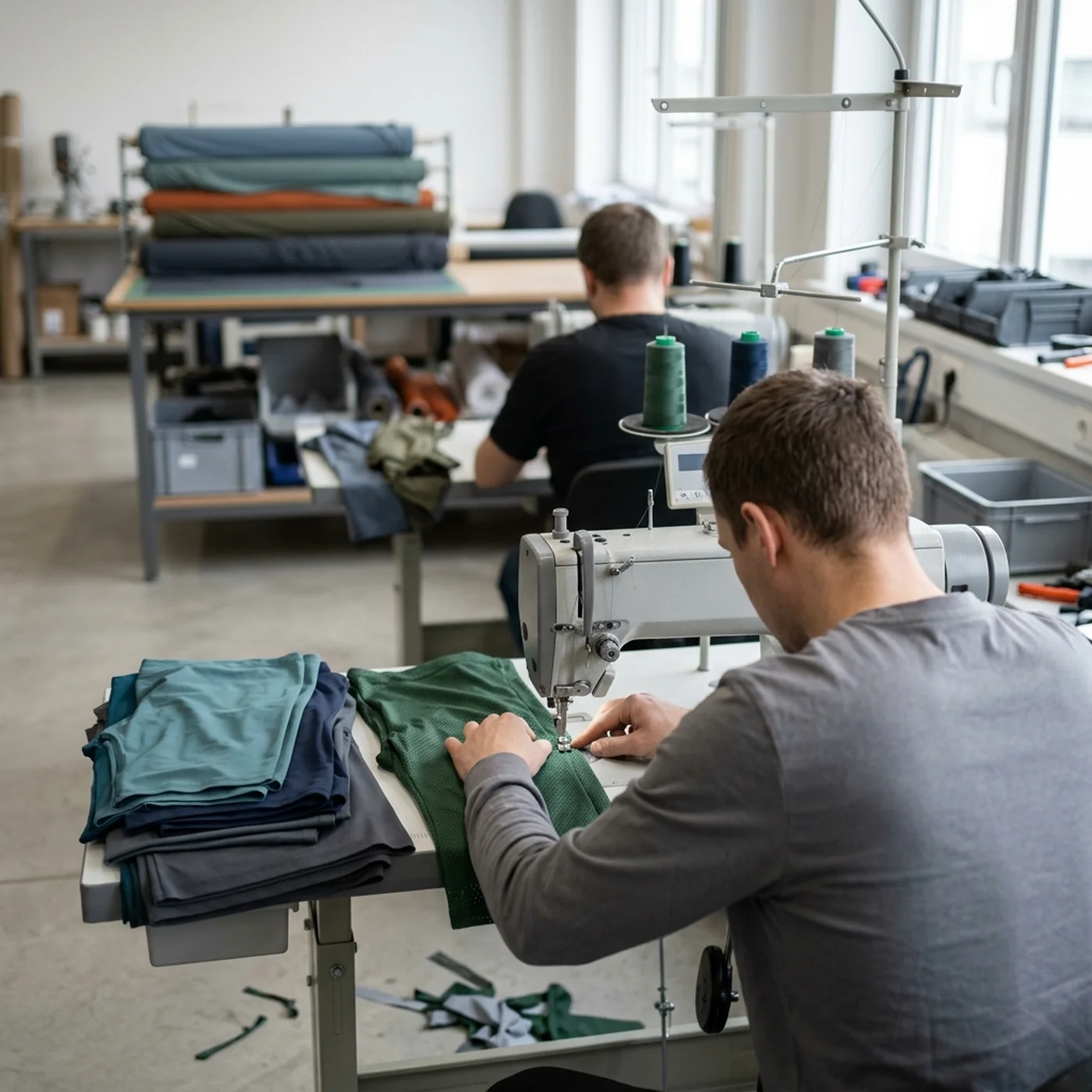
What Is Actually in the File
Four things, kept together under your club's account:
- The graded pattern set for every size your roster ordered.
- The approved colourway reference.
- The decoration file with each sponsor mark in position.
- The size breakdown from your last order.
A reorder pulls all four at once. That is what makes an accent-colour change a change rather than a project.
Season One Builds It, Season Two Reads It
The first order is where the development happens: fit confirmed on a sample, colour matched, logos positioned and signed off. Once you approve that sample, those files become the reference held on your account — the actual record the next order is produced against, not a draft that gets re-derived.
From season two onward, a colourway swap, a sponsor change or a shifted size breakdown are all read against that record and applied as updates. None of them touch the graded pattern, so none of them re-open pattern development.
Three Things That Genuinely Restart Development
- A different fit from the one on file — moving a squad from club-cut to race-cut is a new block, not an update.
- A different garment silhouette — adding a vest to a jersey-only programme is a new garment, with its own development.
- A fabric change — a different cloth changes how the pattern behaves, so the pattern has to be re-proven on it.
Each of those re-opens sampling because the file no longer describes what is being ordered. A colourway change or a roster change never does.
And what a reorder does not skip. The opposite claim is everywhere in this industry and it is not true here: a reorder is still its own production order. It meets the same per-style, per-colourway minimum as a first order — stated once in the FAQ below, and it does not shrink because your file exists.
It still runs sampling where anything material changed, and it still runs the full bulk window. What you save is development, which is the expensive and slow part — not the minimum, and not the production clock.
Whose File It Is
Your ODM pattern is developed for your club and is not put on another buyer's order. If you brought your own tech pack, the original stays yours and the factory keeps only a production copy for your work.
Full terms are on OEM / ODM & Private Label Services.
Eight Squads, Three Seasons: One Club Programme in Detail
One programme, described by structure and scale rather than by name. It is the only club case on this site, and it is more useful read in depth than padded out with three more like it.
A North American amateur cycling club running eight squads. Each squad orders 30 kits per season — jersey, vest and arm warmers — for a club total of 240 pieces.
The programme has now repeated for three consecutive seasons, with the pattern set and colourway record held on the account between orders. The club is described by type, scale and structure only; no name and no marks are shown.
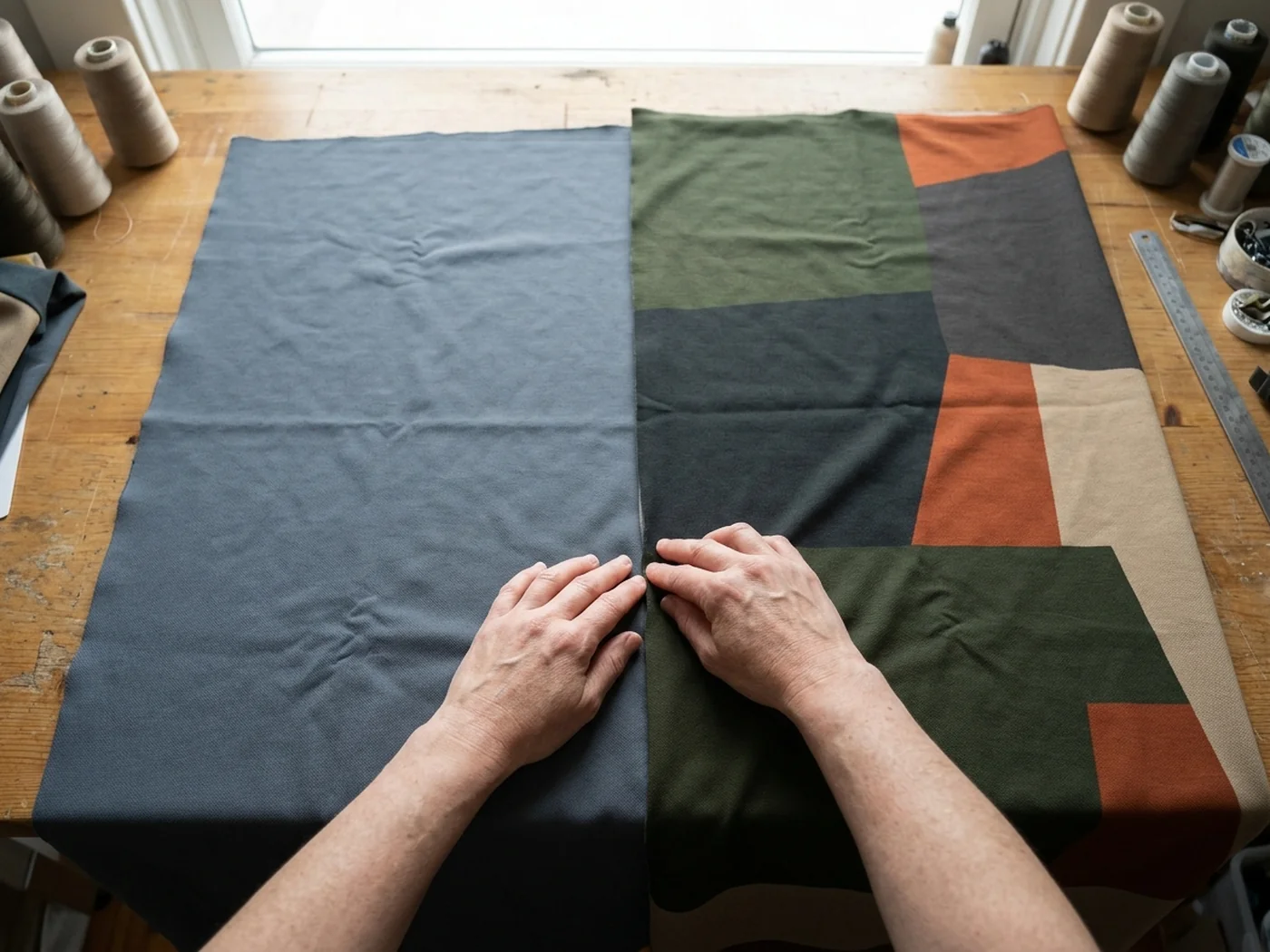
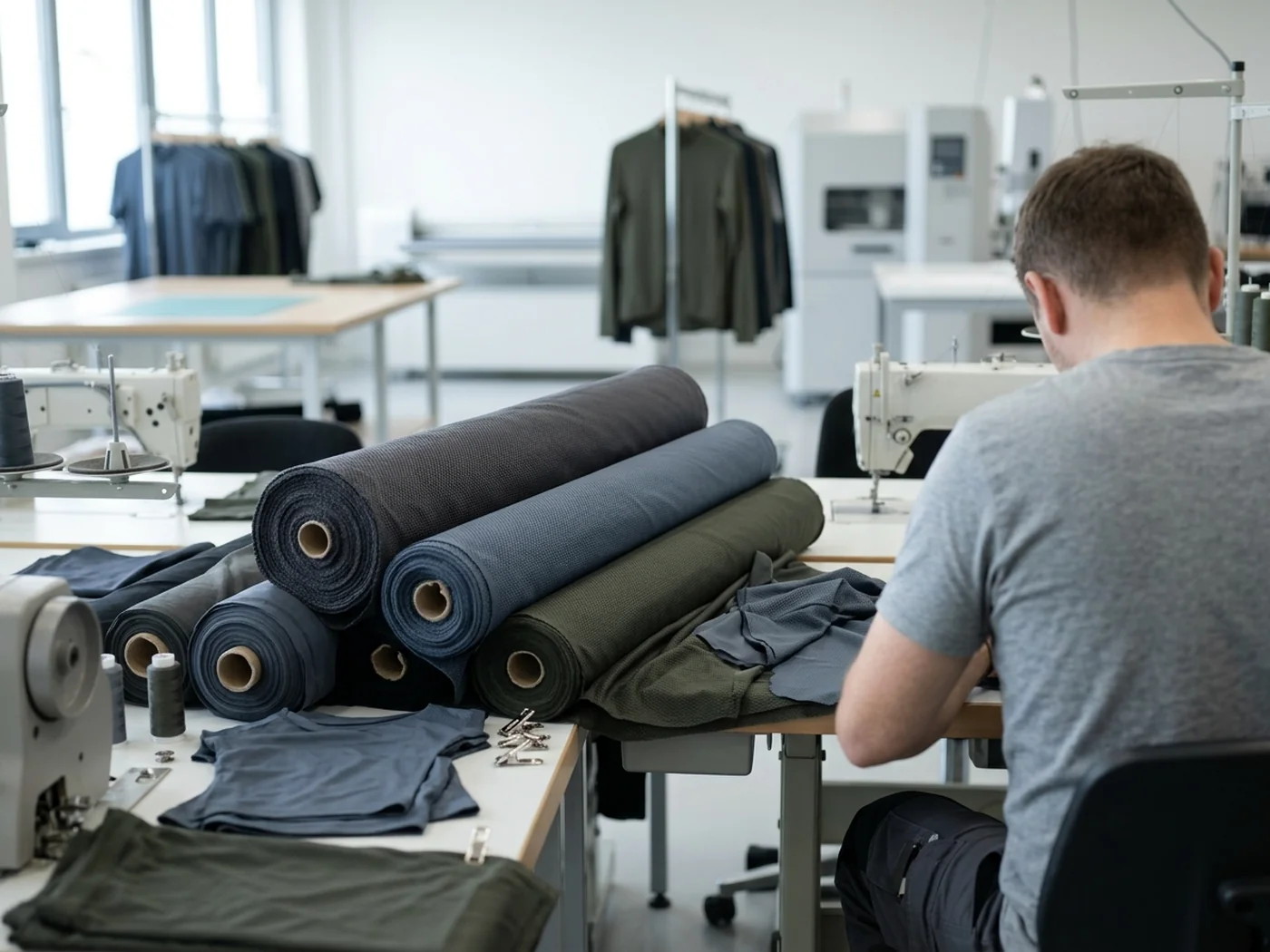
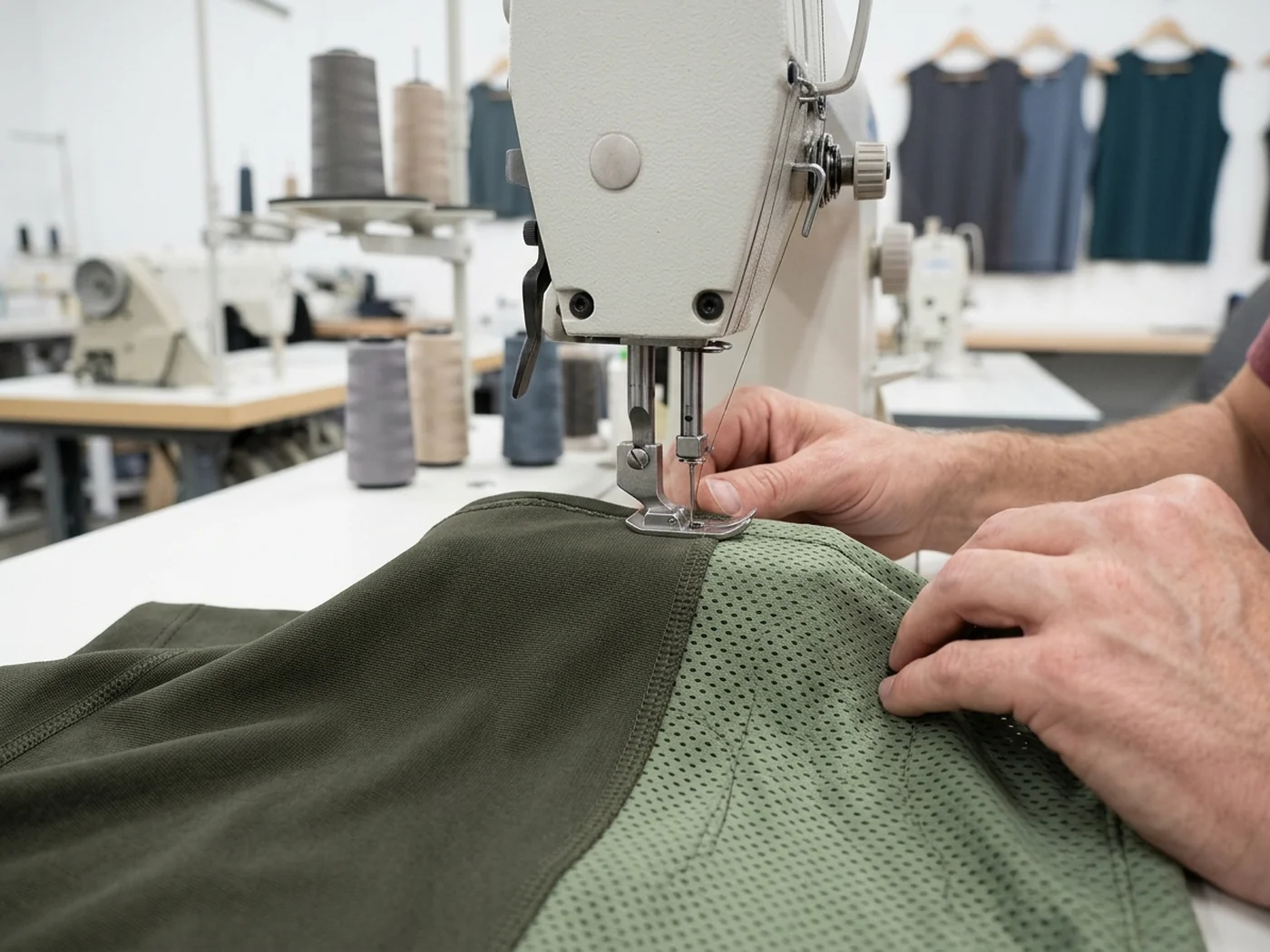
Why Eight Squads Order as One
Each squad is run day to day by its own captain, but the club places one order.
That is not an administrative preference: it is what lets eight groups share one graded pattern set and one decoration layout while each takes its own accent colourway. Ordering separately would mean eight development conversations for what is, structurally, one kit.
What Actually Happened in Seasons Two and Three
The recurring touchpoint each season was a colourway sign-off, not a pattern re-approval. The club confirmed the season's accent against the graded set already on file, updated the size breakdown, and the order moved to production.
Name, number and sizing changes across the eight squads went through the same exchange process described earlier — not by reopening the pattern between seasons.
Why the Reorders Didn't Queue Behind Anyone
A reordering club skips the file-build stage, which is the longest and least predictable part of a first order. It does not skip production. Across three seasons that difference showed up as a much shorter front end each year, with sampling and bulk running their normal windows every time.
What This Case Does Not Prove
Worth stating plainly, because a single case gets over-read: it is one club, in one market, ordering one kind of kit. It says nothing about what any other club's size spread looks like.
And it is not evidence of a reduced minimum — each squad's 30 pieces per season met the ordinary per-style, per-colourway floor on its own, which is exactly why eight squads and 240 pieces is the number rather than something smaller.
A Second Shape, for Contrast
For a different kind of group order, a corporate charity ride in the United States put roughly 80 riders into kit against a fixed event date, with a size spread across general staff rather than self-selecting riders.
That is a corporate event, not a club — it appears here only to show the contrast: a one-off date and whole-workforce sizing, versus a repeating season and a roster you already know. It is covered properly on Cycling Events & Corporate Orders.
What We Need From You, and in What Format
We cannot take the volunteering off you. What we can do is stop the back-and-forth that turns a two-week job into a two-month one — by being specific about what to send.
- Size list
- Artwork
- Tech pack
- Date
The Four Inputs
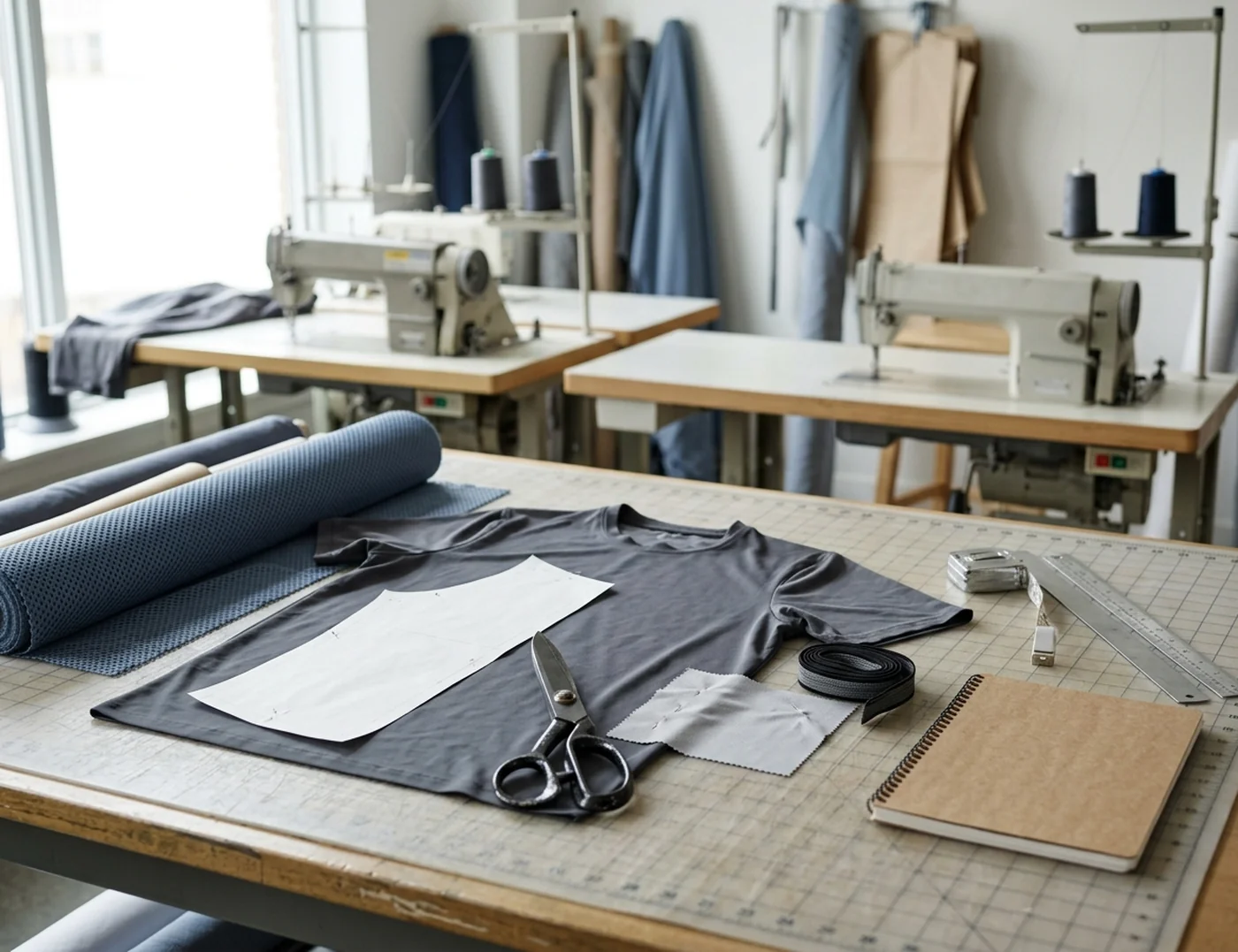
- A size list. One row per rider: name as it should appear on the kit, squad, garment, size. A spreadsheet is ideal, an email list is fine. What costs you a week is a list built from guesses.
- Artwork. Vector files with fonts outlined, plus a colour reference for each brand mark. Your sponsor's marketing contact has these; asking early is a two-line email.
- A tech pack, if you have one. If you do not, say so — an ODM development route exists precisely for clubs that have a concept and reference images rather than a specification.
- The date. The date kits need to be in riders' hands, not the date of the opener. We will tell you straight away whether it is achievable before anything is drawn.
Name One Person to Confirm
Four squad captains can feed the list. One person should confirm it. This is the single cheapest thing a club can do to shorten its own order, and the most common reason a first order runs long is that three people are approving three slightly different versions of the same artwork.
How to Send Files
The form at the bottom of this page takes your basic details and your message. It does not take attachments — that is a plain limitation of the form, not a portal you are missing, and we would rather say so plainly than put a button on the page that quietly does nothing.
Send tech packs, artwork and size lists by email to [email protected], either alongside the form or on their own. Inquiries are answered within 24 business hours, and a quote follows within 48 hours of a complete tech pack.
What We Do Not Ask You to Do
We do not run a group-ordering portal, and we are not going to tell you we have built you a system for chasing your own teammates. There isn't one.
What there is: a clear specification of what we need, one named contact on our side, and answers inside a working day — so that your evenings are not spent waiting on us as well as on your club.
Questions From Club and Team Buyers
What kit coordinators ask before sending a first club brief.
30 pieces per style per colourway. Three things follow from that, and they are the three that matter to a club:
- Sizes mix freely inside one colourway — XS through 3XL in one run is one line item.
- Each additional colourway counts its own 30, so a squad taking its own accent colour is its own count.
- Sample pieces sit outside the count entirely.
Reorders are counted the same way as first orders. The full ordering logic lives on MOQ & Wholesale Pricing.
Yes, and it is the normal case. Each squad's colourway is tracked as its own line inside one order, with its own size breakdown, while sharing the club's base pattern and decoration layout.
XS–3XL, in separate men's and women's patterns. Your own size chart can replace ours during development — for a club with years of ordering history behind its chart, that is usually the better option.
A working sample takes 5 to 7 days once the specification is complete, and two revision rounds carry no additional sampling charge. Bulk runs 20 to 30 days from sample confirmation. Rush production can compress to 12 to 15 days with a production slot confirmed in advance.
It depends where the order sits. A sponsor change confirmed before bulk production starts is applied as a normal file update.
Once bulk is running, the decoration is already in production against the signed-off file, so the change goes into the next order instead.
Yes. Additional squads are added against your existing account file rather than started as a separate development. Each added squad's colourway carries its own count, as above.
Capacity is 60,000 garments a month across 5 dedicated sportswear lines, with 150+ staff including 10 in QC, and six inspection gates before anything ships — those are set out in full on Quality Control and not repeated here.
We export to 20+ countries, and clubs and teams are one of the four buyer types this factory is built around.
Gloves, footwear of any kind including overshoes, helmets, and hardware such as computers and lights. None of those are garments and none come off our lines.
We also do not hold finished club stock — every programme here is produced against a specification.
Inquiries are answered within 24 business hours. A quote follows within 48 hours once a complete tech pack is in hand.
Start Your Club's Kit Programme
Send how many squads, roughly how many riders, and whether this is a first order or a season update. That is enough for a real answer rather than a brochure.
Tech pack, artwork and size lists go by email to [email protected] — this form carries your details and message only.