How a Confirmed Spec Becomes a Physical Sample
Send a spec, get a first sample in 5–7 days, two revision rounds to get it right, and sign-off is what releases the bulk schedule — not the other way around.
Start Your Sample- Owner page
- One question
A Sample Answers One Question, and It Is Not "Do I Like It"
The reason to sample is not to see your kit early. It is to answer a question that has to be answered before bulk can start — and to answer it on one garment instead of thirty.
A sample is a decision tool. Its job is to take a question you are currently holding in your head and turn it into a physical thing you can look at, hold up, and answer yes or no. The question is always specific. Does the fit hold in the riding position? Does the colour come off the printer the way it looked on screen? Does the print sit where the spec says it sits? A sample answers exactly one of these at a time — which is why there is more than one kind of sample, and why they do not all happen at once.
What a Sample Verifies, and What It Does Not
- What a sample verifies is the spec itself: that the numbers you wrote down survive contact with cloth, thread and a printing machine.
- What a sample does not verify is everything that happens after it — how the bulk run behaves, how the packaging looks, whether a different garment in the same range fits the same way. Those are answered later, and by other things.
- What a sample is not is a preview of the finished range. It is one garment, made to be judged and then, usually, changed.
Each of those three boundaries has a place further down this page. For now, hold the one distinction that matters: the sample exists to find the difference between what the spec says and what the cloth does. Finding it on one garment is the cheap way. Finding it on a thirty-piece run is the expensive way.
- Before the sample
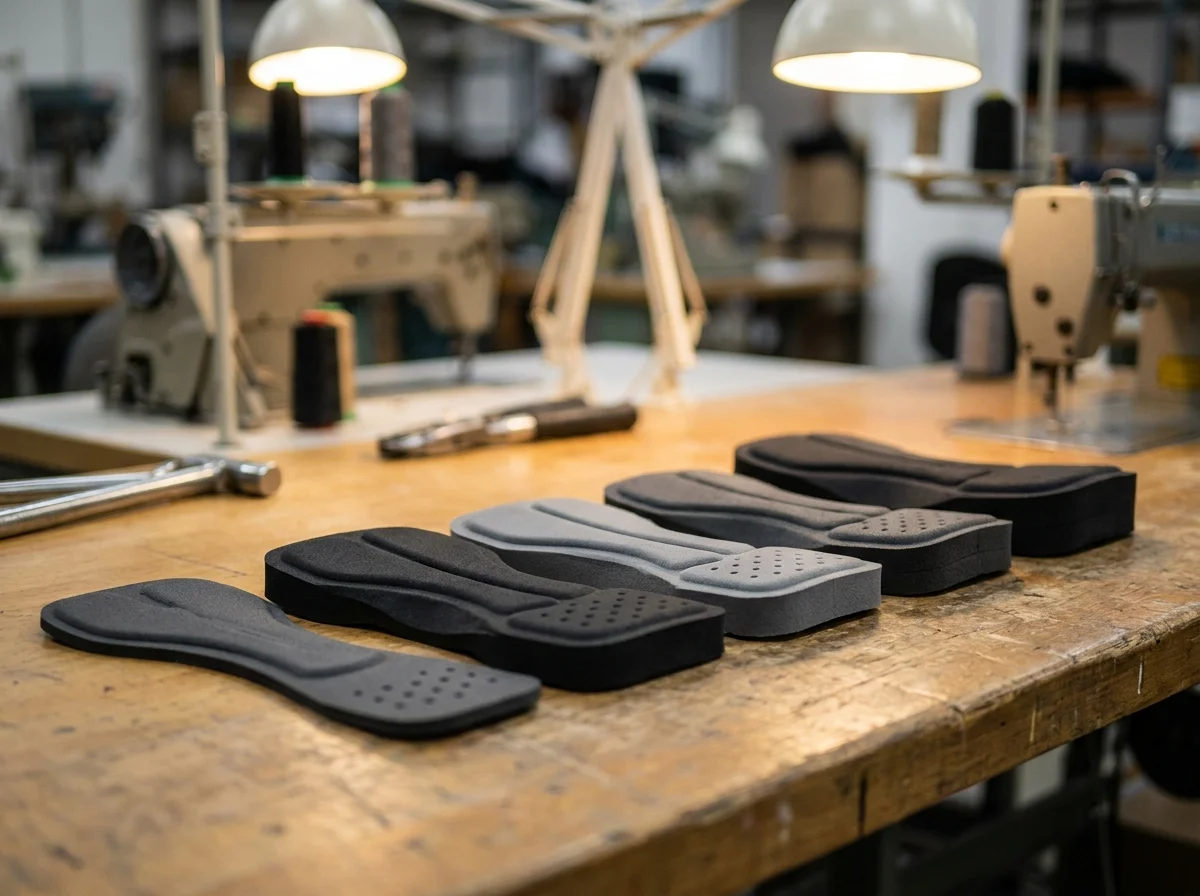
The Sample Can Only Be as Good as What You Send
"Send us a spec" is doing a lot of work in four words. Before a single garment gets made, a few specific things have to exist — and knowing which is which saves you a revision round before the first one has even been cut.
A confirmed spec is not a mood board and it is not a sentence. It is a small set of concrete documents, each one fixing a different thing.
You do not need all of them to start a conversation — a sketch and a reference garment are enough for us to tell you what is still missing. But by the time the first sample is cut, these are the ones that matter.
The Four Documents, and What Each One Fixes
| What you send | What it fixes | What happens without it |
|---|---|---|
| A tech pack | The pattern, the measurements and the construction. | The pattern is a guess, and the fit sample measures the wrong thing. |
| Artwork | The print, its size and its position. | The print proof confirms a design that was never actually specified. |
| A size list | Which sizes the sample should represent. | You get a sample in a size that says nothing about the sizes you will order. |
| A reference garment | Feel, weight and hand-feel against something you already trust. | "Soft" and "stretchy" are the only two adjectives anyone has to work from. |
You do not send files through this page. The form below is a plain submission and physically cannot carry a file, so a tech pack, artwork and a size list go to [email protected] — the form carries your details and your message, nothing more.
It is a small step and it is worth saying plainly, because promising a file field that does not exist is worse than not having one.
- After the sample
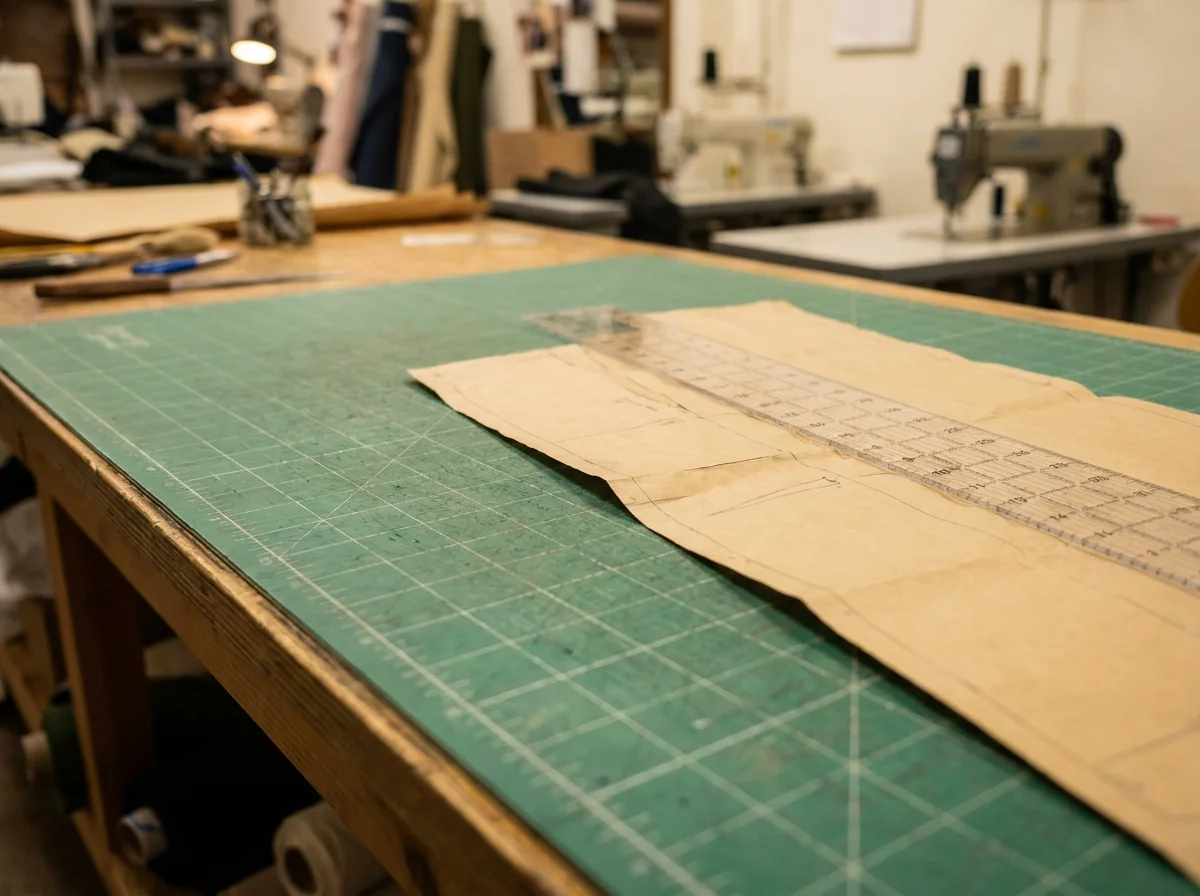
The Pattern Is Yours, and It Stays Yours — In Both Directions
This is the part of sampling most buyers never think to ask about, and it is the one that matters most after the sample is approved. It has two halves, and both of them are about the same promise.
Here is the promise in both directions, because they are two halves of the same rule.
OEM — Yours Already
If you come to us as OEM, you already own a complete tech pack. It is yours, and it stays yours. We keep one working copy to run your order, and that copy is not authorised for anyone else's order — not a different buyer, not a different programme, not a "similar" one.
ODM — Developed Here, Then Yours
If you come to us as ODM, you are bringing a concept — a reference garment, a rough idea, a sketch — and the pattern and spec get developed here, from your input, until the sample is confirmed.
Here is the part most people get wrong about ODM: once that sample is confirmed, the finished tech pack is treated as your exclusive deliverable, exactly like an OEM pack.
- The pattern we built from your concept does not get reused on another buyer's programme.
- Your confirmed sample does not go out as a reference for anyone else's job.
What that means in practice is simpler than it sounds. A pattern and a confirmed sample are the two things that make your range yours, and they are filed under your name, not under ours.
When you come back next season to reorder or change a colour, the work starts from your signed-off file — it does not start from scratch, and it does not get lent out while you are gone. The full service-model routing sits on OEM, ODM and private label.
- Three kinds
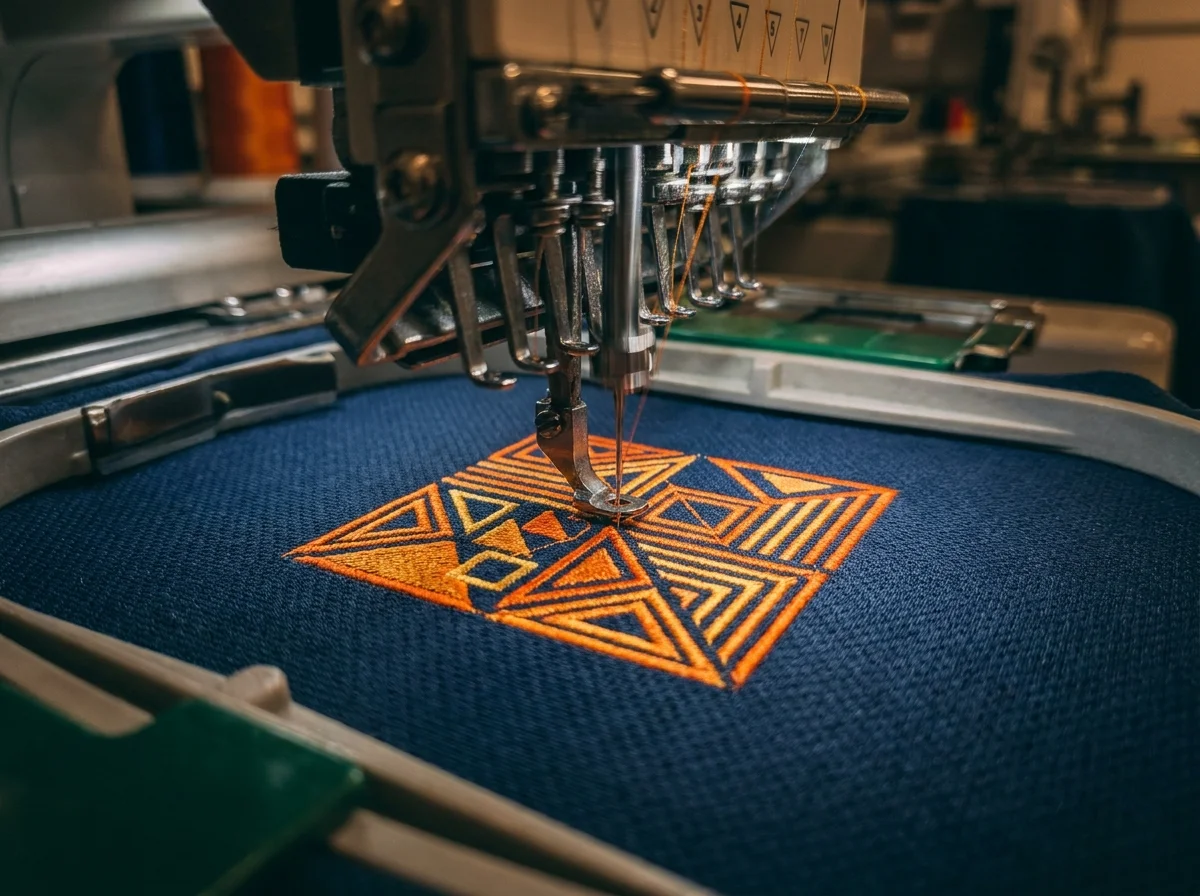
There Is Not One Sample. There Are Three, and Each One Answers a Different Question
"Can I get a sample?" is not specific enough to act on. The right question is which sample, because each type verifies a different thing and it is cheaper to verify them in order.
- Fit Sample — verifies the pattern. This is the one that answers whether the garment works on a rider, in the riding position, across the size grid. Our own size table runs XS to 3XL in separate men's and women's patterns, and you can verify that whole grid on the fit sample — or bring a size chart of your own and we develop against it. The fit sample is the one that settles the argument you cannot settle on paper.
- Colour & Print Sample — verifies the artwork. This is the one that answers whether the colour comes off the press the way it looked on screen, and whether the print lands where the spec says it lands. It is the cheapest sample to get wrong late and the easiest to check early, because it needs no riding.
- Pre-Production Sample — verifies the whole thing at once. Once fit and print are each confirmed, this is the garment made exactly the way bulk will be made, in your confirmed colour and decoration. It is the last thing you sign off before the run starts.
Chamois and one-piece development sits on the same sequence but is not a product we hold. We develop and sample bib, chamois and tri-suit construction against a spec and a chamois supplier's reference you bring — it is a development-and-sampling capability, not a line we keep in a range, and not something we show as an existing product. More on chamois development.
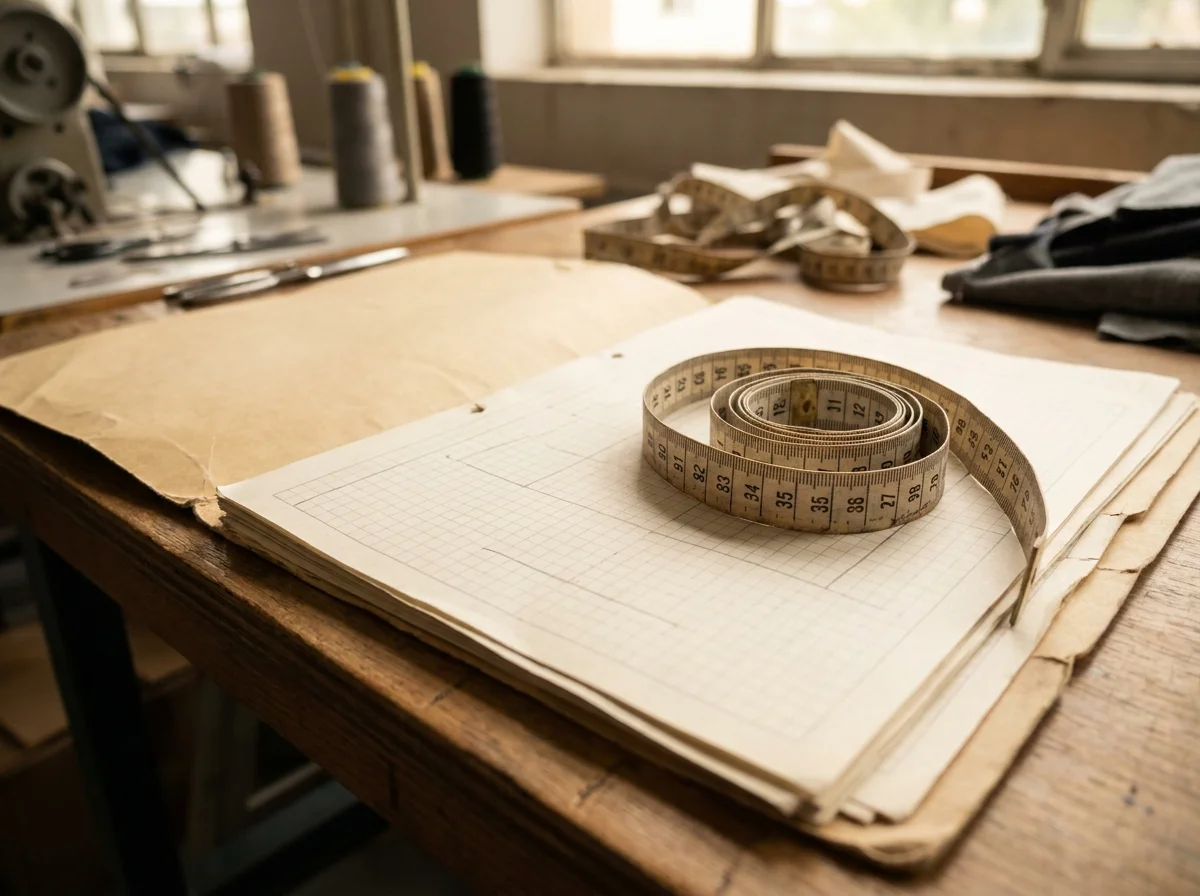
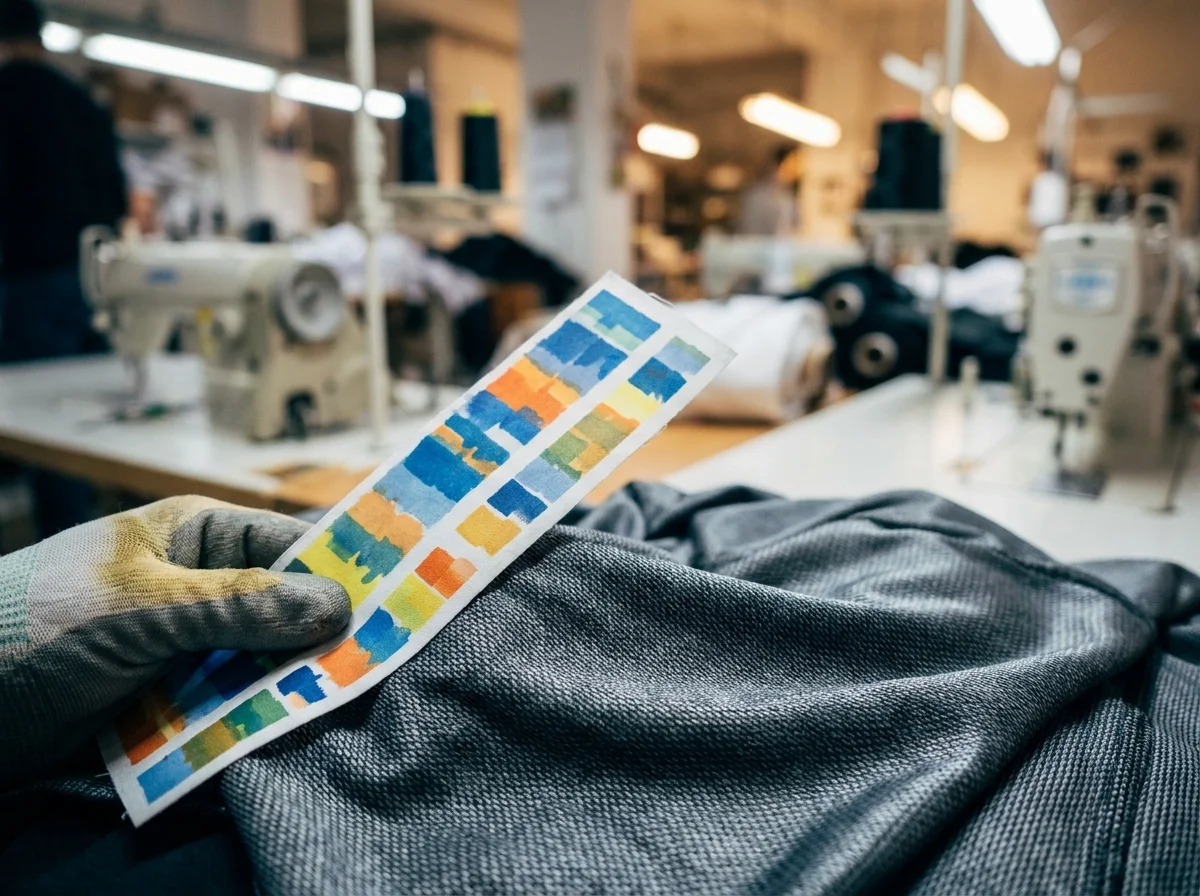
The First Sample Runs 5–7 Days, and Here Is What Those Days Are For
A number without a job behind it is just a number. The 5–7 days is the time it takes for your confirmed spec to survive one full trip through pattern, cut and a single sewing pass on your actual cloth.
The first sample runs 5 to 7 days. That is not a marketing promise and it is not the fastest anyone can sew a jersey — it is the honest length of one complete pass through the things your spec set in motion: finalising the pattern from your measurements, laying it onto your actual fabric, cutting one garment, and sewing that one garment to the spec's standard.
What Those Days Are Doing for You
There is a reason to say this plainly rather than dress it up as speed. Those 5–7 days are doing a job for you: they are the last place where a wrong measurement, a colour that drifted off the screen, or a print that moved can be caught on one garment instead of a run. The clock on the sample is short because the thing being made is one garment — not because anyone is skipping steps.
The sample sits outside the minimum entirely. It is a separate, earlier step, and it does not eat into your production minimum — if you want the arithmetic of how that minimum is counted, it is set out in full on MOQ & wholesale pricing. Fabric parameters live with fabric development.
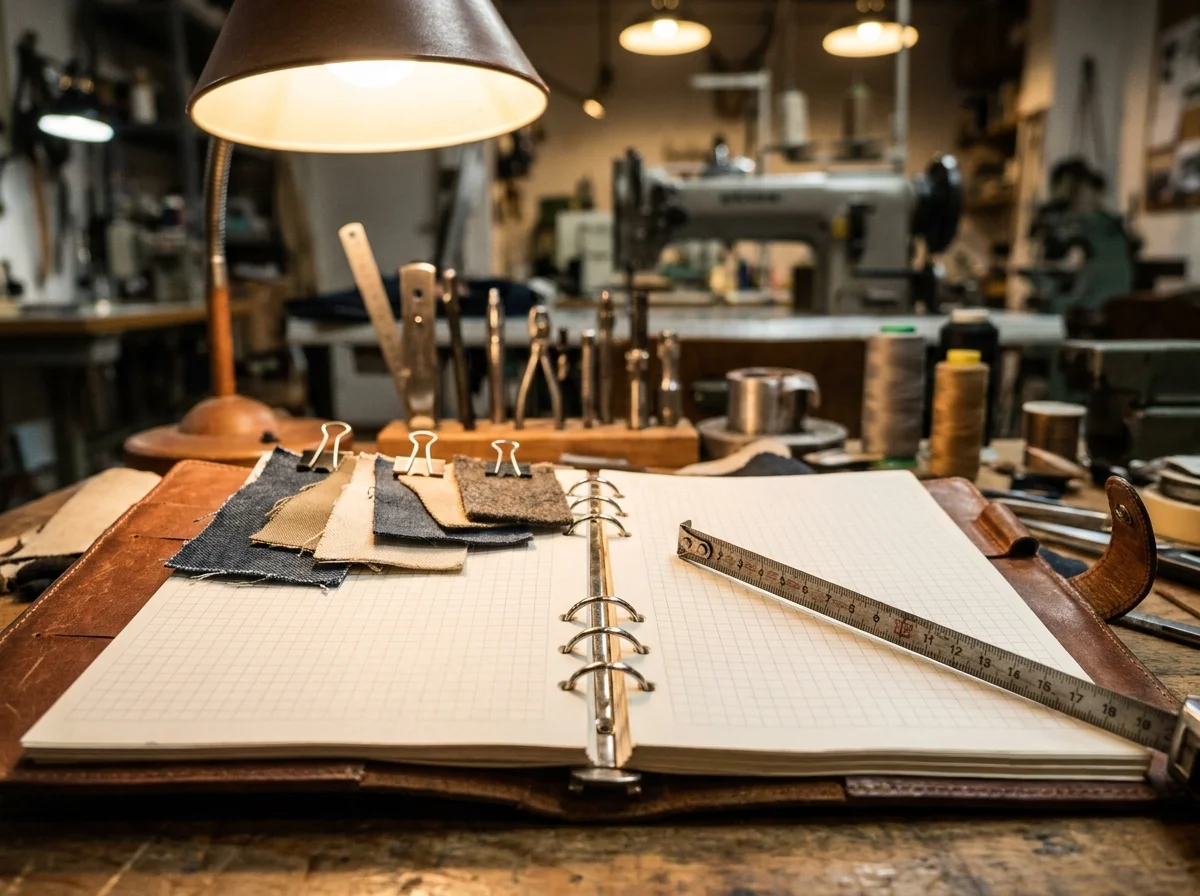
- Two rounds
Two Revision Rounds Are Included, and the Boundary Is What "Revision" Means
The number everyone asks about is how many times they can change their mind. The answer is two — but the number is only useful once you know what counts as a revision and what counts as starting over.
Two revision rounds are included with the sample. That is the registered fact. But saying "two rounds" without saying what a round is, is how people get disappointed later — so here is the boundary in both directions.
A Revision, or a New Sample
| What you change | Is it a revision? | Why |
|---|---|---|
| The fit — a sleeve length, a cuff, a measurement | Yes | The pattern changes; the same garment is re-made against it. |
| The colour, or the position of the print | Yes | The file changes; the garment does not. |
| The fabric itself, or the garment itself | No | That is a new development, not a revision — and it starts its own clock. |
What happens beyond two rounds is not a cliff and not a penalty. If a third round is ever needed, it is a short conversation before it happens — we tell you what is being changed and what it means, and nothing gets made without you knowing. The point of saying "two rounds" up front is not to ration your changes; it is to make sure you know the first two are the place to be decisive.
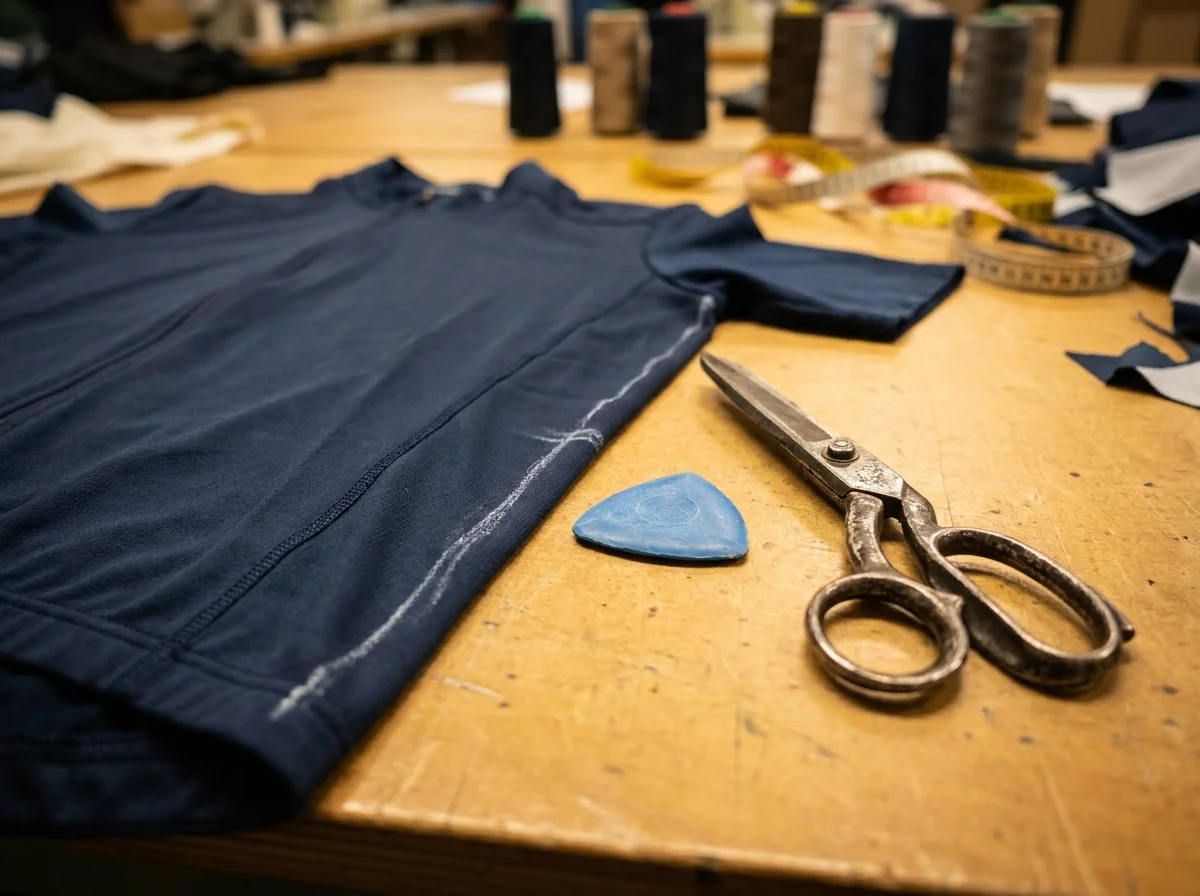
Two Rounds Is Enough When the Feedback Is Specific
The revision count is not the limit most teams hit. The limit is vague feedback, which spends a round without moving the garment. Here is what actually shortens the loop.
- Vague feedback spends a round. Two rounds is generous if each round does work. The thing that wastes a round is not the factory being slow — it is feedback that does not name what changed. "Make it pop" and "it just feels off" are not instructions; they are a request to guess, and a guessed revision is a round you have to spend twice.
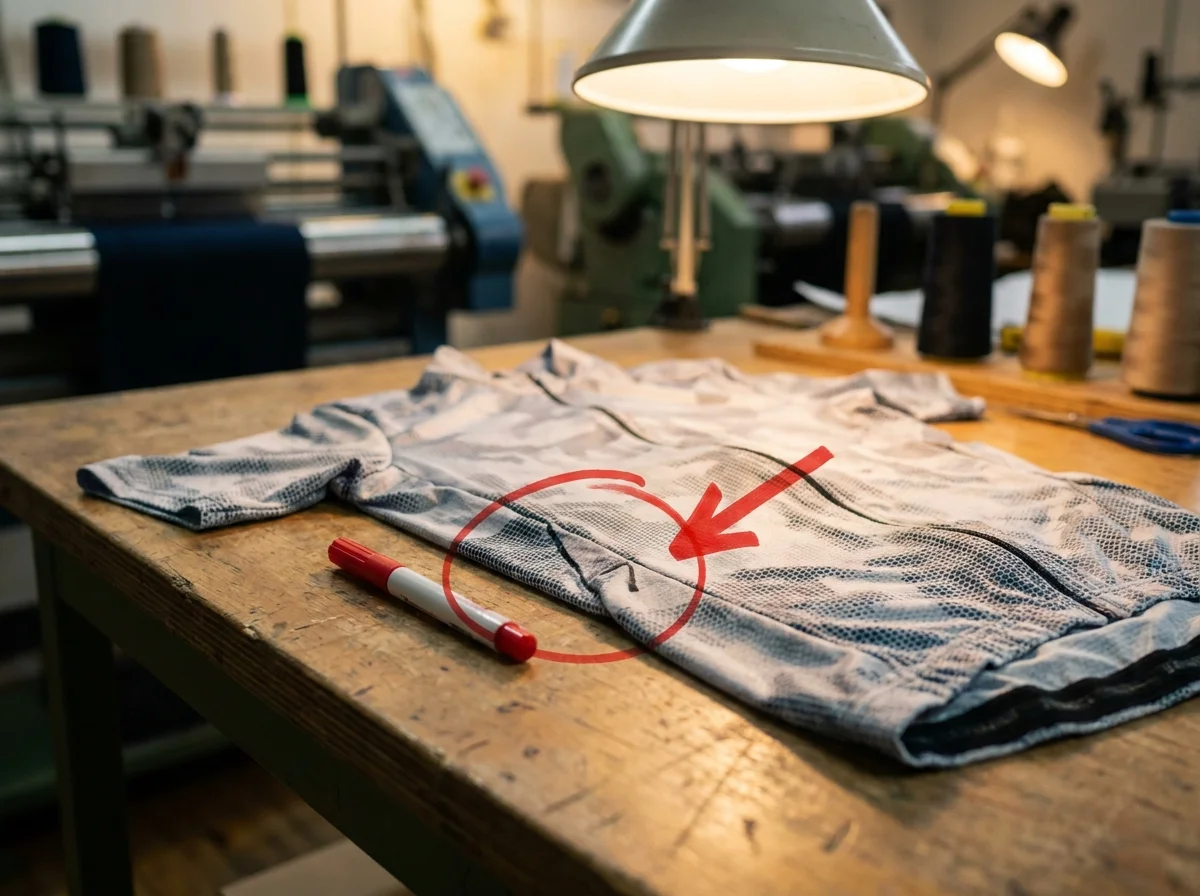
- The feedback that lands names the change. The sleeve is two centimetres too long at the cuff, the accent colour is one shade too warm against the reference, the print sits eight millimetres too low and clips the rear pocket. An annotated photograph is the fastest version of this — the garment with a mark on the part that is wrong, and a note that says what to do to it.
- What we do with it. We put the change against the file or the pattern, not against the air. A fit change moves on the pattern; a colour change moves on the file; a position change moves in the layout. One revision, one named change, one re-made garment. That is the loop, and specific feedback is what keeps it to two.
- After sign-off
Sign-Off Is the One Thing That Starts the Bulk Clock
The 20–30 day production window does not start when you order. It starts when you sign the sample off — and everything about the rush option follows from that same fact.
This is the sentence that reorders the whole process: bulk production runs 20 to 30 days, measured from sample sign-off, not from the day you place the order.
The reason is not a policy choice — nothing can be made in bulk until the sample is confirmed, because every garment in the run is a copy of the thing you just approved. The clock starts the moment there is a confirmed thing to copy.
What signing releases
The 20–30 day bulk window, and — if the date is fixed and the slot is arranged ahead of time — a compressed run of 12 to 15 days.
The rush option is real, and it is the one thing on this page that has to be arranged in advance rather than requested when the deadline is already on top of you. A slot confirmed early can be compressed; a slot that does not exist yet cannot be compressed into existing.
5–7days is the sample window that sits in front of that clock. ⛔ It is not a headline about speed — it is the part you can move by being specific early.
What signing does not release
It does not release the parts you did not confirm. Whatever you left open on the sample — a fit you never checked in the riding position, a colour you approved on a screen instead of on cloth — carries straight into bulk, on every piece of the run.
Sign-off is not a rubber stamp. It is the exact boundary between "one garment we can change cheaply" and "a whole run we can no longer change cheaply."
If your date is fixed, that is a reason to write early, not a reason to write urgently. The scheduling side sits in full on production capacity.
- Before sign-off
What to Check Before You Sign
Sign-off is only as good as what you actually looked at. Each item you skip carries straight into bulk, on every piece of the run.
- The fit, in the riding position. Not standing, not on a hanger — on a rider, in the posture the garment was built for. This is the one check the fit sample exists for.
- The colour, on cloth. A screen and a swatch card are not the same thing. Confirm the colour on the fabric it will actually be printed on, not on the file it came from.
- The print, at size and in place. Where the spec says it sits, not where it happened to land. Eight millimetres low is a revision round you could have caught right now.
- If it carries a chamois, the chamois against the reference you brought. That is a development check, and it is measured against your chamois supplier's spec — not against our word.
Sign only what you checked. Whatever you leave open is what you will find, unchanged, on every piece of the bulk run — and the cheapest moment to have caught it was this one.
A sample is a decision you pay for, not a preview you frame.
The Sample Cannot Tell You Everything, and We Will Not Pretend It Can
Every boundary below is a place where a less careful supplier lets you assume the sample is a promise it never was. Naming them is the trust.
- The sample does not verify the bulk run. One garment made carefully is not thirty made at speed, and the way the run behaves is checked at the production stage by its own checks — not by the sample. The sample confirms what to copy; it does not pre-approve the copying. The production side of that sits on production capacity.
- The sample does not cover what we do not make. Bib shorts, chamois and one-piece tri-suits we develop and sample against your spec — they are a development capability, not a product we hold. Gloves, footwear of any kind including overshoes, and hardware are outside what we do at all. There is no sampling route for them because there is no production route behind them.
- The sample does not answer what you never asked it. If you sign off a colour you approved on screen instead of on cloth, the sample has not failed you — it answered the question you asked, and you asked a different question than you thought. This is the whole reason the page keeps coming back to specificity: the sample is only as specific as the spec.
The sample is a strong tool and a narrow one. Each of those limits is a place buyers get burned by assuming the opposite, and each one is a reason the sample is one step in a sequence rather than the whole of it.
Six Questions That Arrive Before the First Sample
Do I need a finished tech pack to start a sample?
No — you need enough to tell us what you are trying to confirm. A sketch, a reference garment and a rough size list are enough to start the conversation and for us to name what is still missing. The finished pack is what the first sample gets cut against, not what the first email needs.
Is sampling a separate step from the bulk order, or part of it?
It is a separate, earlier step. The sample runs its own 5–7 day window, sits outside the production minimum entirely, and the bulk window is measured from the moment you sign it off rather than from the day you order. Nothing can be made in bulk until there is a confirmed thing to copy.
The Sample Itself
How many times can I change the sample?
Two revision rounds are included. A revision is a change to the fit, colour or print position on the sample that already exists — not a change to the fabric or the garment itself, which is a new development and not a revision. If a third round is ever needed, it is a conversation before it happens, not a surprise.
Can you sample a bib or a one-piece tri-suit?
We can develop and sample bib, chamois and one-piece construction against a spec and a chamois reference you bring — that is a development capability, not a product we hold in a range. There is no sampling route for gloves, footwear or hardware, because there is no production route behind them.
Will the sample be made the same way the bulk order will be?
The pre-production sample is exactly that — made the way bulk will be made, in your confirmed colour and decoration. The earlier fit and print samples are cheaper, narrower checks that answer one question each, which is why they happen first.
The Handoff
What do I send the files to?
A tech pack, artwork and a size list go to [email protected] — the form on this page carries your details and message, and physically cannot carry a file. We reply within 24 business hours, Monday to Friday, and a quote follows within 48 hours of a complete pack.
Send the Spec, Not the Sales Pitch
The most useful first message is not "how much is a sample" — it is the spec itself: which garment, which colour, which size, and what you are trying to confirm.
- Reply within 24 business hours. Monday to Friday.
- Quote within 48 hours of a complete pack. ⛔ You do not need one to start.
⛔ You do not need a finished tech pack to start. If you have one, email it to [email protected] and reference this enquiry — the form beside this is a JSON submission and cannot carry a file, so ⛔ there is no file field on it.