Production Capacity at a Cycling Apparel Manufacturer, Read as a Date Rather Than a Number
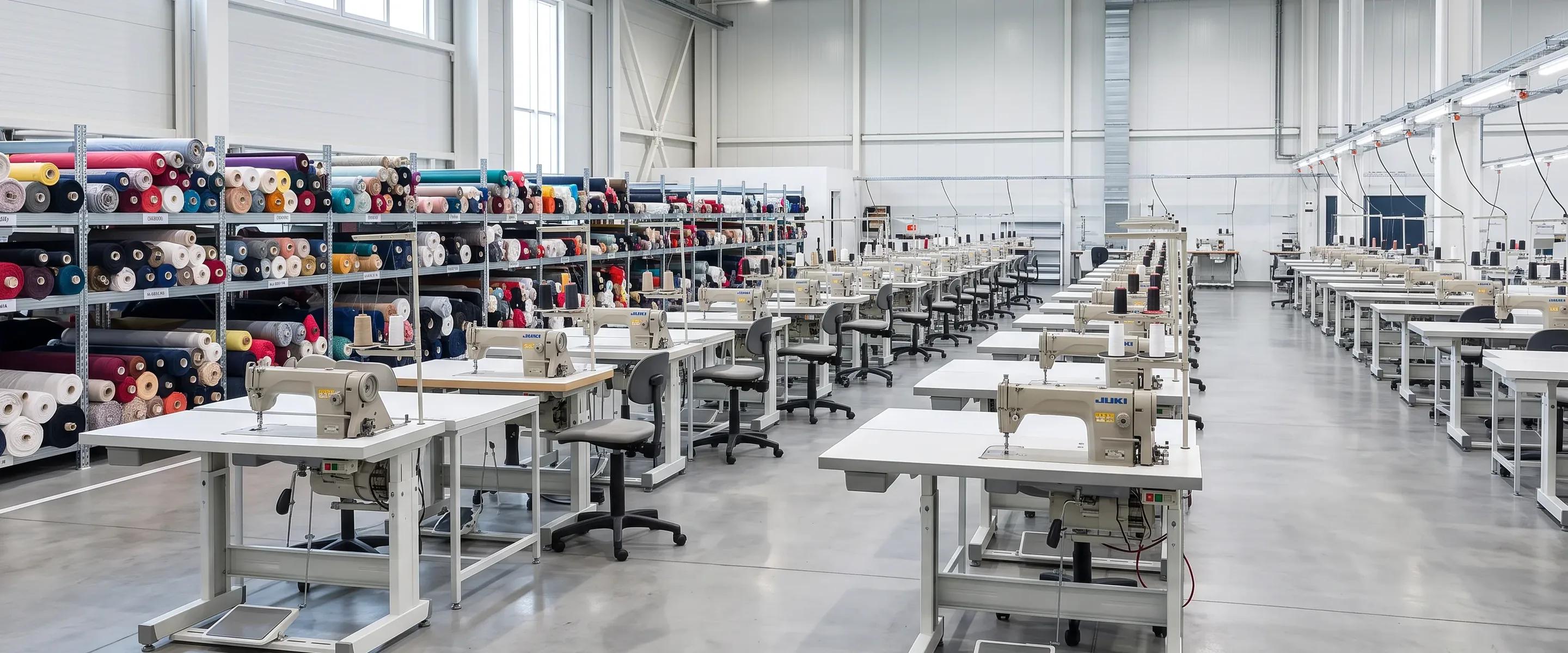
Five lines, 60,000 garments a month, 150+ people, 5,000 m² of floor. Below, each of those turns into the only question you actually have: when does mine leave, and when would I hear if it were slipping.
Tell Us Your DateHow to read this page: every number below is followed by what it does to a date — and where it stops being able to tell you anything.
Sixty Thousand Garments a Month Is a Fact About the Floor, Not a Queue With Your Name on It
Monthly capacity is the most quoted number in this industry and the least useful one on its own. Here is what it is, and the four words it cannot finish.
What the Figure Actually Describes
This floor puts out 60,000 garments a month across 5 dedicated sportswear lines. That is a real number and it is the one every other page on this site uses. What it describes is throughput: how much finished product leaves the building over thirty days when the lines are running the way they normally run.
It does not describe availability
Nothing about that figure is reserved. On the day you write to us, most of the month is already committed to orders that arrived before yours — and the honest version of “we have capacity” is not we have room but we know exactly how much room we have, and when it opens.
The Four Words the Number Cannot Finish
“We can make 60,000 garments a month” is a complete sentence about the building. Try to finish it with “…so yours will ship in ——” and it falls apart, because the missing pieces are not capacity at all: which decoration route your garments take, whether the pattern already exists here, how many colourways you split the run across, and whether your sample has been signed off.
Every one of those four gets a section of its own below. None of them is a volume problem.
A buyer who is told “huge capacity, no problem” and then waits five weeks has not been given bad service. They have been given a number that could not answer their question, and no warning that it couldn't.
- Owner page
- 5 schedules
Five Lines Means Five Separate Calendars, and Only One of Them Has Your Order in It
The reason a small order and a large order can both wait three weeks is that they are not waiting for the same thing. They are waiting for a slot.
They are not five machines and they are not one big line cut into five — they are five schedules, each with its own week already partly filled. An order does not get spread across all five; it lands in one, in a slot, behind whatever is already in that slot.
Which is why the arithmetic everyone does first is the arithmetic that misleads. Divide the monthly figure by five and you get an average per line per month. That average is real, and it is also the least informative number on this page: it describes a line with nothing else on it, and no line here is ever in that state. We are not going to quote you that average as a lead time.
What Actually Decides Which Calendar You Land In
Not size. Route. A run that needs full-width sublimation before assembly, a run that needs bonded and taped seams, and a run that is straight cut-and-sew with an embroidered logo do not queue for the same equipment — so they do not queue for the same slot, and two orders of identical quantity can sit two weeks apart. That mapping is the next two sections.
- FullThe slot you are looking at is next month. Nothing about your order changes; the date does.
- Full, with a batch closingDays rather than weeks before something opens. This is where asking early is worth the most.
- HalfYour run can start, and may finish alongside another. Where a split delivery becomes possible.
- Turning overA slot between orders. The narrowest and least predictable window — real, and not promised before it exists.
- Held for a confirmed sampleBooked, but not by production. Which is why sign-off timing matters more than order size.
- Six operations
- Registered list
Six Operations Run on This Floor, and Each One Hands Over Something You Can Hold
This is the concrete answer to what the building can do — not a capability list, but the physical thing each operation produces and the boundary it comes with.
Six Operations, and What Leaves Each One
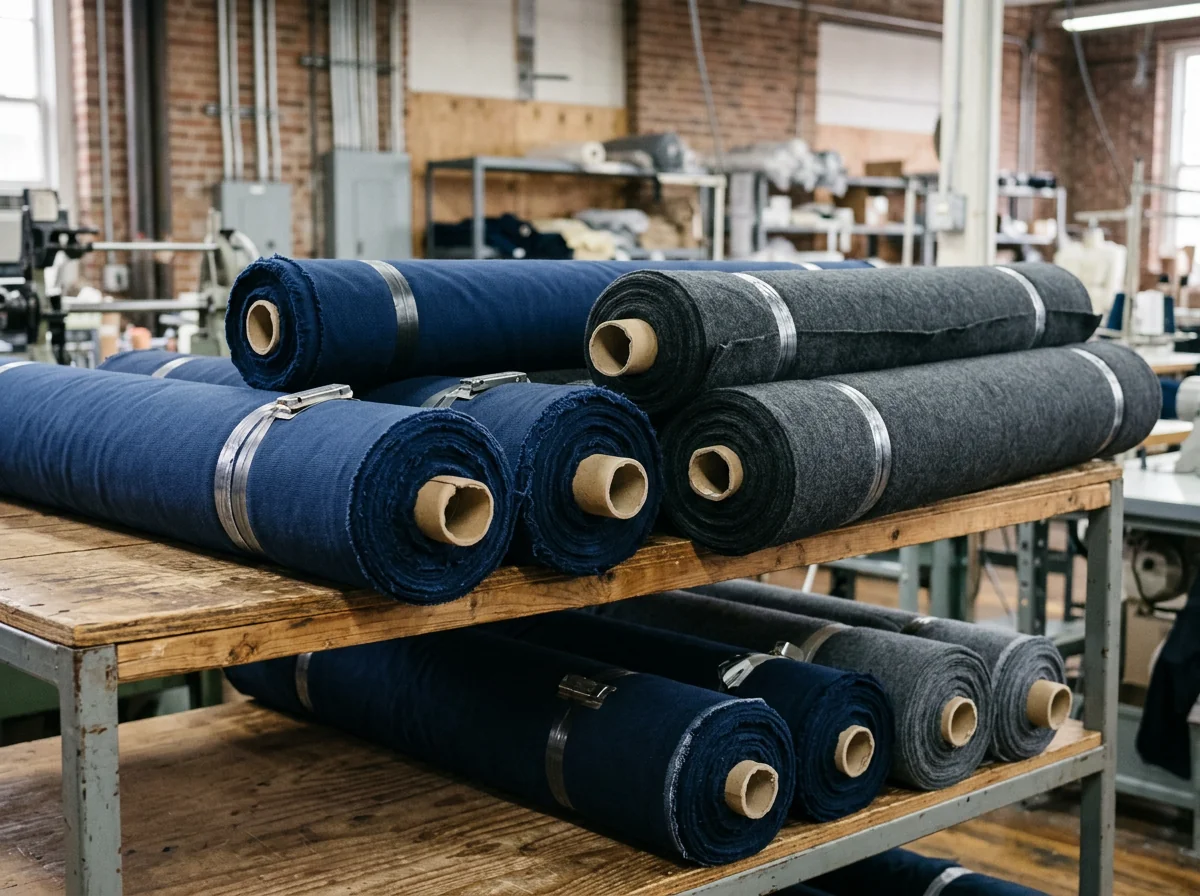
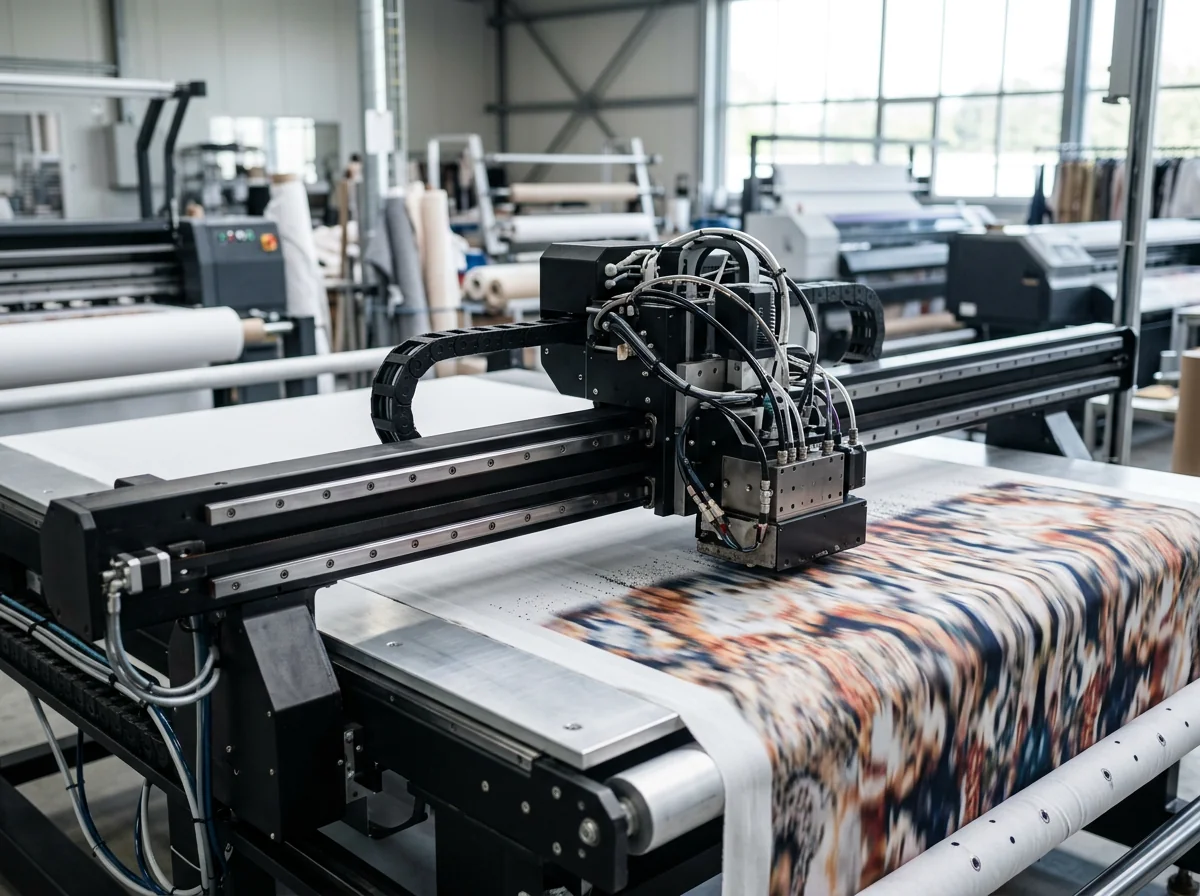
- Full-width digital sublimation printing→ panels with the colour inside the cloth, not sitting on top of itThe dye is laid across the full panel plan before assembly, so artwork can run across a seam and keep going — the one thing a garment-level print cannot do.
- Laser and ultrasonic automatic cutting→ stacked panels, counted by size, with a sealed cut edgeOn synthetic knits the cut edge is fused rather than raw, so a panel does not start fraying between stations.
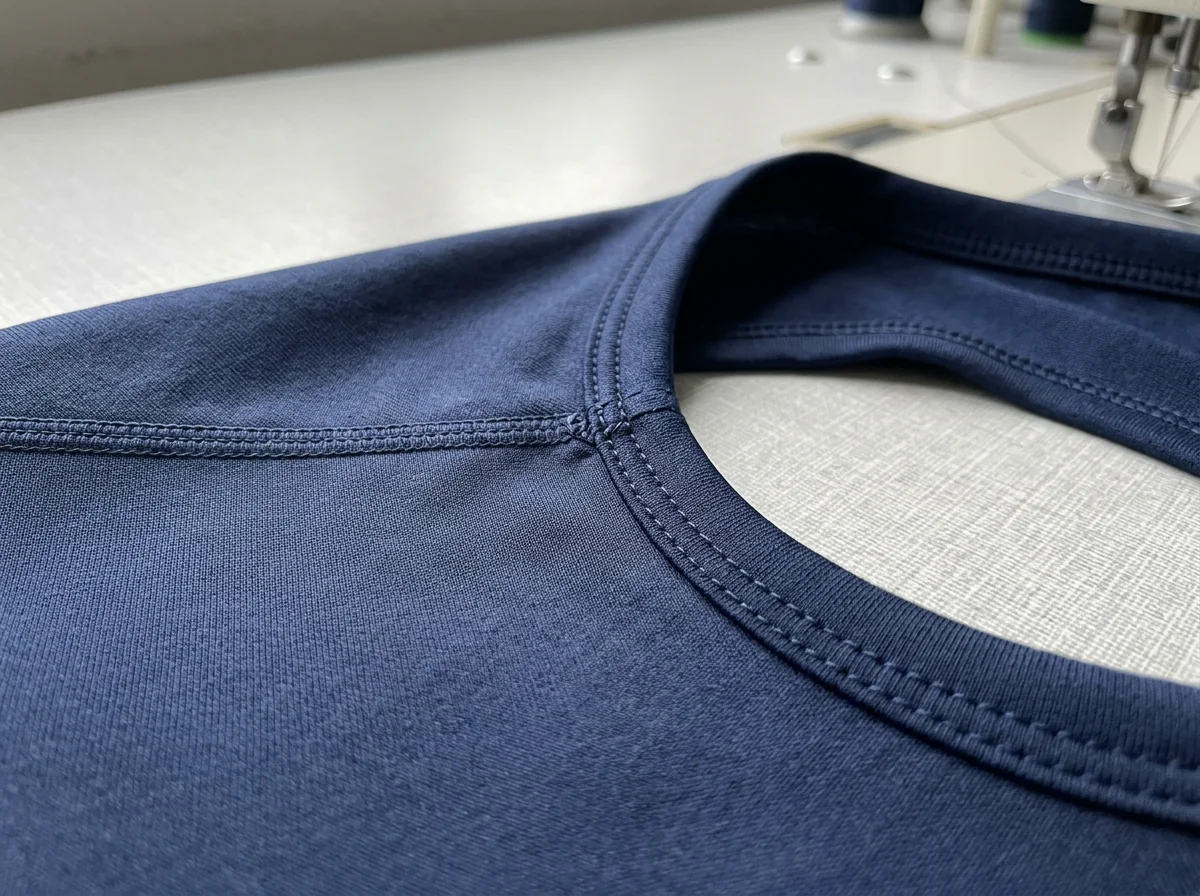
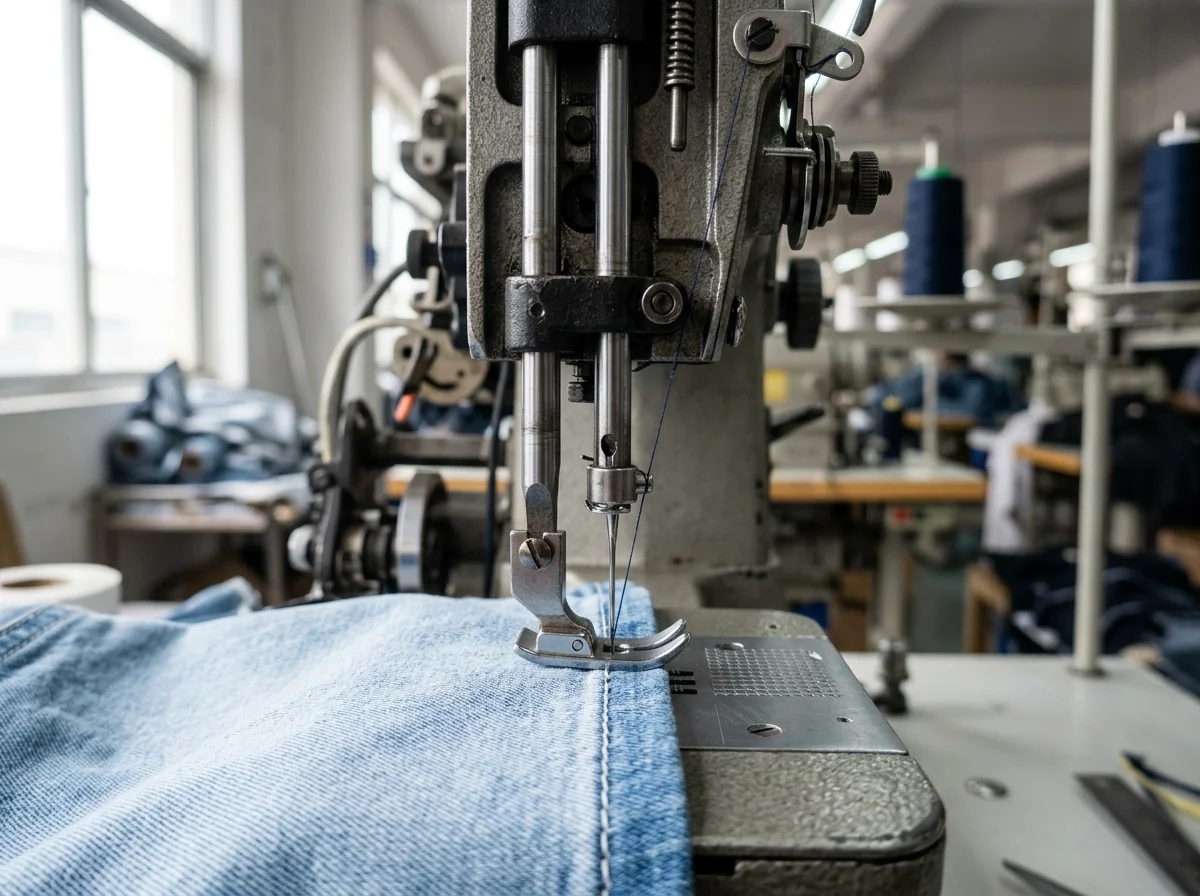
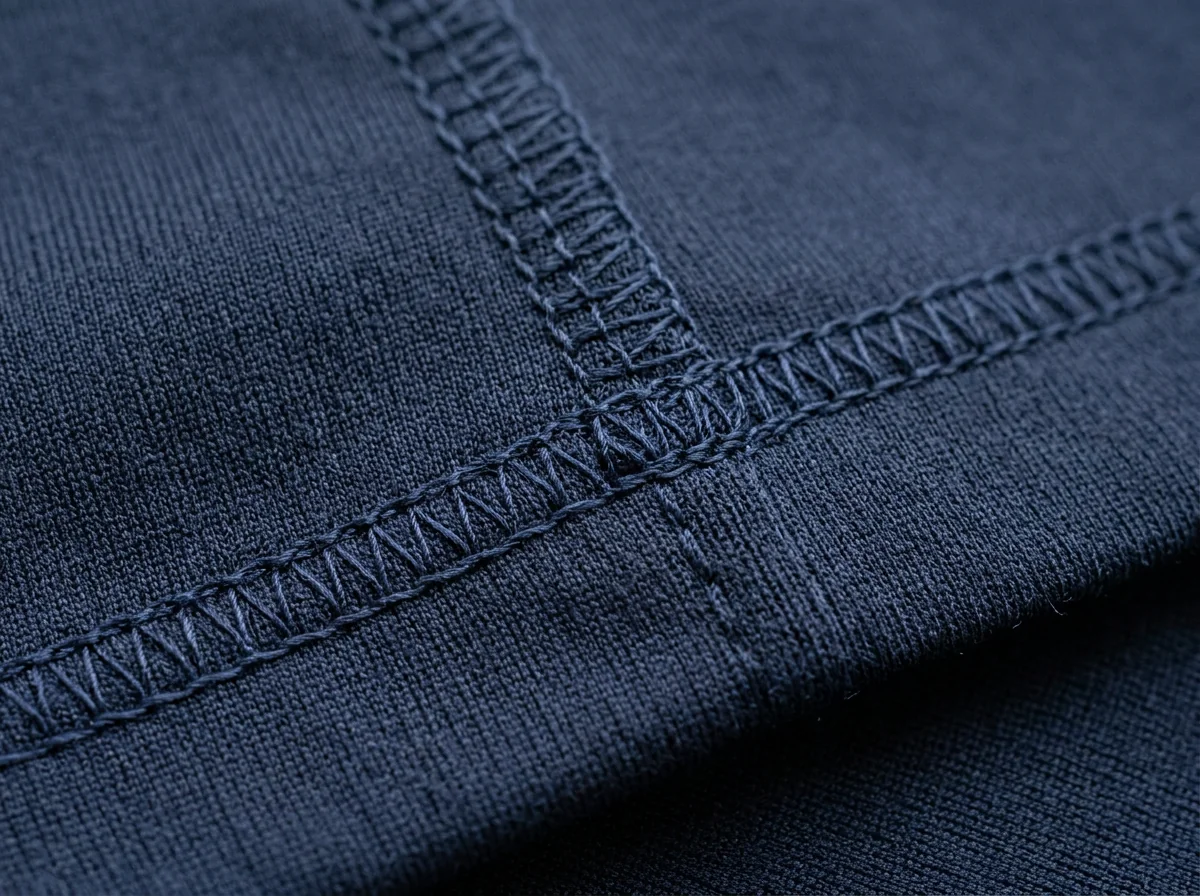
- Lockstitch, coverstitch and four-thread overlock machines→ a garment body whose seams stretch with the panelCoverstitch and overlock are what keep a seam flat and elastic under a shoulder rotating forwards, instead of becoming the stiffest line in the garment.
- Computerised embroidery→ a raised, dimensional mark with a stitch count behind itThe option when a logo has to survive being seen from a metre away rather than photographed. Not a cheaper print — a different object.
- Heat transfer→ a single applied graphic on a panel that already existsHow a name, a number or a late sponsor mark goes on without re-laying out the whole print plan.
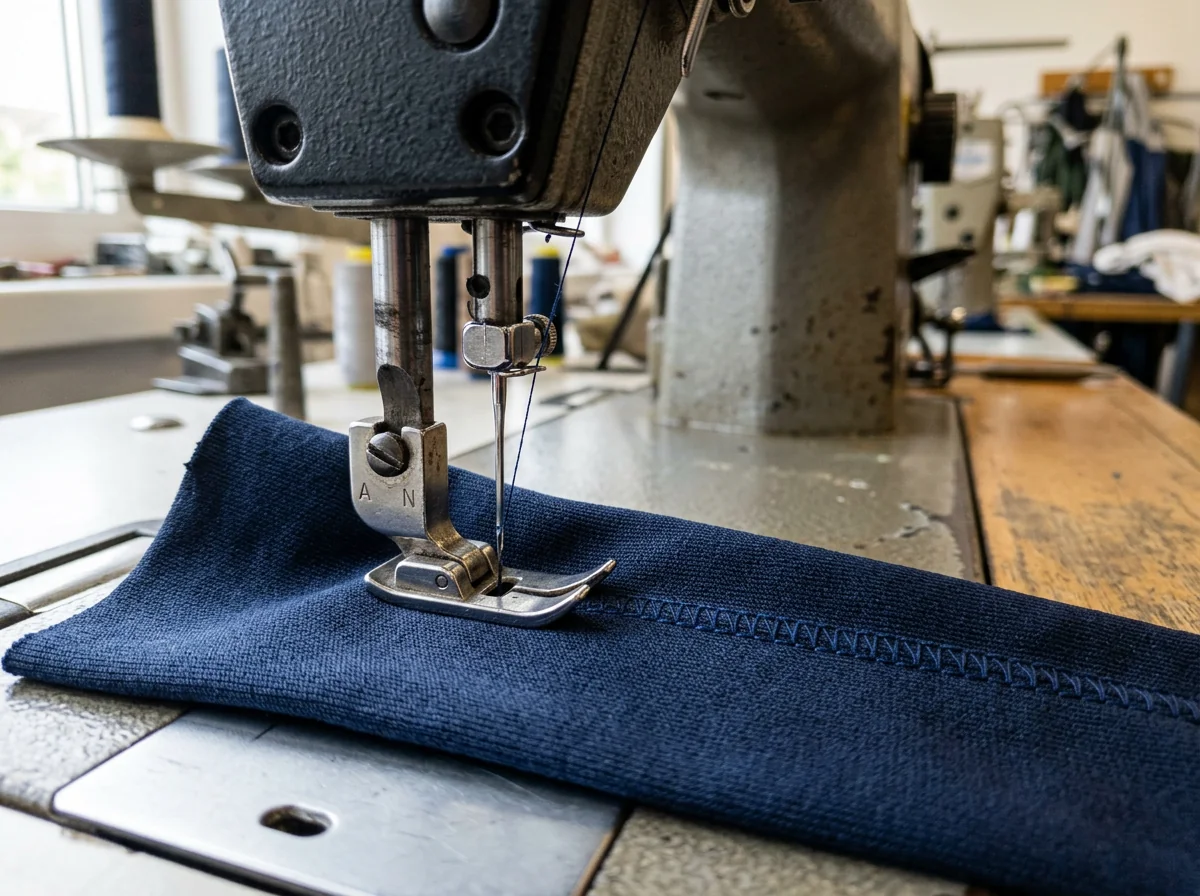
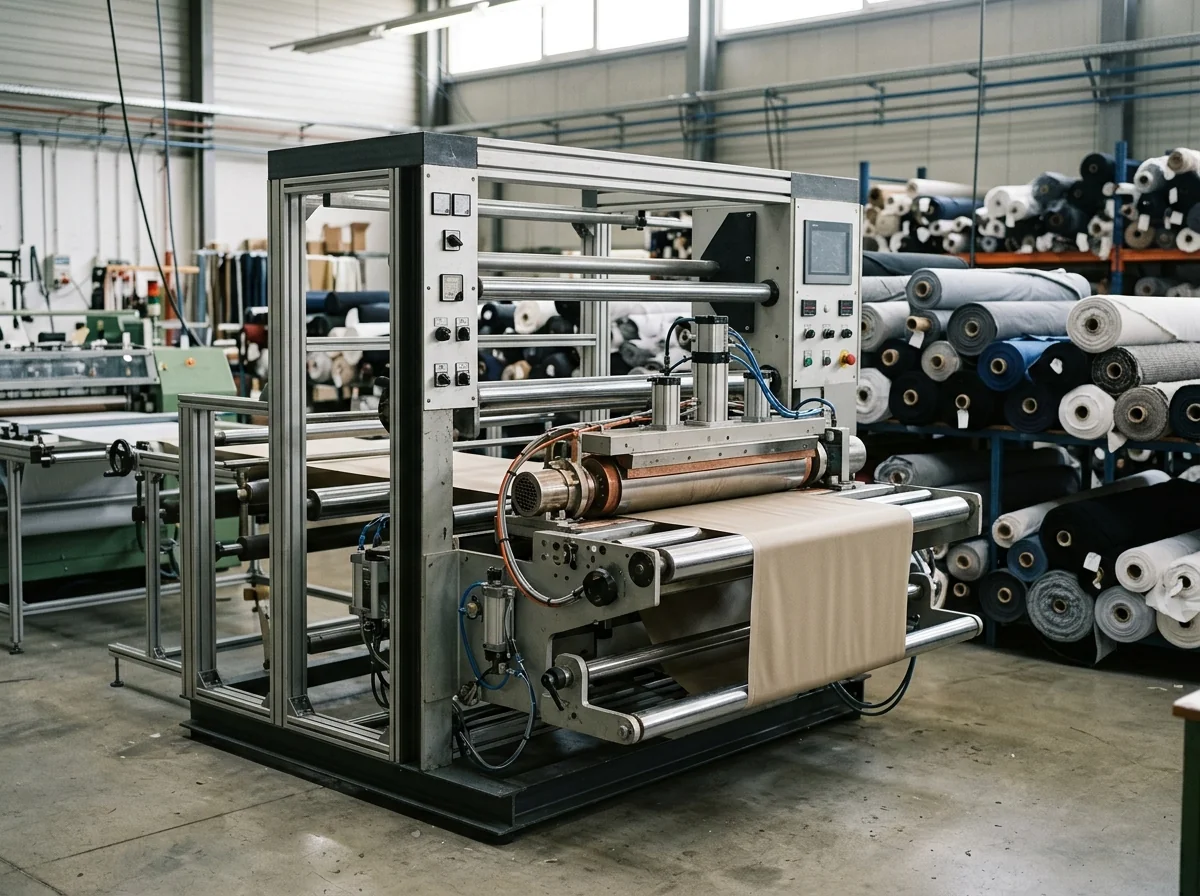
- Seam taping and seam-sealing equipment→ a seam that is closed, not just sewnTape and sealing are applied over the stitch line piece by piece, and they are what make an outer layer's seams windproof or waterproof.
The boundary inside that last one
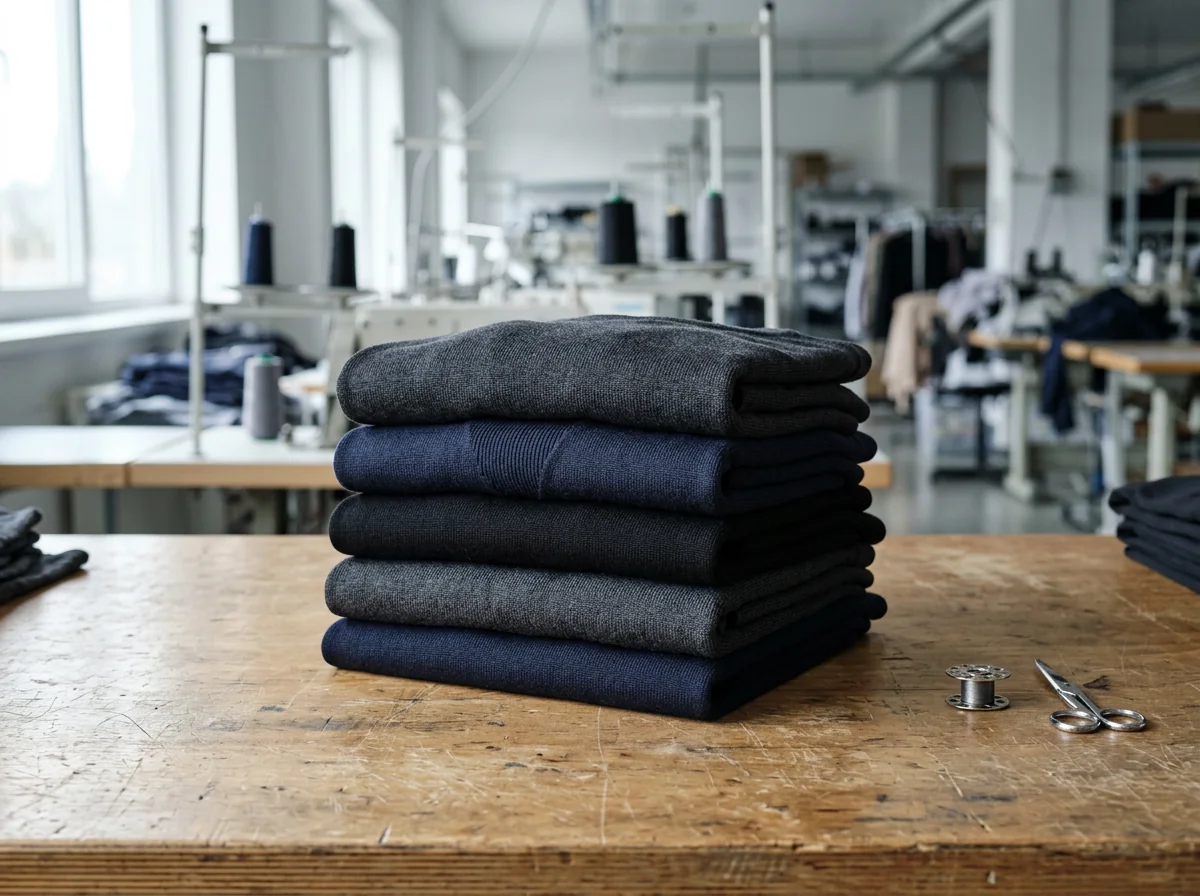
Read entry six precisely. Taping and sealing describe what the equipment does to a seam. The fabrics themselves are water-resistant — the repellency comes from a DWR finish — and ordinary stitching on a water-resistant fabric will still let water through the needle holes if the seam is not taped.
Those are two different claims and only the first one is about the cloth. We do not describe our fabric or our finished garments as waterproof, and we do not publish hydrostatic-head or breathability figures. Fabric belongs on Custom Fabric Development; the decoration methods themselves are compared on Printing Methods.
- Front of the run
- Back of the run
Two of Those Six Are What Actually Move a Date, and They Sit at Opposite Ends
Four of the operations above are broadly predictable. The two that are not are the first thing that happens to your order and the last — which is why a kit with both is a different scheduling problem.
At the Front: Print Layout, Which Happens Before Anything Is Cut
All-over sublimation is laid out across the whole panel plan before a single panel is cut. The consequence is not that printing is slow — it is that the artwork has to be final earlier than most buyers expect. A change after layout is not a reprint; it is a re-layout, and everything downstream of it moves with it.
If your sponsor artwork is still being negotiated, that is the stage it collides with — and it collides before cutting rather than after sampling.
At the Back: Taped Seams, Which Are Applied Piece by Piece
Seam taping and sealing are the slowest per-piece operation here, and per-piece is the whole problem: it does not benefit from the run being long. A hundred jackets take roughly a hundred times one jacket. Everything else on the floor gets faster per unit as the run grows; this one does not.
The Combination Nobody Costs In Advance
If your kit has all-over print and a sealed outer layer, it is not one order in the schedule — it is an order that visits both slow stations, at both ends, with everything else in between. We are not going to quote that as though it were a plain jersey run, and it is the single most common reason a date we could have committed to becomes one we cannot.
None of which discourages either operation: a sealed outer layer is the reason an outer layer is worth having. It means the two of them together are a scheduling fact worth raising in the first email — not a quality trade-off worth arguing about.
There Are 150+ People Here, and Your Order Is Waiting On About Ten of Them
Headcount describes a building's capacity to sew. It does not describe where a specific order stops moving — and those two are almost never the same place.
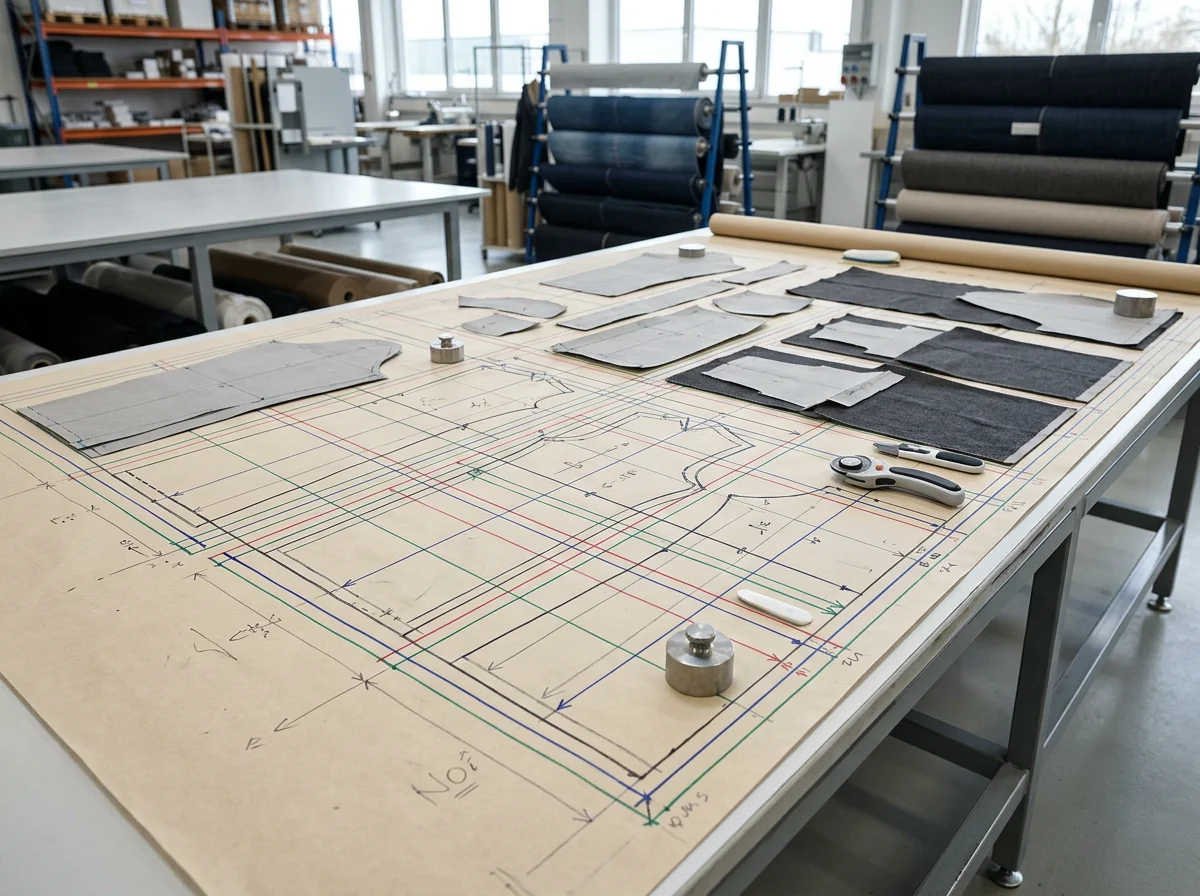
The sewing floor is the largest group and it is almost never what you are waiting for: sewing scales. You add operators to a line and more garments come off it. The stations that do not scale that way are the ones that decide your date, and there are three of them.
- Pattern and sample development. One block gets developed at a time for a given style, and a second person does not halve that. If your pattern already exists here from a previous order, this stop shrinks to almost nothing — the largest single difference between a first order and a repeat one. How the work itself is done is on Riding Fit & Pattern Development.
- Sign-off. A confirmed sample is a decision, and decisions wait on people — including yours. We are not going to pretend this half of the delay sits entirely on our side of the table.
- Inspection. The 10 QC staff read a batch against the signed sample at six fixed checkpoints between incoming fabric and a closed carton. Adding inspectors does not make a hold shorter; it makes it happen sooner — better for your date and worse for your week.
Why We Do Not Publish a Pass Rate
The obvious way to end this section would be a first-pass yield figure. We do not have one we would stand behind, and a number we cannot back is worse than no number — you would have no way to check it and we would have no way to defend it. What we will commit to instead is in the timing section below: you hear about a hold while it is happening, not on the delivery date.
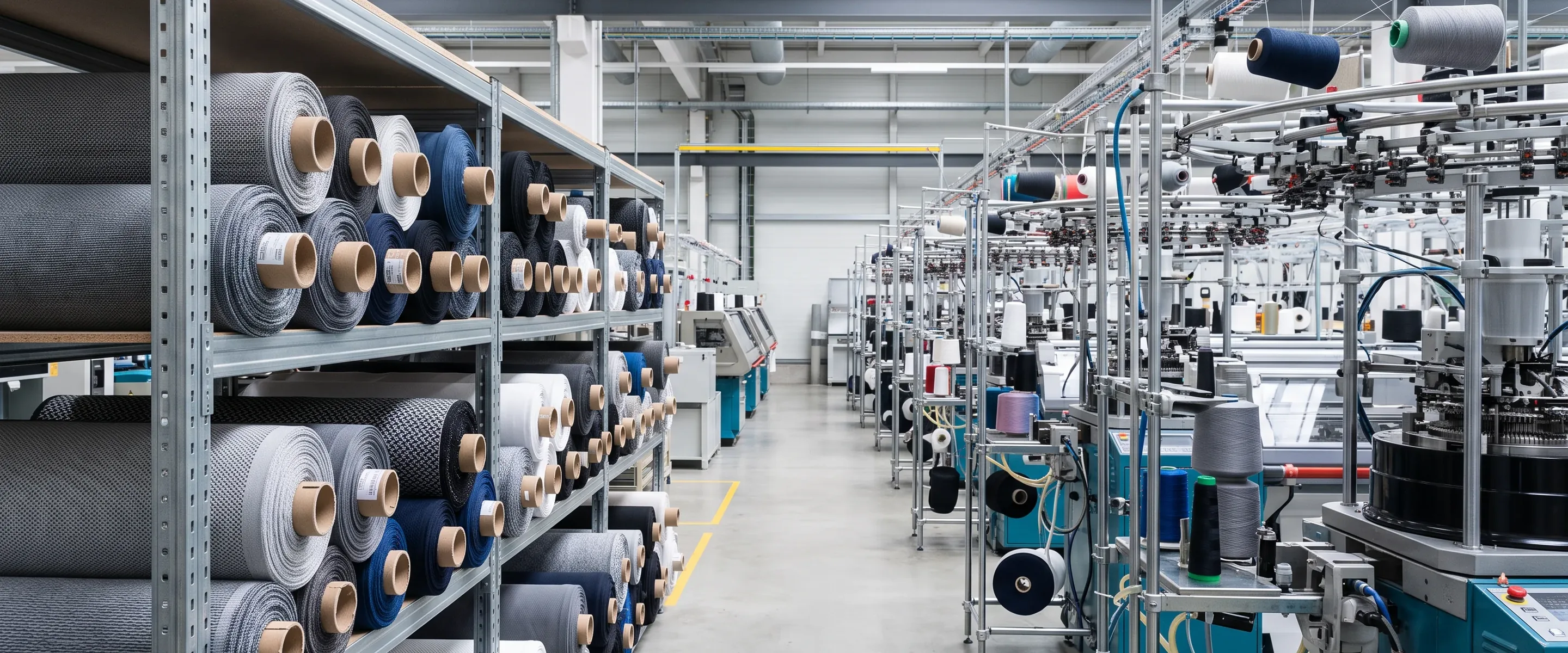
A busy floor and an available floor are two different claims, and only one of them is worth anything to you.
What 5,000 Square Metres Actually Buys You Is Walking Distance
Floor area is usually quoted as a size claim. The only thing it reliably tells you is how far one station is from the next — and that distance is denominated in hours.
That is not a boast about scale; at this size it is specifically not a boast about scale. What it means is that the answer to a mid-run question is a walk, not an email.
- A question that would otherwise leave the building comes back the same afternoon. Can that print cross that seam? is answered by someone walking to the panel and looking at it. Sent to an outside decorator, the same question comes back tomorrow, as a maybe.
- A hold is discovered at the station, not at the loading bay. Inspection sits where the sewing does, so a batch that has drifted gets caught while the run is still open — the difference between re-sewing part of a run and re-sewing all of it.
- A correction does not need a courier. When a panel has to go back a station, it goes back a station. There is no version of this where the fix involves shipping something across a city and waiting.

And What Floor Area Does Not Buy
It does not buy you a slot. A large floor with a full schedule and a small floor with a full schedule are, from where you are standing, the same floor. Area affects how fast a problem gets resolved once your order is running; it does not affect when your order starts running. Those two get confused constantly and they are not related.
How the building is organised as a company, rather than as a floor plan, is on About.
- From sample sign-off
Your Twenty to Thirty Days Do Not Start When You Place the Order
Three moments feel like the start of the clock. Only one of them is, and the other two are where most delivery-date arguments actually come from.
Bulk production runs 20 to 30 days from sample confirmation. That last clause is the whole section, so it is worth being blunt about what it excludes.
- The day you send the enquiry Not the startYou get a reply within 24 business hours, and once a tech pack is complete, a quote within 48 hours. Those are response commitments, not production ones. Nothing is in a slot yet.
- The day you approve the quote Still not the startSampling comes next: 5 to 7 days for a sample, and up to 2 rounds of revisions without an additional sampling charge. Sample pieces do not count toward a minimum. How that stage runs is on Sampling & Prototyping.
- The day you sign off the sample This is the startFrom here the 20 to 30 days begins, and the signed sample becomes the reference every later inspection measures against.
Why it is set there and not earlier
Because before sign-off there is nothing to inspect against. A run started against an unconfirmed sample is a run with no test — “does it match?” has no answer, and the first honest opportunity to find that out would be the delivery date. We would rather the clock start late and mean something than start early and mean nothing.
What this does to your planning: work backwards from your date, not forwards from today. A fixed event date needs sign-off scheduled, not just production scheduled — and that is the conversation worth having in the first email rather than the third.
- Owner page
Where Your Order Sits in the Schedule, End to End
Every figure in the table below appears somewhere else on this site, and each one is the same figure there. This is the one place they are lined up in order.
| Stage | What it takes | What it is waiting on |
|---|---|---|
| First reply | Within 24 business hours on a working day | Nothing — this one is entirely on us |
| Quote | Within 48 hours of a complete tech pack | The tech pack being complete, not the order being confirmed |
| Sample | 5 to 7 days, with up to 2 revision rounds | Whether the pattern already exists here |
| Bulk | 20 to 30 days from sample confirmation | A slot, and which stations your route visits |
| Rush | Compressed to 12 to 15 days | A slot confirmed in advance — not available on request after the fact |
Working hours are Monday–Friday, 9:00–18:00 (GMT+8), which is what “working day” means in the first row. There is no 24/7 desk here and we are not going to imply one.
The Row That Surprises People
Rush. It is real — 12 to 15 days — and it is the only row in the table that has to be arranged before you need it. A slot that has been confirmed in advance can be compressed. A slot that does not exist yet cannot be compressed into existence, and no amount of paying attention on our side changes that. If your date is fixed, that row is the reason to write early rather than the reason to write urgently.
What This Table Deliberately Does Not Have
A column for “typical total”. Adding the rows up produces a number that describes an order with no decisions in it, and every real order has decisions in it — sign-off waits on you, artwork waits on your designer, a colourway split changes the route. A total would be the most quotable and least true number on this page.
- Registered case
What Changes When an Order Is Large, Using the Largest One We Have
Large orders do not get a different factory. They get a different shape of delivery, and the shape is the interesting part.
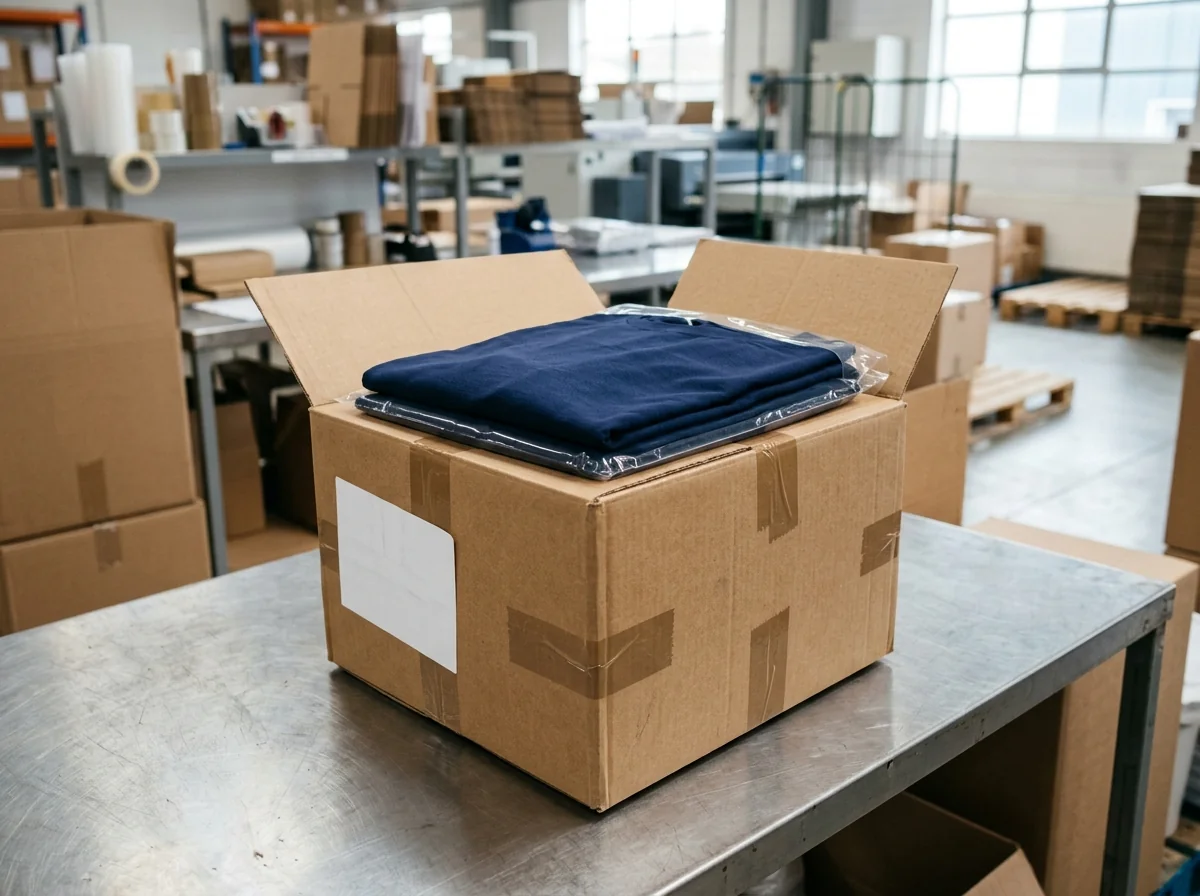
The largest single order on our books is a European amateur road racing organiser who had finisher's commemorative jerseys made for the competing teams: 1,800 pieces in one order, delivered in 2 batches on day 22 and day 28 — both inside the standard 20 to 30 day window. Nothing exceptional happened. What is worth reading is why nothing exceptional happened.
- It was split before it started, not because something went wrong. Two batches was the plan on day one. A single 1,800-piece drop would have needed one line clear for longer than any line here is ever clear.
- A staged delivery is a scheduling tool, not a concession. The first batch shipping on day 22 meant the organiser could start distribution while the second half was still being finished — usually more useful than one late complete shipment.
- The route mattered more than the quantity. 1,800 of one style through one decoration route is a much smaller scheduling problem than 600 across three routes. Quantity is not the axis that decides this.
The Part That Is Actually Harder Than Volume
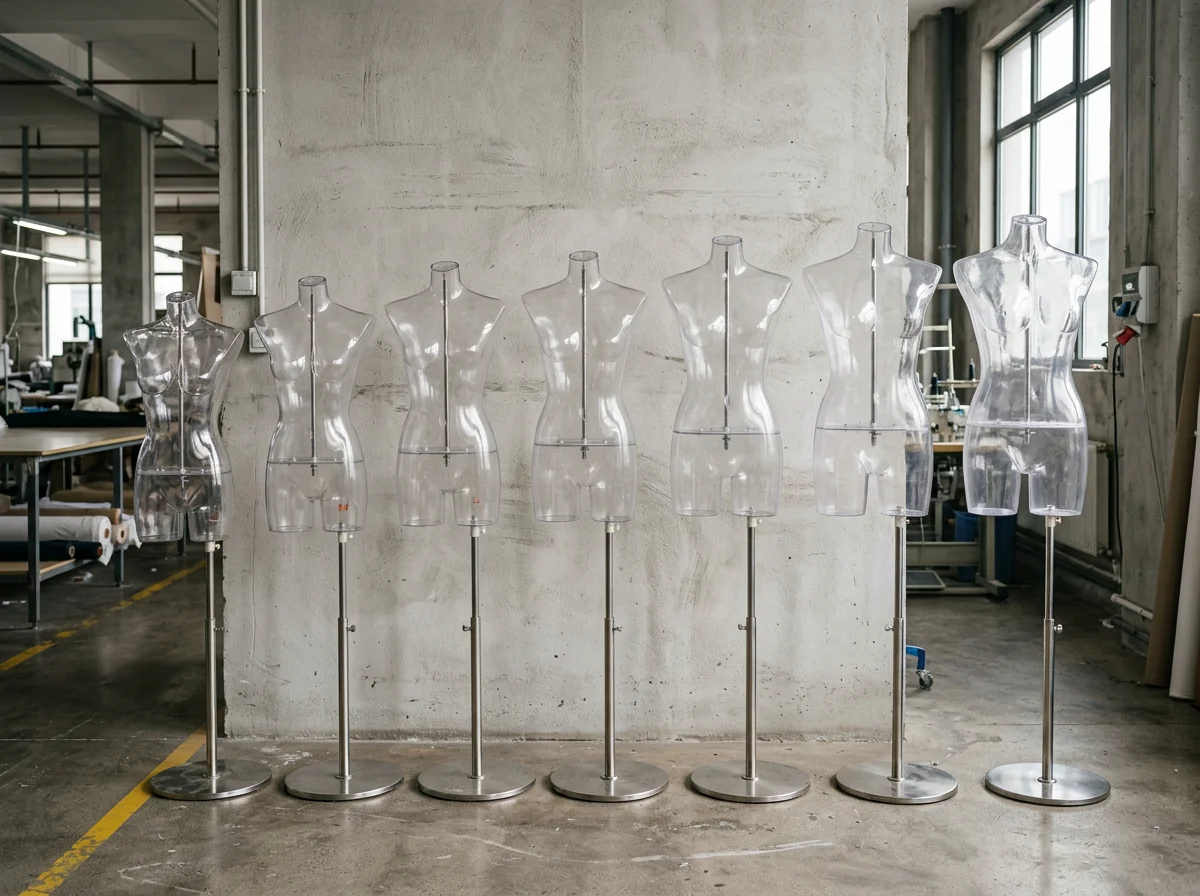
Not the pieces. The size spread. A large order across a wide size range is many small runs wearing one purchase order, and the grading and the cutting both feel it. Our own base size chart runs XS–3XL with separate men's and women's patterns, and you can supply your own size chart to be developed against instead. That is the part to raise early on a large order, not the total.
How an event or corporate order is scoped from the other side is on Cycling Events & Corporate Orders.
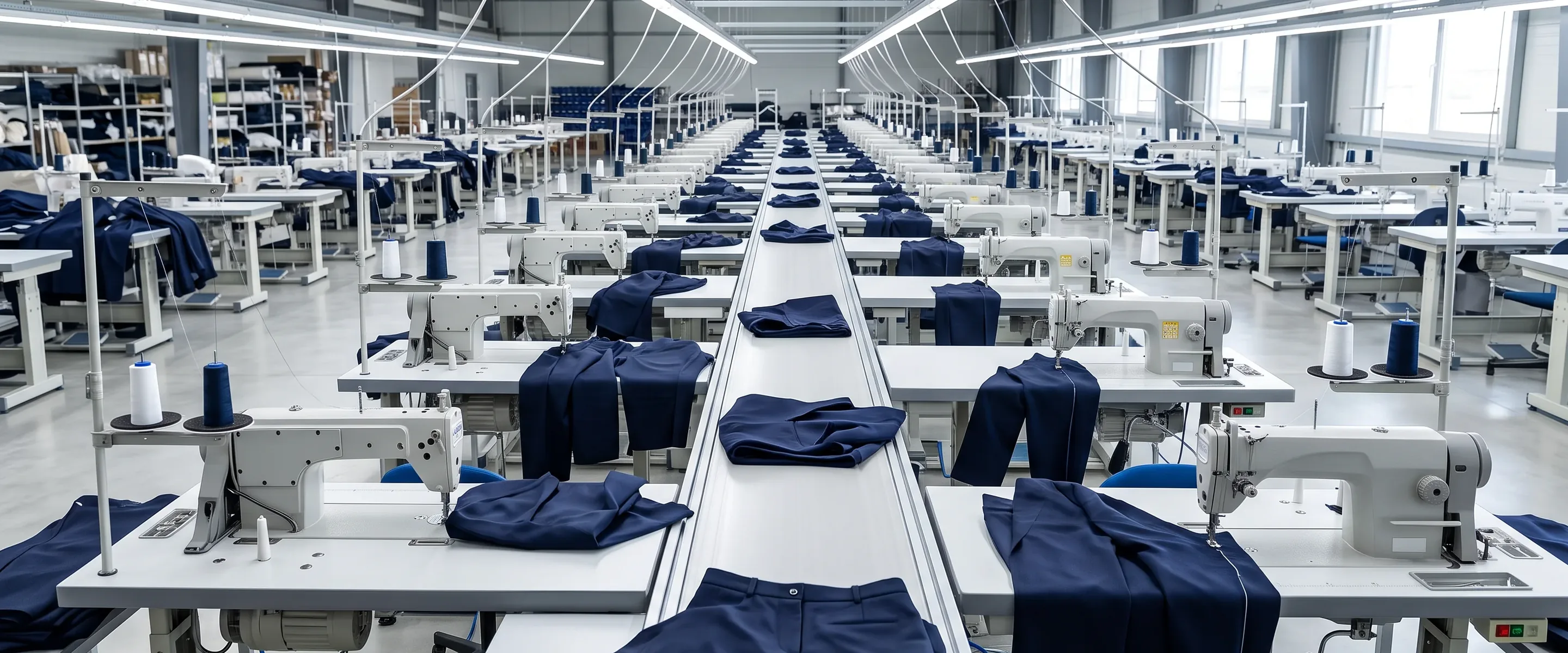
Two orders of the same size can sit two weeks apart, and the reason is never the size.
- Registered cases
What Changes When an Order Is Small, Which Is More Often Than the Word “Factory” Suggests
A small order is not a favour we do and it is not a rounding error in the schedule. It is a different set of things going wrong, and they are worth naming.
Two of our registered cases are small, and both are repeat business. A North American amateur cycling club runs 8 squads at 30 pieces per squad per season — jersey, vest and arm warmers — 240 pieces in total across the 8 squads, repeating for 3 consecutive seasons, with patterns and screens kept on file and reused. A newly established DTC cycling brand ran a first season of 6 private-label SKUs, 2 colourways each, 30 pieces per colourway — 360 pieces for the season — including its own main label and packaging.
- Small orders are not scheduled late, they are scheduled narrow. A 240-piece run occupies a slot for a short time, which makes it easier to place, not harder. The thing that delays it is almost never its size.
- The colourway split is the real cost. In both cases the piece count is spread across separate colourways, and each colourway is its own run through the decoration station. That is a scheduling fact before it is a pricing one.
- The second season is a different order entirely. By the time the club reordered, the pattern and the screens existed here. The development stop from the staffing section largely disappears — the biggest single reason a repeat order moves faster than a first one.
Minimums are set per style per colourway and are explained properly on MOQ & Wholesale Pricing — they are not re-derived here. How each of these buyers scopes a first season is on Cycling Clubs & Teams and Brands & DTC Startups; private label and packaging are on OEM & ODM Services.
Four Things to Flag in the First Email, and One Case Where We Will Tell You No
Most delivery-date problems on this floor were visible in the first message and nobody mentioned them. These are the four.
| Flag this | Why it moves your date | When to say it |
|---|---|---|
| A fixed, non-moveable date | Rush at 12 to 15 days needs a slot confirmed in advance; it cannot be created after the fact | First email, before quantities |
| All-over print plus a sealed outer layer | Your route visits both slow stations, so it is a different queue from a plain jersey run | First email |
| Artwork that is not final | Layout happens before cutting; a change after layout is a re-layout, not a reprint | Before sampling, not after |
| A wide size range on a small quantity | Many small runs under one order; grading and cutting both feel it | With the size list |
And the case where the answer is no
If your date is fixed, your artwork is not final, and no slot has been held, there is a point past which we will say we cannot make it. We would rather say that in the first reply than take the order and manage your expectations downward for four weeks. We are not going to quote a date we can only hit if nothing at all goes wrong.
And what we will not do about it either: we do not offer a slot in exchange for anything, we do not discuss commercial terms on this page, and we do not have a customer-facing production tracking system to log into. The honest mechanism is a person telling you, in writing, when something moves. If your date is at risk, the message goes out when we know, not when it is due.
The Four Numbers You Would Expect on a Capacity Page, and Why None of Them Is Here
This is the section that would normally be a wall of percentages. It is the absence of those percentages, with the reason for each one written next to it.
Every figure on this page describes something you could walk in and count: floor area, lines, people, days. The four below cannot be counted that way — they can only be reported — and a reported number you cannot check is worth exactly as much as our word, which is what it was supposed to replace.
| What is missing | Why we do not publish it |
|---|---|
| An on-time delivery percentage | It depends on which promised date you measure against, and we are the ones who set the date. A supplier grading its own homework is not evidence |
| A first-pass or defect rate | It depends entirely on where you set the threshold, and we would be setting it. We would rather commit to telling you about a hold than publish a rate that implies holds are rare |
| A daily decoration output figure | It varies by artwork coverage and stitch count by more than the figure itself would suggest. A single number here would be a fiction with a decimal point |
| A count of brands or teams served | The most easily checked and least useful claim available. It says nothing about whether we can take your order in March |
And the Things We Do Not Make at All
Gloves, footwear and overshoes, and hardware such as helmets and computers, are not made here. Not as a capacity limit — those are different trades with different machines. Cycling bib shorts, chamois-based garments and one-piece suits are development and sampling capability only: we can develop and sample to a saddle supplier's specification and a tech pack, and they are not a product line here.
What we do make is cycling jerseys, vests, outer layers, arm and leg warmers, caps, base layers, commuter trousers, reflective vests, headbands and neck gaiters, and team kit sets built from those.
Two limits on what we can tell you: we hold no environmental certification and do not calculate a carbon figure, and we do not give legal or compliance opinions on resale labelling — we produce to the labelling specification you give us for your market.
What We Do Hold
Our certifications are ISO 9001:2015, OEKO-TEX® STANDARD 100 and a BSCI social compliance audit, and we do not publish certificate numbers. What the fabric side can and cannot be asked for is on Custom Fabric Development; retail labelling and packaging are on Bike Shops & Retailers.
Six Questions About Scheduling and Capacity
How much of your monthly capacity can one order take?
There is no fixed cap, and that is the honest answer rather than an evasive one — it depends on which stations your route visits, not on the piece count. Our largest registered single order is 1,800 pieces, and it was delivered in two batches inside the standard window because it was planned that way from the first conversation.
When exactly do the 20 to 30 days start?
At sample confirmation. Not at enquiry, not at quote approval, and not when sampling begins. Before there is a confirmed sample there is nothing for an inspection to measure a batch against, so a run started earlier would be a run with no test in it.
Our event date cannot move. Can you compress the window?
To 12 to 15 days, and only against a slot confirmed in advance. That is the one row in our schedule that has to be arranged before you need it — a slot that does not exist yet cannot be compressed into existence.
Will you hold a slot while we are still deciding?
A slot can be held against a signed-off sample. It cannot be held against an intention, because holding it means something else does not get made that week. We would rather tell you a slot is unavailable than promise one we would have to take back.
What happens to our date if a batch is held at inspection?
A hold costs days, not hours: the batch stops, the cause is found, and panels get re-cut or a run re-sewn depending on what it is. You hear about it while it is happening, not on the delivery date. We are not going to absorb it quietly and hope the days come back somewhere else.
Do you publish an on-time delivery figure?
No, and the reason is on this page rather than hidden: we would be measuring against dates we set ourselves. What we will commit to instead is the message going out when a date comes under threat, which is the part you can actually hold us to.
Tell Us the Date First
Most enquiries here start with a quantity. The more useful opening is a date — because a date tells us immediately whether this is a normal scheduling conversation or the one where we have to be honest with you early.
Send the date, a rough quantity, and what the garments are; we reply within 24 business hours on a working day, and once a tech pack is complete, a quote follows within 48 hours.
You do not need a finished tech pack to start. If you have one, email it to [email protected] and reference this enquiry — the form below is a JSON submission and cannot carry an attachment, so there is no file field on it.