How a Minimum Order Is Counted at a Cycling Apparel Manufacturer, and What Decides the Quote That Follows
Two questions arrive together and get answered separately here: how many counts your range turns into, and what a quote is built from. One is arithmetic you can do before you write to us. The other needs your spec in front of us first.
Send Us Your Range- Owner page
- Unit: one run
The Minimum Is Counting a Production Run, Not a Garment and Not an Order
Almost every argument about minimums is actually an argument about units. Once you know what unit the number is attached to, the rules stop being rules you have to remember and start being consequences you can work out.
Our minimum is 30 pieces of one style in one colour. That sentence appears on a dozen pages of this site, and on every one of them it is the answer to a question. Here it is the beginning of one: thirty of what, exactly?
Thirty of What, Exactly
The unit is a run. One marker laid out for one pattern, one print layout locked to that marker, one pass through cutting and one pass through sewing without the line changing over to something else. Thirty is the point at which laying that up stops costing more per garment than the garments are worth. Below it, the setup does not get smaller — it gets divided among fewer pieces.
That is the whole mechanism, and three things fall directly out of it.
The Three Consequences, and Where Each One Is Answered
- Sizes are inside the unit. A marker holds every size in the run at once, so which sizes you take does not change the setup at all. That is why the split is yours to set, and why it does not have to be even.
- Another fabric colour is outside the unit. A different body colour is a different roll going onto the cutting table and a different print base underneath the artwork. It cannot ride along in the same lay-up, so it is its own run, with its own thirty.
- Artwork is not a colour. This is the one that costs people money, because it looks exactly like the previous rule and is not. Two decorative treatments printed on the same body colour share one lay-up — and therefore share one count.
Each of those gets a section of its own below, in that order. Kit programmes read the same rule across several garments at once.
Inside One Count, the Size Split Is Entirely Yours to Weight
The freedom here is larger than it first sounds, and the reason it exists is mechanical rather than generous. It also has one boundary that catches people, which is worth knowing before you build the grid.
Because every size sits in the same marker, a run of thirty can be one of each across a wide grid or weighted hard toward three sizes and thin everywhere else. Nothing about the lay-up changes. You are not buying a size curve from us; you are telling us how to cut the one you already know you need.
Our own size table runs XS to 3XL in separate men's and women's patterns, and if you have a size chart of your own it can replace ours during development rather than being mapped onto it afterwards. How that replacement is handled sits with pattern development.
Why the Freedom Exists at All
It is not a concession. It falls out of the marker: the sizes were already nested into the same cloth before anyone counted pieces.
What This Actually Lets You Do
- Weight it to real demand, not to a neat spread. A club that knows its roster and a shop that knows what clears off the rail are solving different problems with the same freedom. Neither has to pad the middle sizes to make a number work.
- Leave headroom instead of guessing. If two riders are between sizes, order for the size you are confident about and settle the rest at sample stage, where a fit decision costs a sample rather than a run.
- ⛔ Where it stops. Men's and women's are separate patterns, not one pattern with different labels. A run is one pattern, so a mixed men's and women's order of the same jersey is two runs — the sizes inside each are yours to set, the boundary between the two is not.
- Owner page
- Complete list
A Second Body Colour Starts a Second Count, and Here Is the Full List of What Does
This is the table people want screenshotted. Every row is the same question — does this addition ride along in the existing lay-up, or does it need its own — and the answers are not intuitive in both directions.
A colourway here means the colour of the fabric itself. A second body colour is a second roll, a second lay-up and a second print base, so it carries its own count of thirty. Nothing about that is a policy we could relax by wanting to: the two colours are never on the cutting table at the same moment.
The Complete List
The rows below are the complete set. There is no row we have left out to keep the table tidy, and ⛔ no row that depends on how large the rest of your order is.
| What you add | Starts another count? | Why |
|---|---|---|
| Another body colour of the same style | Yes | Separate roll, separate lay-up. |
| Another decorative treatment on the same body colour | No | Same lay-up; the artwork changes what goes onto the panels, not which panels get cut. |
| Another style in the same colour | Yes | Different pattern, different marker. |
| More sizes inside a colour you are already running | No | They were always in that marker. |
| Sample pieces | No | Sampling runs before bulk and sits outside the count entirely. |
| A repeat of something you have run before | Yes | A run is a run; see the section after the band. |
Why the Table Reads Both Ways
Two of these six say no, and those two are worth more to you than the four that say yes. Ranges get expensive when someone assumes every variation is a new count and quietly cuts the range down to protect a budget. Rows 2 and 4 are where most of that caution turns out to have been unnecessary. How the artwork side of that plays out in a kit design is its own conversation.
- Same lay-up
- Shared count
Artwork Is Not a Colourway, Which Is the Rule Most Ranges Get Wrong
This is the single distinction on this page worth building a tool for, because reading it is not the same as believing it. Add things to the builder below and watch which additions restart a count and which do not.
Sublimation puts the design into the fabric rather than onto it, and the design is a file. Changing the file changes what the printer lays down; it does not change which roll goes onto the table or which marker gets cut. So several decorative variants sitting on the same body colour share one count of thirty — sponsor blocks that differ between squads, a name and number set, a season badge, a fully different graphic on the same navy base.
That is not a concession and it is not an exception. It is the same rule as everywhere else on this page, read on the correct unit. The decoration side of it has its own page.
Where the Confusion Actually Costs Money
The place this matters most is the range that has not been ordered yet. A brand planning six graphics assumes six counts, arrives at a number it cannot justify, and cuts to three. If those six graphics sit on two body colours, it was two counts the whole time.
The Mistake Almost Everyone Makes First
Nearly every first conversation treats a new graphic as a new colourway, and nearly every one of them is more conservative than it needed to be as a result. The builder below exists so that the mistake happens here, where it costs nothing, rather than in a planning spreadsheet.
Styles
Separate garments — a jersey and a vest are two patterns.
Body colours
A colourway is the colour of the fabric itself — ⛔ not the printed artwork on it.
Artwork variants
Different graphics printed on the same body colour.
What that counts as
⛔ It counts pieces. It does ⛔ not price them and it does ⛔ not date them — both of those need your spec in front of us, and both are further down this page.
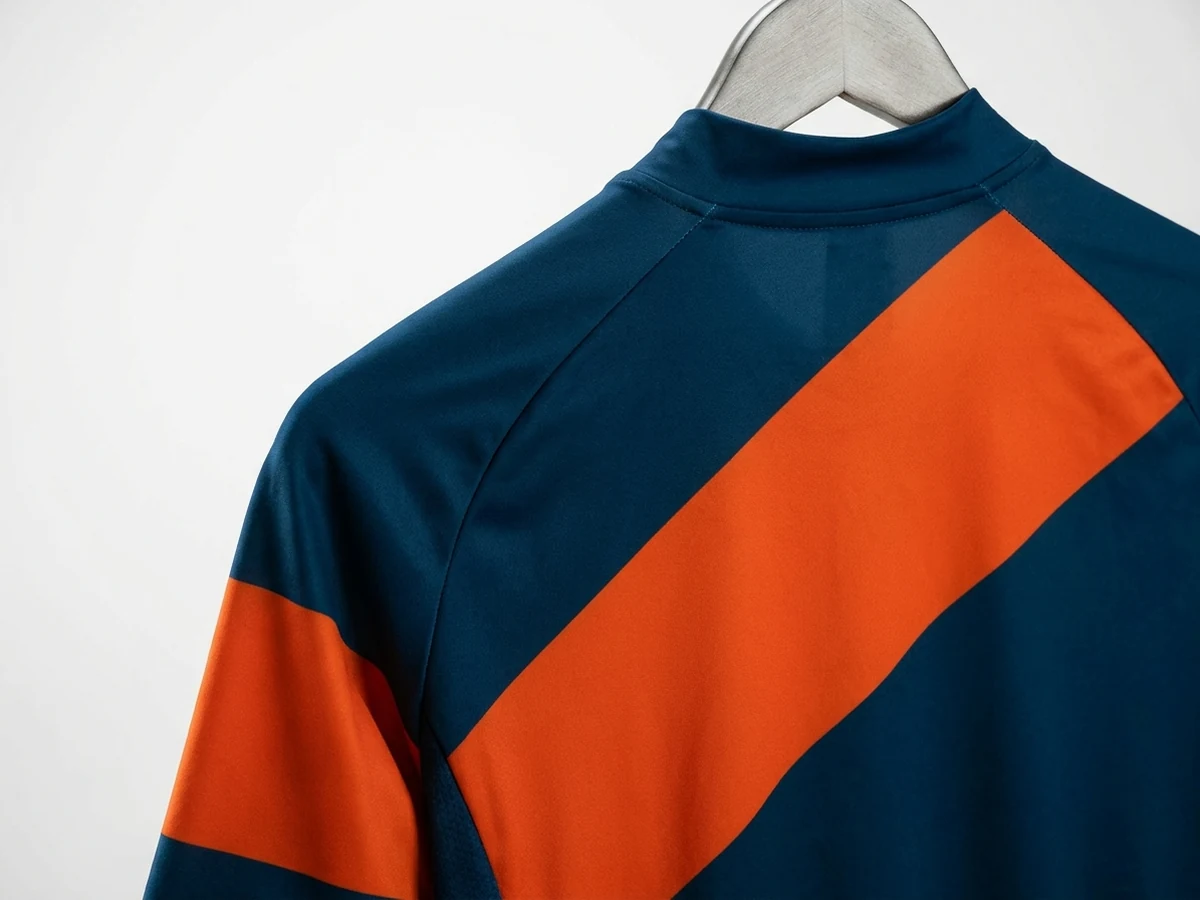
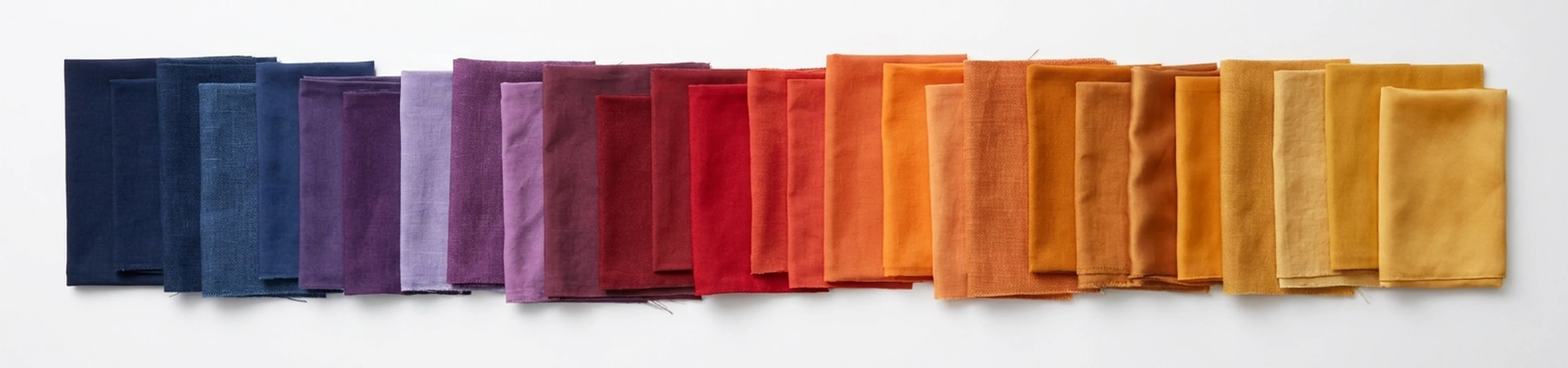
The floor is a fact about how cloth gets cut. It is ⛔ not a lever we are holding back from pulling.
- After the sample
There Is One Real Exception to the Count, and One Place People Expect a Second
Both halves of this section are more useful than a rule. The exception that exists changes how you should sequence a first order; the one that does not exist changes what you should ask us to keep.
The one that exists — sample pieces sit outside the count
Sampling runs before bulk and does not eat into it. A confirmed sample is not thirty pieces minus one; it is a separate, earlier thing, which is why the bulk window is measured from sample sign-off rather than from the day you order.
Practically: you can put a garment in your hands and settle a fit argument before committing a run at all, and doing so costs you a sample rather than a share of your minimum. Rounds, timings and what a sample does and does not prove sit on sampling.
The one that does not — a repeat is counted exactly like a first order
Thirty pieces, one style, one colour, every time. ⛔ There is no reduced repeat minimum here and ⛔ no arrangement where a second season tops up a first. We register this openly because the opposite is a common thing to imply and an expensive thing to discover late.
⛔ What you get instead, and why it is the better half of the trade. What carries forward is not the count — it is the work. The confirmed pattern and the spec stay on our side, filed against your styles, so a repeat starts from a signed-off file rather than reopening pattern development. Who owns those files is set out on OEM, ODM and private label.
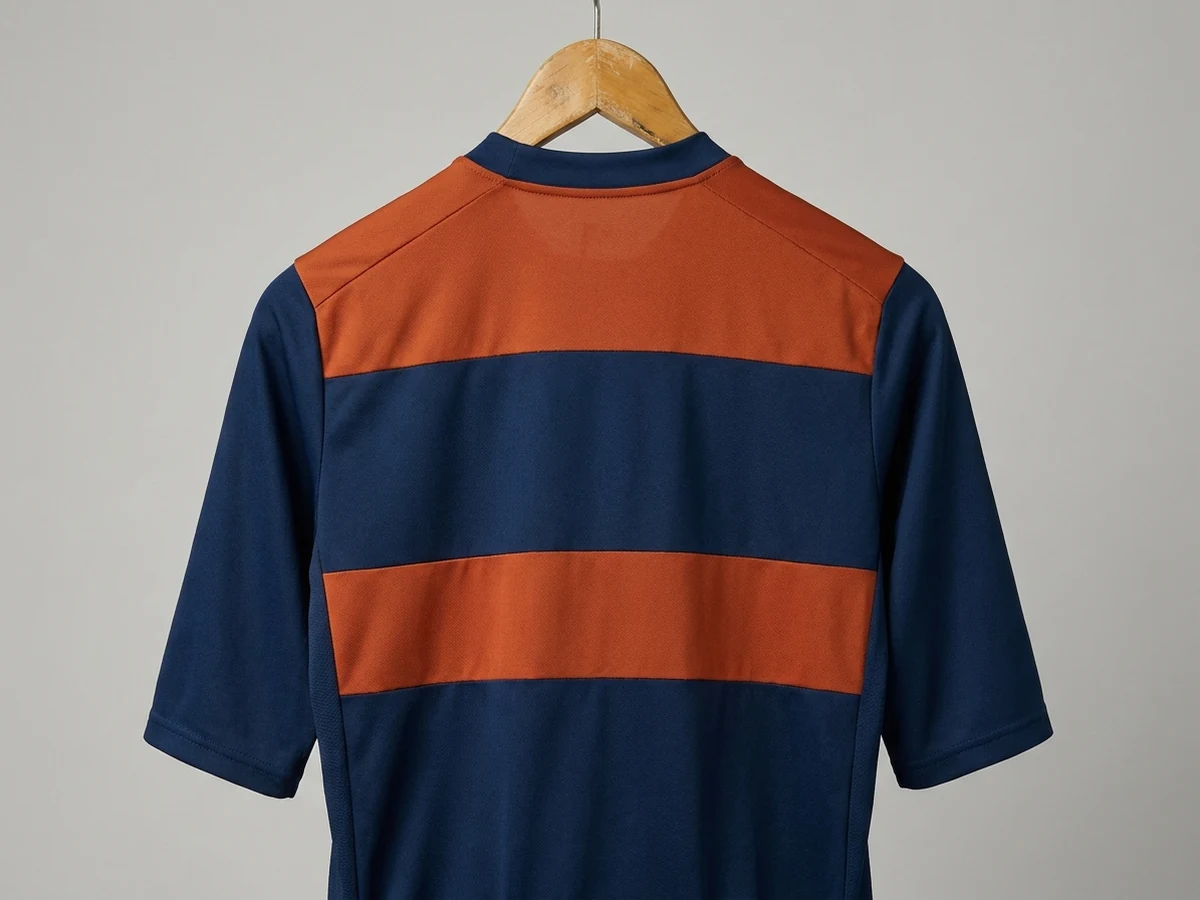
Our longest-running registered club programme runs exactly this way: eight squads, 30 pieces per squad per season across jersey, vest and arm warmers — 240 pieces a season — reordered for three consecutive seasons, with patterns and print screens retained between them. Read that sequence carefully, because it is the honest shape of the trade: what repeats each season is the run. What does not repeat is the development. More on how clubs and teams plan around it.
- Registered case
How a First Season Gets Shaped When the Budget Is the Constraint
This is the conversation this page exists for, and it is not a negotiation about the floor. It is a conversation about which axis of your range to spend on first, because the floor is the same either way.
Ask us to go under the floor and the answer is no, and it will be no in the first reply rather than after three emails. What is genuinely open is the shape of what you order — and that turns out to be where the money actually is.
What a Registered Opening Season Looked Like
One of our registered programmes is a new direct-to-consumer brand's opening season: six styles under private label, two colourways each, thirty pieces per colourway — with its own main label and packaging. Twelve counts.
360pieces in that brand's first season
The same brand could have taken six styles in one colour for six counts, or three styles in two colours for six counts. The floor never moved. What moved was how much range those pieces bought. More on how DTC brands sequence a first range.
Three Trades Worth Making in That Order
- Cut colourways before you cut styles. A style you drop is a gap in the range your buyer notices. A second colour of a style you kept is mostly invisible to them and is a whole count to you.
- Let the artwork carry the variety. Since decorative variants on one body colour share a count, the cheapest way to look broader in season one is more graphics on fewer base colours.
- Put a sample where the risk is, not everywhere. Sample the piece whose fit you are least sure of. Samples sit outside the count, so this costs you time rather than volume.
⛔ What we will not do is quote you a shape. Send the range you want and we will tell you how many counts it is — that part is arithmetic, and it costs you nothing.
- Before you ask
- Five inputs
A Quote Here Is Assembled From Five Inputs, and It Is Why a Table Cannot Do It
The counting half of this page is arithmetic you can finish alone. This half is not, and the reason is worth one section: the five inputs do not add up independently, they interact.
The Five, and Why They Do Not Add Up Separately
Everything that decides your quote falls into five inputs: riding scenario, fabric, decoration, quantity and lead time. A price table would have to fix four of them to show you the fifth, and every table like that is wrong in exactly the situation that brought you here — the one where two of the five are unusual at the same time.
A Worked Example, With No Numbers Attached
Two of the five, acting on each other: a full-coverage graphic and a windproof outer layer are each ordinary on their own. Together they are a different job, because the print layout has to be locked before anything is cut and the seams get sealed piece by piece afterwards. Neither of those gets cheaper with volume in the way the sewing does. That is the kind of thing a table cannot tell you and a person reading your spec can.
| Input | What it actually changes | Where it is decided |
|---|---|---|
| Riding scenario | The garment mix and the fit approach — which pieces the programme needs at all. | When you decide what you are making. |
| Fabric | Weight and finishing. Heavier cloth and added treatments sit above the light base mesh. | At development, against your spec. |
| Decoration | Coverage, and how many separate times a finished garment gets handled. | When the artwork is settled. |
| Quantity | How widely one setup is spread — up to the point where it stops mattering. | When you place the order. |
| Lead time | Whether a slot is arranged in advance or compressed against one that already exists. | Before you need it, not when you need it. |
What to Send, and What Comes Back
We reply to enquiries within 24 business hours, Monday to Friday. Once a tech pack is complete, a quote follows within 48 hours. ⛔ You do not need a finished tech pack to start a conversation — a sketch, a reference garment and a rough quantity are enough for us to tell you what is still missing.
⛔ There is no file field on this page. The form below is a JSON submission and cannot carry a file, so if you already have a pack, email it to [email protected] and reference your enquiry. Everything else can be settled in writing first — see contact.
- Set by design
Three of the Five Are Settled by Your Design, Before Anyone Prices Anything
Scenario, fabric and decoration are decided when your garment is decided. Each pushes a quote in a direction you can predict, which means you can trade between them deliberately rather than finding out afterwards.
- Scenario sets the piece count and the pattern, not the price of cloth. Road, gravel, mountain, commuter and triathlon development each imply a different garment mix and a different fit approach, and the mix is what you are buying. A programme that needs an outer layer is a different programme from one that needs two jerseys, whatever either weighs.
- Fabric moves the quote through weight and finish, not through brand. Our body fabrics are two-component nylon and spandex only, in three broad weight bands from a light summer mesh through a mid-weight stretch body cloth to a windproof laminate. Heavier cloth and added finishing — a water-resistant treatment on an outer layer, for instance — sit higher than the base mesh. The weight range and abrasion floor we cut to are set out in full on fabric development rather than repeated here.
- Decoration moves it through coverage and through how many times a garment is handled. All-over sublimation is one pass. Embroidery, reflective tape and silicone grippers are each a separate operation on a garment that has already been made, and that handling is what you are paying for rather than the material itself. Method by method on printing methods.
⛔ One Thing None of the Three Will Do
⛔ None of them makes a garment we do not make. Gloves, footwear of any kind including overshoes, and hardware are outside what we do at all. Bib shorts, chamois and one-piece tri suits we develop and sample against a spec you bring — ⛔ they are not products we hold or have in a range.
Quantity and the Calendar Are the Two That Keep Moving After the Design Is Fixed
These two are the inputs buyers try hardest to use as levers, and they behave differently from each other. One has a point where it stops doing anything. The other has to be arranged before you need it.
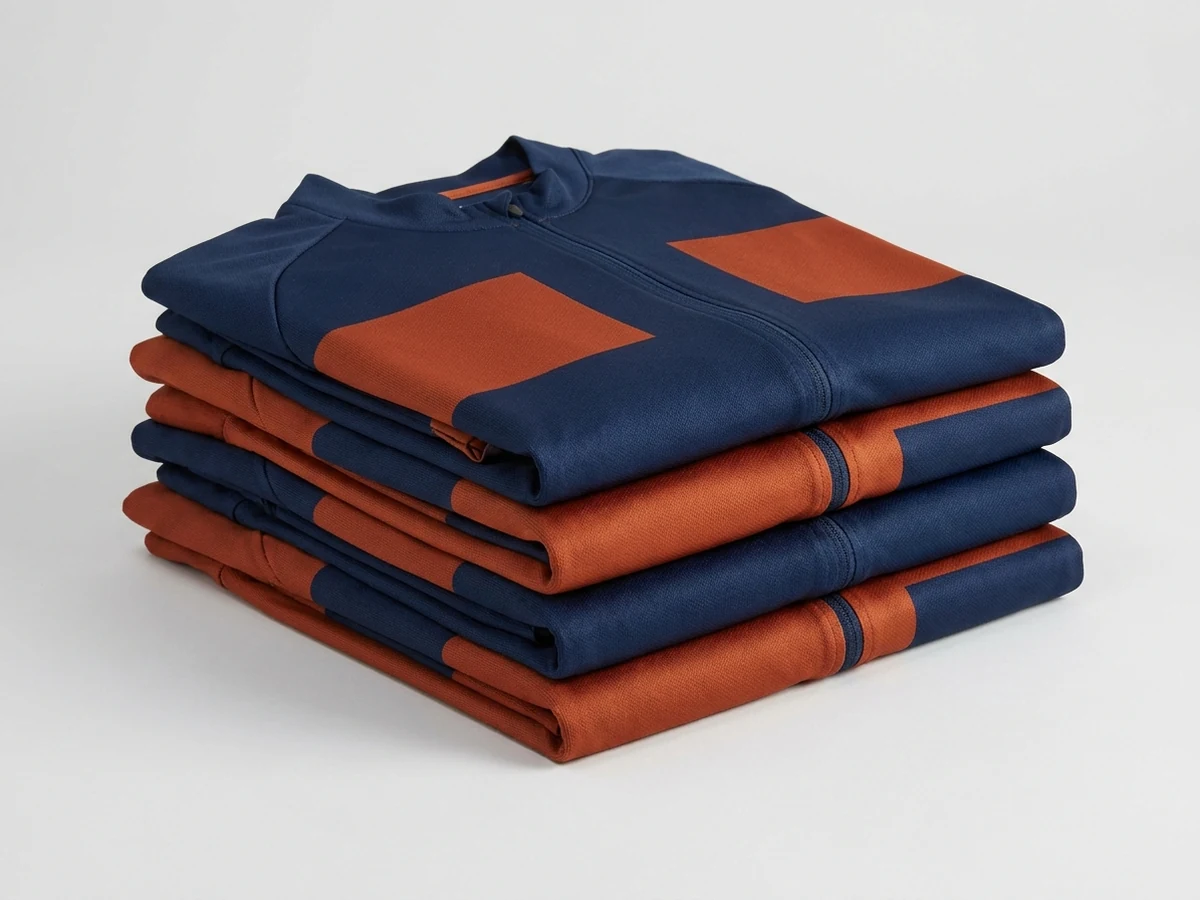
Quantity Works, and Then It Stops Working
Above the floor, more pieces in one count spread one setup across more garments, and that is real. But it stops at the point where setup has become a small part of the garment — past there, you are buying cloth and labour at close to the same rate however many you take.
The practical consequence is the opposite of what people expect: stretching to a much larger single run is usually a worse use of budget than putting the same money into a second style, which buys you range instead of a diminishing return.
The Calendar Is Only a Lever Before It Is a Deadline
Bulk production runs 20 to 30 days, measured from sample sign-off rather than from the day you order — and sampling itself runs 5 to 7 days ahead of that. Compression to 12 to 15 days is real, and it is the one thing on this page that has to be arranged in advance rather than requested when it is needed.
A slot confirmed early can be compressed; a slot that does not exist yet cannot be compressed into existing. If your date is fixed, that is a reason to write early, not a reason to write urgently.
Where the Two Meet
Where the two meet is the only genuinely awkward combination: a large run with a fixed date and a decoration route that has to be locked before cutting. That one we would rather talk through than quote around, and the scheduling side of it is set out in full on production capacity.
What This Page Deliberately Does Not Answer, and Where Each One Actually Gets Settled
There is no price anywhere on this page, and a page that gave you one before reading your spec would be guessing at it. These three are the answers we get asked for most often and will not put in writing here, with the reason and the real route for each.
| What we are not putting here | Why, and where it gets settled |
|---|---|
| A unit price or a price range | Any number published here would be set before anyone had seen your fabric, your decoration route and your quantity together — and those three do not act on a quote independently, they act on each other. The five inputs above are what decide it, and a real figure follows within 48 hours of a complete pack. |
| A freight figure or formula | It depends on where it is going, how the garments are packed and whether it moves in one batch or two — none of which is knowable from this page, and all of which we can answer once we know them. |
| What anyone else’s minimums are | ⛔ We are not going to characterise anyone else’s minimums. We can only tell you how ours are counted, which is what the rest of this page does. |
⛔ What We Also Do Not Do
- We do not take files here. There is no field for one, because the form is a JSON submission and physically cannot carry a file. Packs go to [email protected].
- We do not quote a date we have not checked. A date given before the schedule is looked at is a date we would have to take back, and taking it back costs you more than waiting a day for a real one.
- We do not hold stock. Everything here is made against a confirmed sample, which is why there is no line on this page about what is available now.
Six Questions That Arrive Before the First Order
What Merges, and What Does Not
Can one count cover more than one style if the total is high enough?
No, and the reason is mechanical rather than commercial: two styles are two patterns and two markers, so they are never in the same lay-up regardless of how the totals add up. A large total does buy you something — it buys the per-garment setup down inside each count — but it does not merge counts.
We want the same jersey in men's and women's cut. Is that one count or two?
Two. They are separate patterns, not one pattern with different labelling, and a count follows the pattern. This is the one place where people are surprised in the expensive direction rather than the cheap one, which is why it is here rather than buried.
Six graphics on two base colours — how many counts is that?
Two. The graphics are files going into the same lay-up; the base colours are what the fabric actually is. If you want to check a more complicated version of your own range, the builder further up this page will do it without anyone having to reply to an email.
Sequencing
Do samples eat into the minimum?
They do not, and the sequencing matters more than the rule: sampling happens first and separately, and the bulk window is measured from the moment you sign a sample off. So a sample buys you certainty without spending any part of a run.
We are reordering last season's kit unchanged. Same minimum?
Yes — a run is a run every time. What you do not repeat is the development: the confirmed pattern and spec are filed on our side, so a repeat starts from a signed-off file rather than reopening pattern work.
The One We Cannot Answer Here
Can you tell us roughly what it will come to, just as a ballpark?
Not honestly, no. A ballpark given before we have your fabric, decoration route and quantity together is a guess that would then have to be corrected, and the correction is the part that damages a plan. Send the spec and you have a real figure within 48 hours of it being complete.
Send the Range, Not the Budget
Most first emails open with a budget and a question about how low we can go. The more useful opening is the range itself — the styles, the base colours, and roughly how many people are wearing it — because that is what turns into a count, and the count is what turns into everything else.
- Reply within 24 business hours. Monday to Friday.
- Quote within 48 hours of a complete pack. ⛔ You do not need one to start.
⛔ You do not need a finished tech pack to start. If you have one, email it to [email protected] and reference this enquiry — the form beside this is a JSON submission and cannot carry a file, so ⛔ there is no file field on it.